#072: Ikat Tepi - Redux
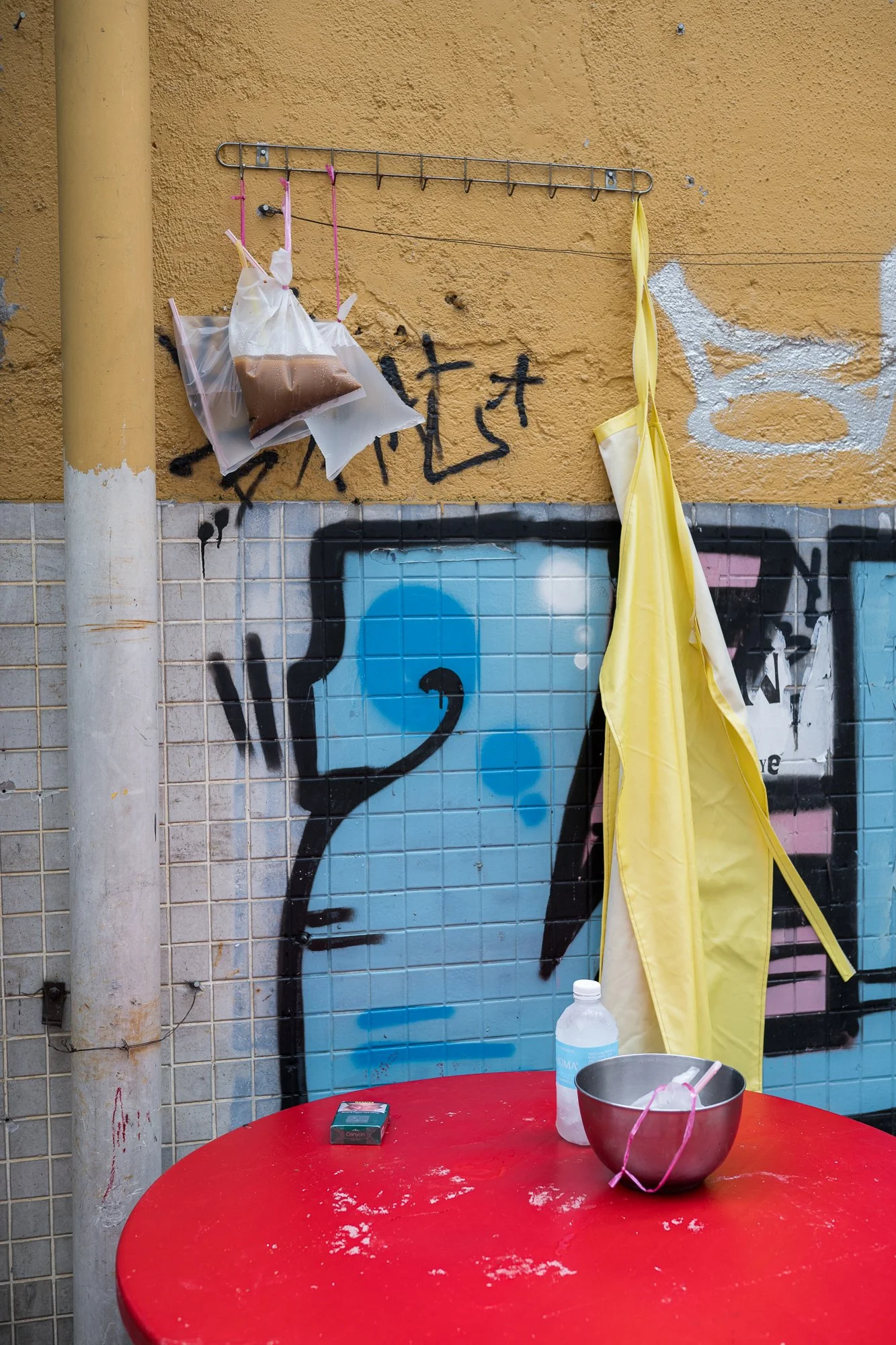
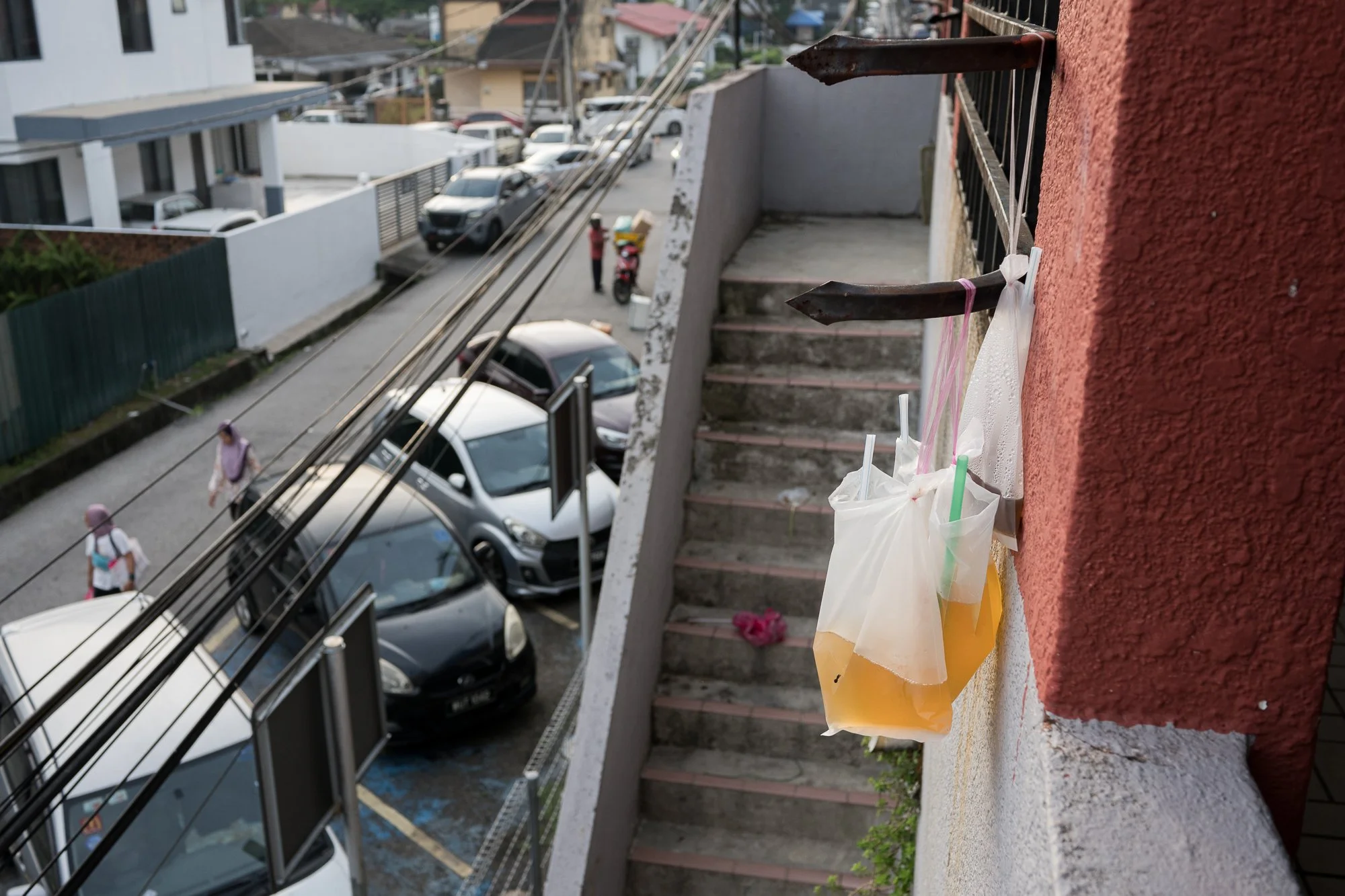
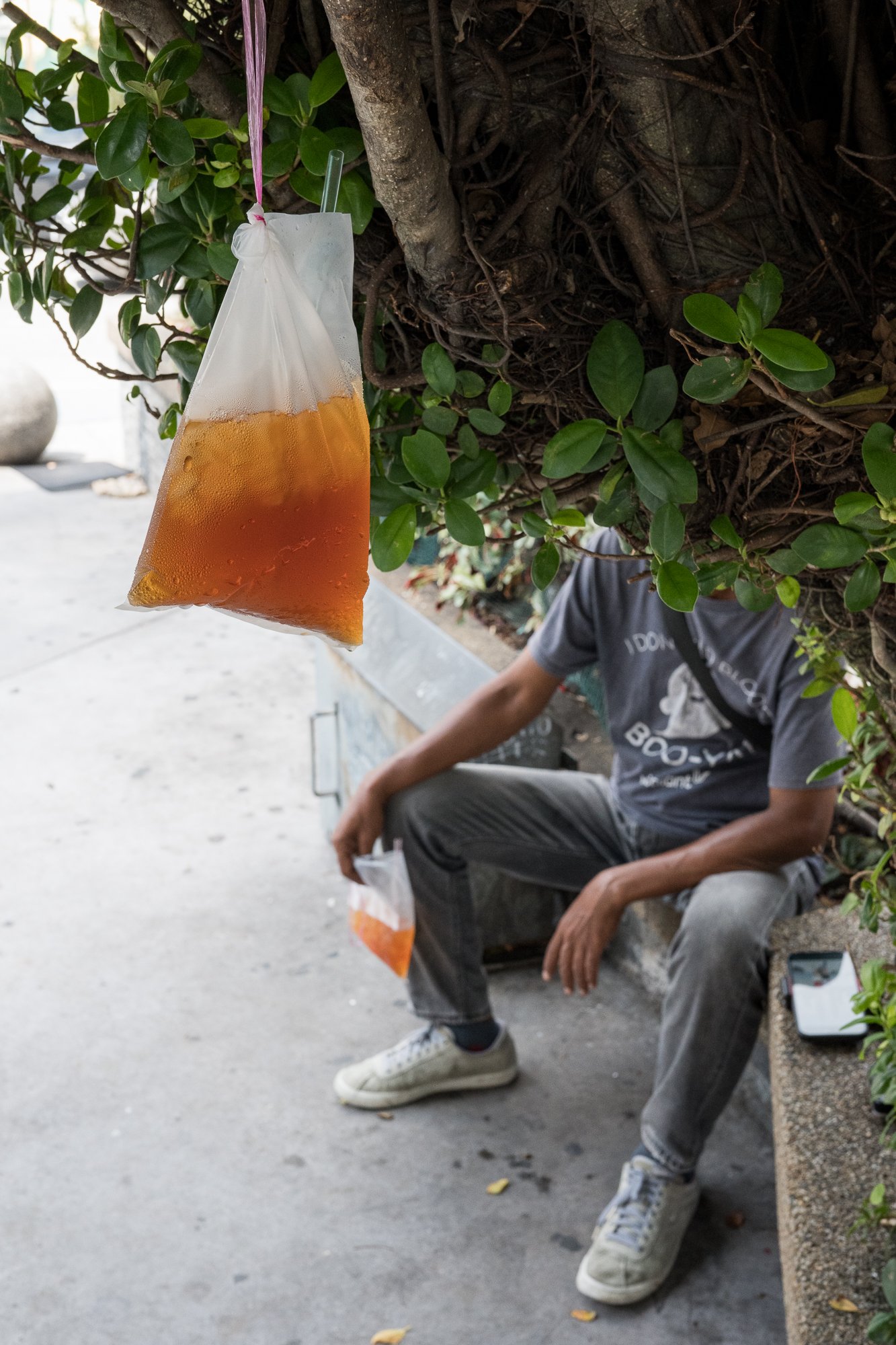
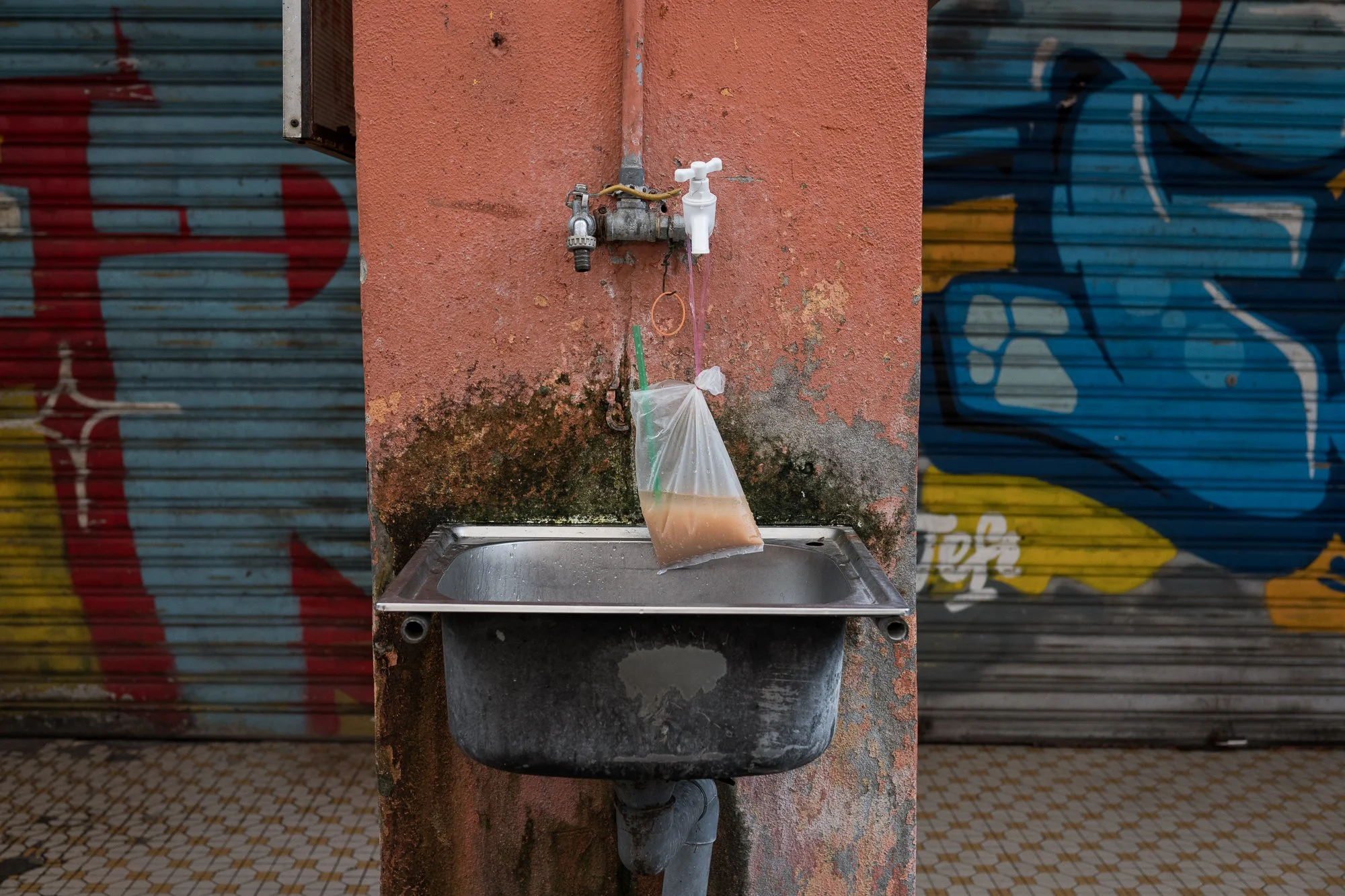
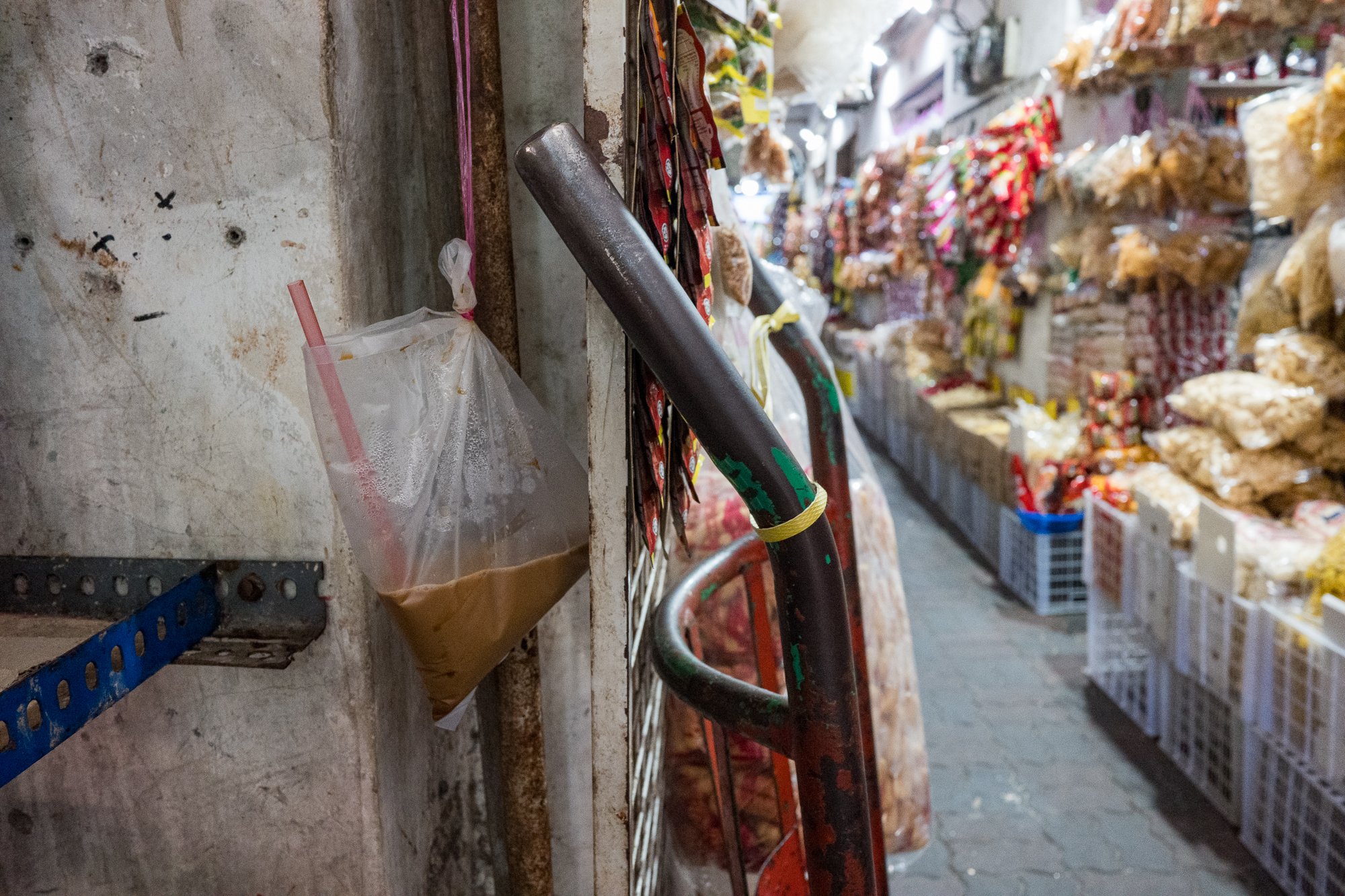
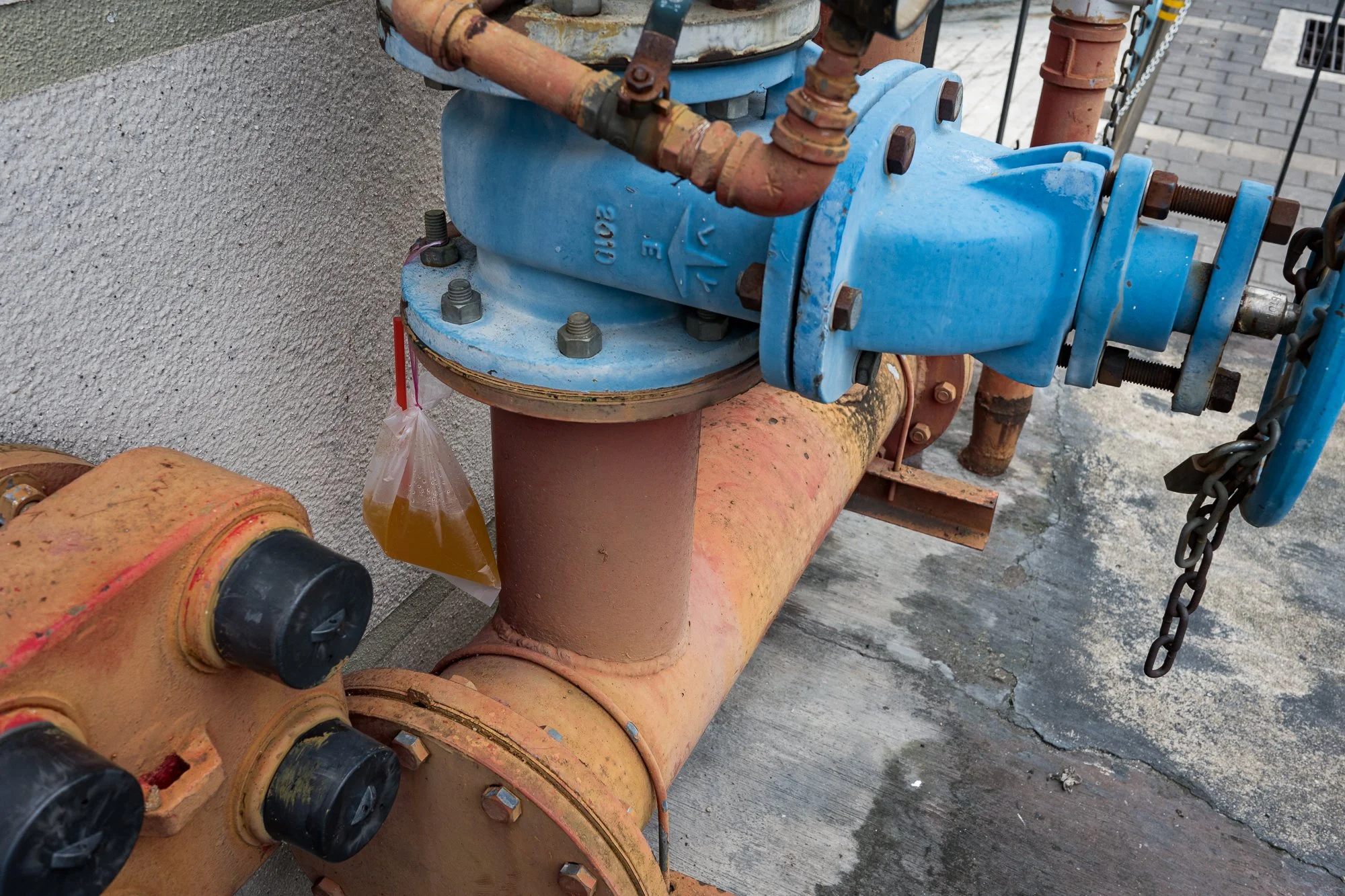
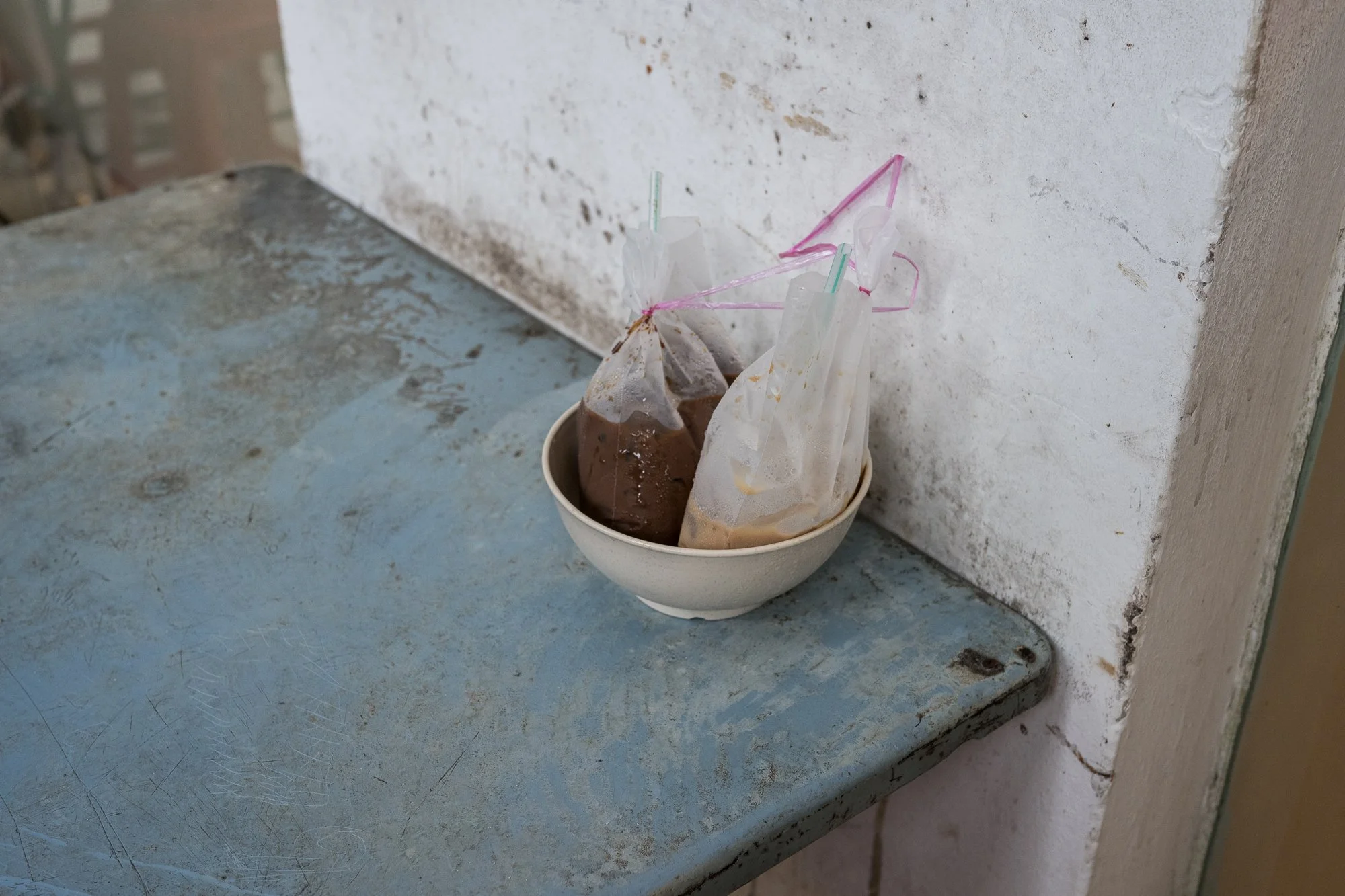
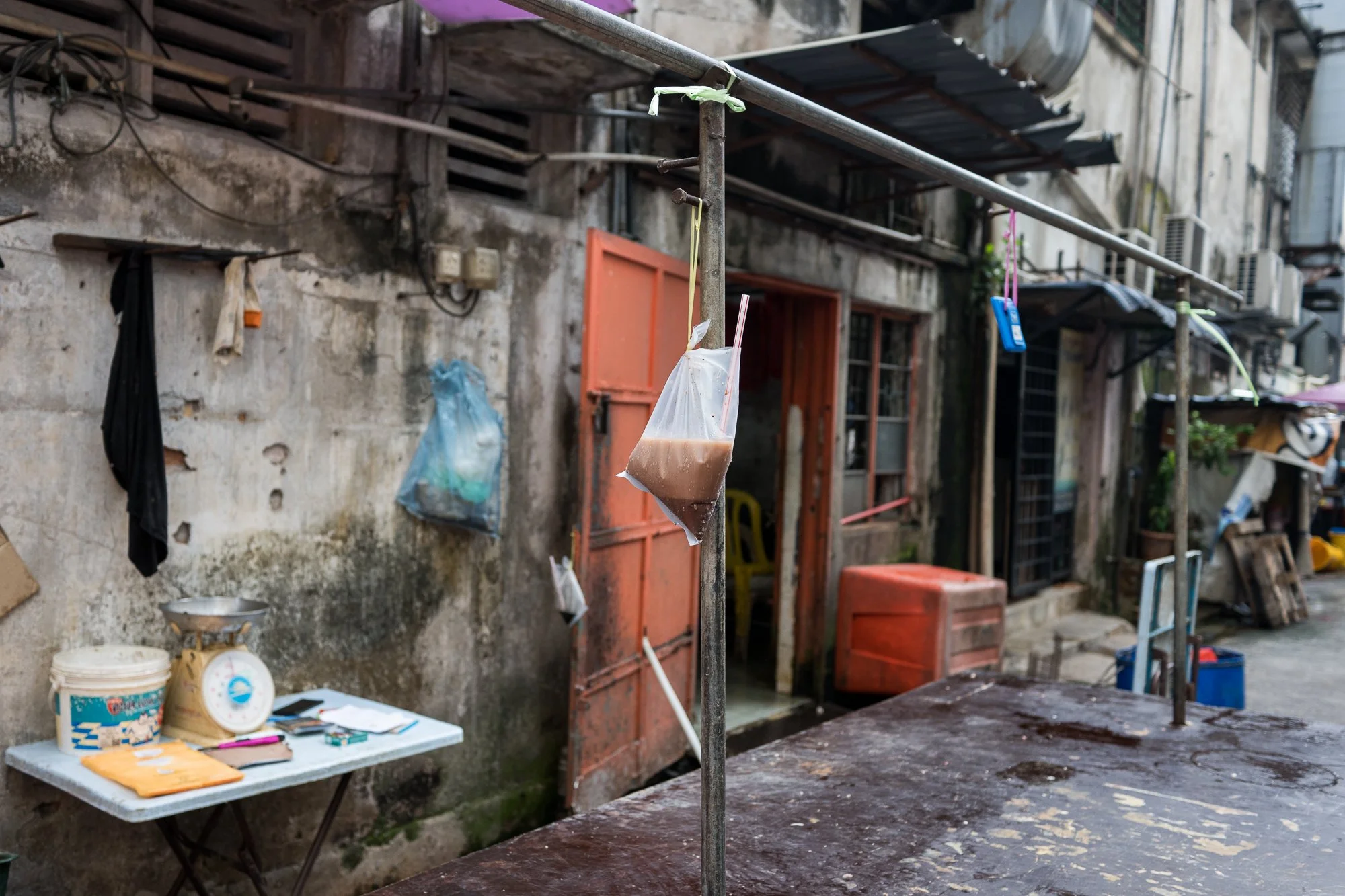
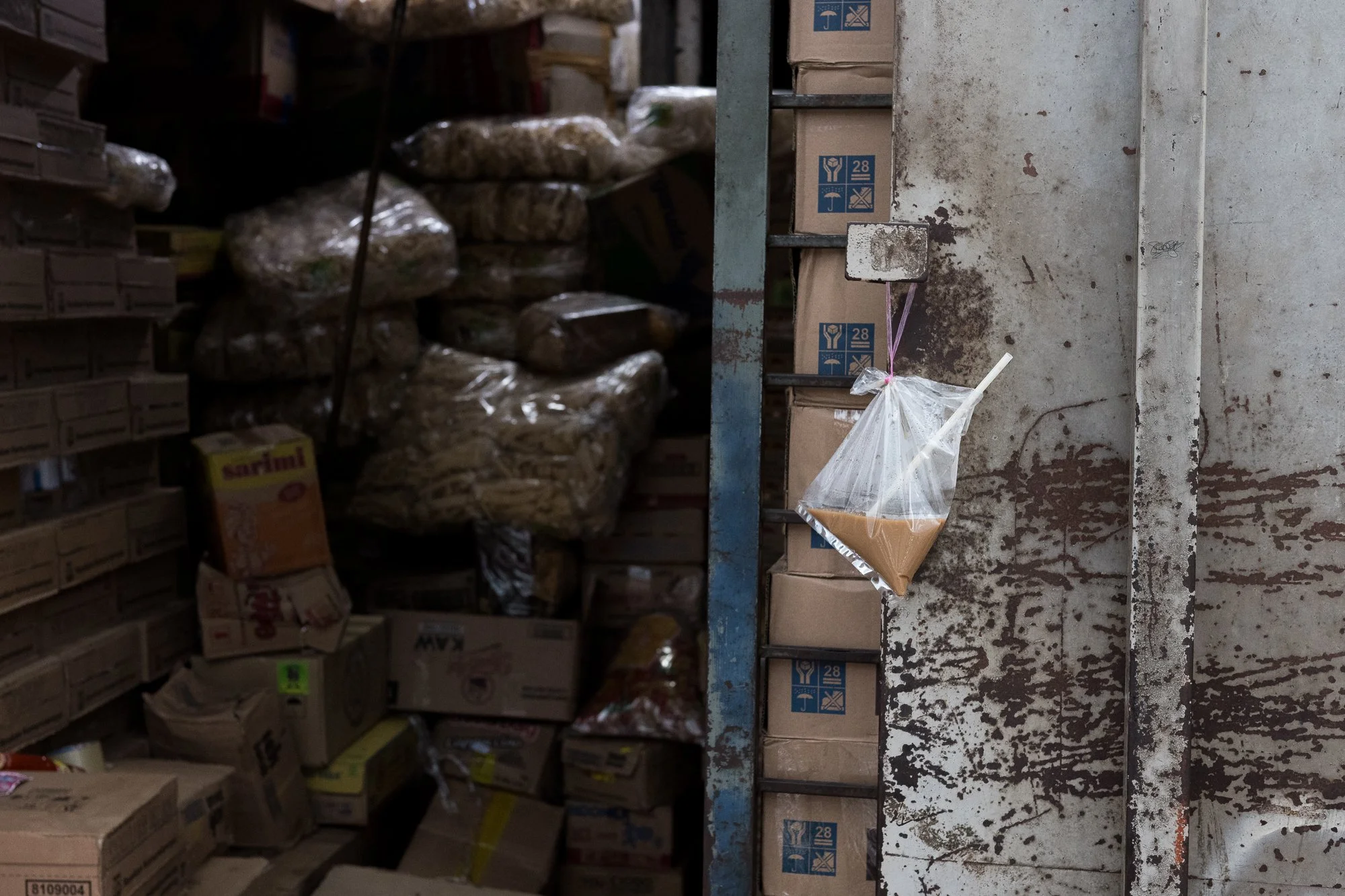
The first one I saw and photogprahed this year was hanging off the side of a wall, next to a drainage pipe. It caught my eye because there were two of them, hanging one on top of the other, and as I was composing the shot, I noticed two more left on the floor in the background. So, four of them in one shot in their various stages of “use”.
Half a decade later, and my old obsession was waving at me again.
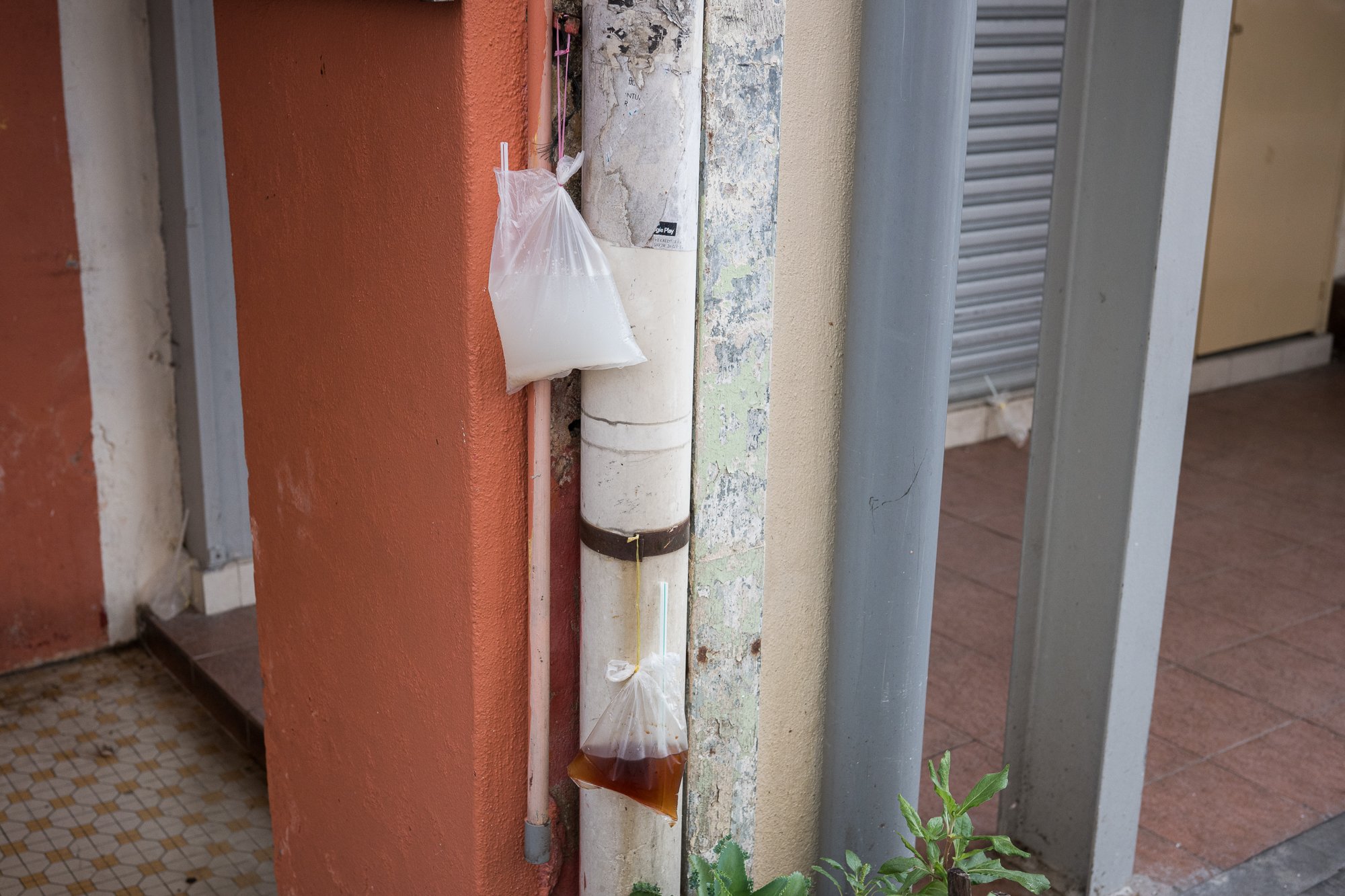
The first photogrph of Ikat Tepi for the year.
If you’ve been following my blog for a while, you’ll remember this all started with one photo – a plastic bag of drink tied to a red fire hydrant in KL. That became Chapter 1: #033 Ikat Tepi, my little love letter / complaint about this very Malaysian way of drinking. Then things escalated into #034 Ikat Tepi 2, when I realised these bags were everywhere once I started paying attention. And then #035 Ikat Tepi 3, where I tried to unpack why a simple plastic bag could feel so iconic and yet so… wrong.
It also ended up being my first photographic showcase as part of an ensamble of photographers from KL, with an exhibition called KL 20x20.
I thought it would end there; nice trilogy, thanks for coming.
But the thing about habits is: they don’t care about your narrative arc.
The sequel I didn’t plan
In the years since those posts, life went sideways.
Pandemic. Lockdowns. Food delivery riders becoming our lifeline. QR codes where menus used to be. We touched our phones more than we touched human beings.
You’d think all that might have changed how we drink.
It did, in some ways. More branded cups, more sealed plastic lids, more reusable tumblers of various shapes and colours, more delivery-friendly packaging. But while the world was busy “pivoting”, ikat tepi quietly stayed in its lane.
Out on the street, away from the air-conditioned cafés, it was still the same old cast:
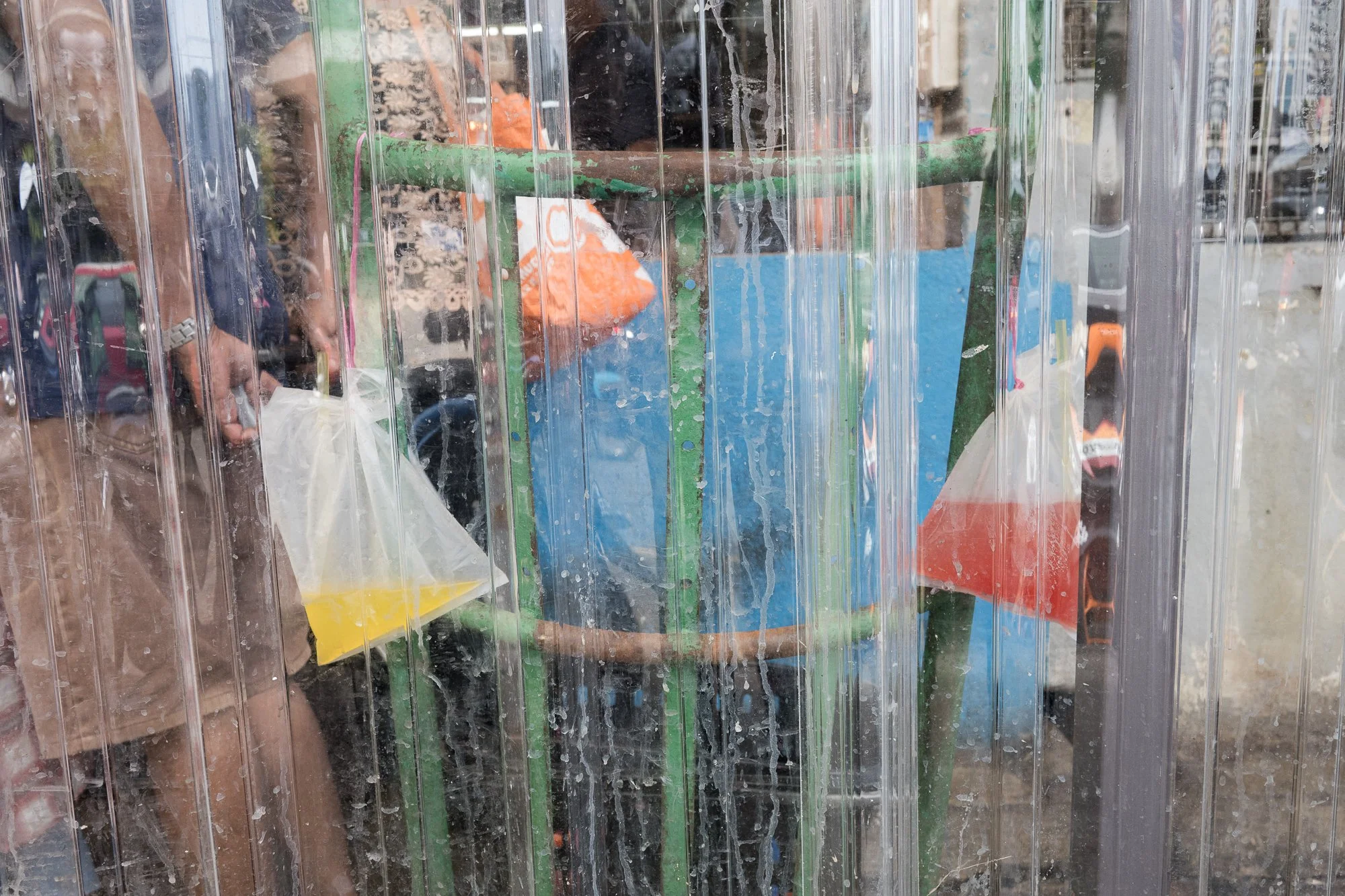
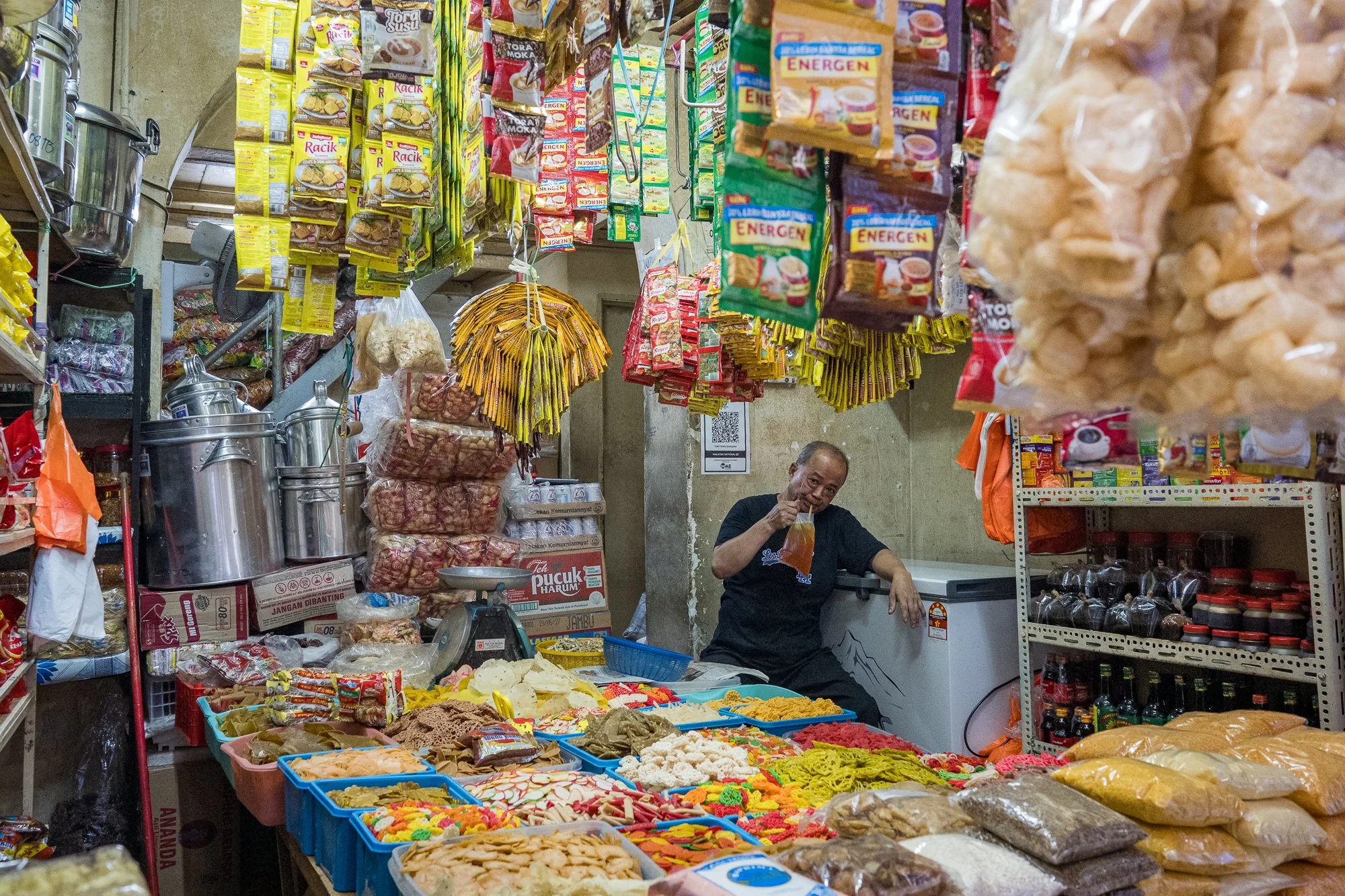
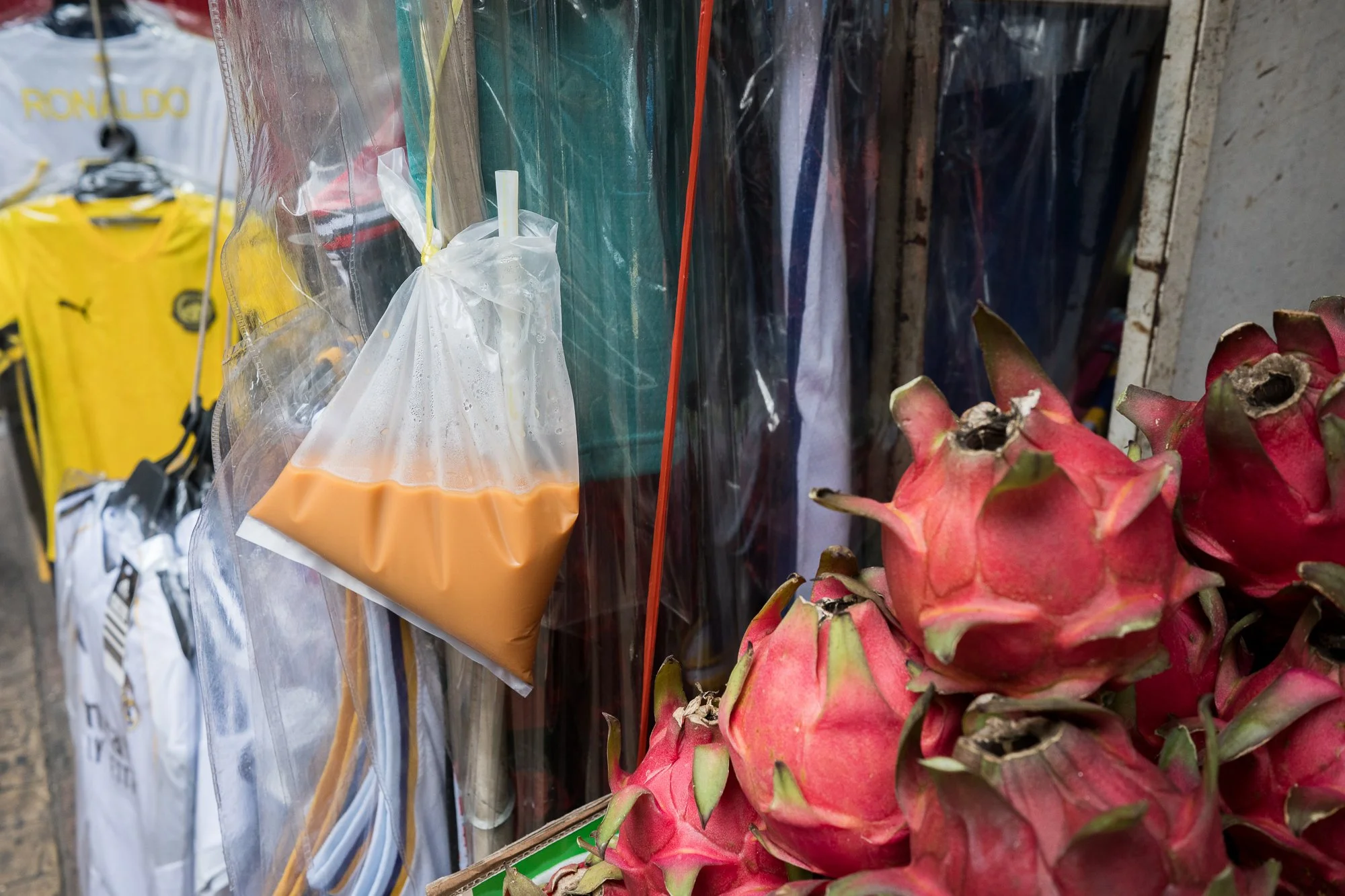
Pasar malam stalls with colourful rows of air tebu, jagung and bandung, all lined up like plastic lanterns.
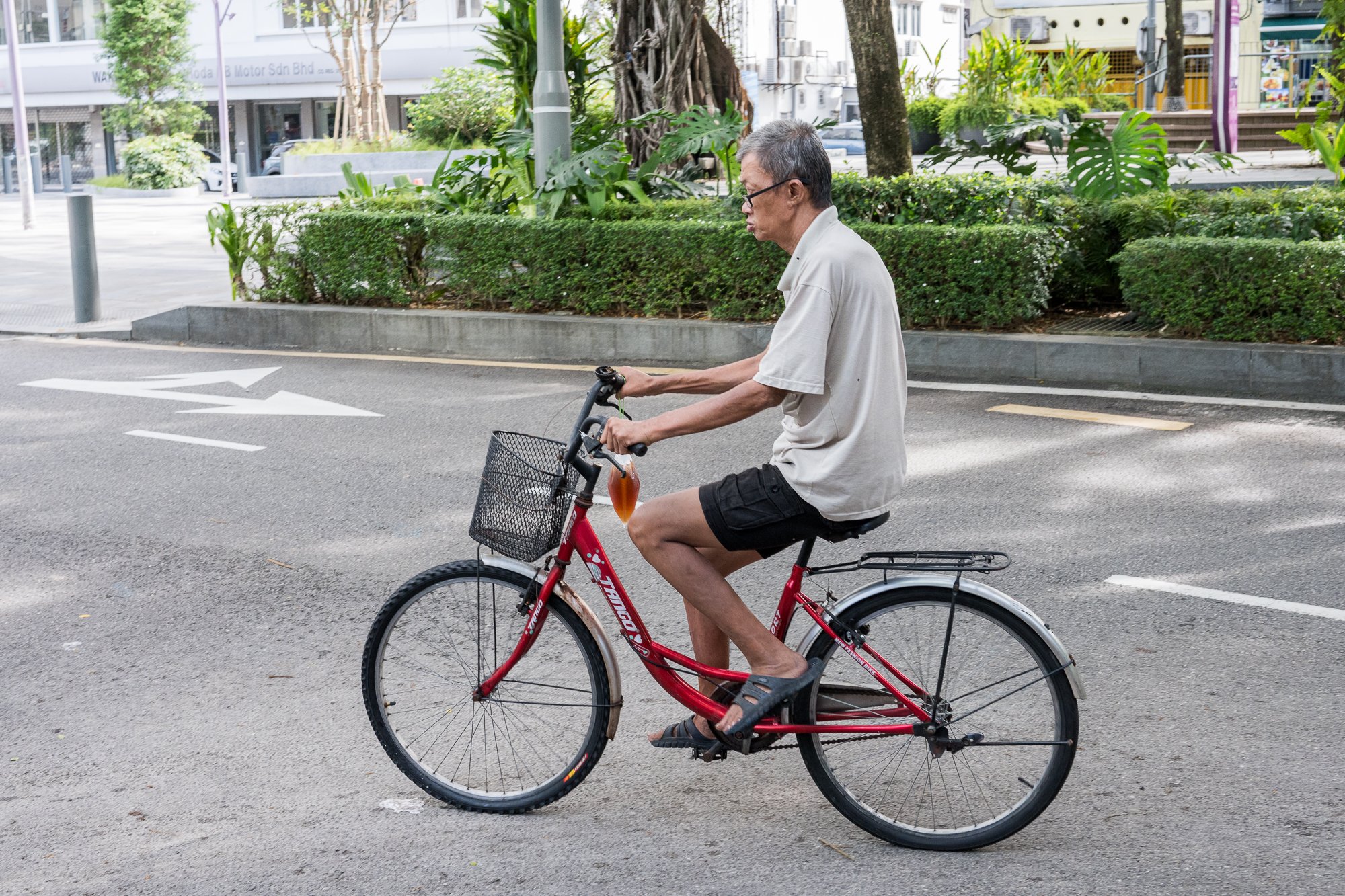
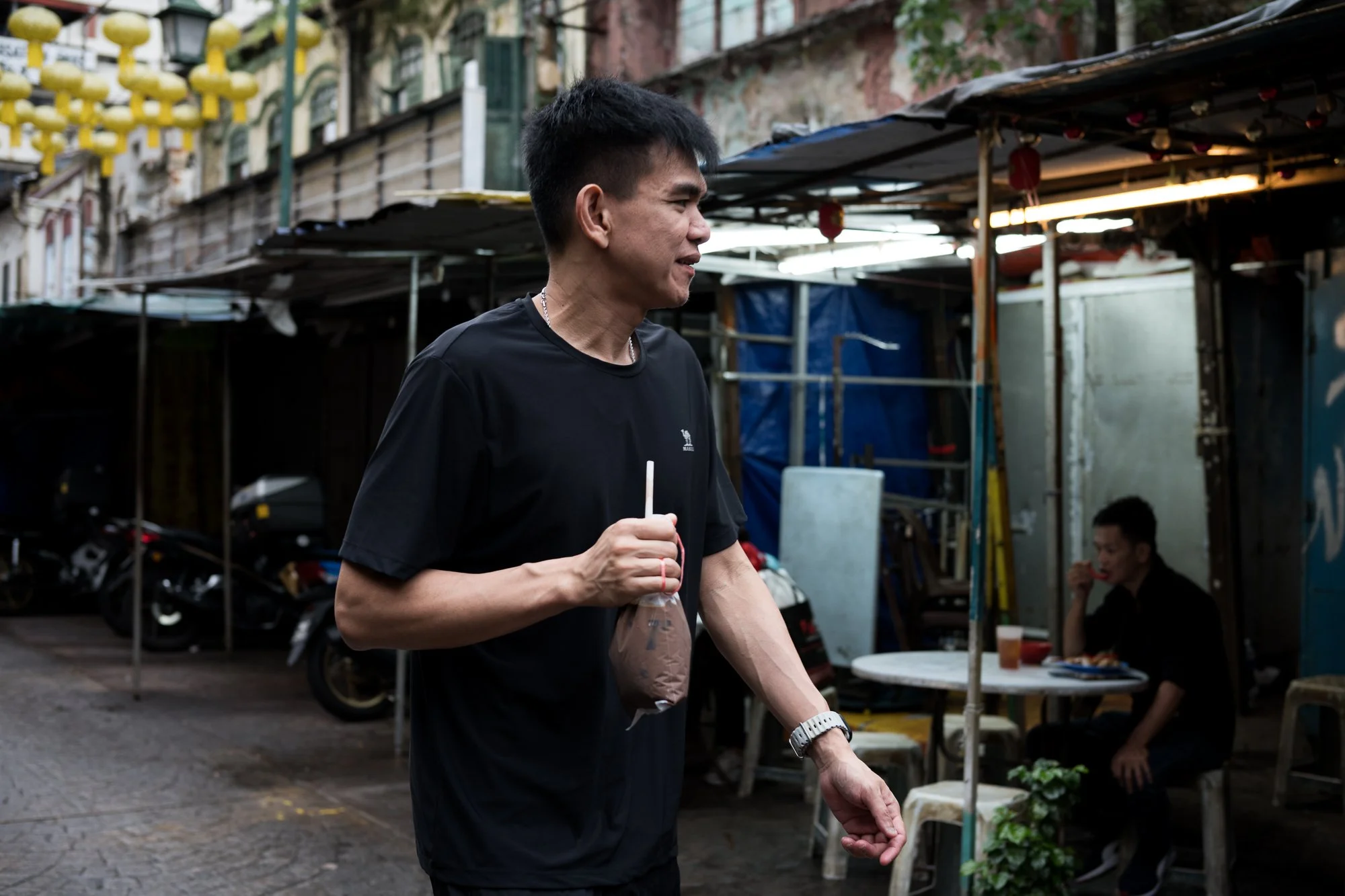
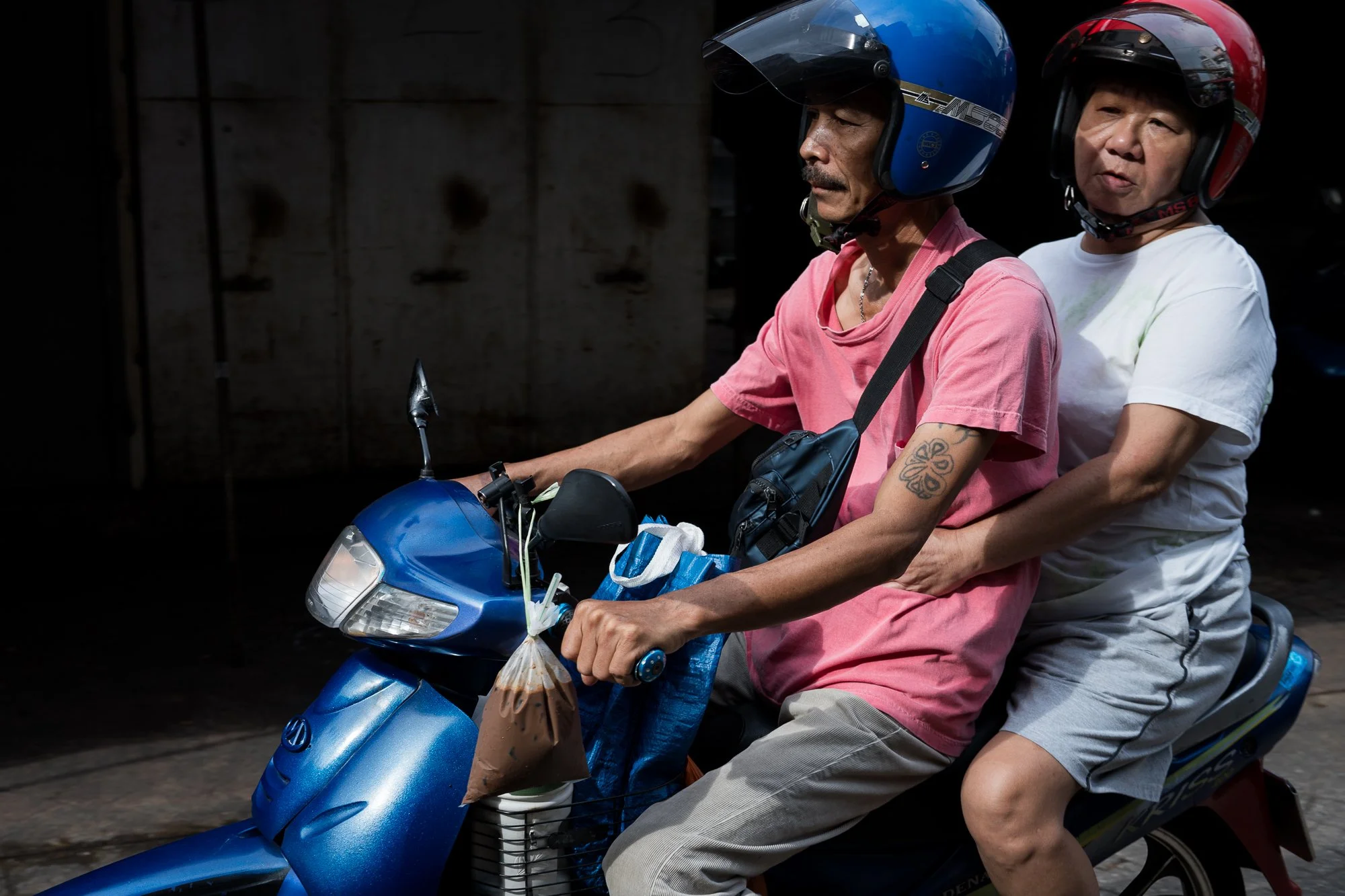
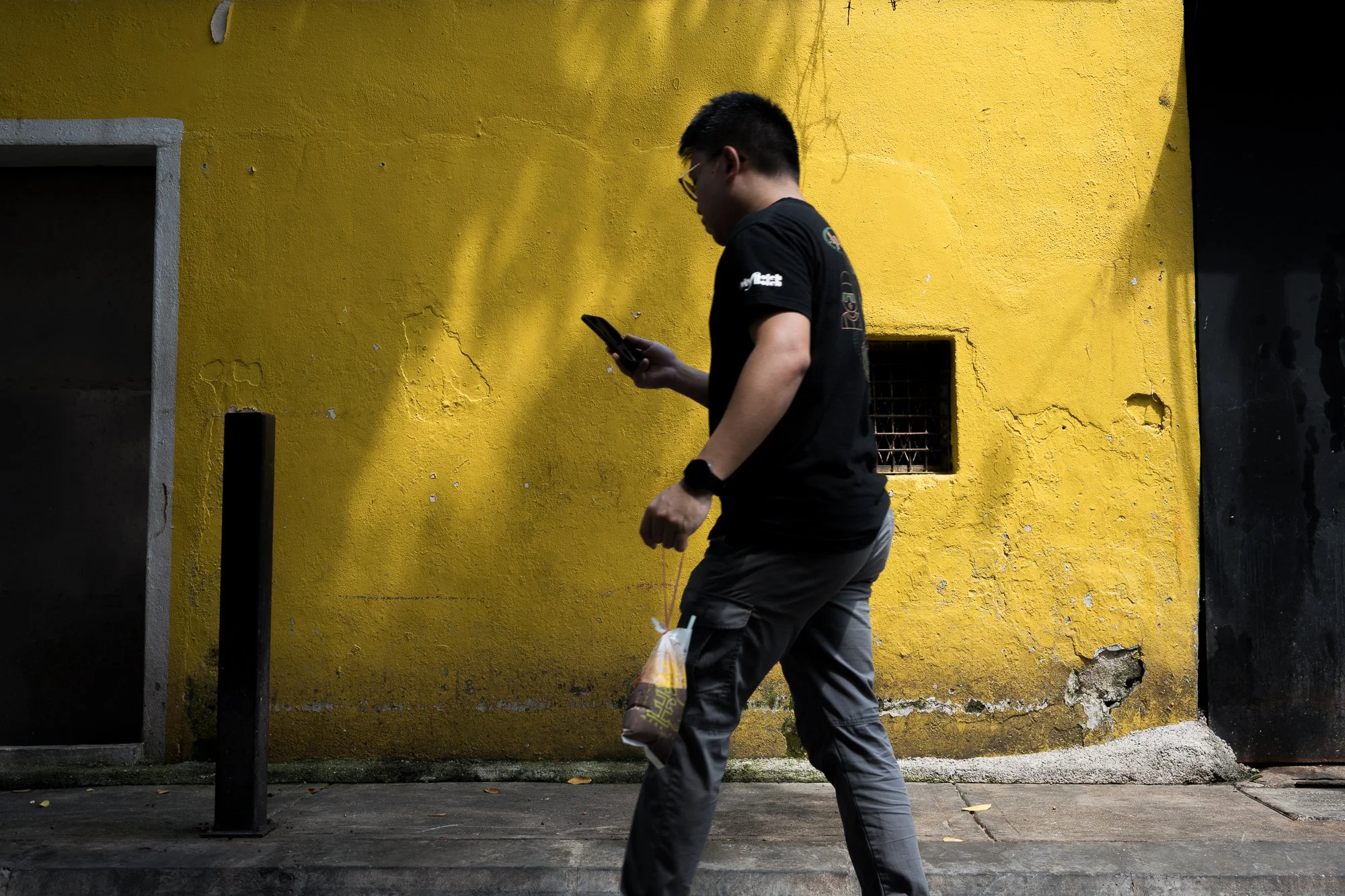
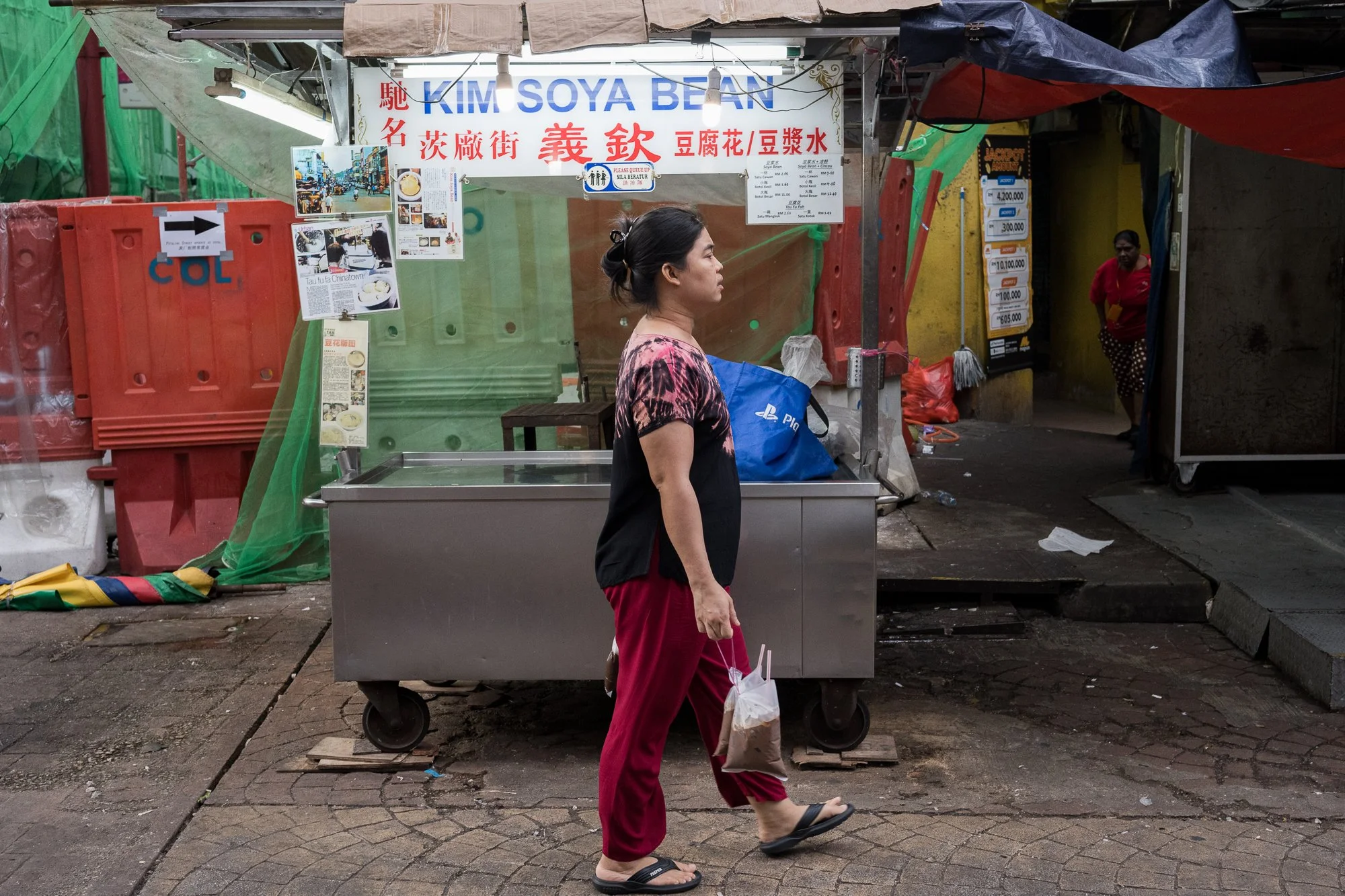
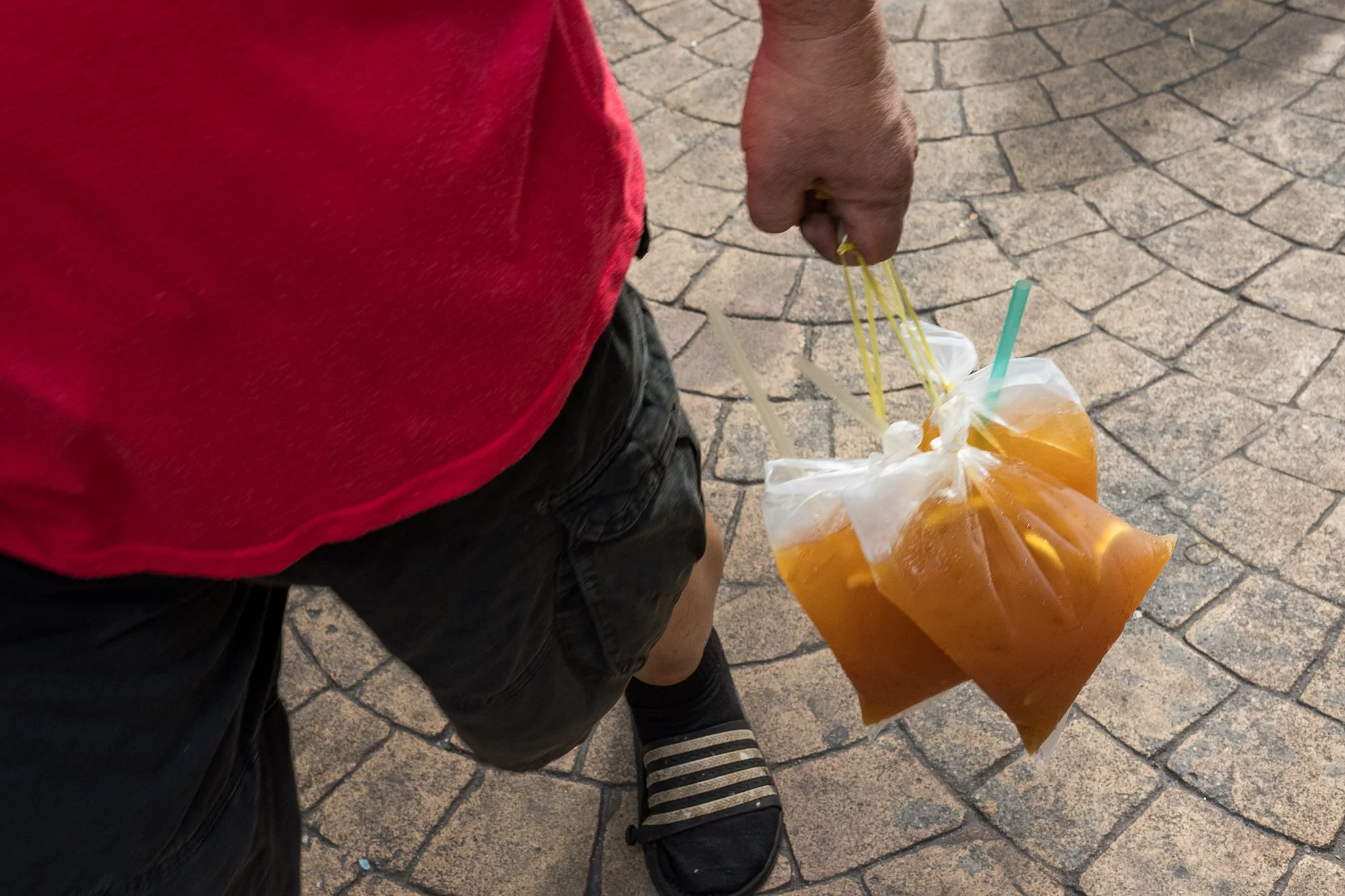
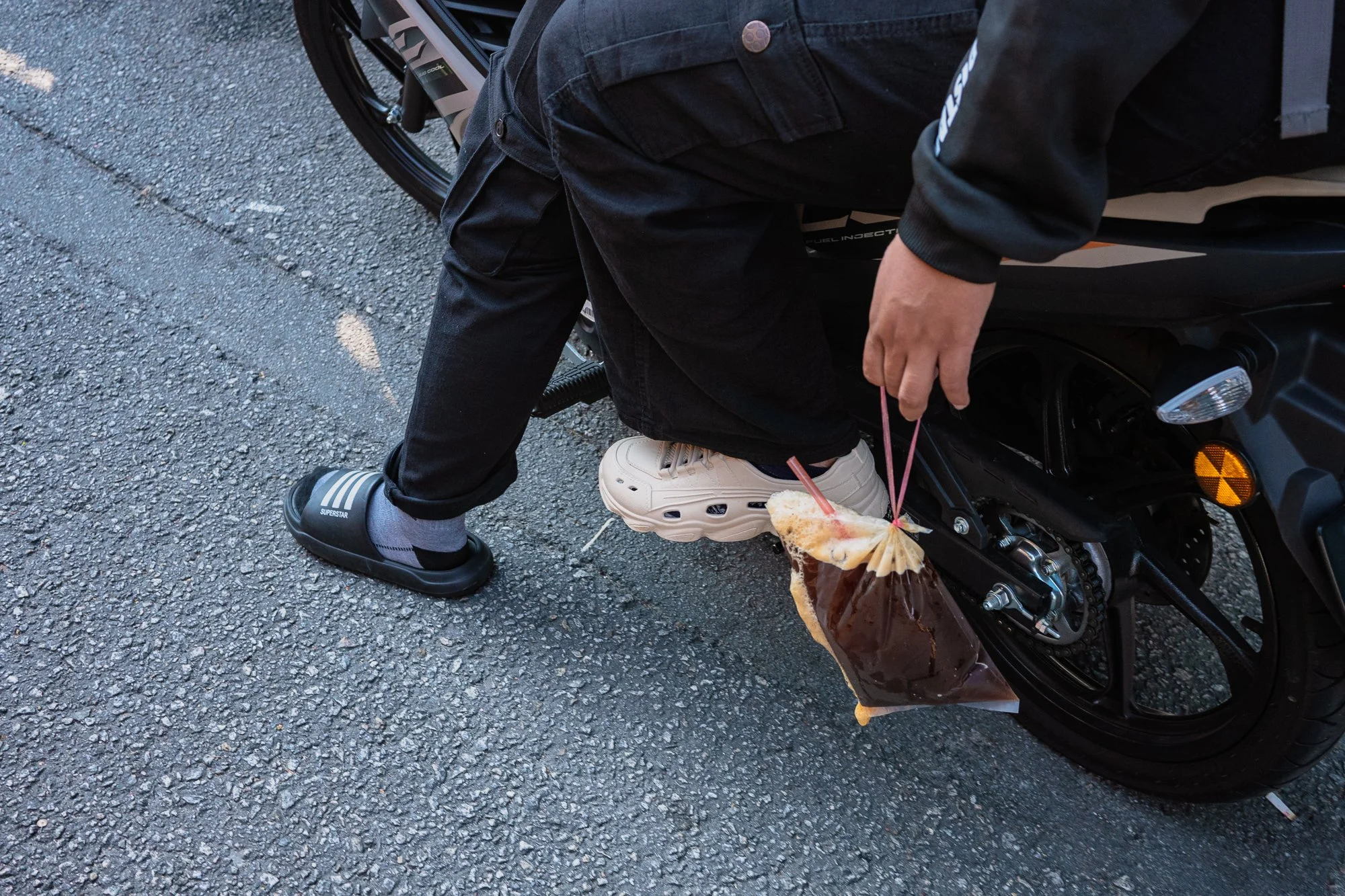
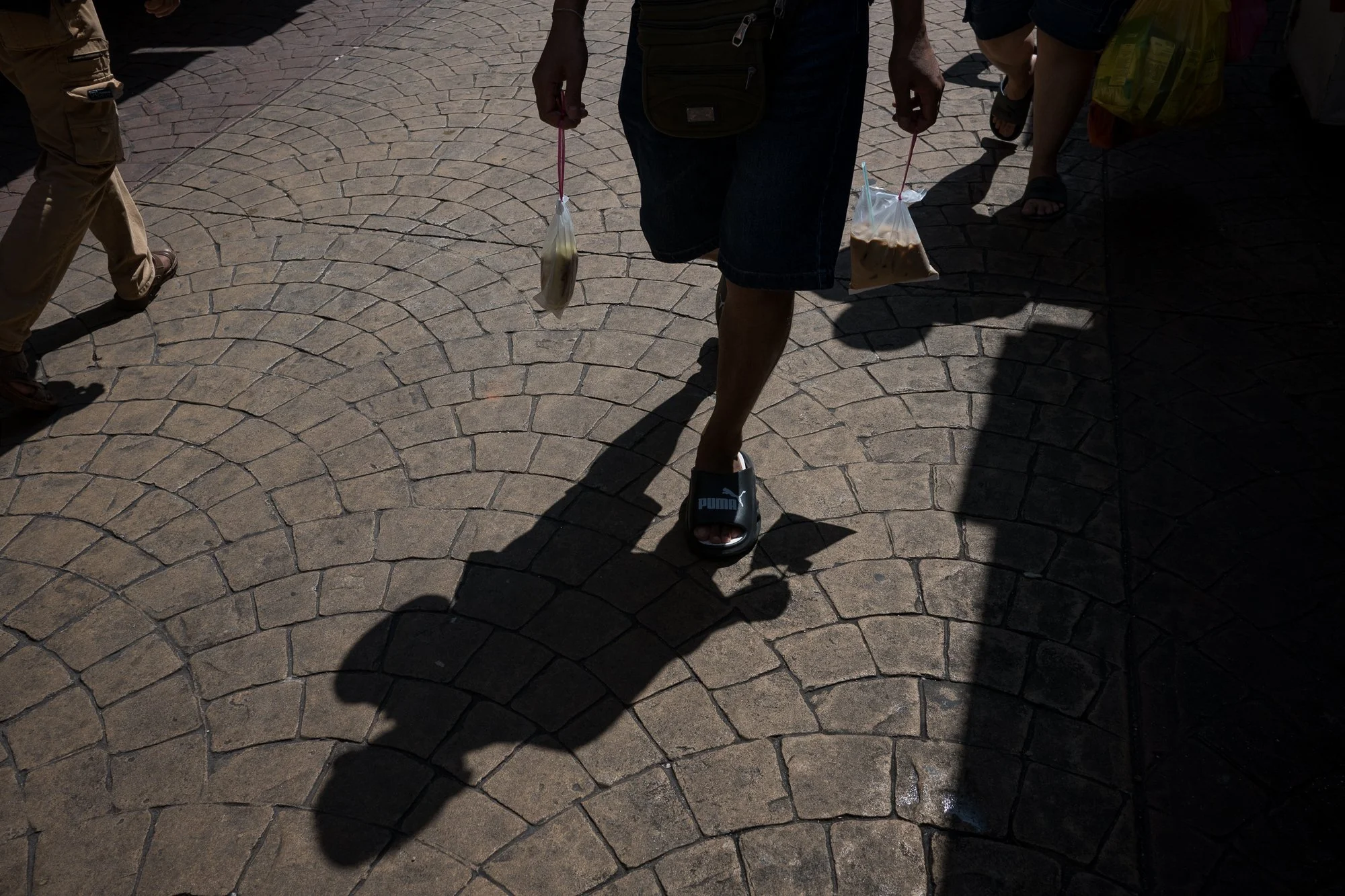
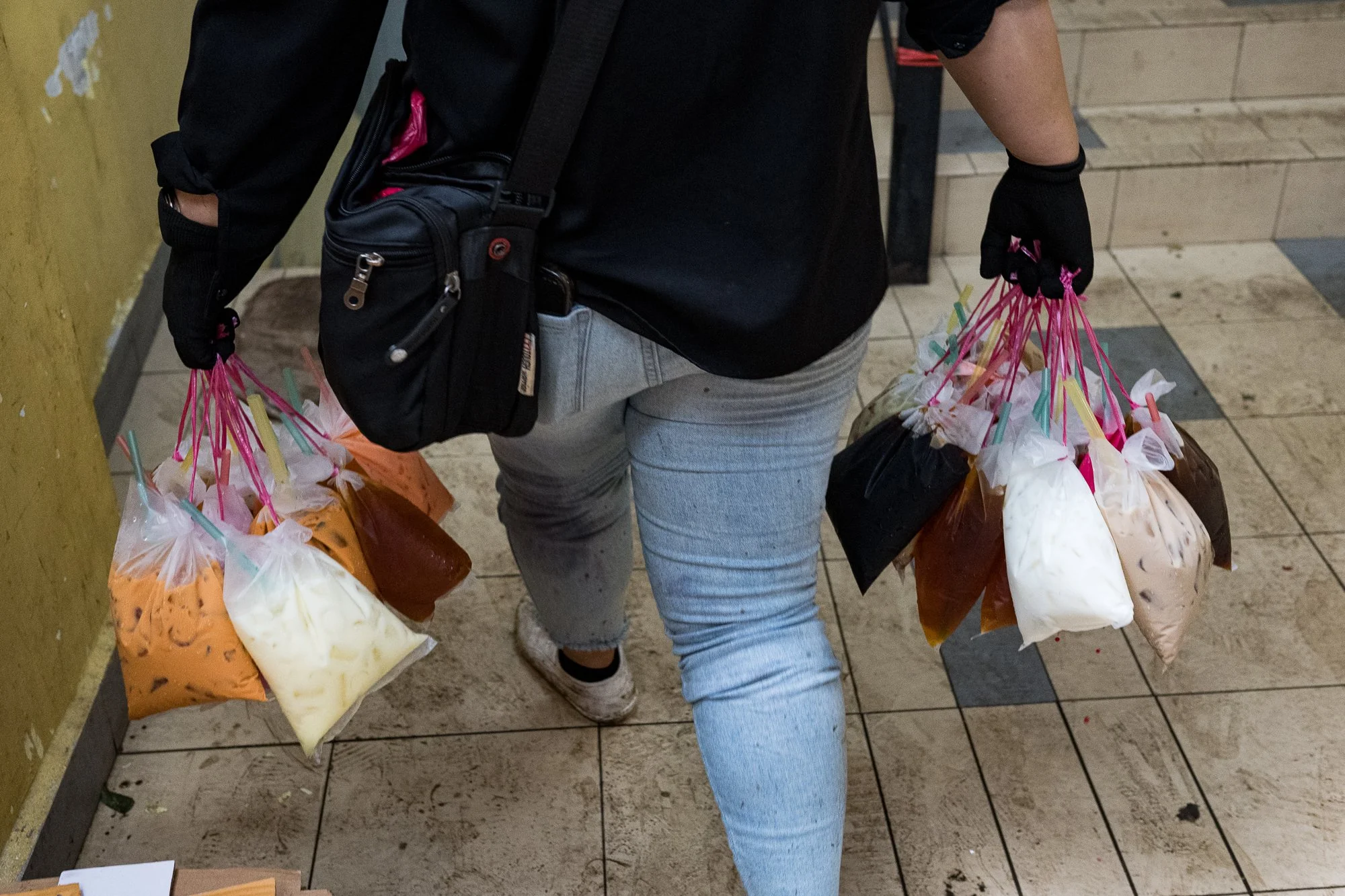
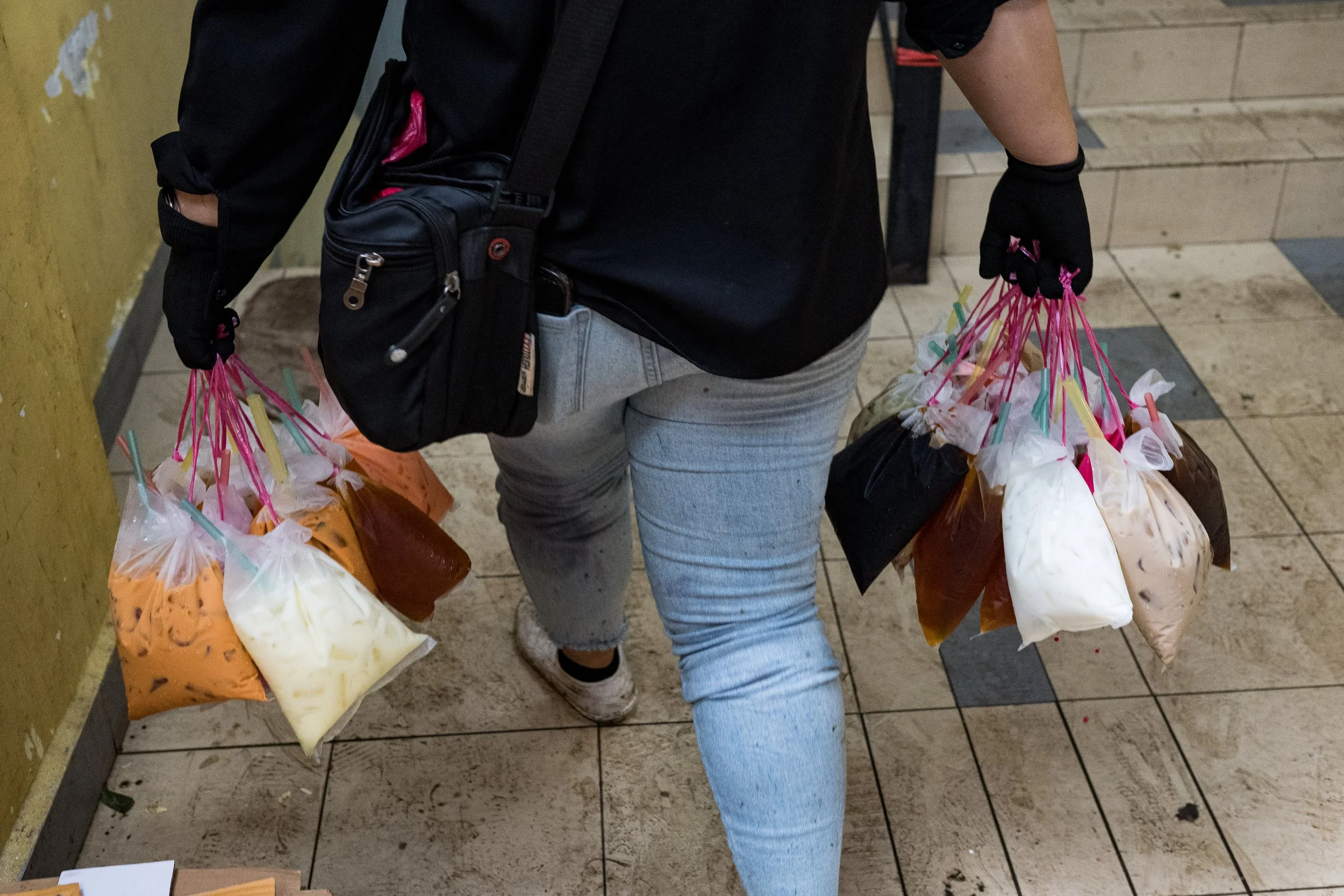
Food delivery riders with a drink bag hanging off each handlebar, clinking like wind chimes as they weave through traffic.
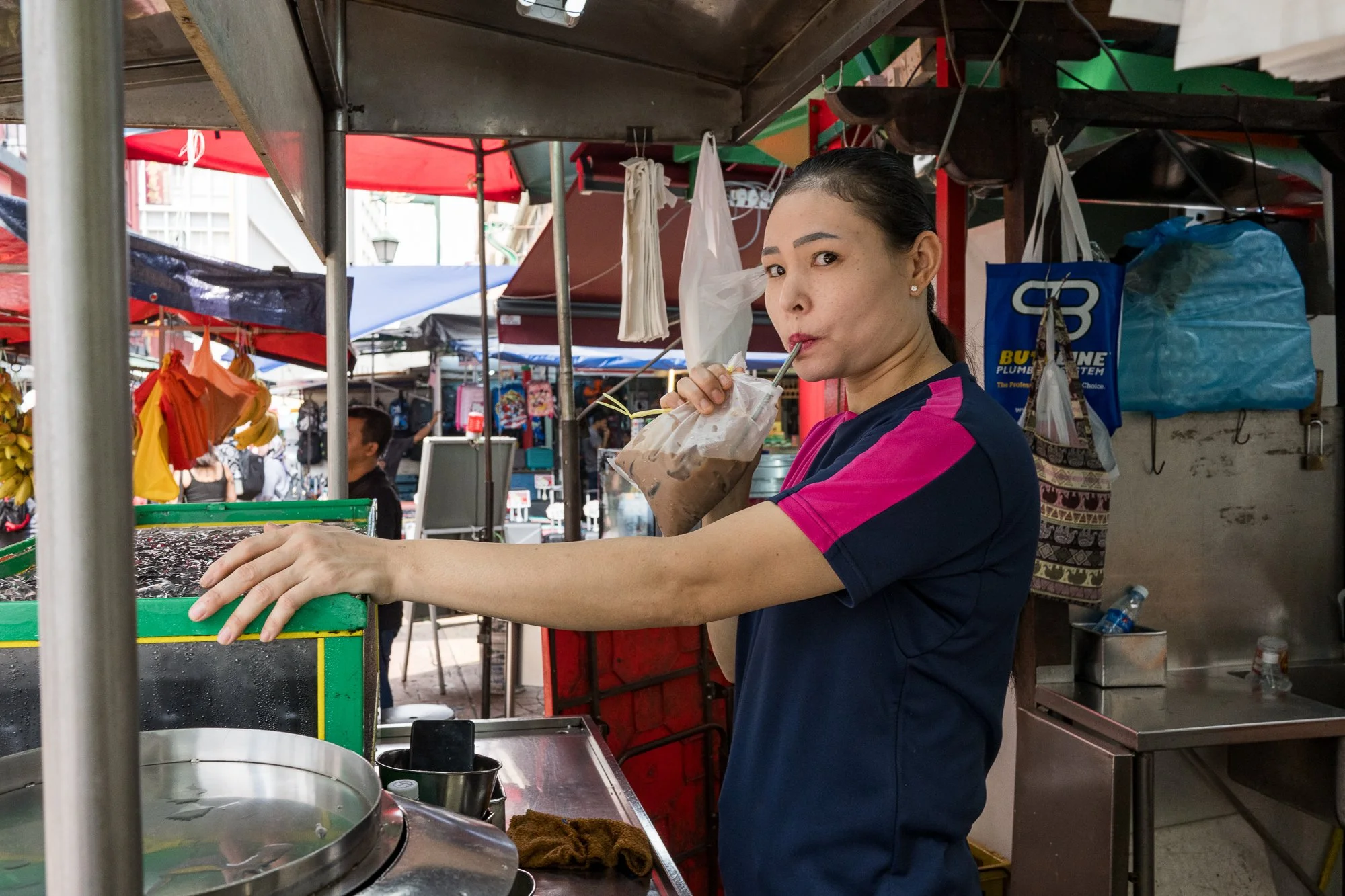
Road side stalls serving chilled drinks to go.
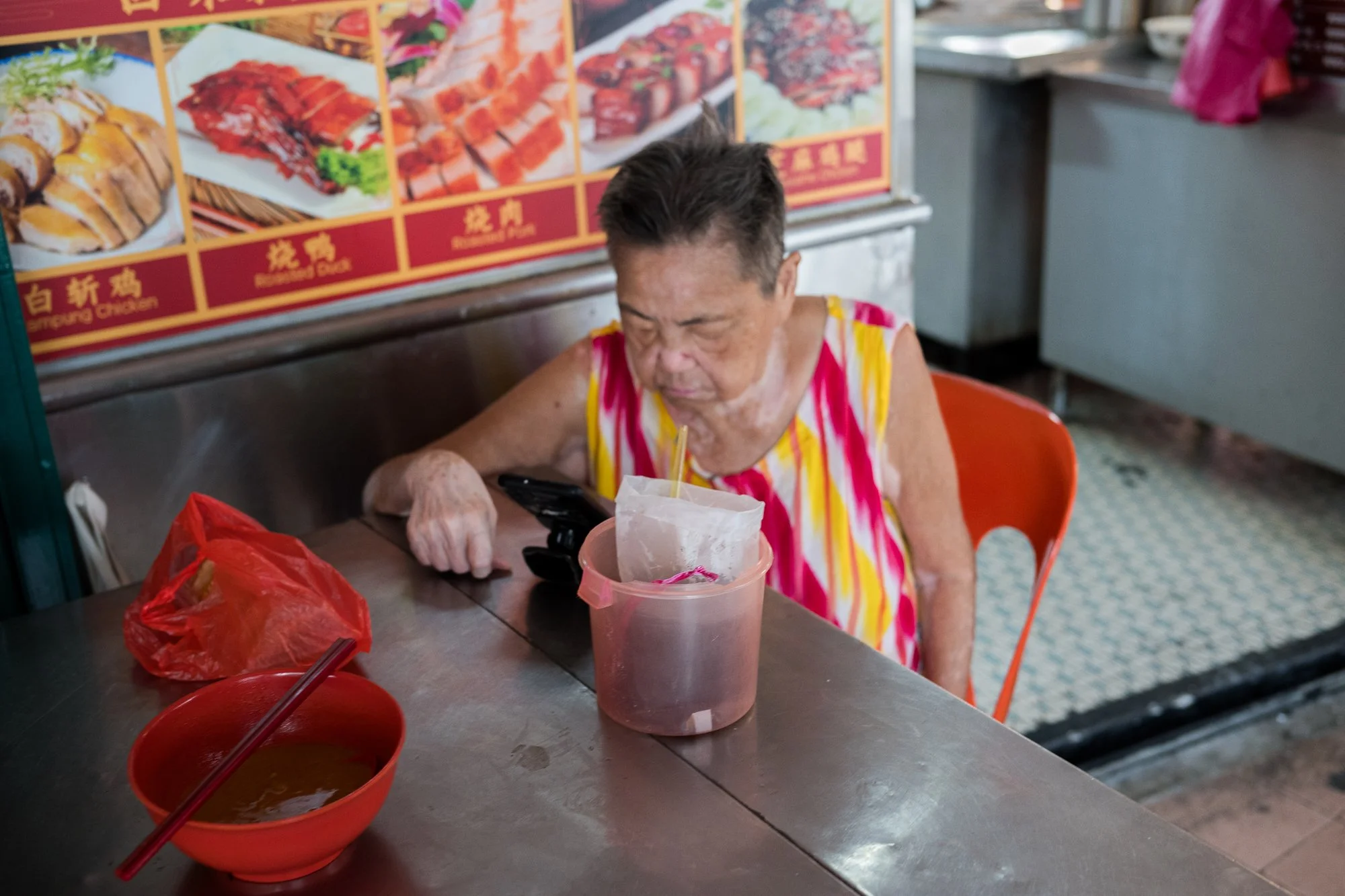
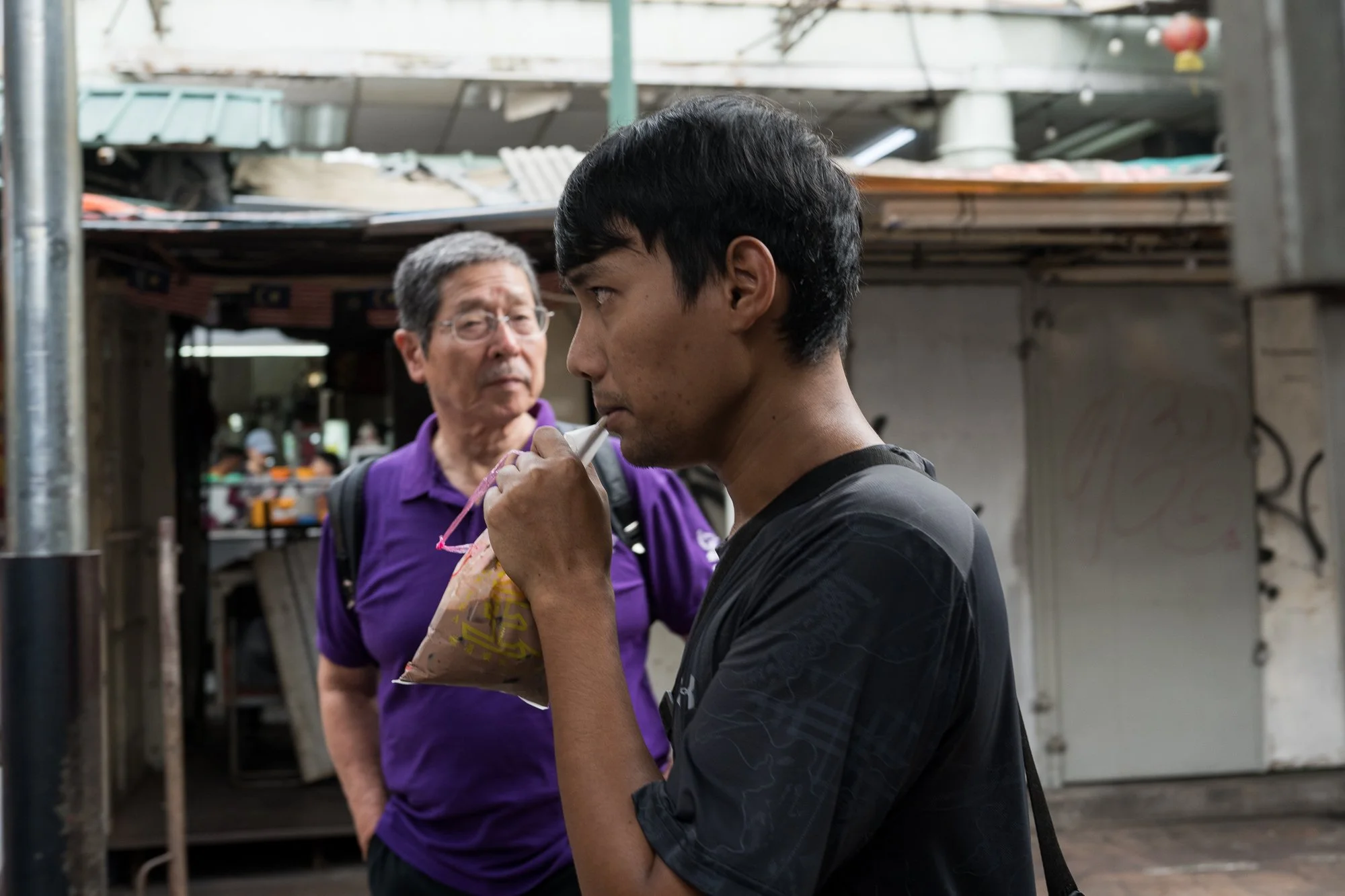
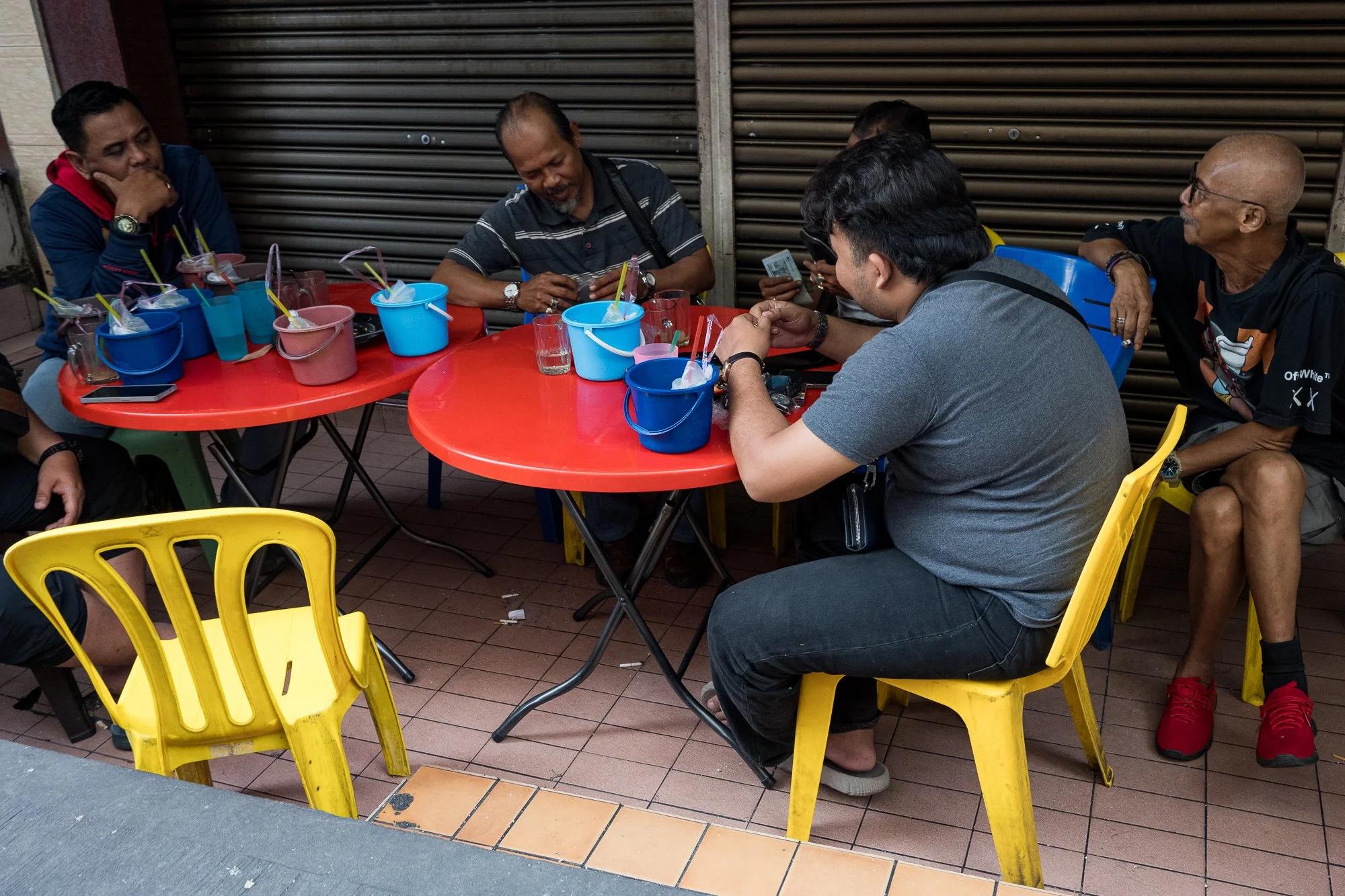
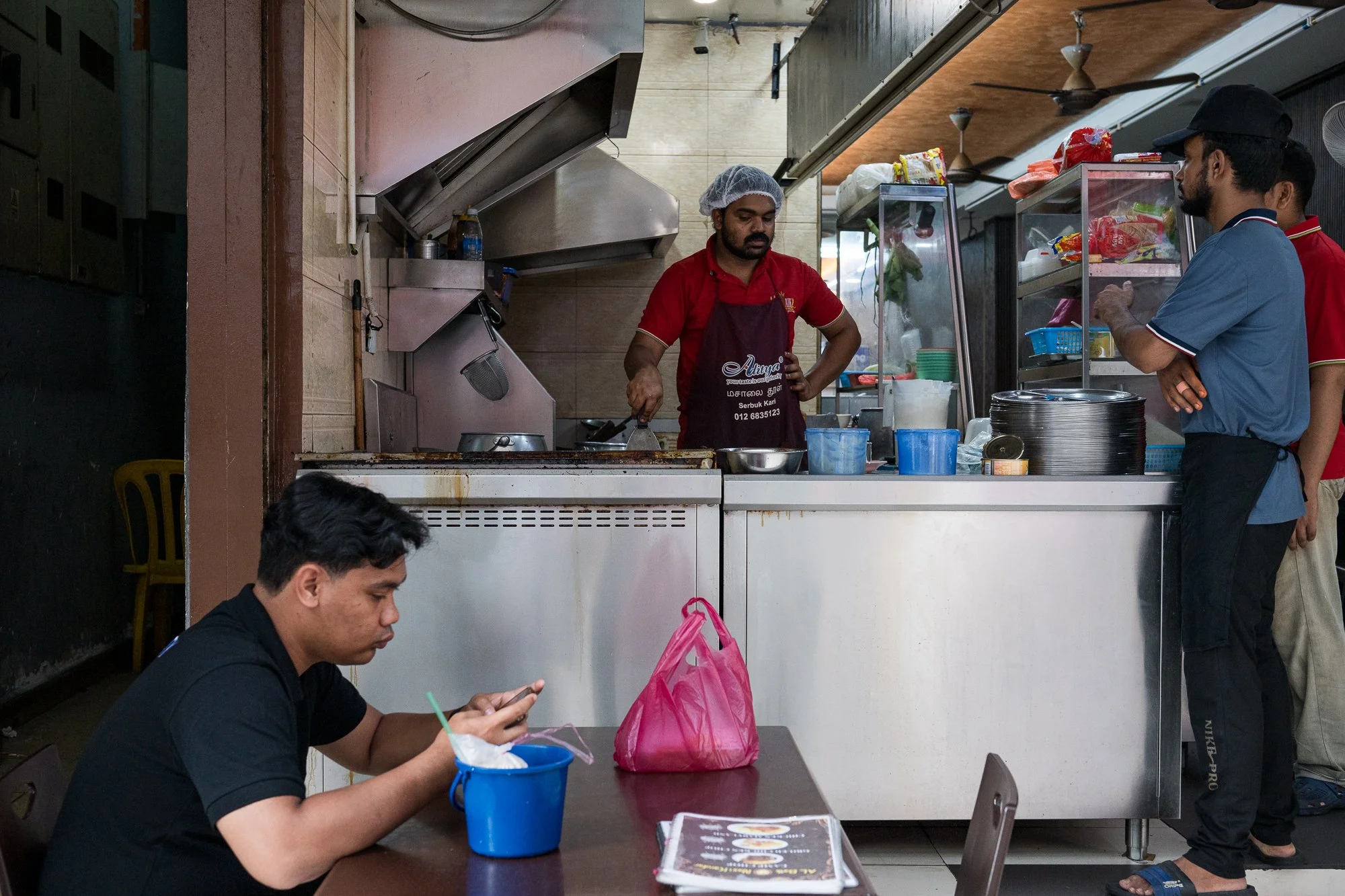
and ever present is drinking from an ikat tepi whilst it sits in a bowl, whilst he/she sits at the mamak, with no intention of taking it to go - the whole point of having it “ikat tepi” in the first place.
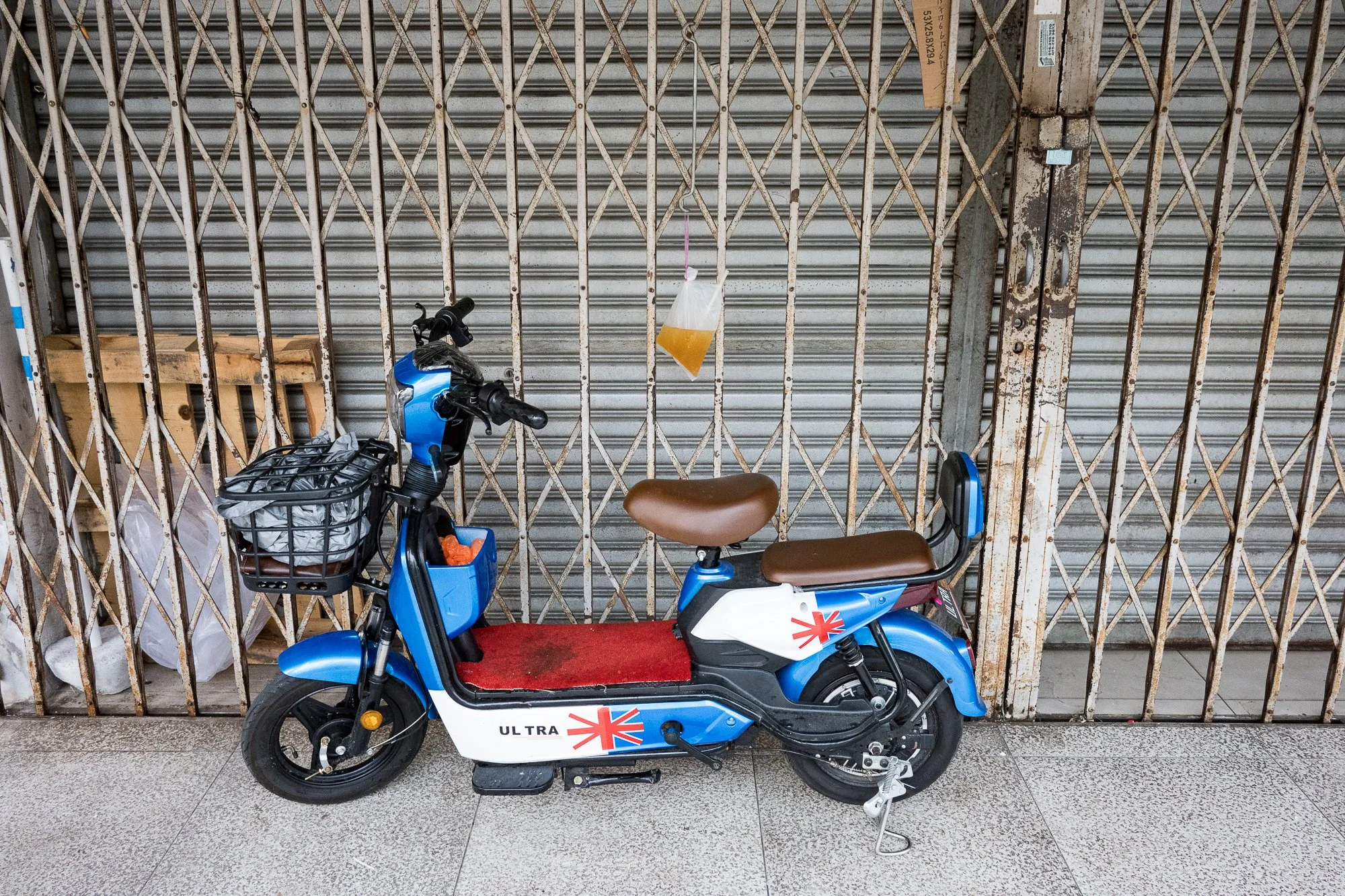
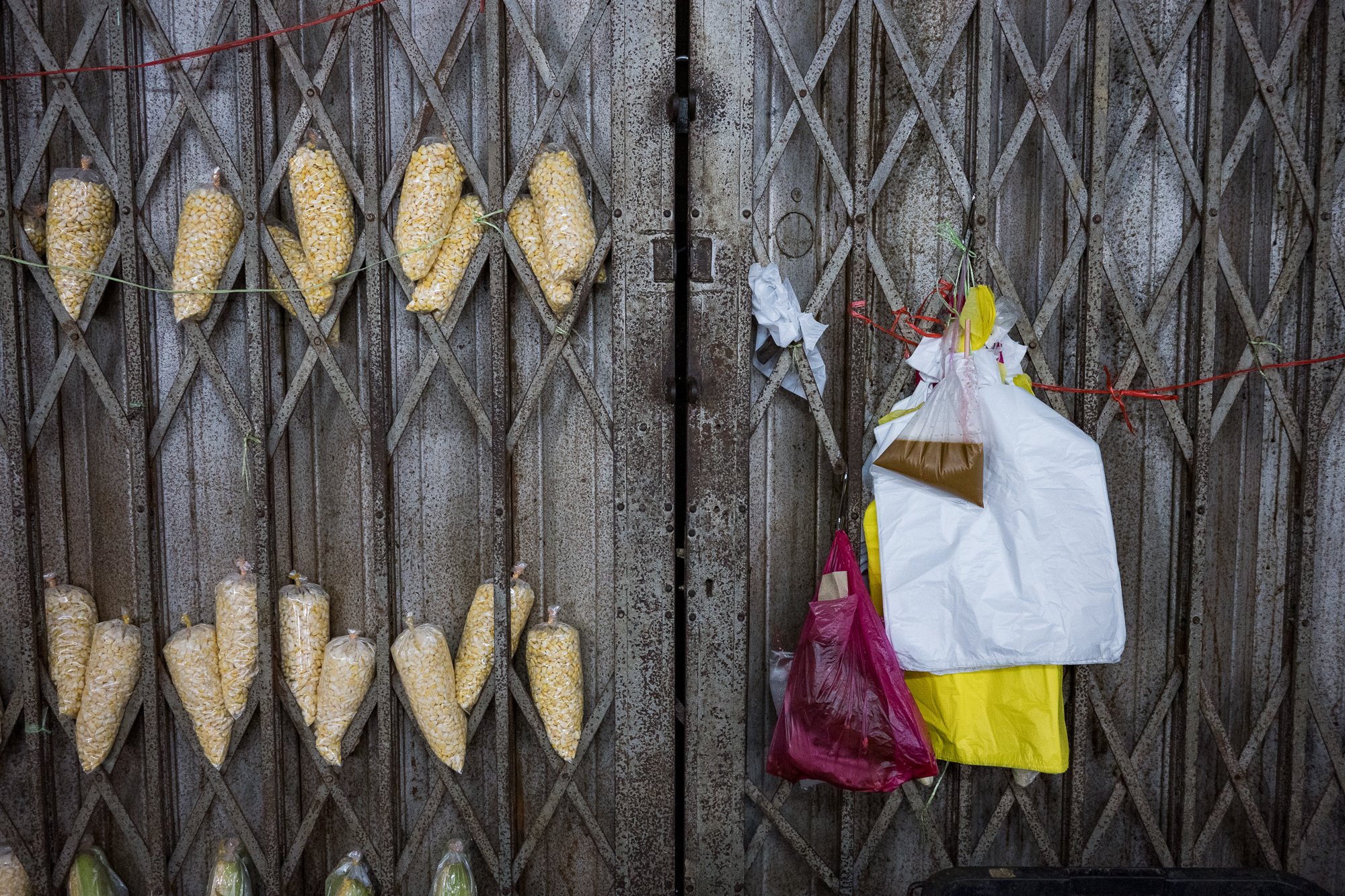
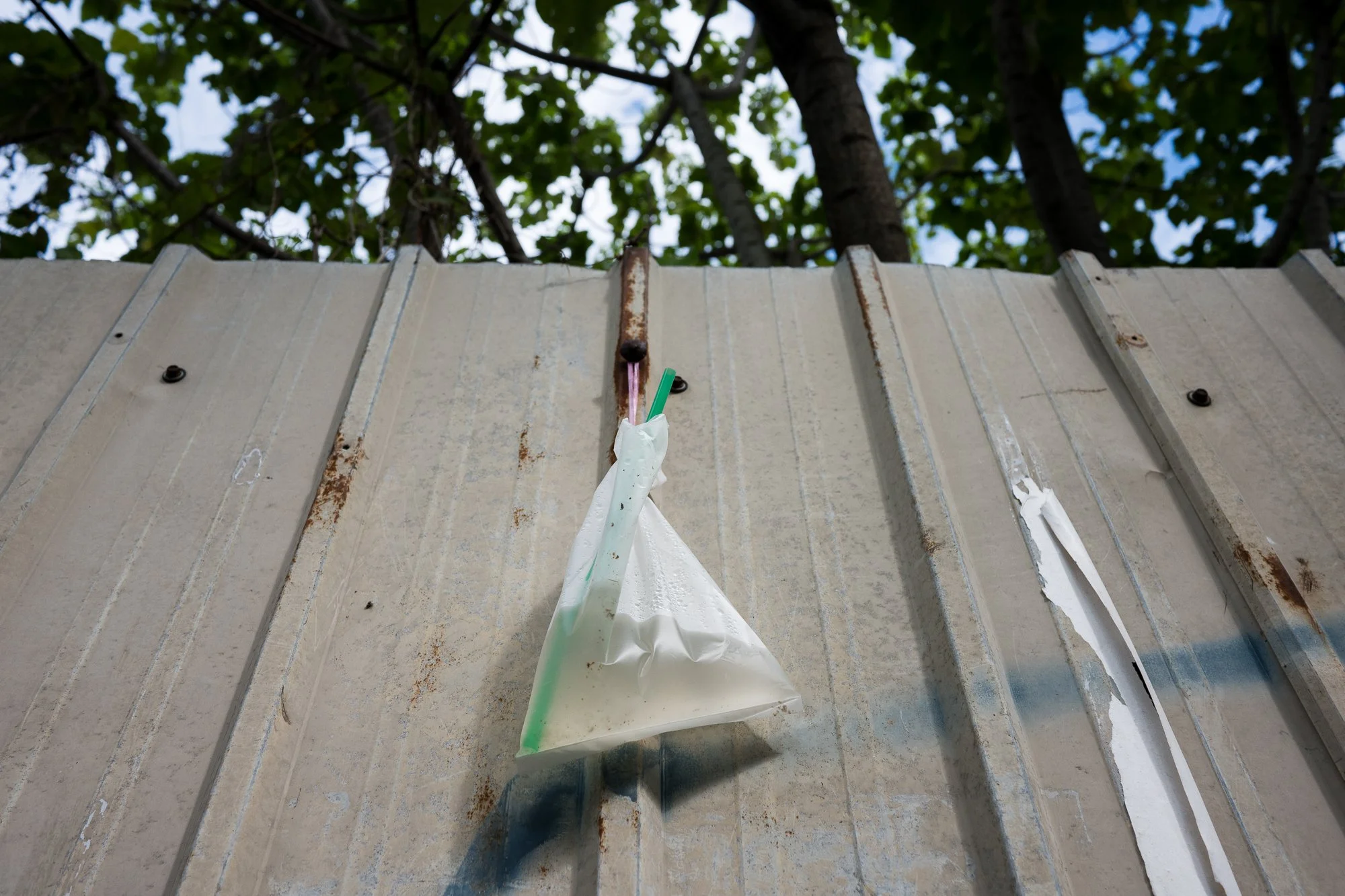
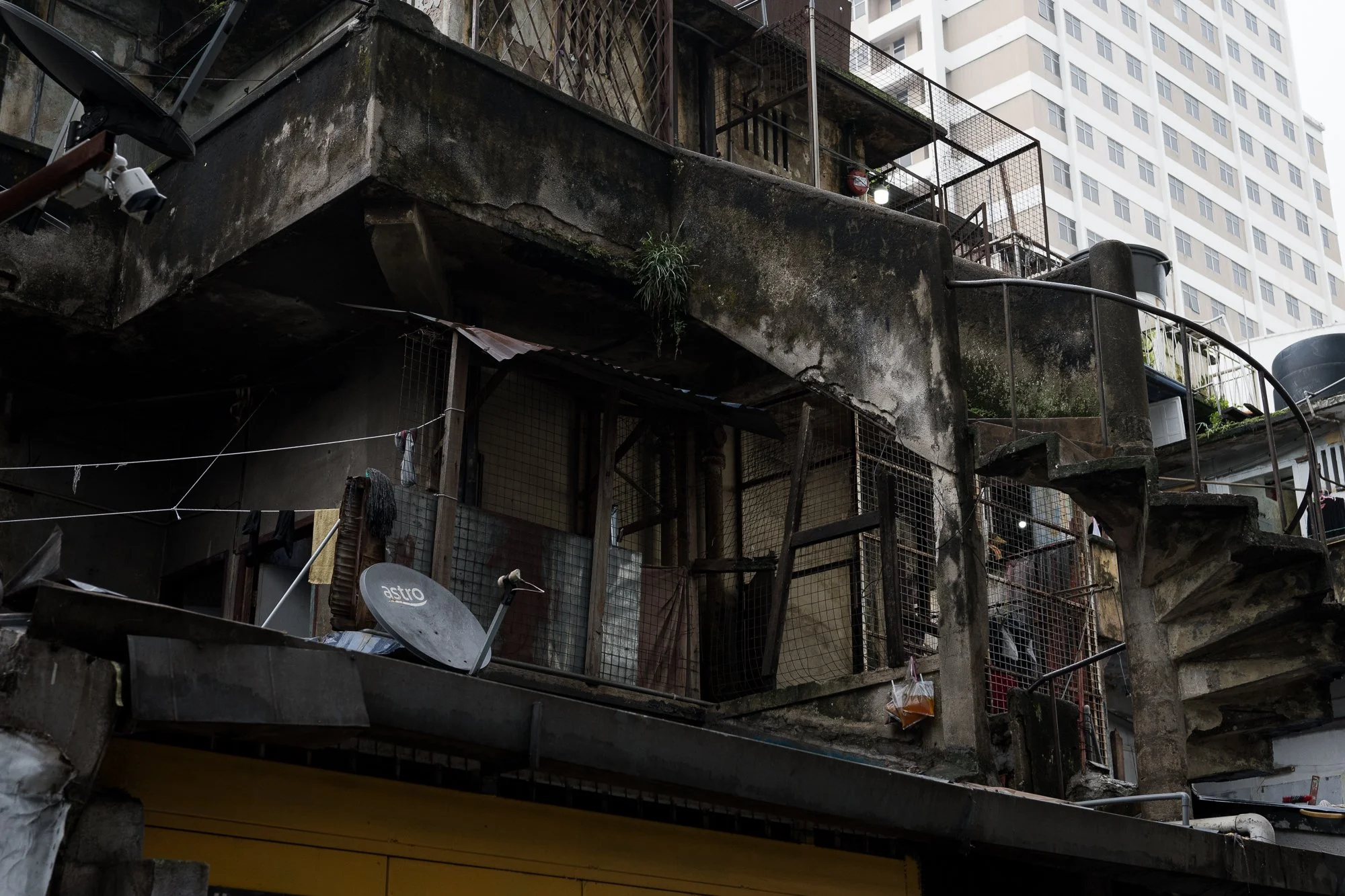
Every time I thought, “Okay, maybe now people have moved on to cups, or reusbale plastic bottles” I’d turn a corner and ikat tepi would be there, tied to a gate, or a railing, or the knob of a rusted door, like it was waiting for me to catch up.
So I did what I always do: I took the camera back out and was on the prowl for the readily abundant ikat tepi, while out on my usual photowalks.
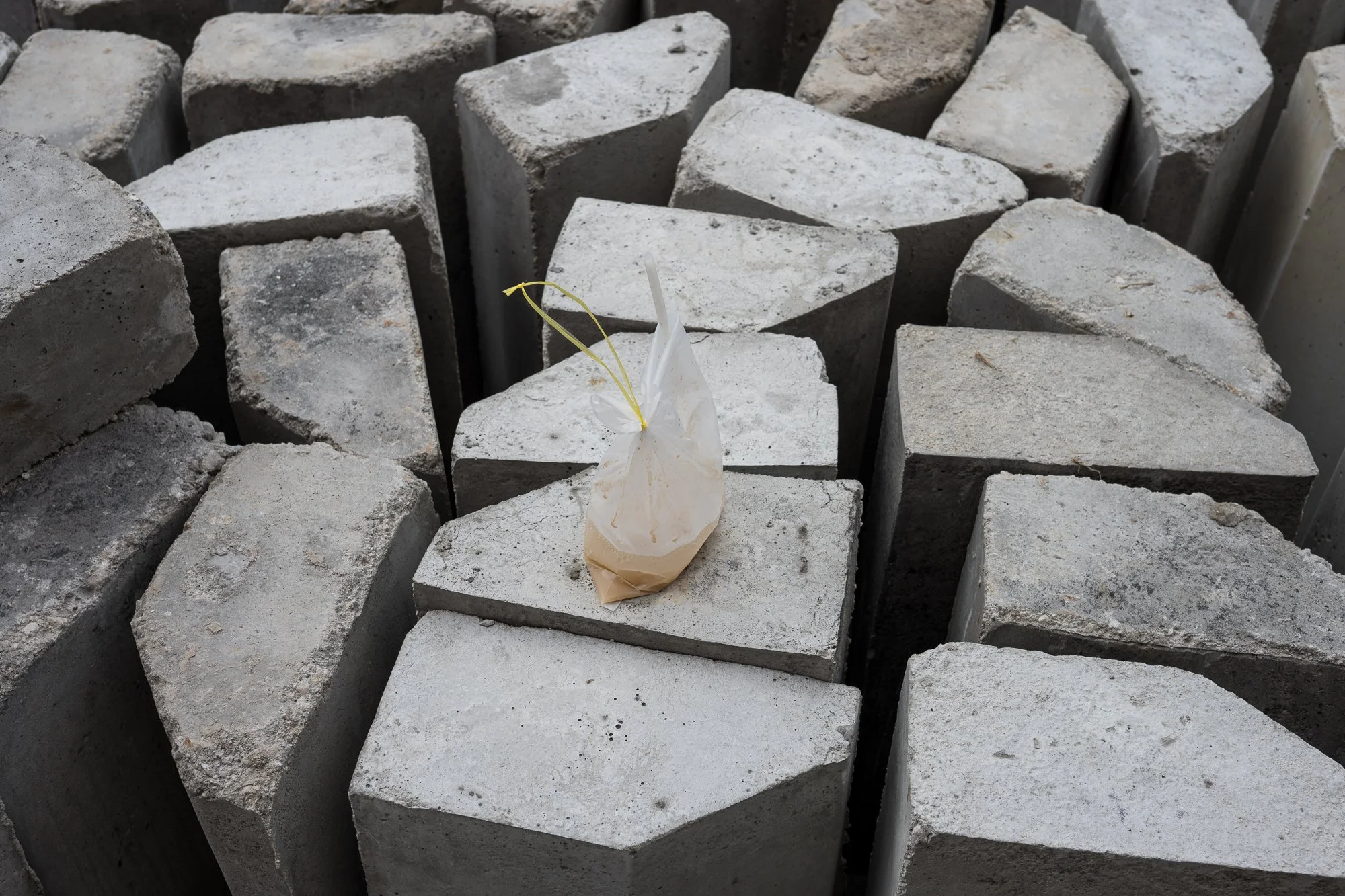
Ikat tepi on the blocks.
Revisiting an old character
In Chapter 1 of my initial blog and project, I treated ikat tepi like a quirky supporting character in the Malaysian street story – a clever little hack for tapau culture. In Chapter 2, that character started showing up in more uncomfortable scenes: drains, gutters, empty lots. By Chapter 3, I realised ikat tepi wasn’t just a prop; it was a mirror.
Five years later, I went walking with that old storyline in my head.
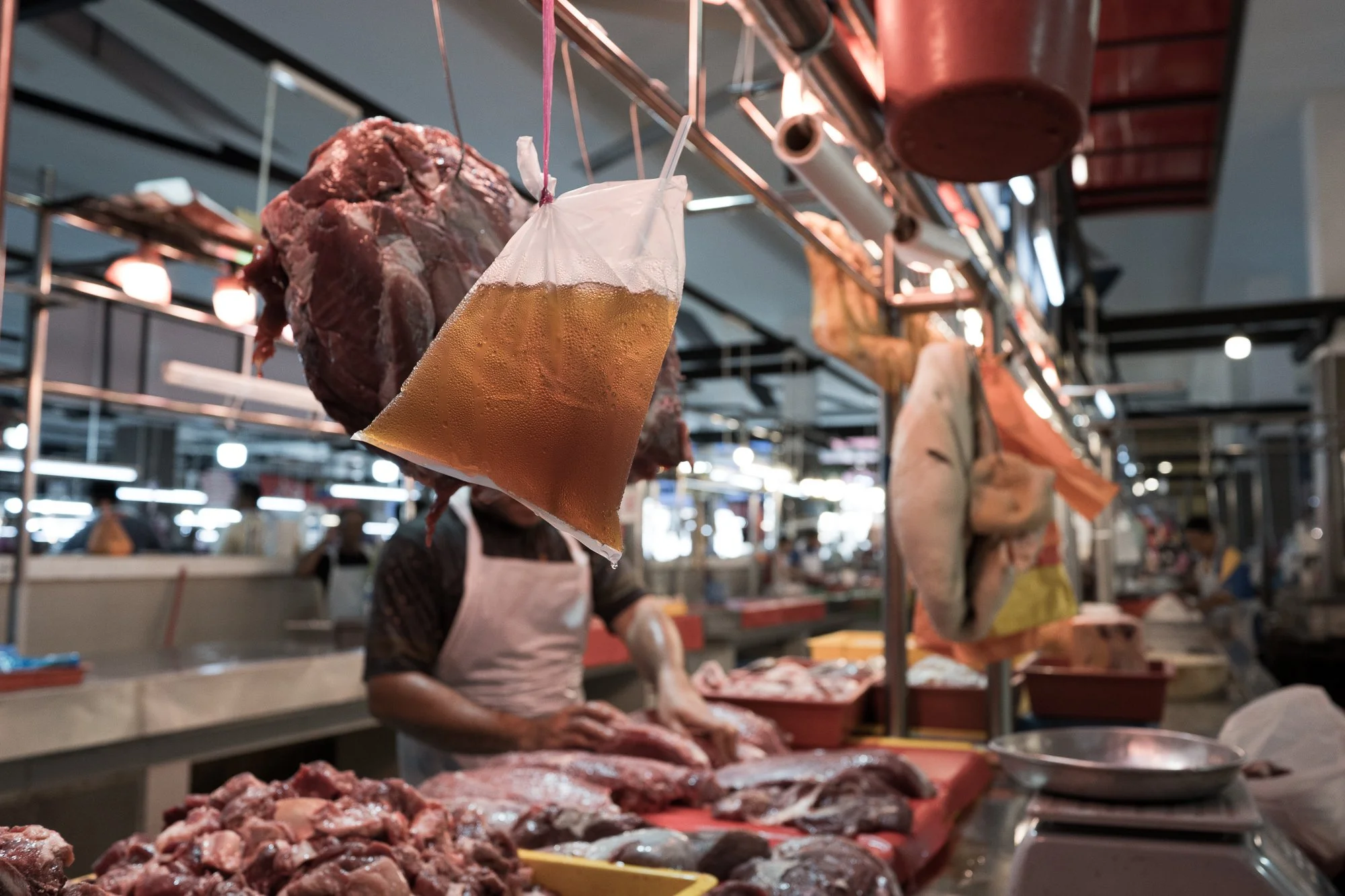
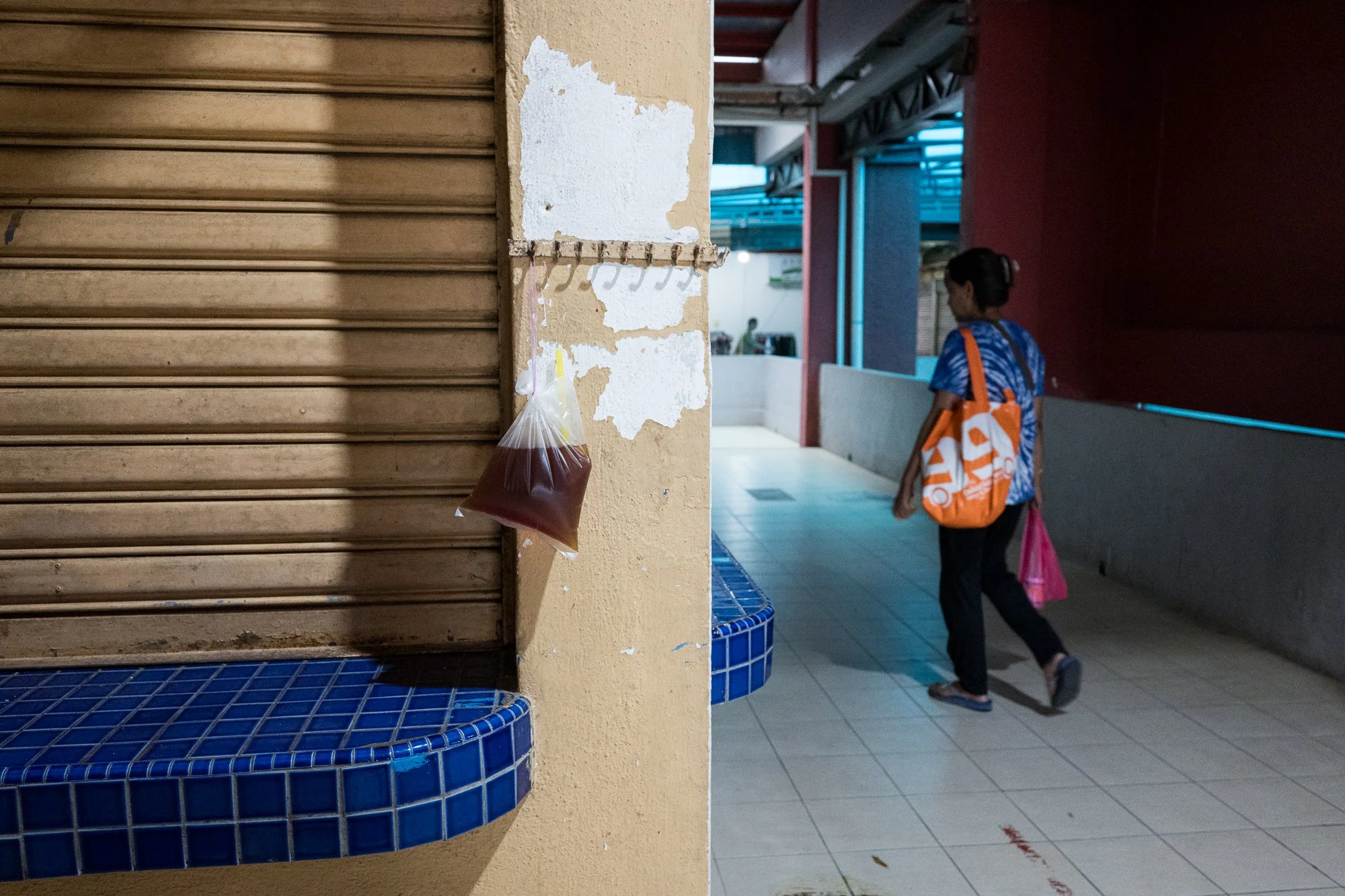
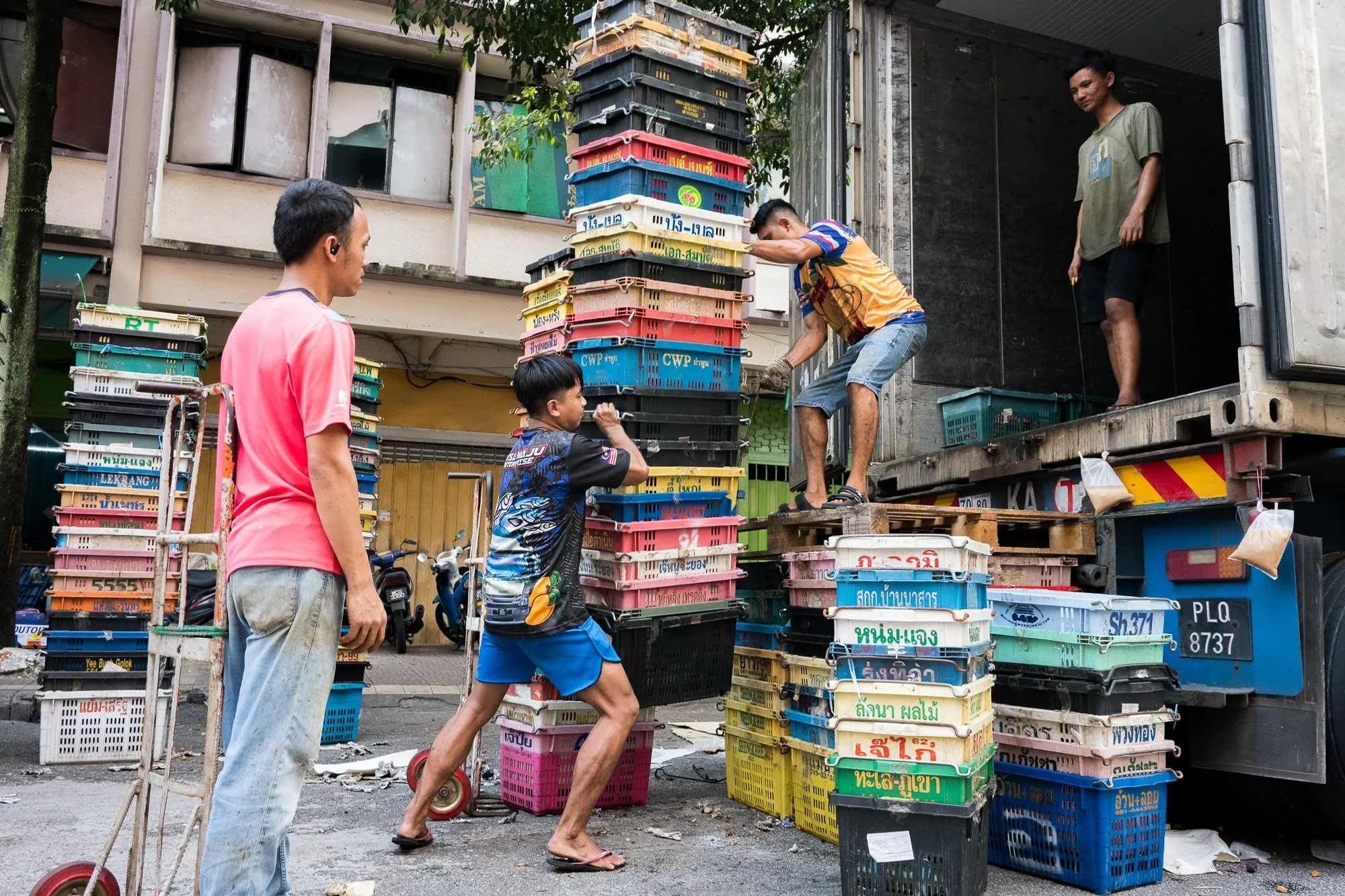
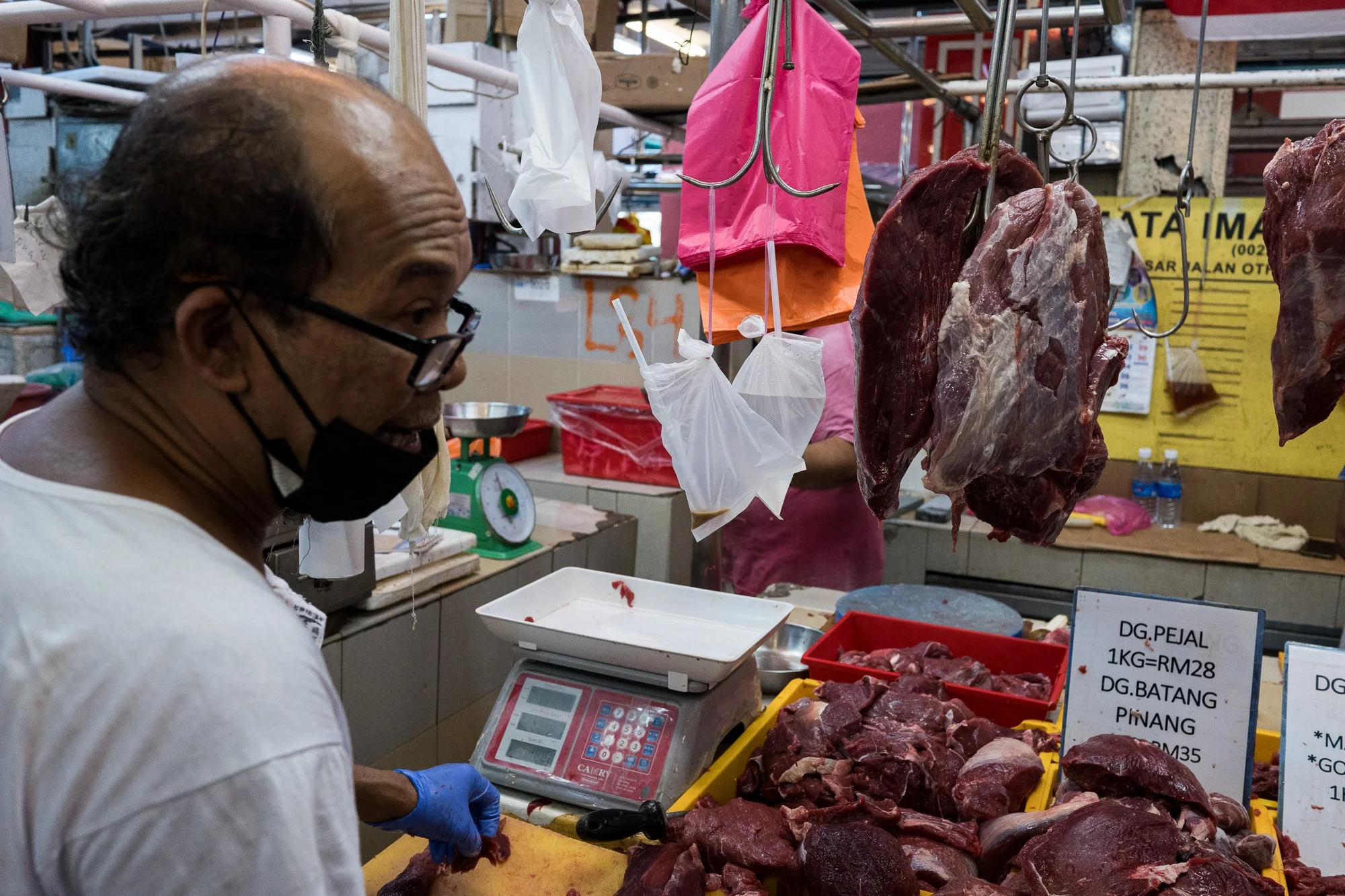
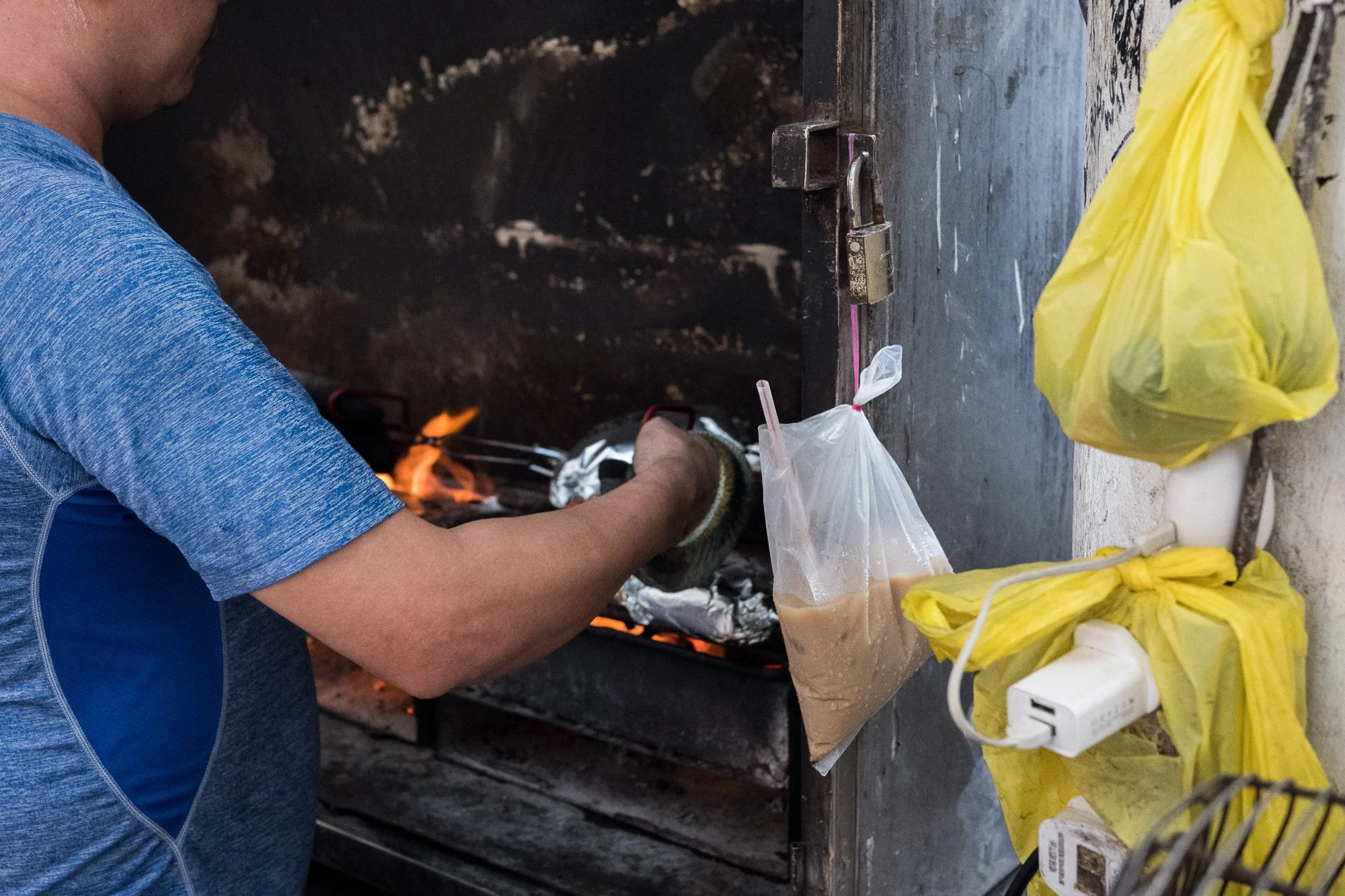
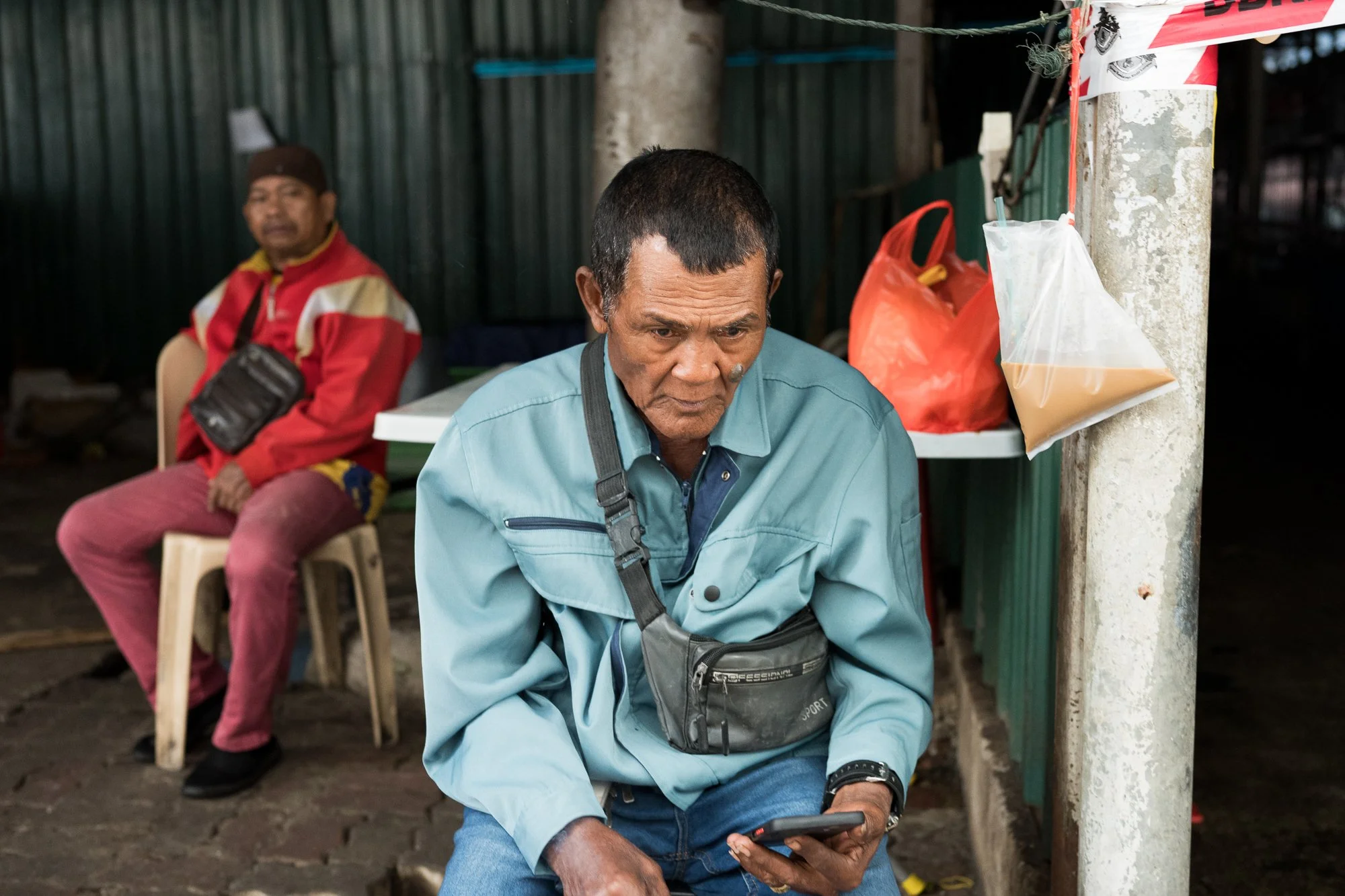
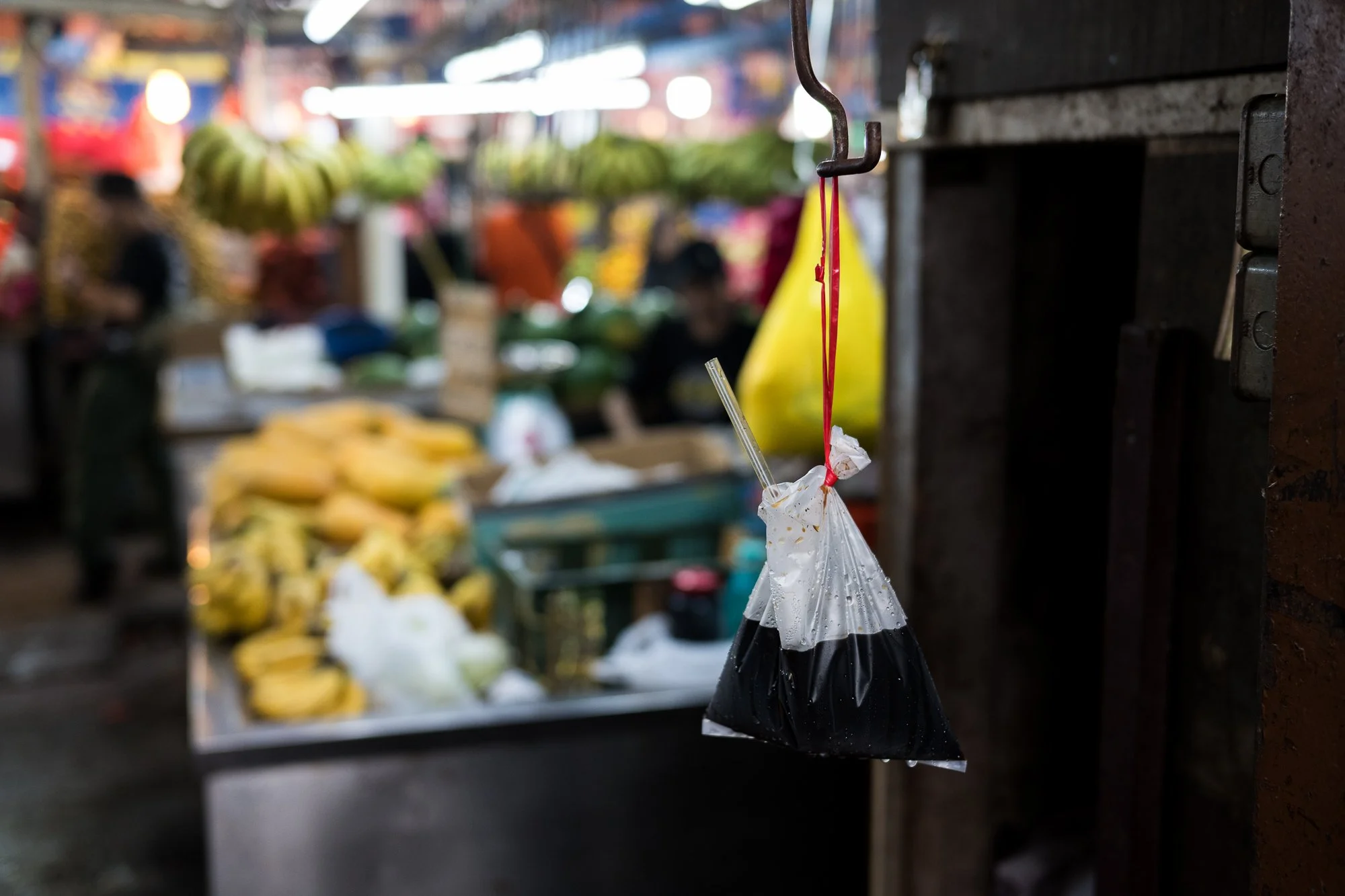
There’s a particular kind of stillness you get in the early morning around the wet markts like Chow Kit or Pudu. The stalls are half–awake, people are setting up tables, trucks are offloading vegetables and fruits, and in between all that you’ll see them: clear bags of coffee, tea, sirap, kopi O, dangling off hooks and nails and any protruding piece of metal handy.
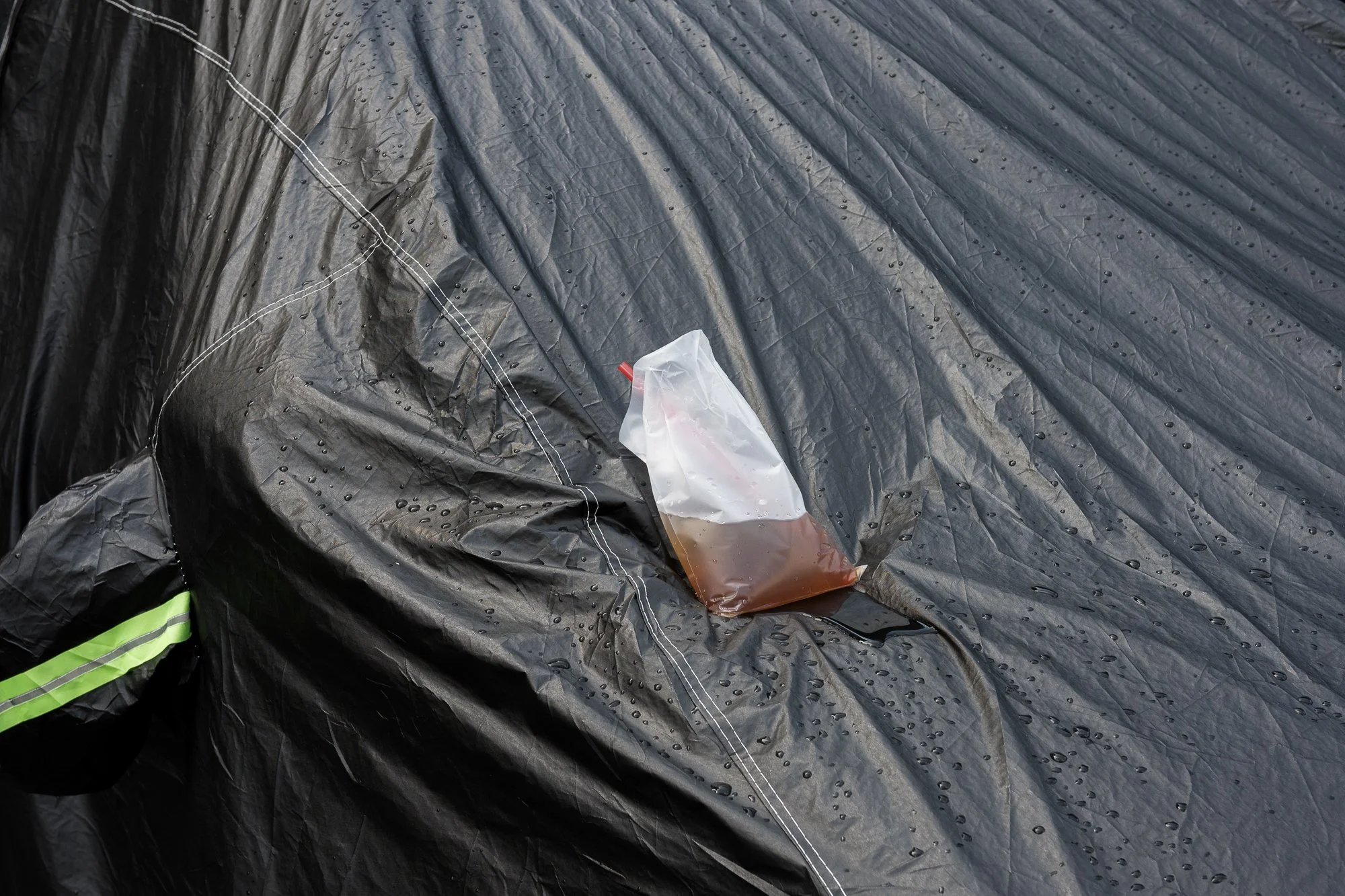
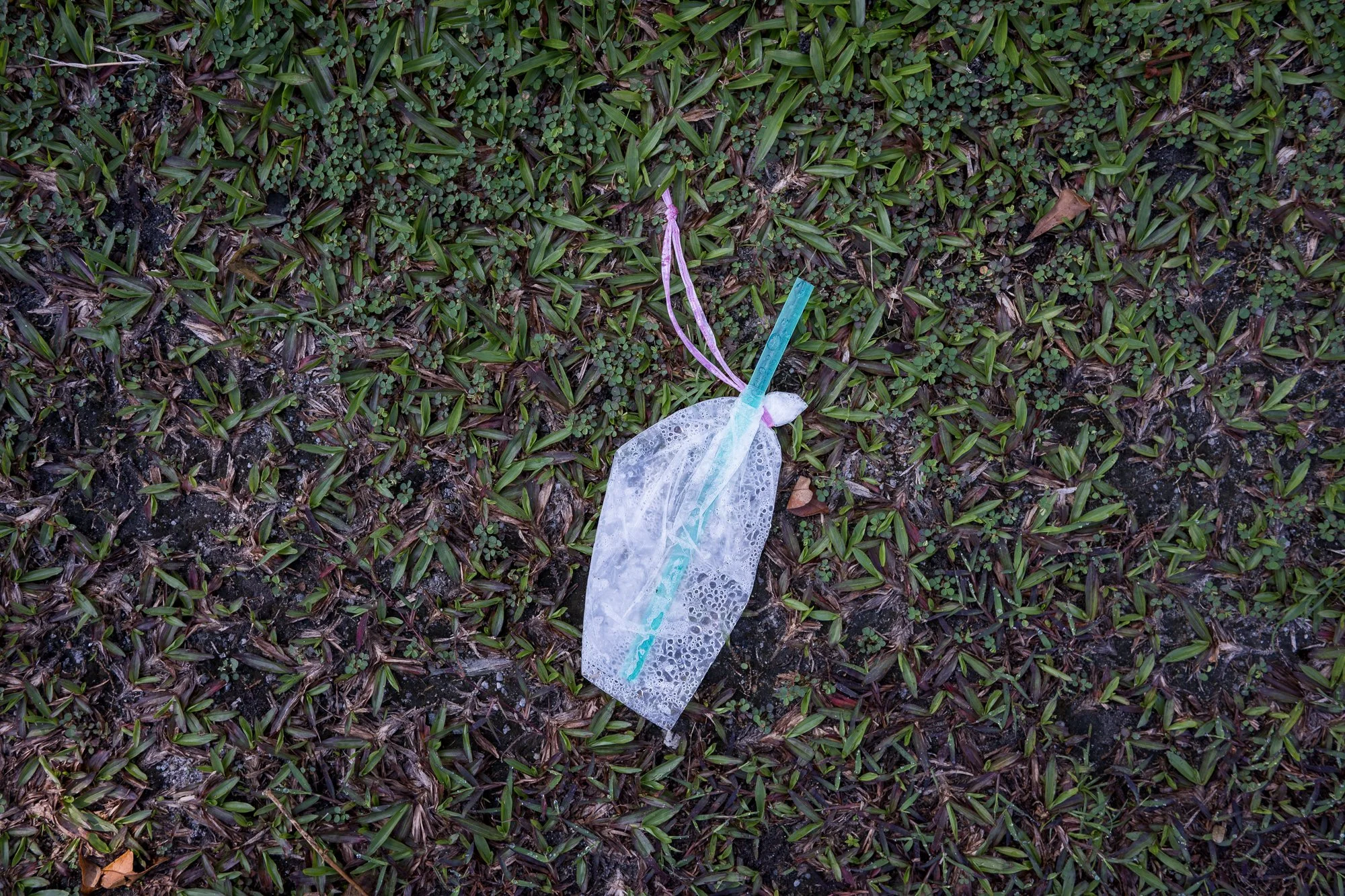
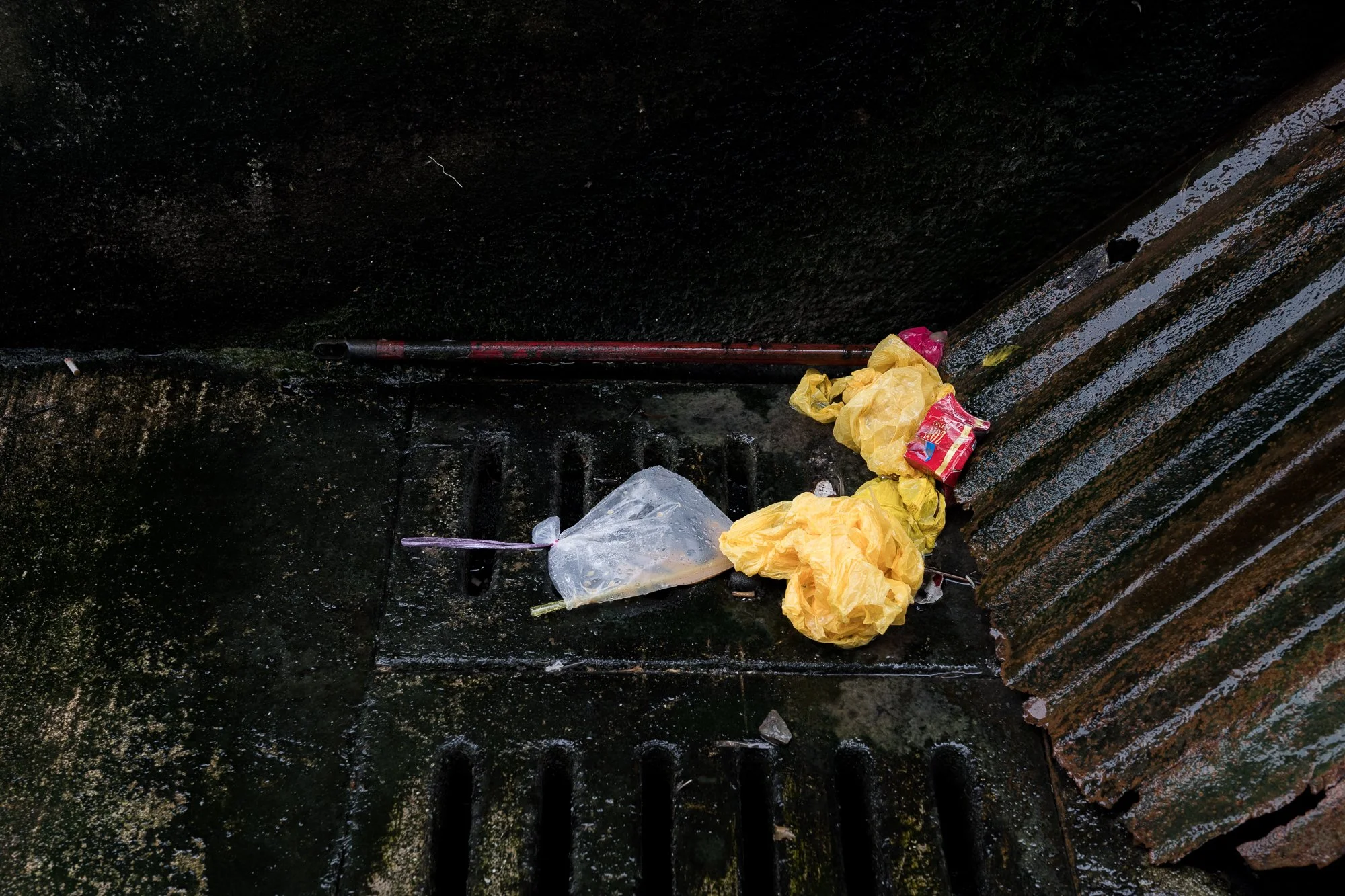
Some are full and waiting for their owners. Some are half-finished – abandoned, straw still in, slowly warming up in the sun. Some have already given up, split open on the floor, last few drops of sugar-water waiting for a trail of ants.
This is the part I didn’t really understand when I shot the first series. Back then, I was mostly fascinated by the aesthetics – the way a plastic bag of orange coloured tea glowed against a grey wall, or how teh-o-ais looked almost golden at sunset.
Now, when I lift the camera, I see something else layered on top of that beauty: numbers.
The numbers that won’t go away
Let me park the story for 30 seconds and give a litlte summary of what the world is going through when it comes to single-use plastics.
In 2023, the world produced around 436 million tonnes of plastic. Three-quarters of all the plastic humanity has ever made has already turned into waste. - UN Trade and Development (UNCTAD)
We like to think recycling will save us, but globally, only about 9% of plastic waste ever actually gets recycled. The rest is burned, landfilled, or simply escapes into the environment – drains, rivers, oceans, beaches, fields. - Our World in Data
Here in Malaysia, we throw away about 39,000 tonnes of solid waste every single day – roughly 1.17 kg per person – and around 22% of that is plastic. - The Star
On the world stage, we rank badly for mismanaged plastic: recent estimates say Malaysia dumps about 2.29 kg of plastic into the ocean per person every year, putting us among the top offenders globally. - The Malaysian Insight
And as if that’s not enough, we’ve now earned a spot in another slightly cursed category: Malaysians are estimated to be among the highest consumers of microplastics in the world – tiny plastic fragments that end up in our food, water and air. - The Star
Some facts and figures for you to tapao and think about the next time you notice yourself doing something with single-use plastics.
Okay. Numbers done. Let’s go back to the street.
Walking past our contradictions
It’s one thing to read statistics in a report.
It’s another thing to walk behind a row of shophouses after a storm and see a whole family of ikat tepi floating in a flooded drain, spinning slowly in circles along with other debri and waste.
Or to watch a cleaner fishing bags out of a longkang with a rake, one by one, because the drain is clogged and the water is starting to smell.
Or to see a bag of half-finished teh-o-asi limau hanging off a railing at a bus stop – the owner long gone – slowly leaking into the pavement, attracting ants, bees and flies, until someone gets annoyed enough to kick it onto the road.
When I shot Ikat Tepi 2, I remember realising how stubbornly present these bags were. They weren’t just part of how we drink – they were part of how we litter, how we forget, how we move on.
With this new round of photos, that feeling is back, just sharper. The global conversation around plastic has gotten louder. Negotiations for a global plastics treaty have stalled, largely because big plastic-producing countries can’t agree on whether we should cap production or just “manage waste better”. - Reuters
Meanwhile, in a narrow KL alley, a bag of kopi O lies quietly in a puddle, straw still in, like none of that debate matters.
And in a way, on that level, it doesn’t. The treaty is one story. Our daily habits are another.
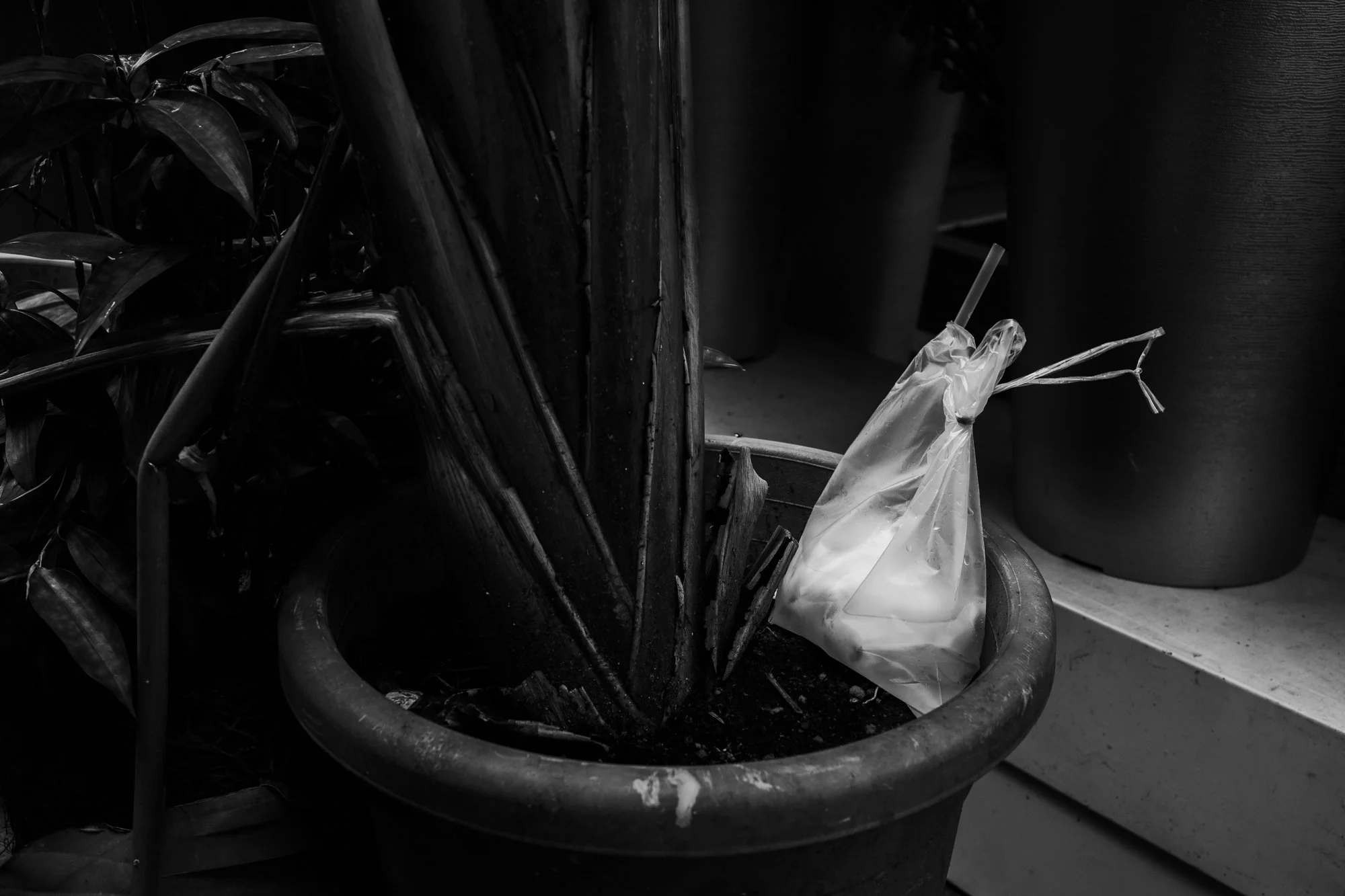
Why we still love (and need) ikat tepi
Here’s the part that hasn’t changed in five years and the decades since its existance: I still completely understand why ikat tepi survives.
It’s:
Cheap – a thin bag and a bit of string cost almost nothing.
Practical – it can be wedged into a basin, hung off anything, stuffed into a tiny space.
Perfect for our tapau culture – we walk, ride, drive, squeeze into buses; we’re always carrying three other things.
Deep in our muscle memory – “Teh ais ikat tepi satu” rolls off the tongue without a second thought.
In Ikat Tepi 3, I admitted I wasn’t some eco-saint. I still bought drinks in bags sometimes (especially when forgetting to tell the waiter to put it into a glass instead). That hasn’t magically changed. I still slip, especially when I don’t have a bottle with me and the heat is trying to cook my brain.
The difference now is that I can’t separate that small act from the bigger picture so easily anymore.
It’s harder to pretend that my one little plastic bag doesn’t matter when I’ve literally spent years photographing hundreds of them, in places they were never meant to end up.
2025: New photos, same knot
Most of the photos I’ll be sharing with this post were taken over the past year:
Morning markets, where coffee in bags fuels the people who make the city move.
Downtown KL back lanes, where thrown-away bags sit next to overloaded bins and stray cats.
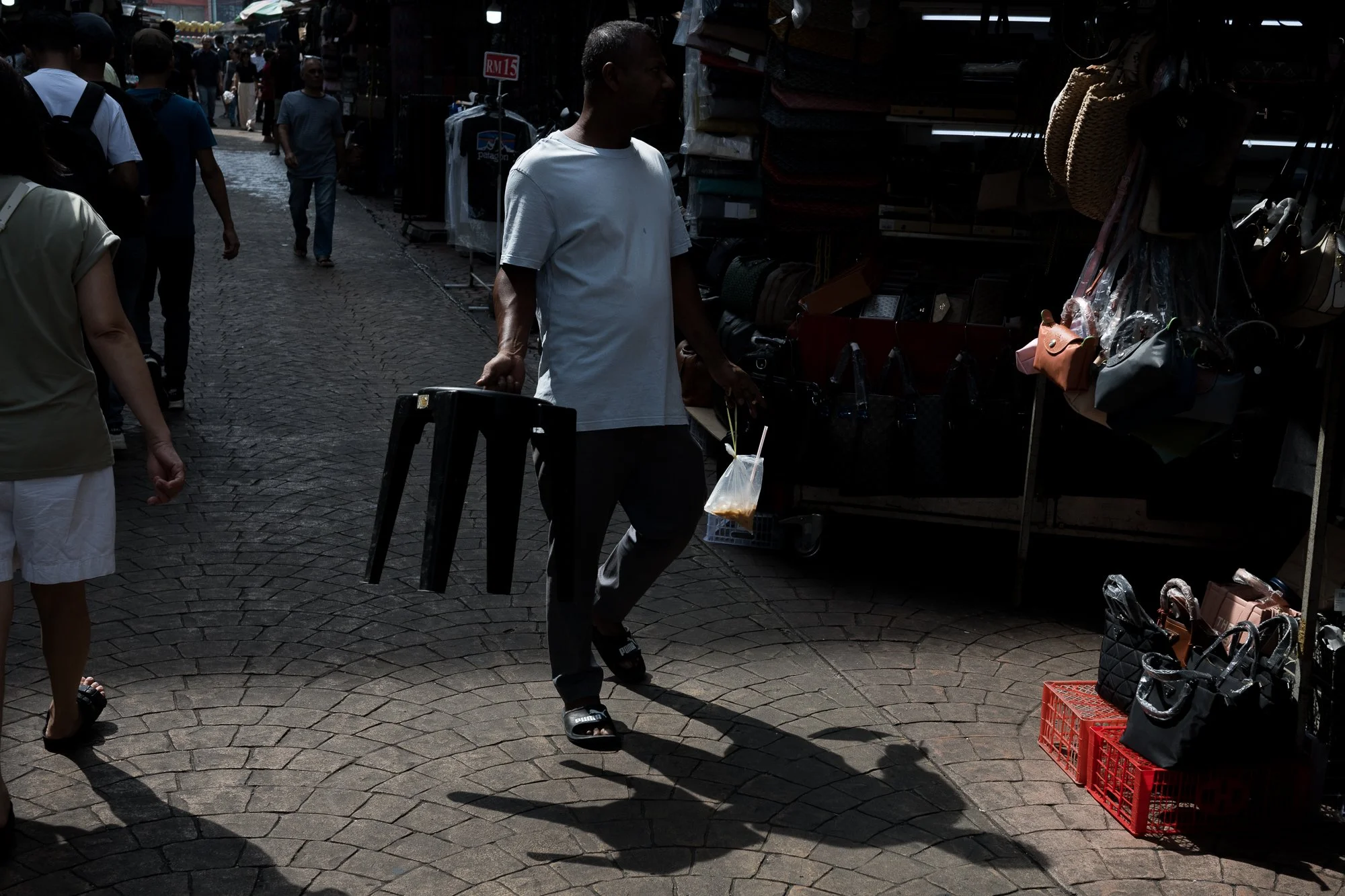
Near food bazaars, where every other stall feels like a plastic forest of hanging drinks and food.
Bus stops, with drinks left tied to railings like forgotten offerings.
Quieter subburbs where the pace is slower but the plastic takes just as long to break down.
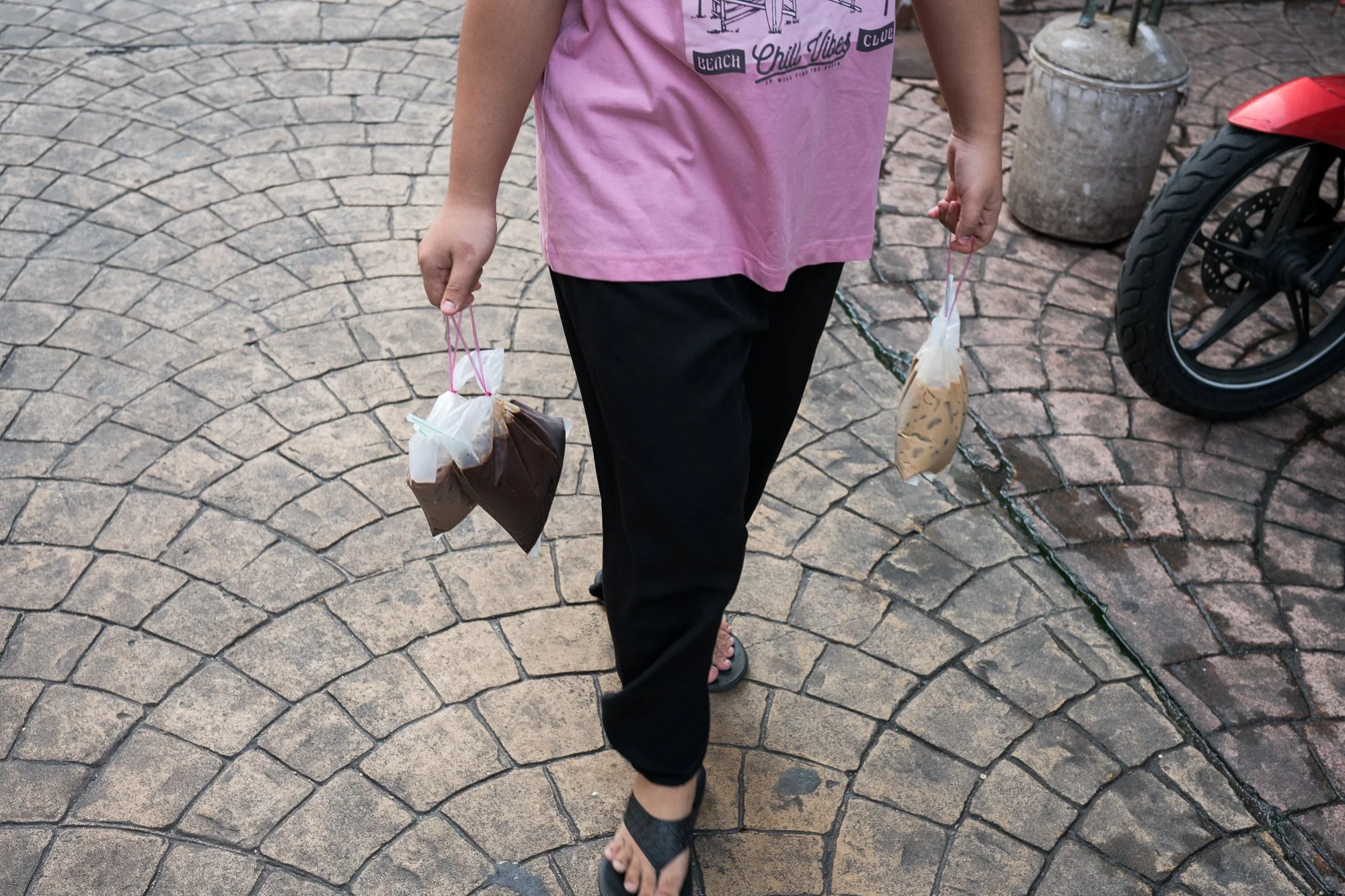
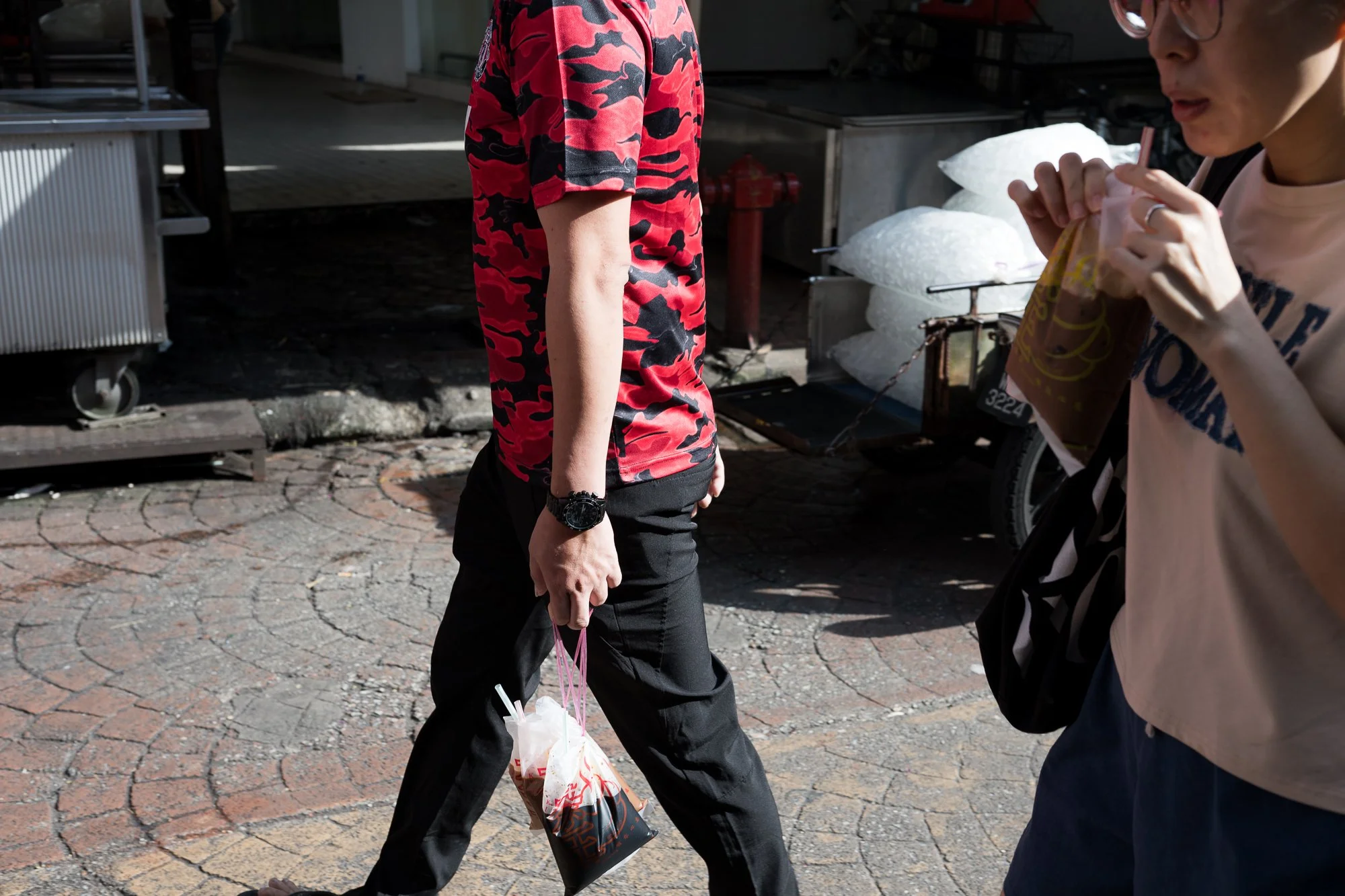
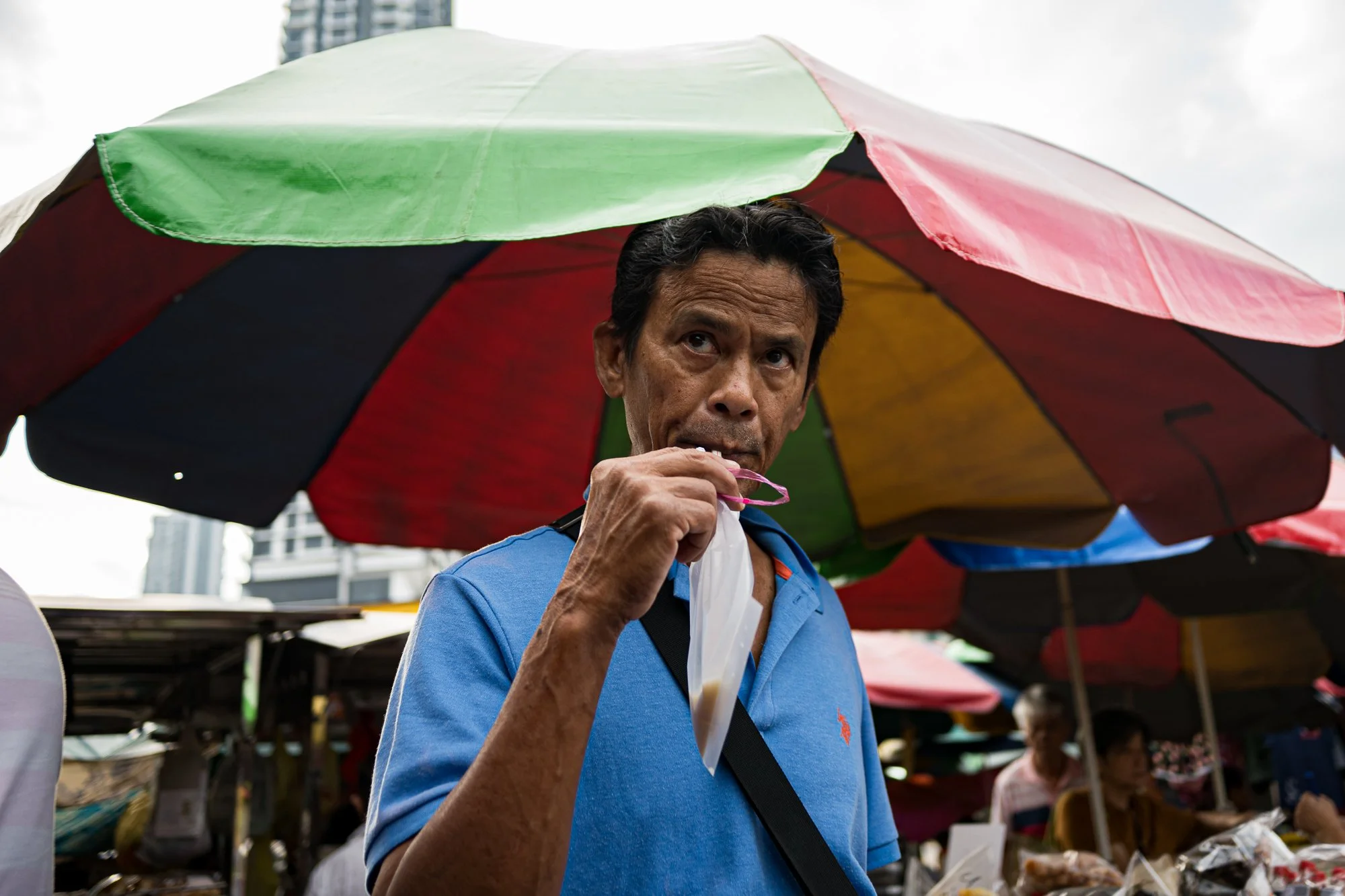
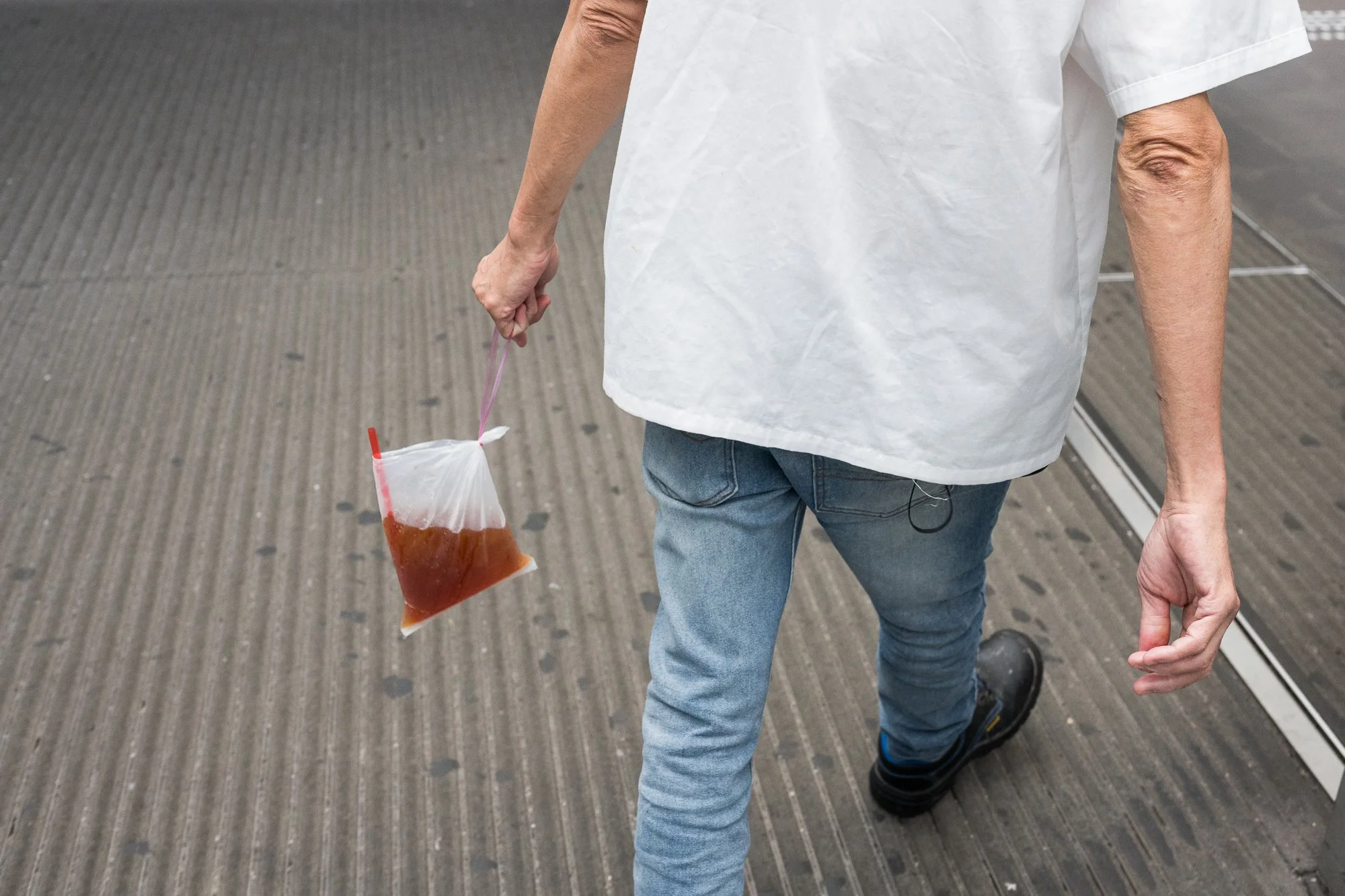
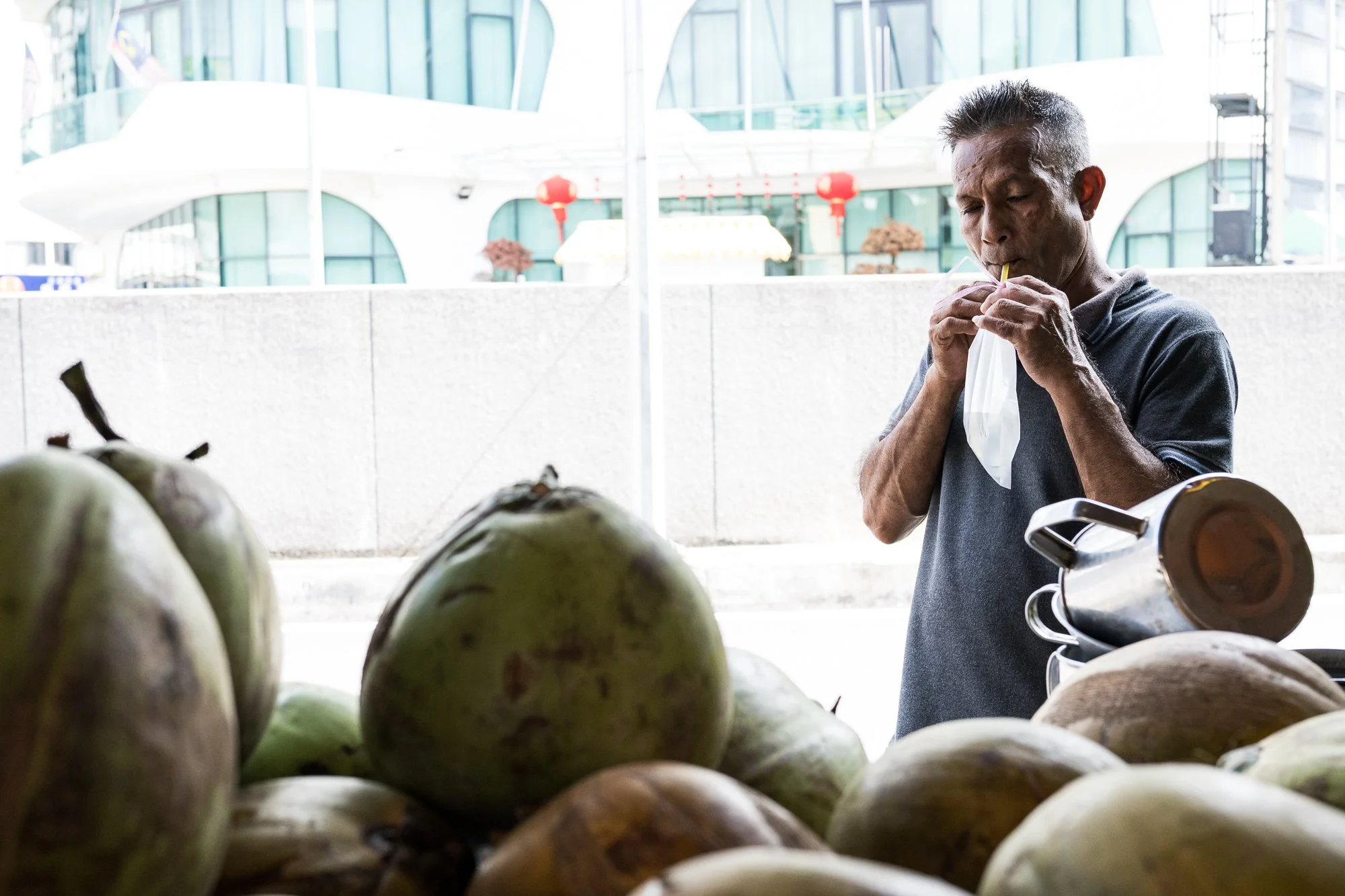
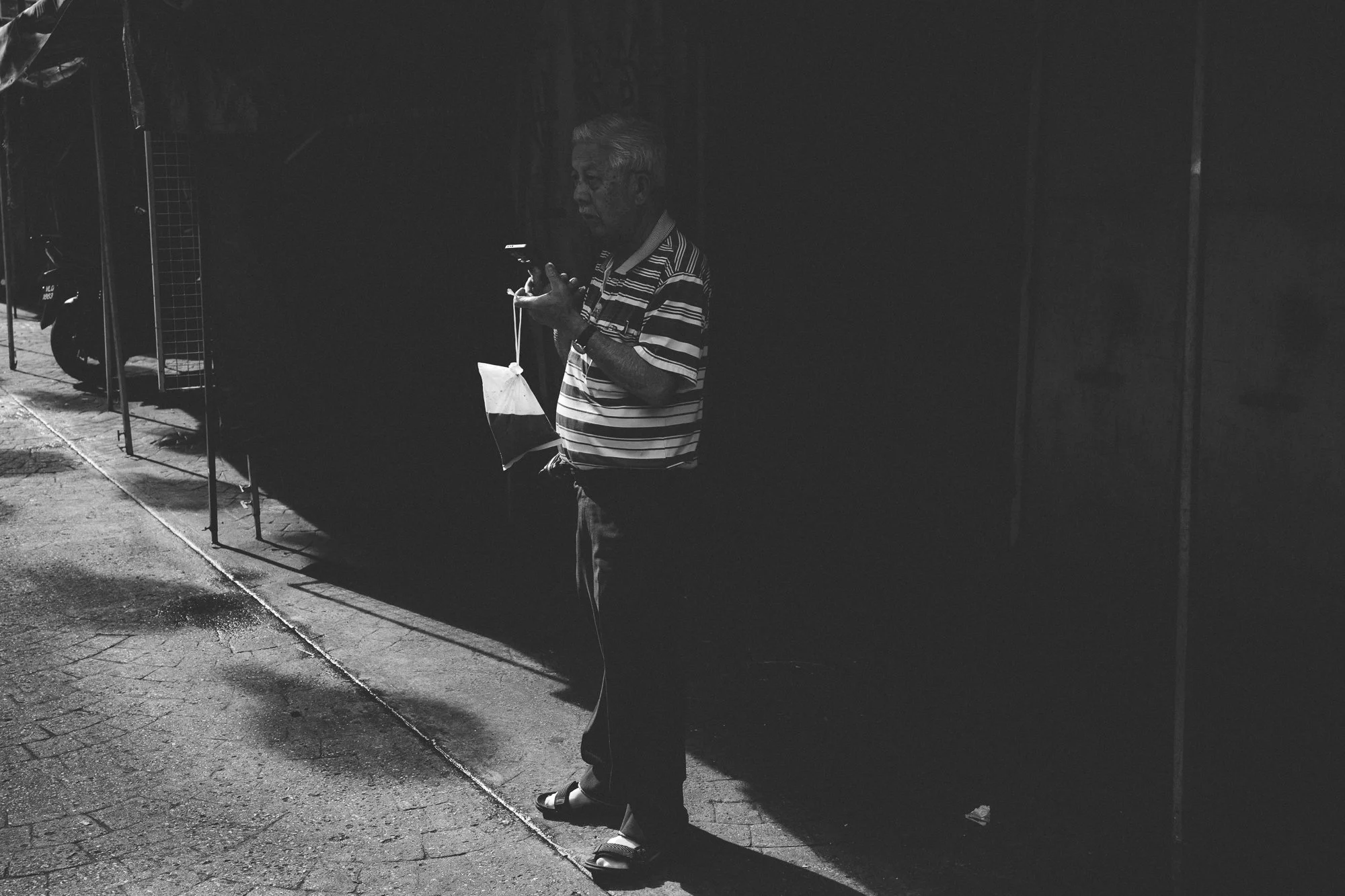
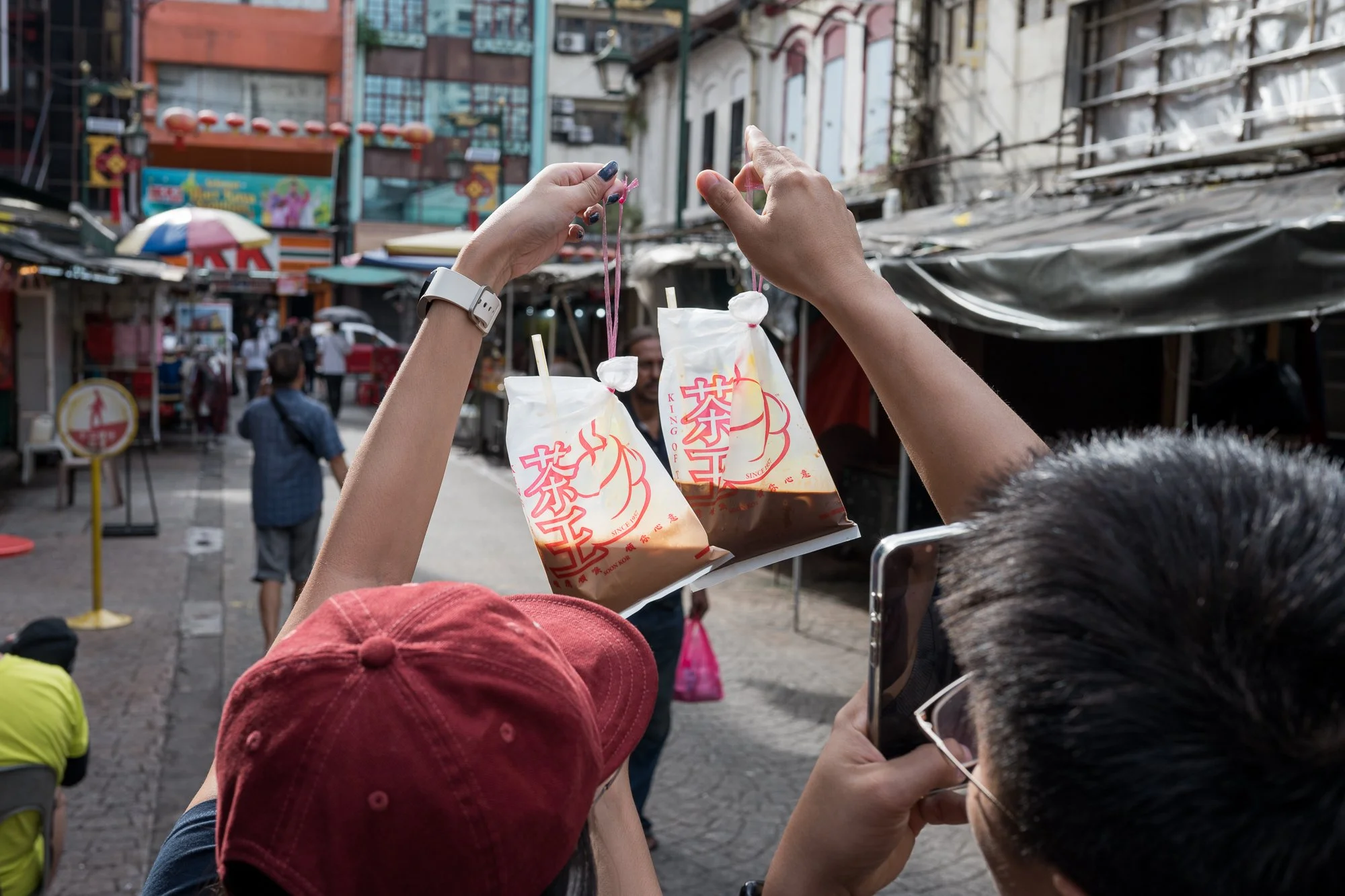
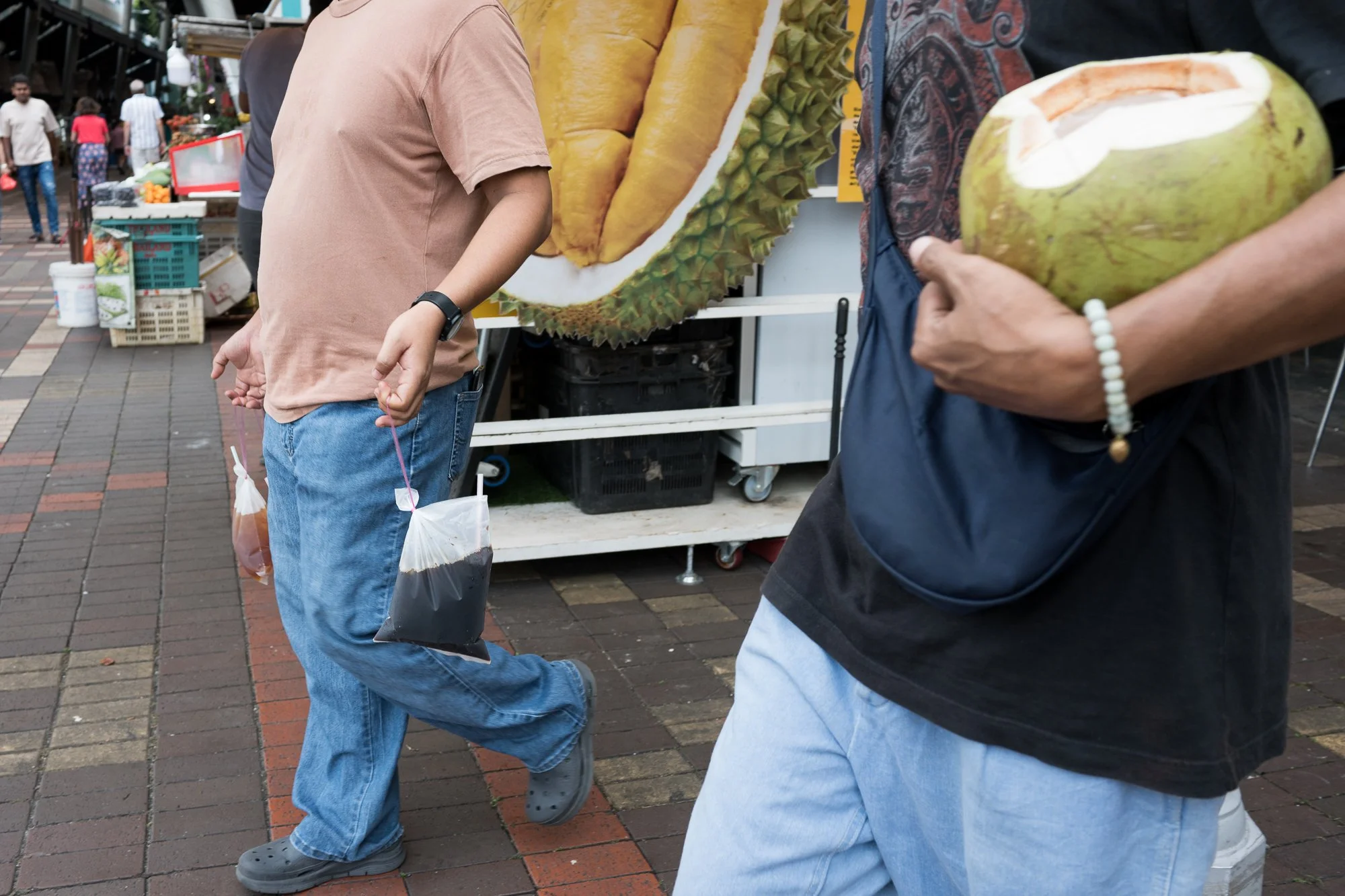
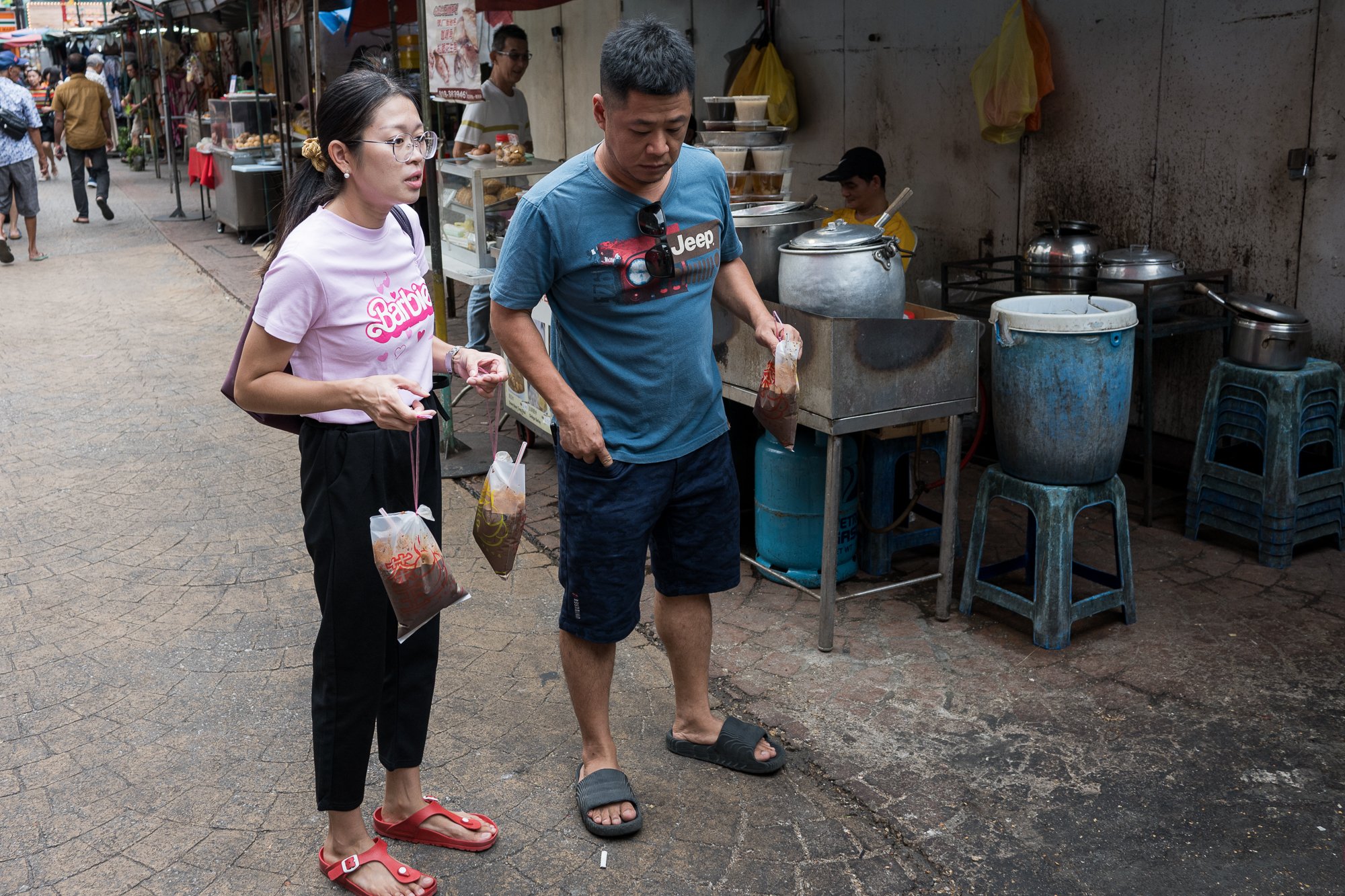
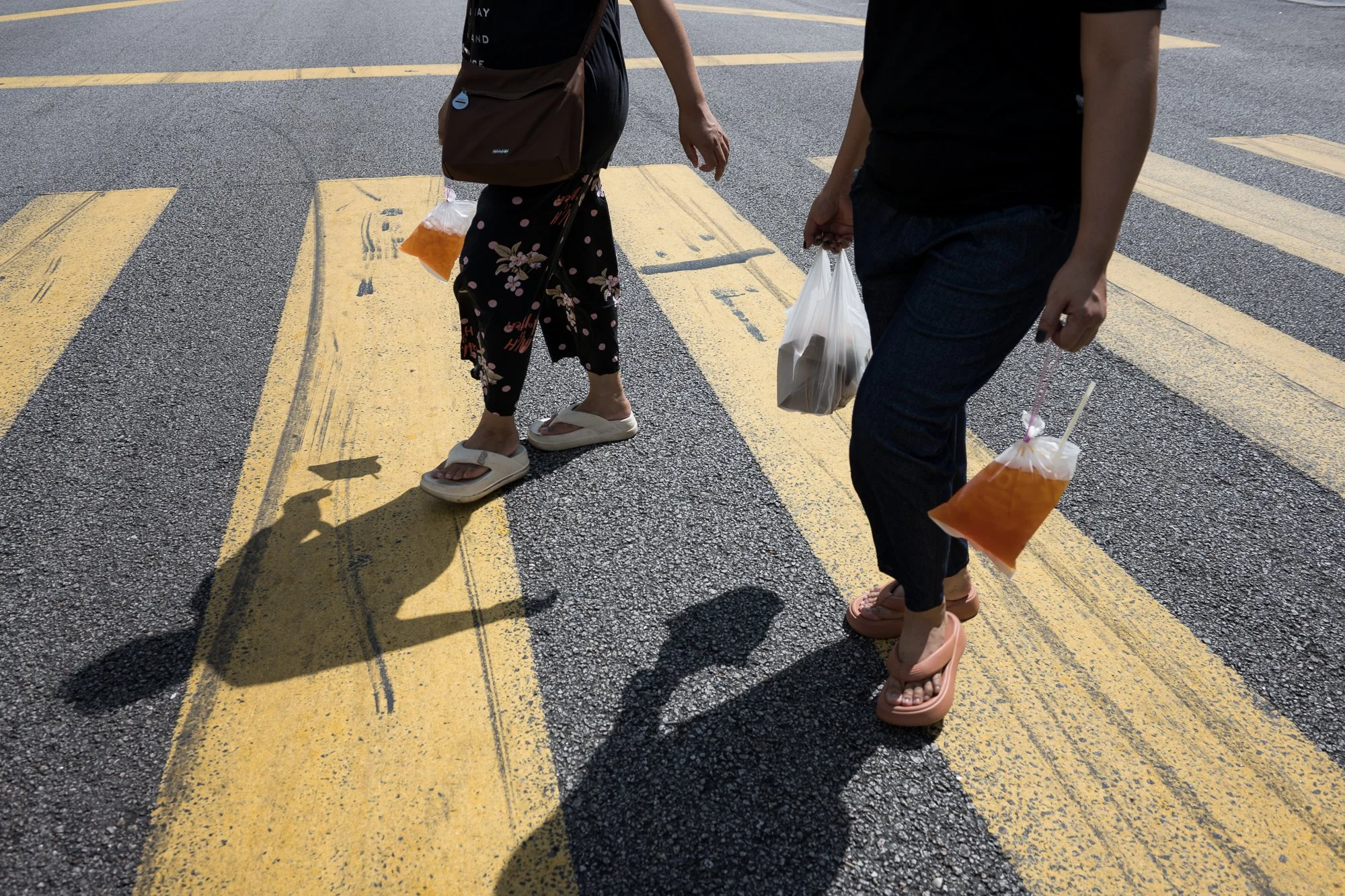
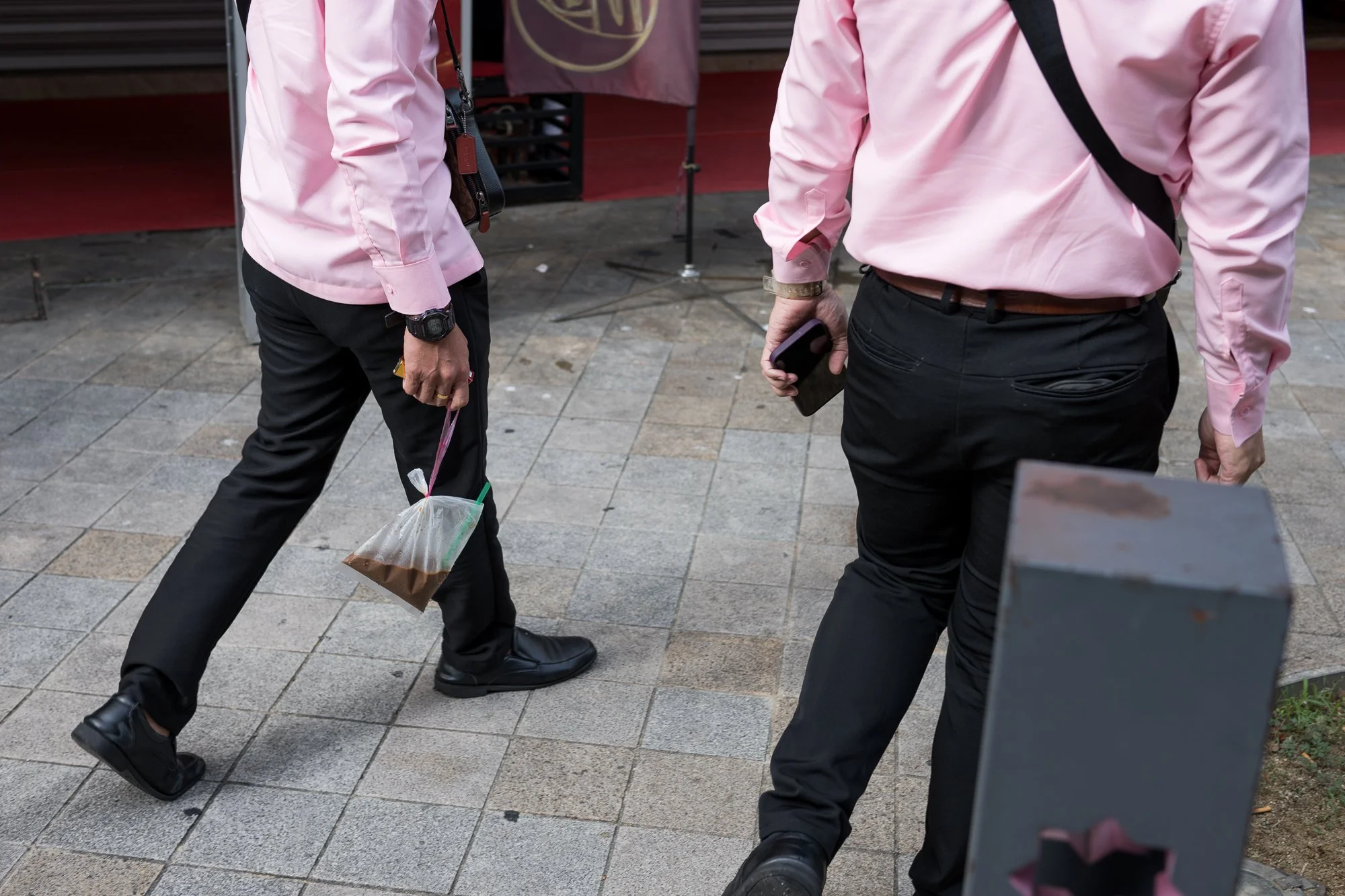
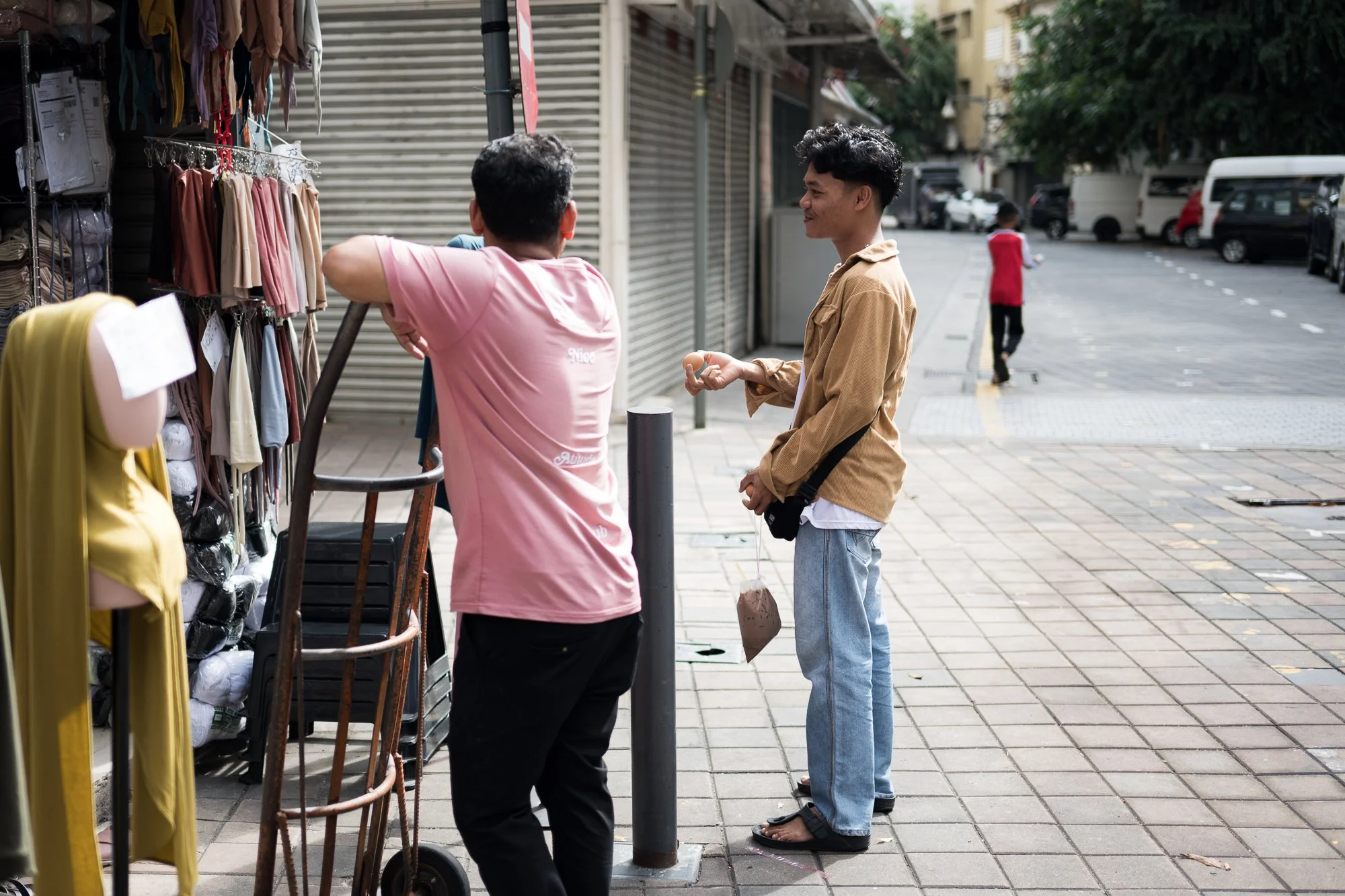
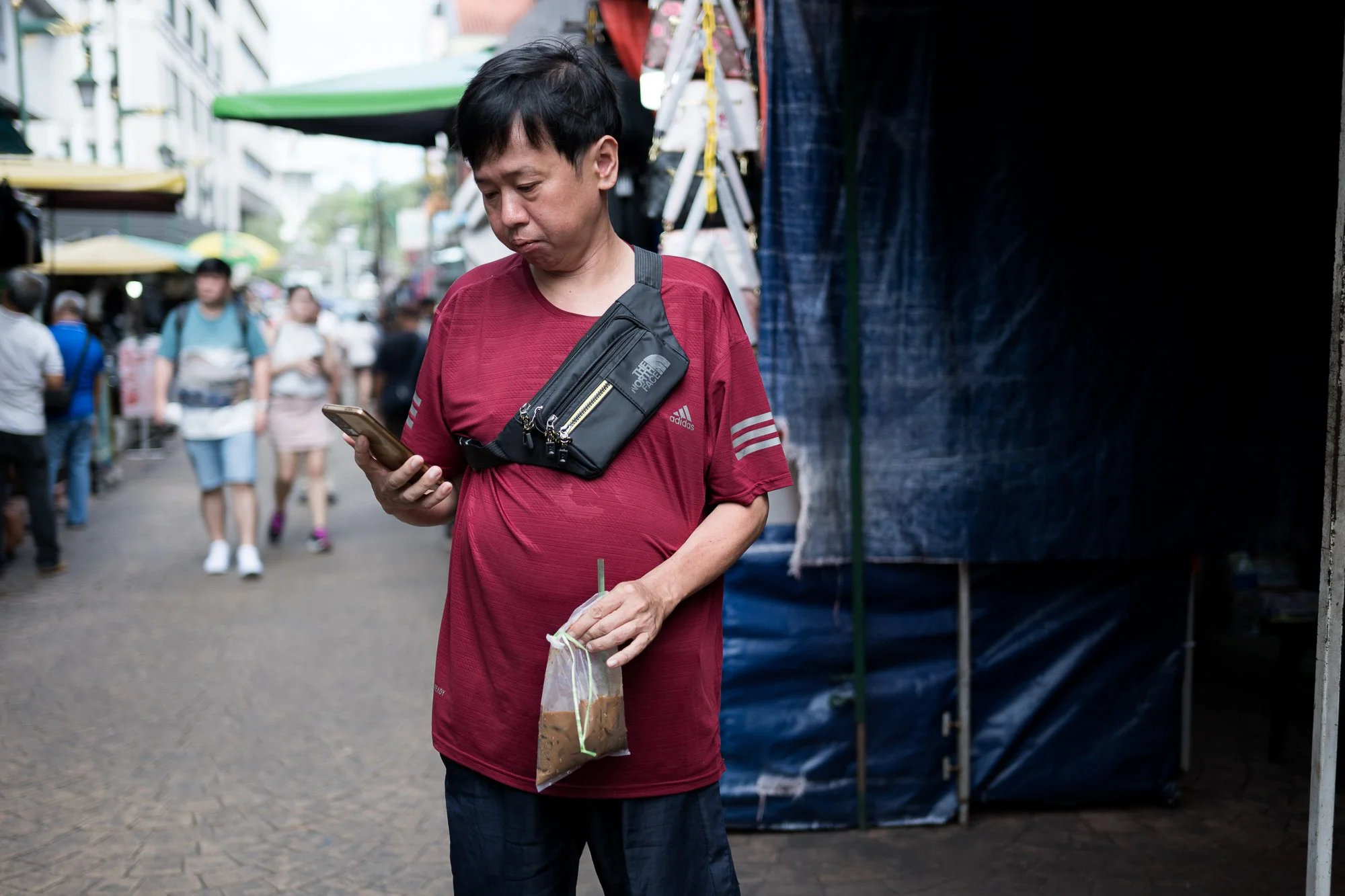
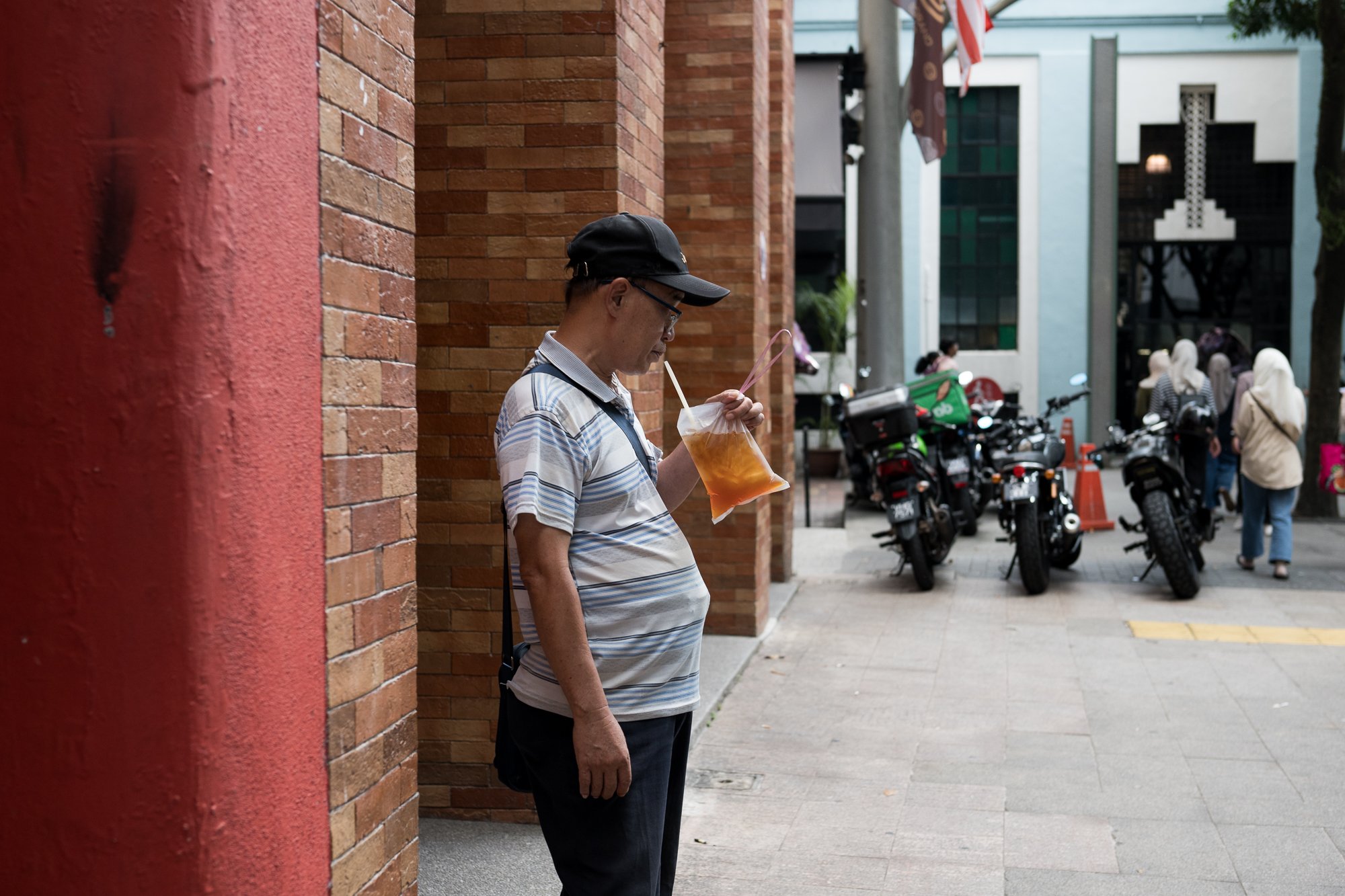
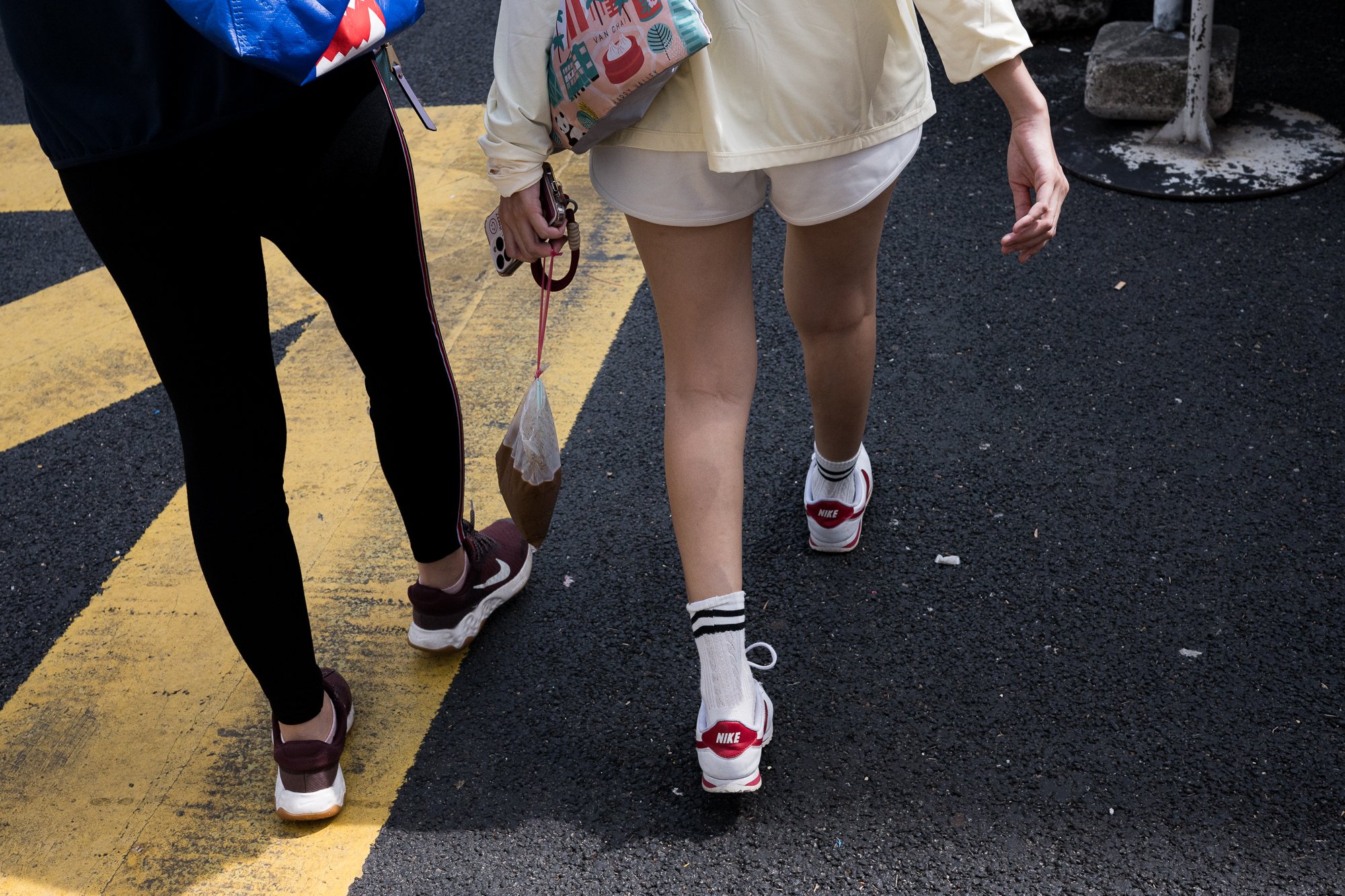
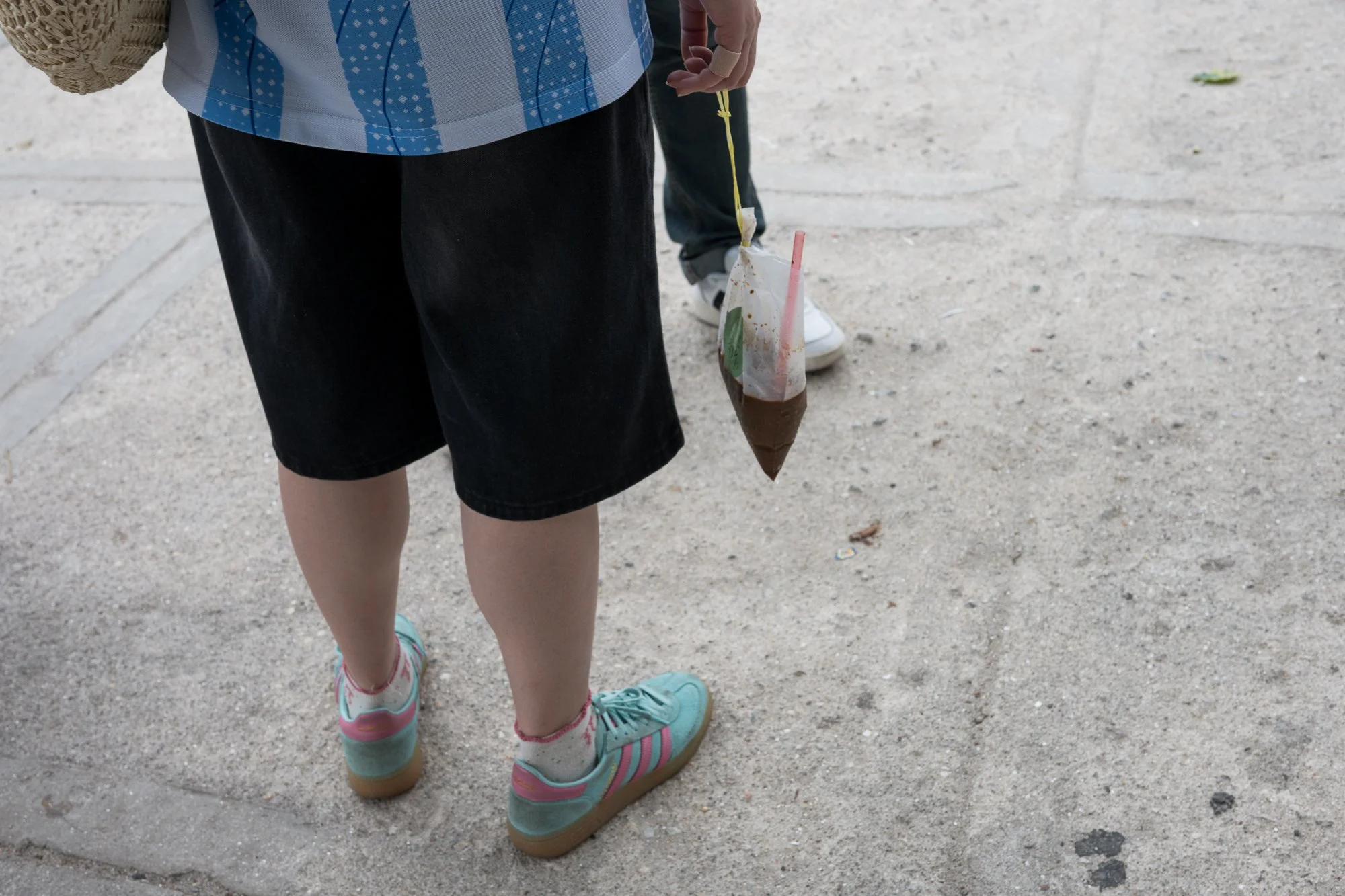
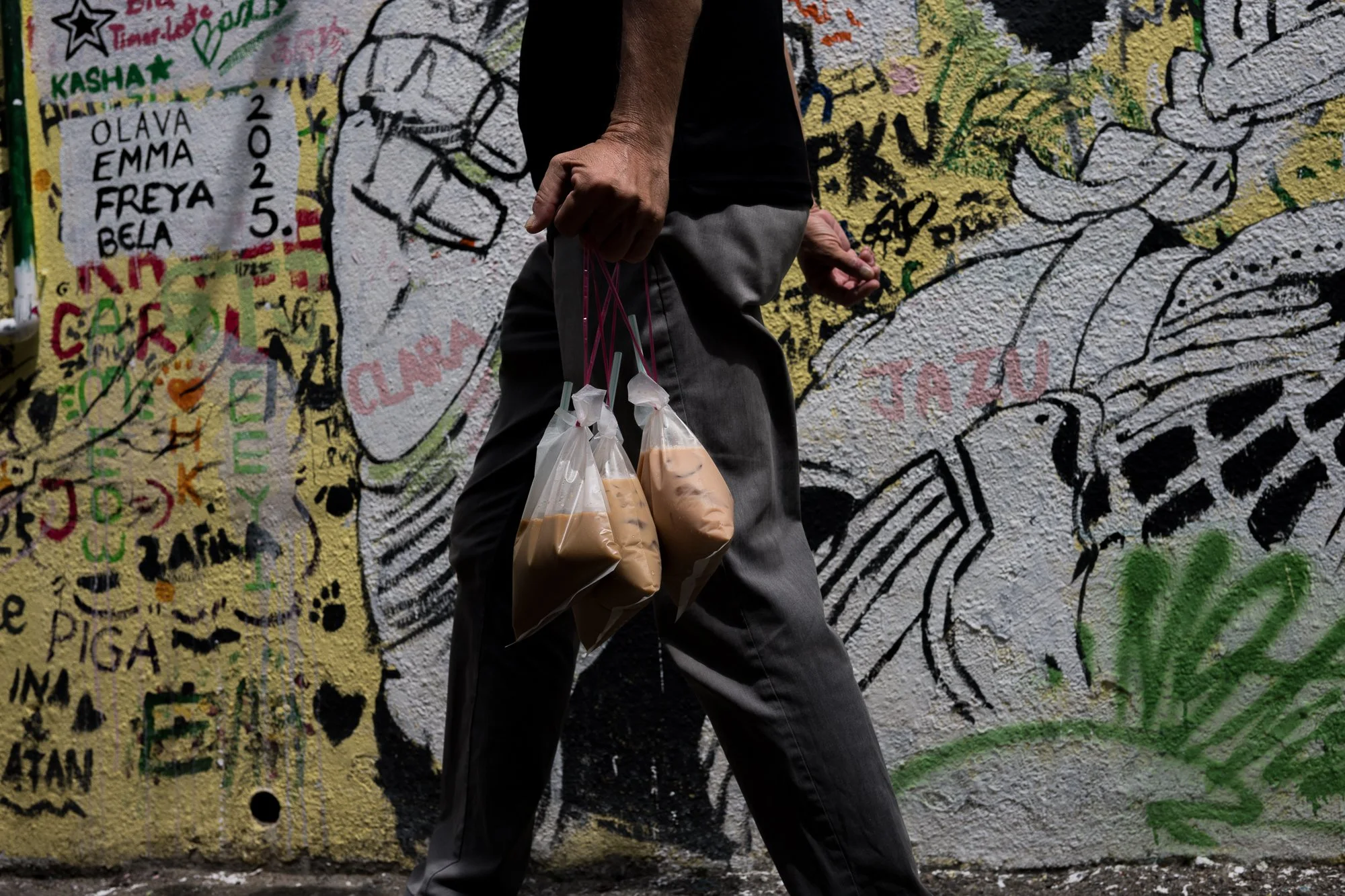
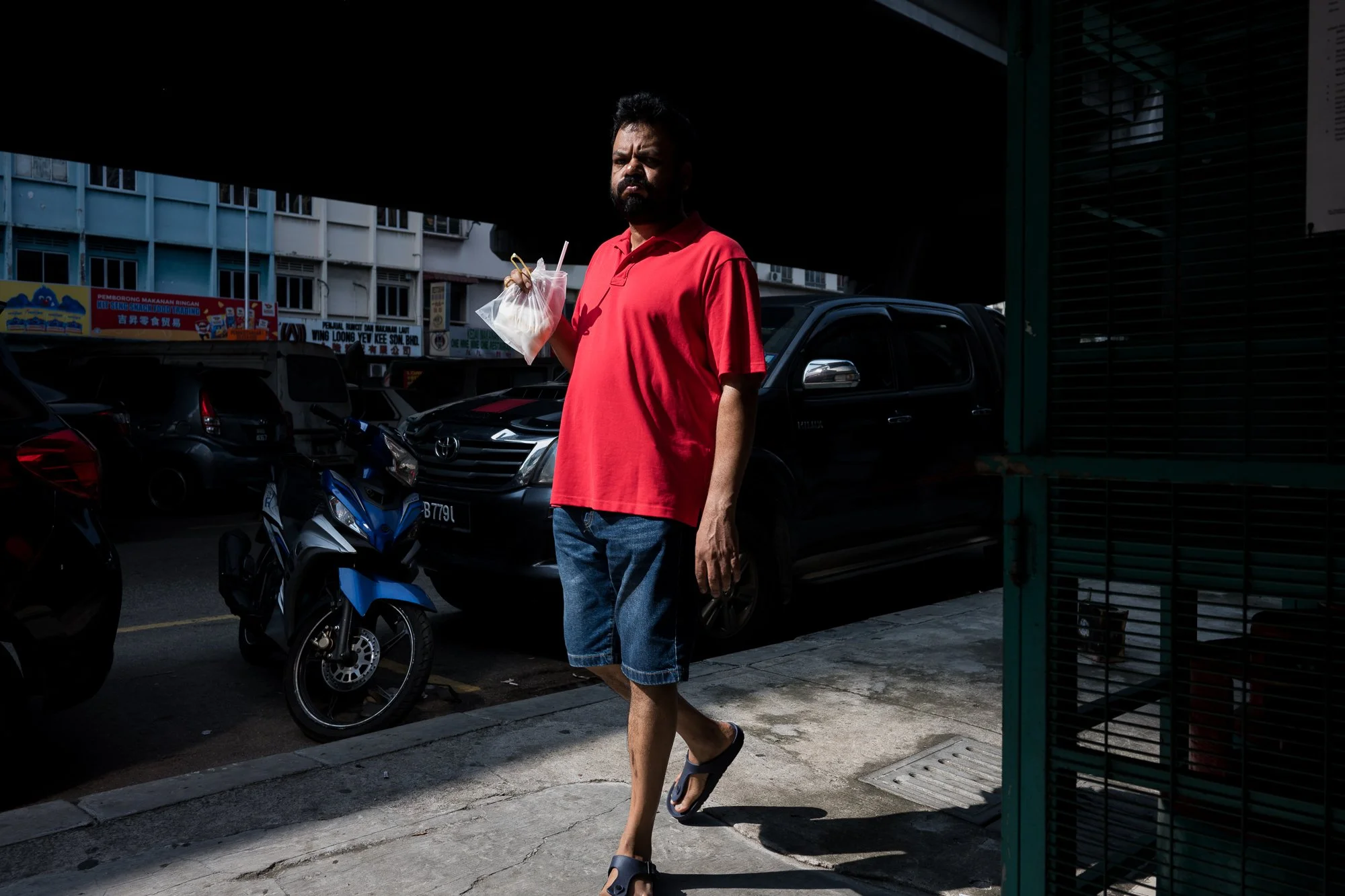
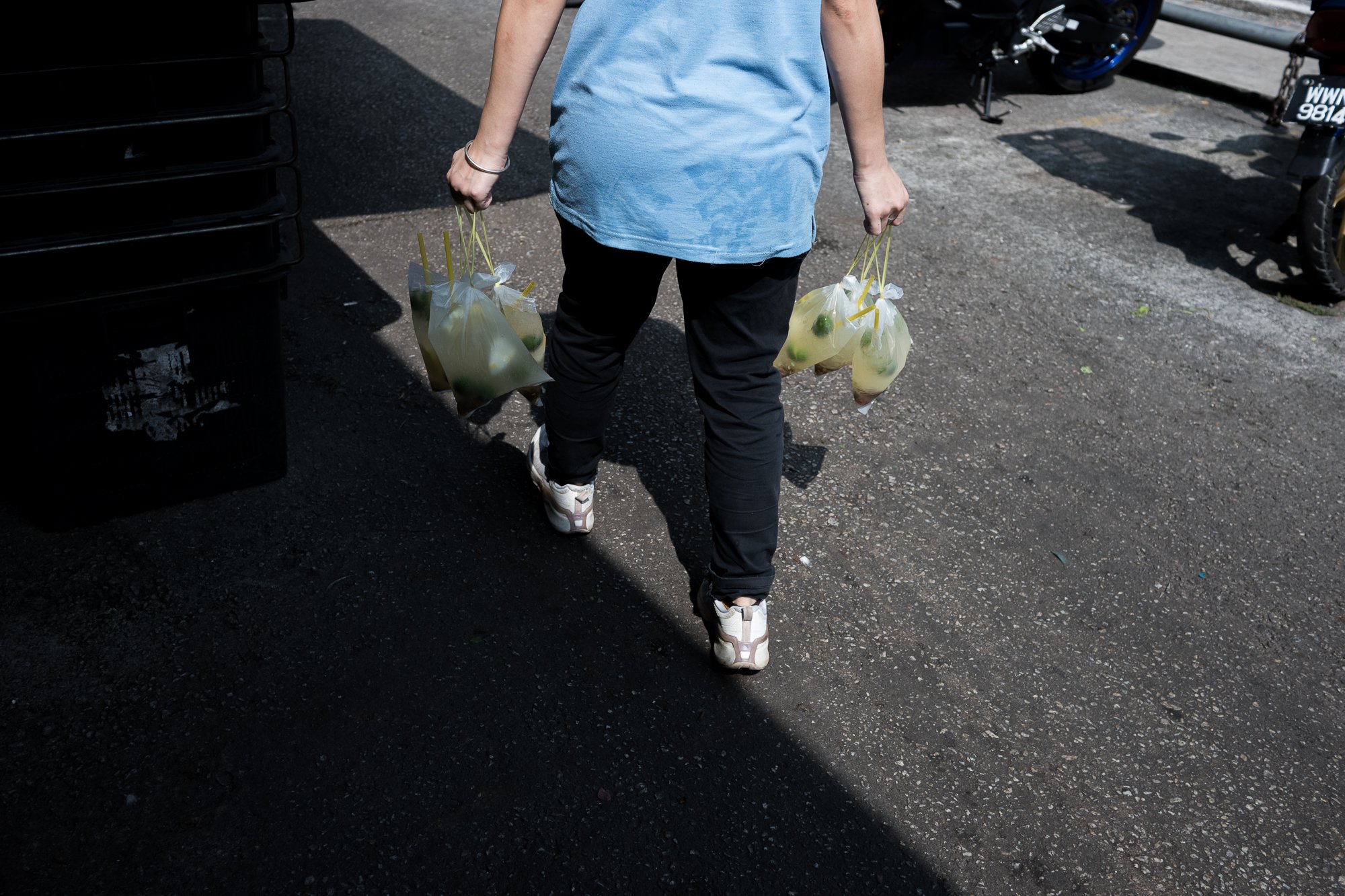
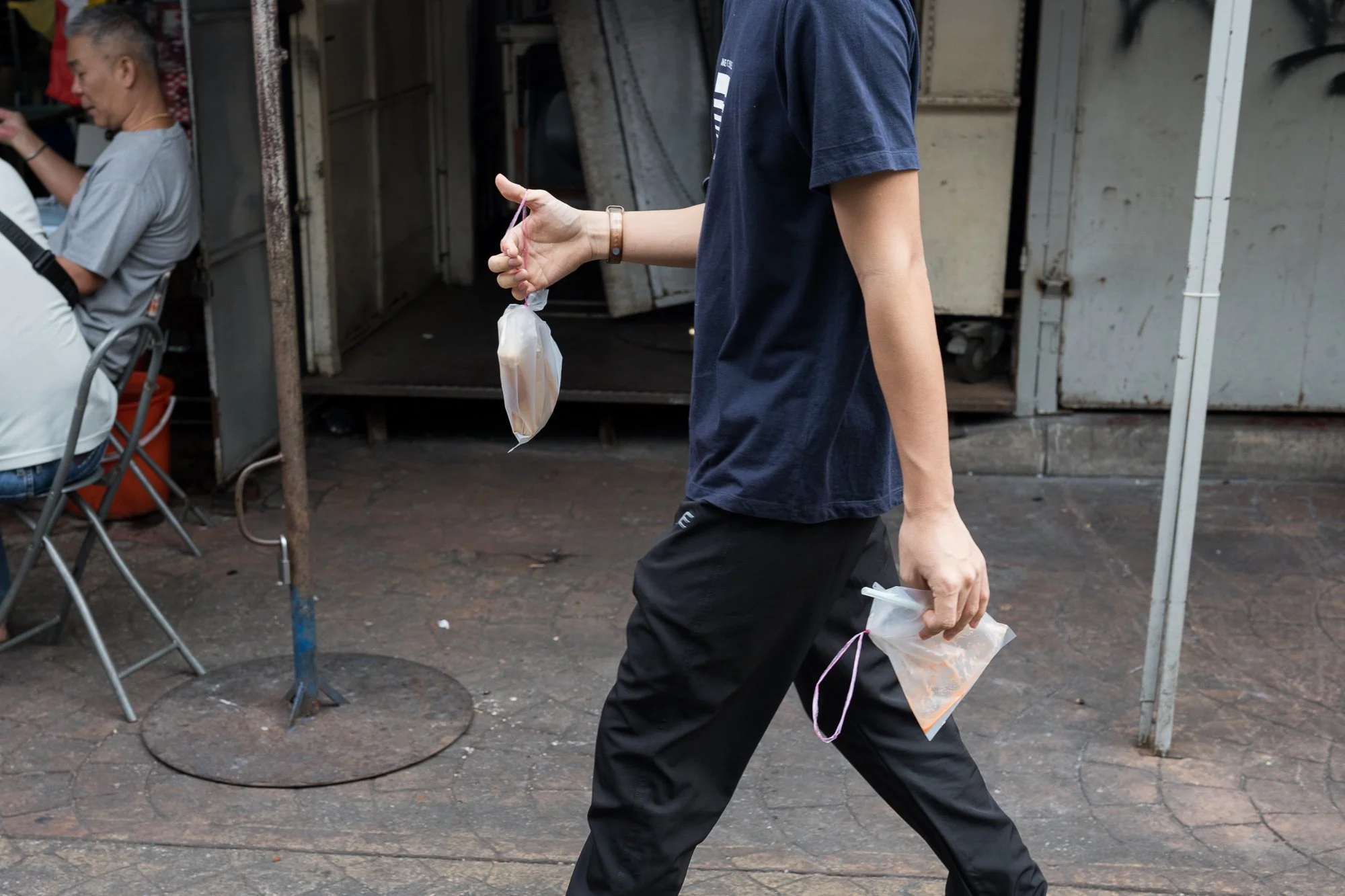
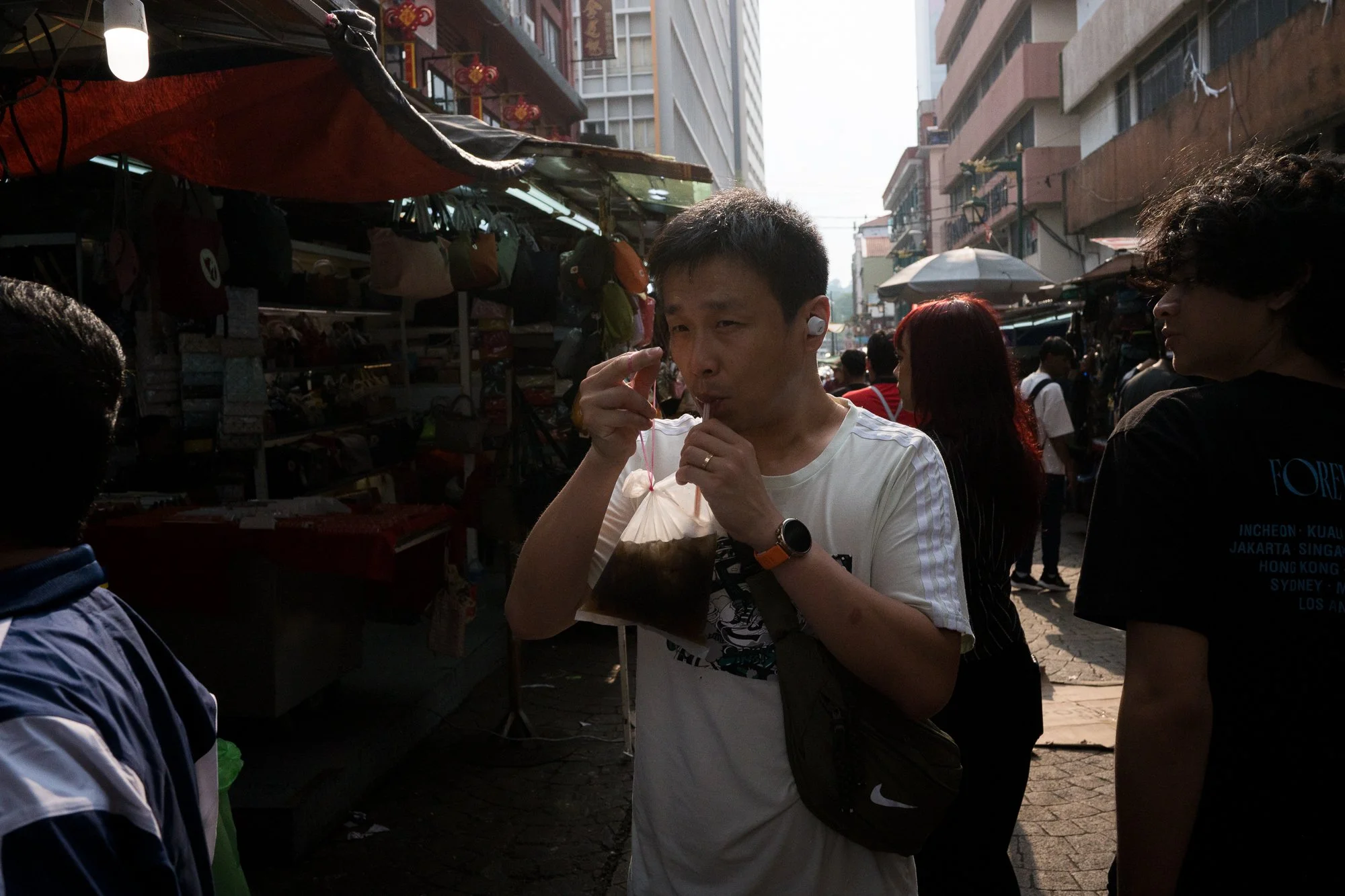
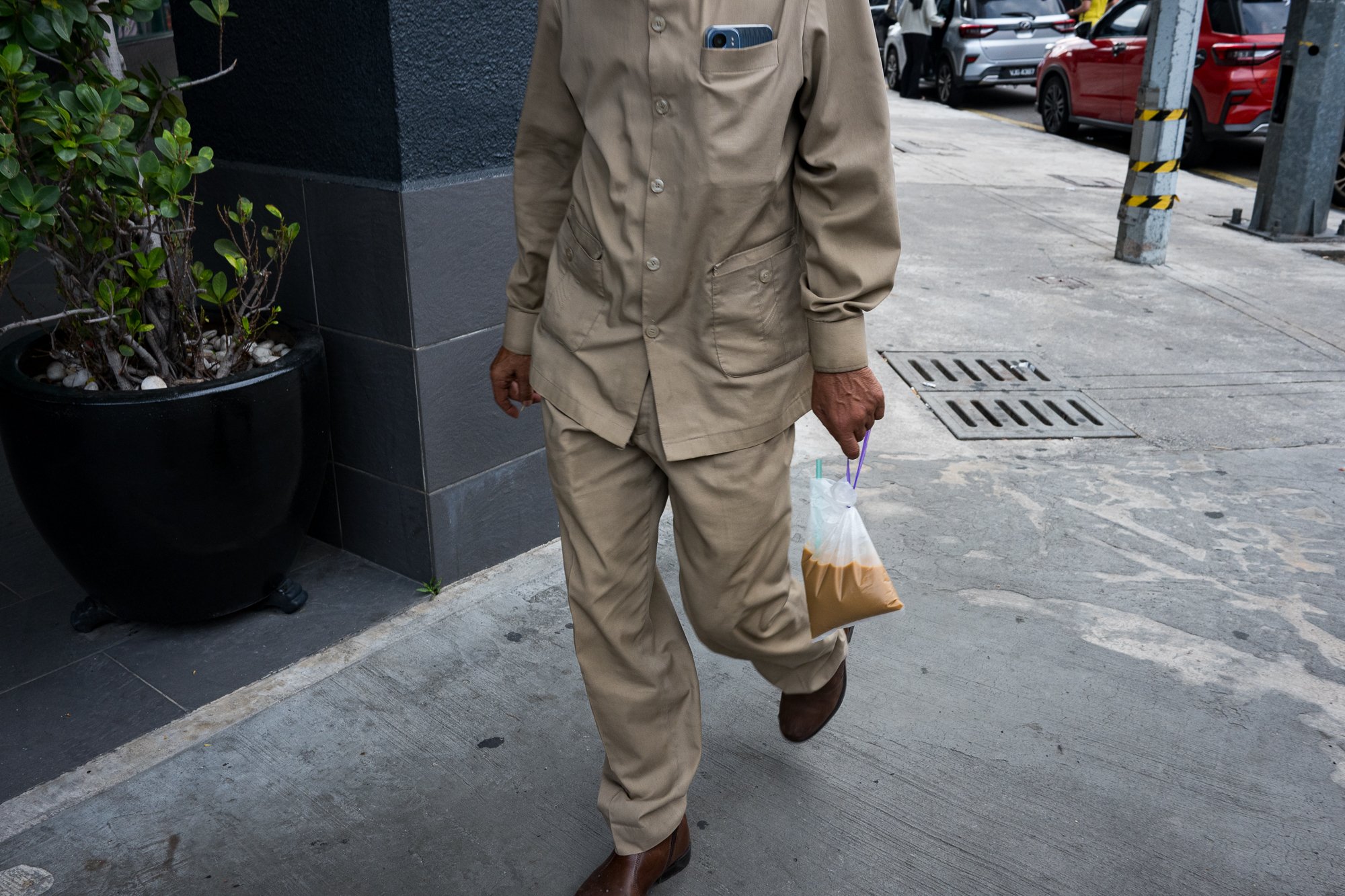
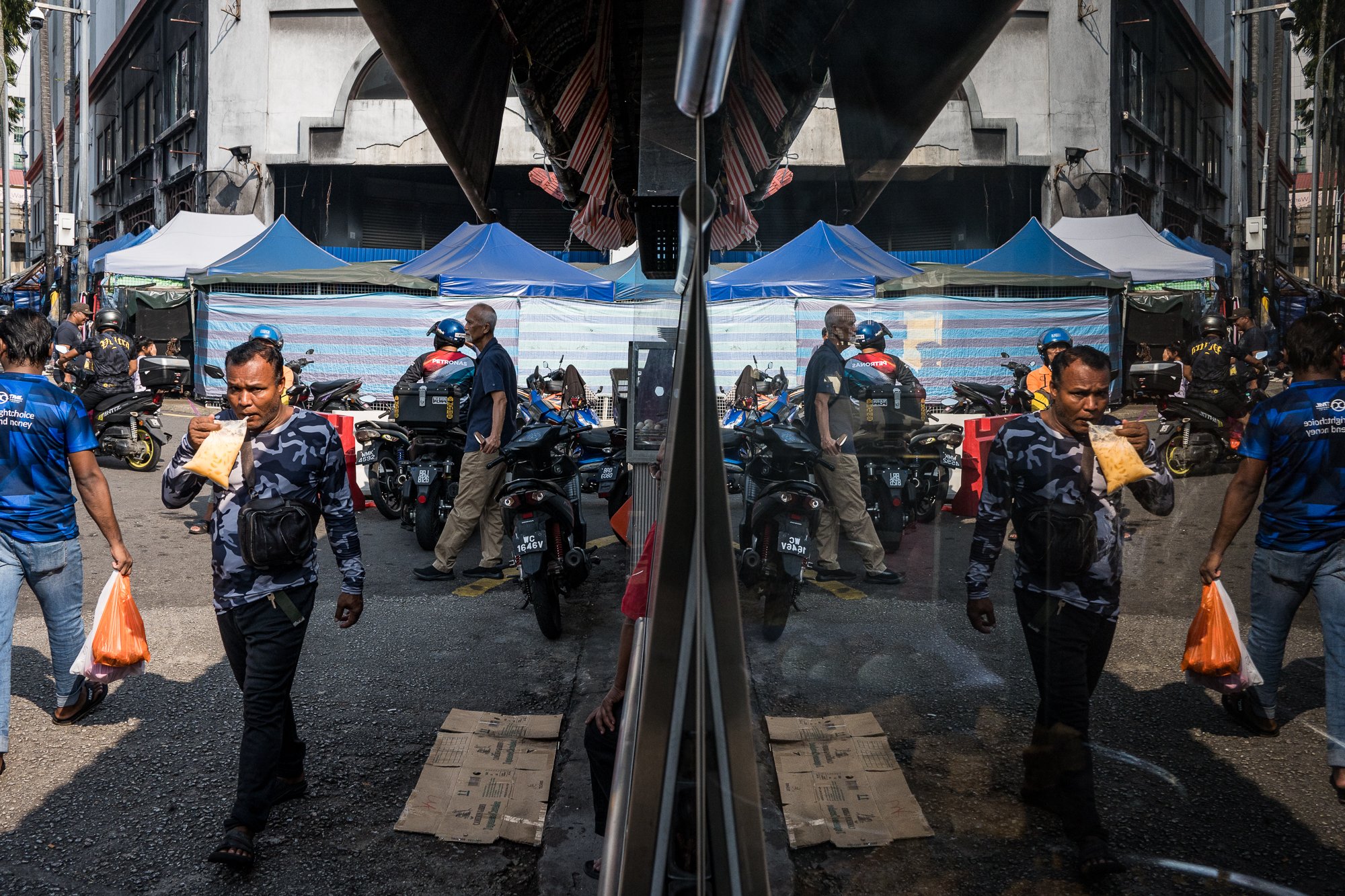
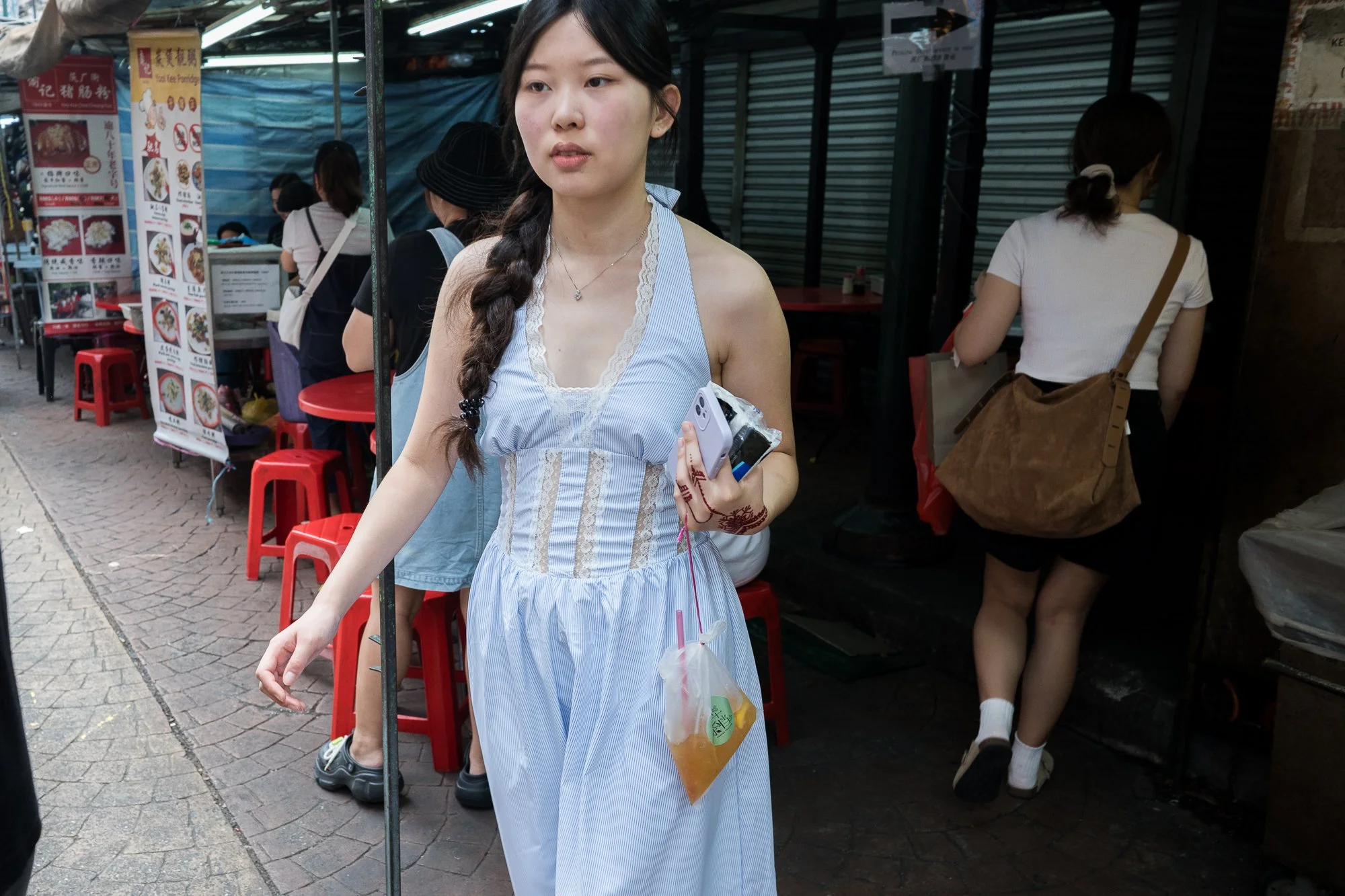
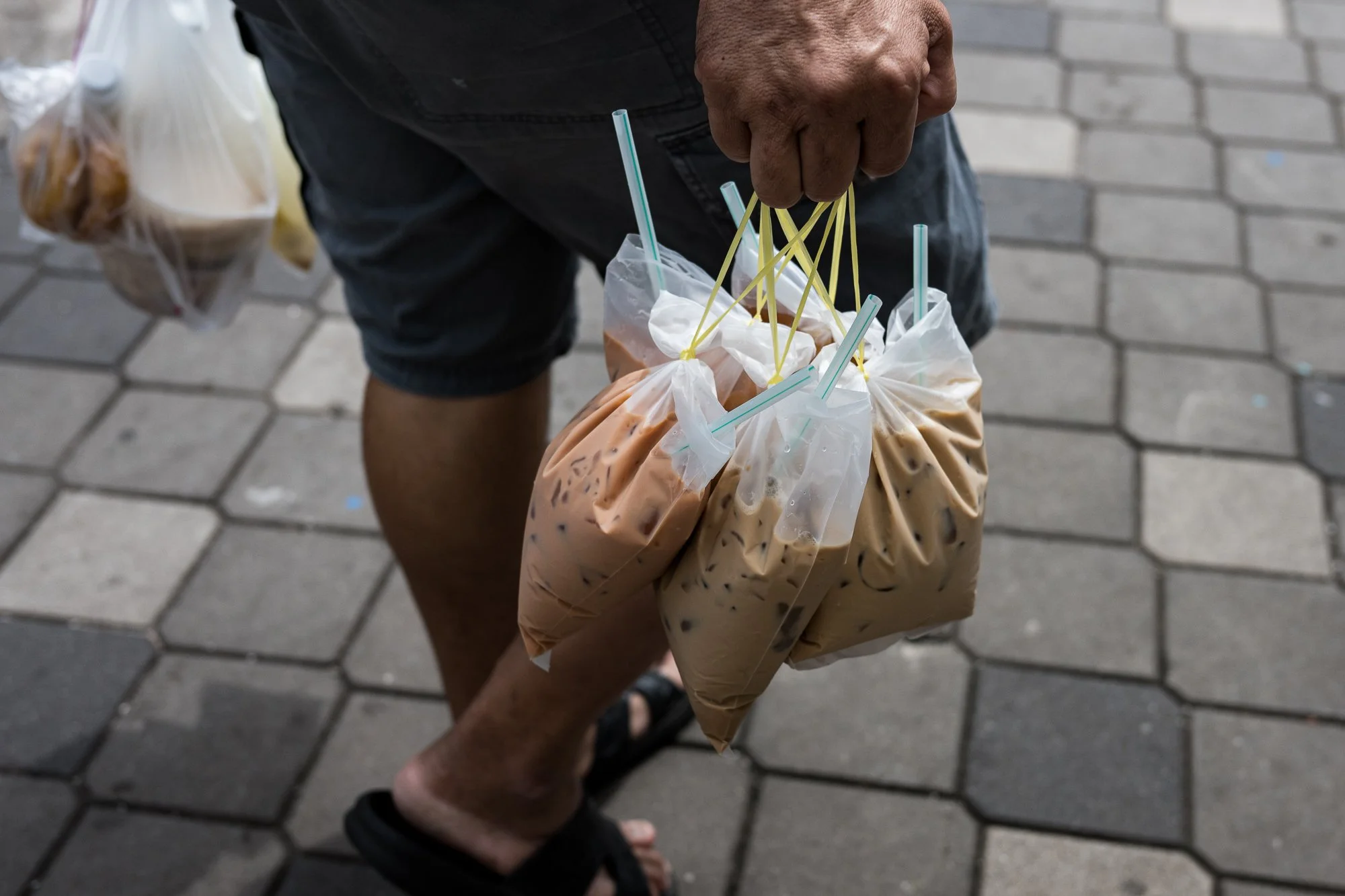
Sometimes the scenes are funny: people with several ikat tepi swinging from their hands like a mobile drinks stall. Most of the times its just people going about their daily lives with a drink in their hand. This is also by no means a judgement on them as individuals; I’m not here to name and shame people for having a drink in a bag of plastic, just a relfection of our normal habits as a society.
As a photographer, I love the visual drama of it. As a person trying to live on the same planet long-term, I’m less thrilled.
So what now?
This isn’t the part where I tell you to never buy an ikat tepi again for the rest of your life or you’re a bad person.
If anything, the last few years have shown me how unrealistic it is to scold our way out of a problem that’s built into economics, infrastructure and culture.
But I do think there’s room for tiny shifts:
Some days I remember to bring a tumbler or bottle.
Sometimes I just say, “Tak payah double bag bang, satu cukup.” One less layer of plastic is still one less.
Sometimes I actually remember to tell the waiter to serve the drink in a cup/glass, not ikat tepi.
None of this is heroic. It won’t fix the global plastic crisis. It won’t move the needle on 436 million tonnes of plastic a year. It won’t magically pull Malaysia out of the top 10 list of ocean plastic polluters.
But it does something important for me personally: it keeps the contradiction in front of my eyes instead of letting it fade into the background.

Tied on the side, tied to us
When I look back at the previous blog entries #033, #034 and #035, I can see my own evolution in how I think about ikat tepi.
Chapter 1: “Eh, this is quite photogenic.”
Chapter 2: “Wow, this is everywhere.”
Chapter 3: “Okay, so this is actually a problem.”
And now, five years on: “It’s still here. So now what?”
Ikat tepi is still one of the most Malaysian things I can think of. It’s resourceful, practical, slightly chaotic and weirdly charming – just like us.
But it’s also a little warning label dangling from our daily routines, reminding us that convenience always comes with a tab that somebody, somewhere, eventually has to pay.
So this new chapter isn’t really about solving anything. It’s about witnessing.
Witnessing how stubbornly this habit holds on.
Witnessing how beautiful and ugly the same object can be.
Witnessing how, despite all the global treaties and reports and statistics, change on the ground still comes down to what we do with our hands when we say:
“Boss, teh ais ikat tepi.”
Maybe we still say it. Maybe we start saying it less. Maybe one day we say it while holding out our own cup.
Until then, I’ll keep walking, keep noticing, and keep taking photos of this little bag that has somehow become one of the clearest reflections of who we are – and who we might become
Cheers (from a glass).
All photos taken with the Nikon ZF
-
P.S.: 28 November 2025 - I forgot to mention that I have also started a new Instagram account to gather all these Ikat Tepi photos. So, if you can, and you like these photos, please follow this series on instagram: @theikattepilife thanks!