#083: Hoi An
A trip to Hoi An.
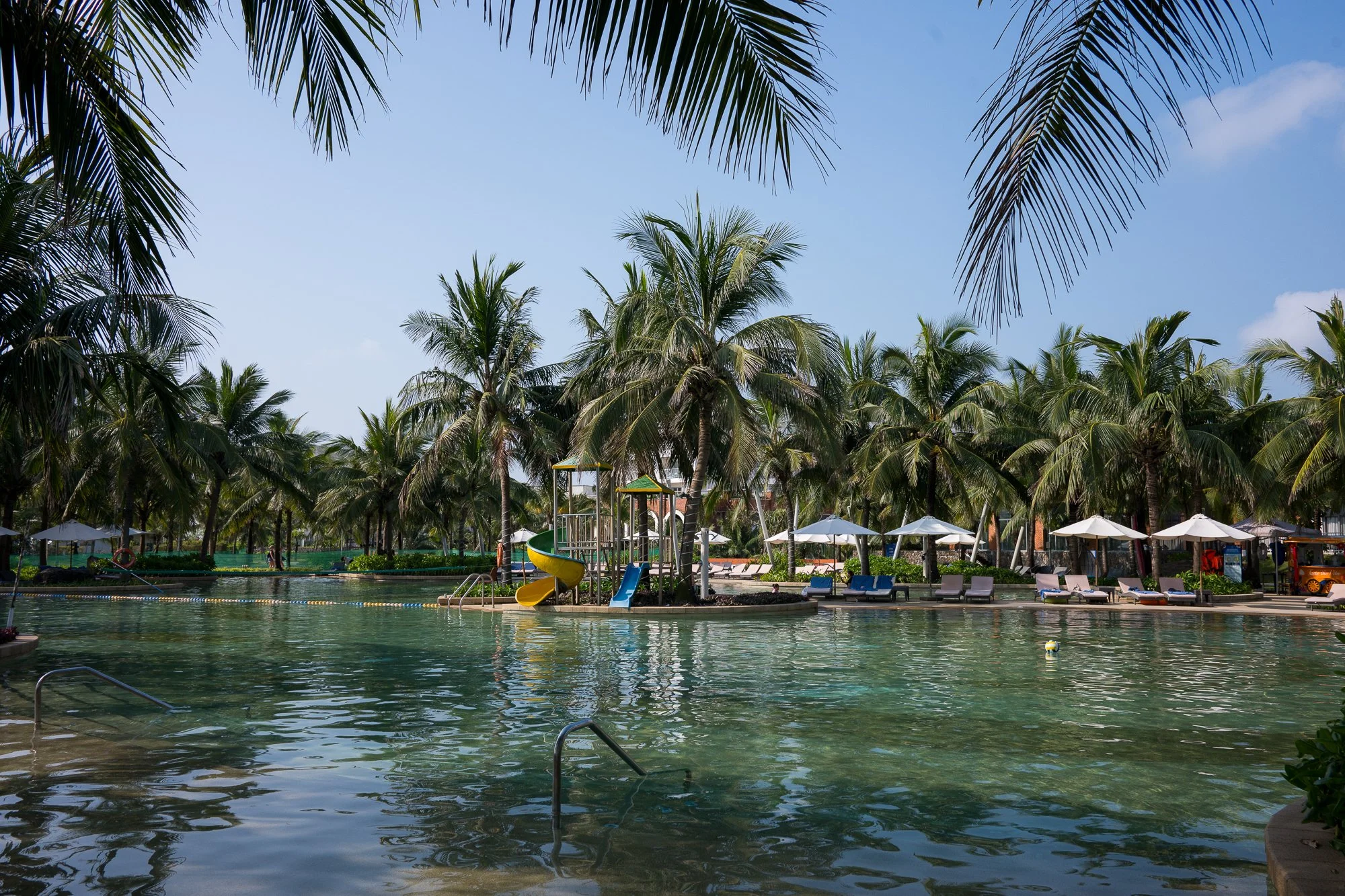
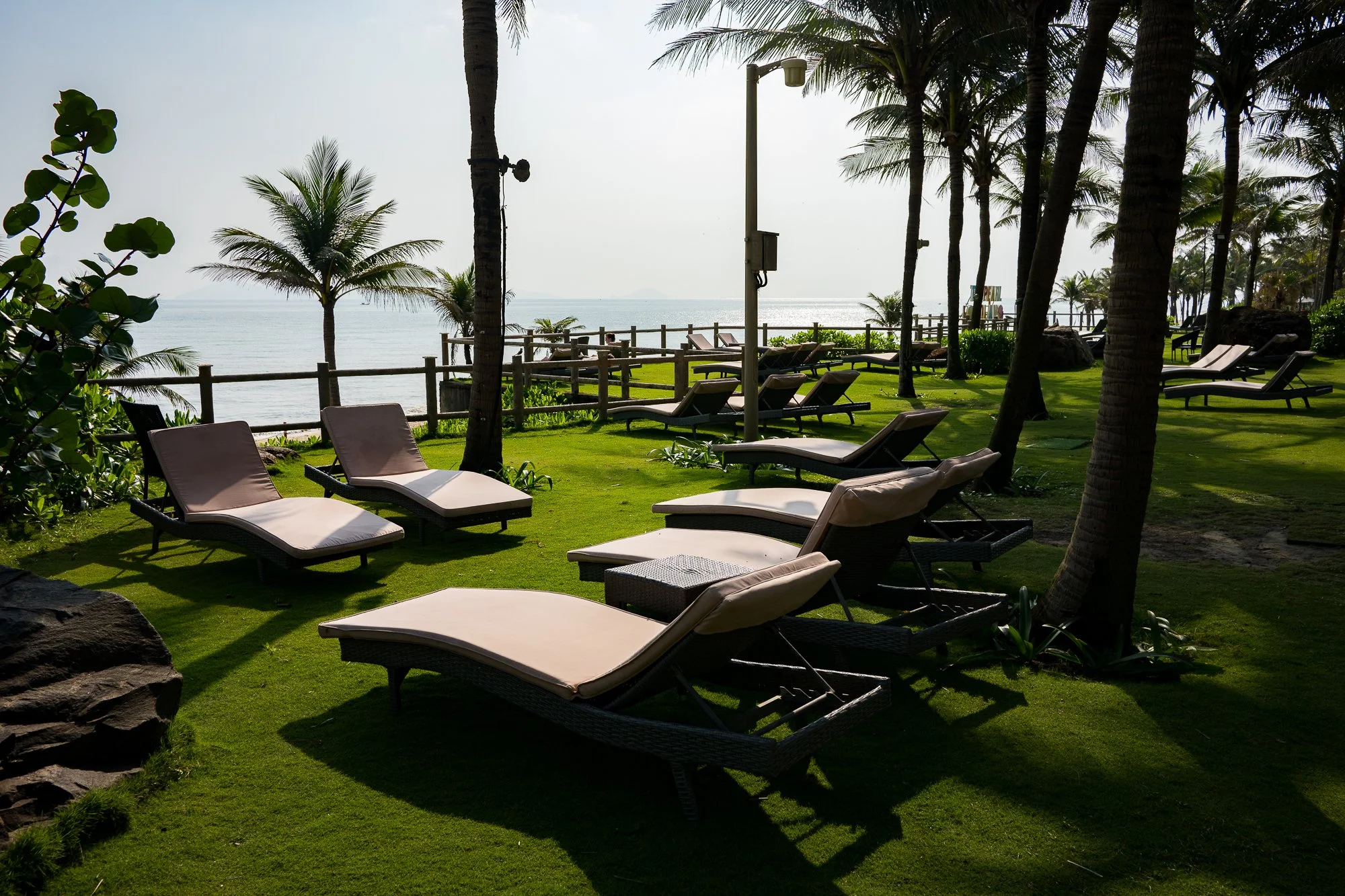
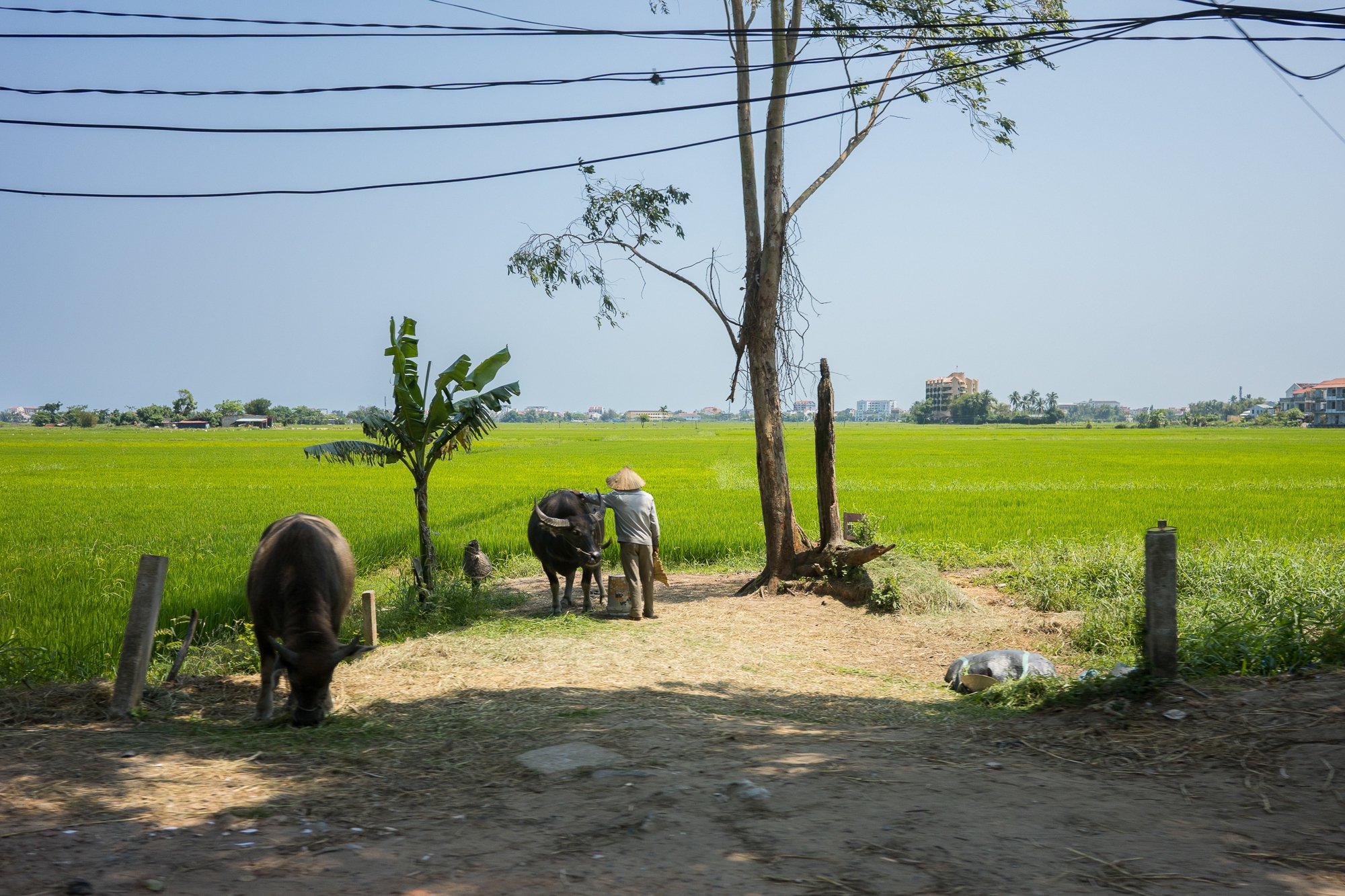
As mentioned in the previous post, we stayed along the coast between Da Nang and Hoi An at a resort called The Pearl Hoi An. Big, sprawling, clearly designed for a crowd three times the size of the one it had when we were there. Pre-pandemic, I imagined this would have had a proper tourist village operation: packed pools, queues at the buffet, that slightly frantic energy of a resort running at full capacity. But whole sections of it were still closed or sitting empty when we visited, semi ghost-town-ish… and honestly? Perfect. We had the pool mostly to ourselves, the beach a short walk away, and a pace that felt almost unhurried. Can't imagine how chaotic the full-swing version would be. For our little trip, it served its purpose well
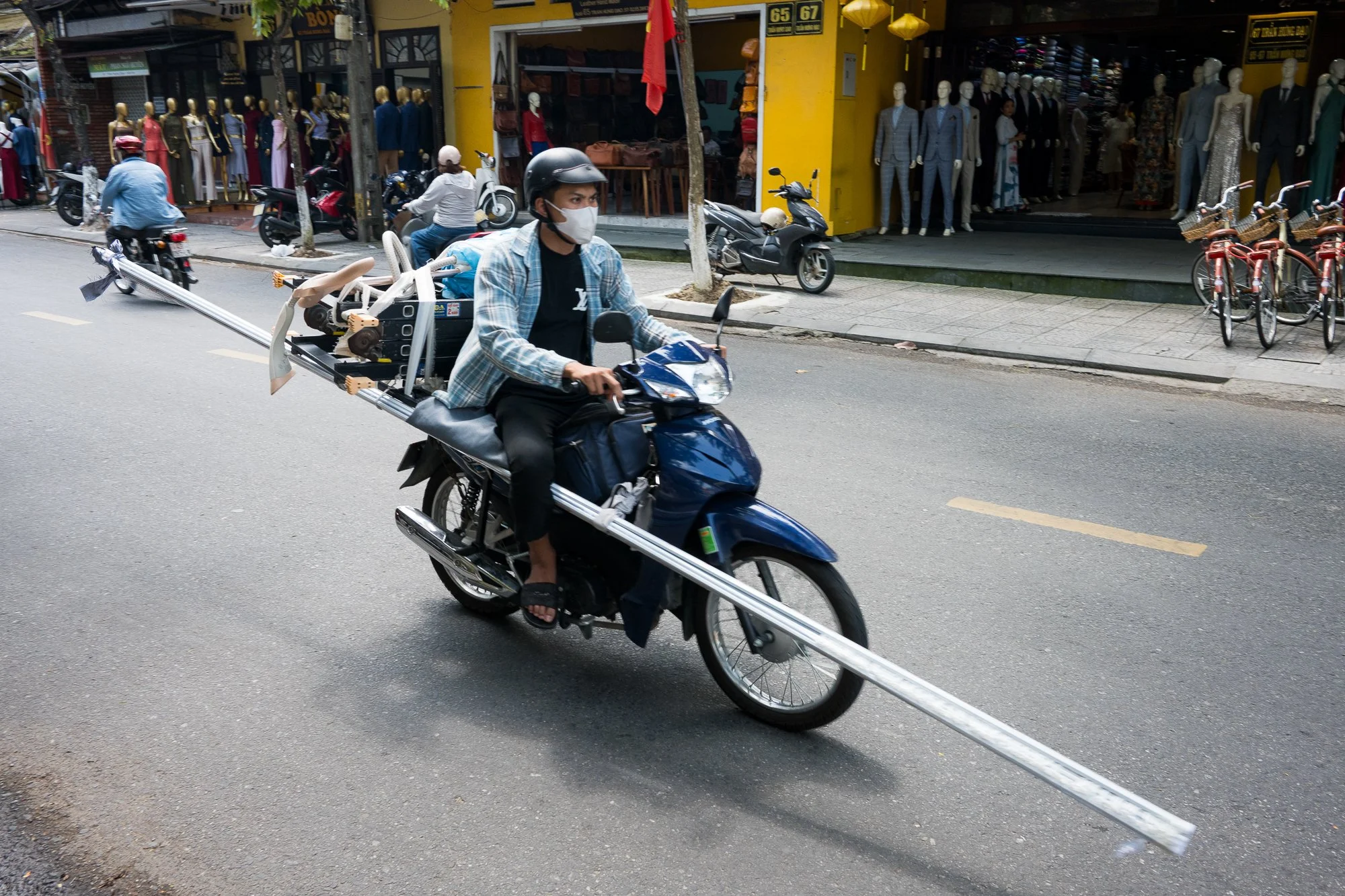
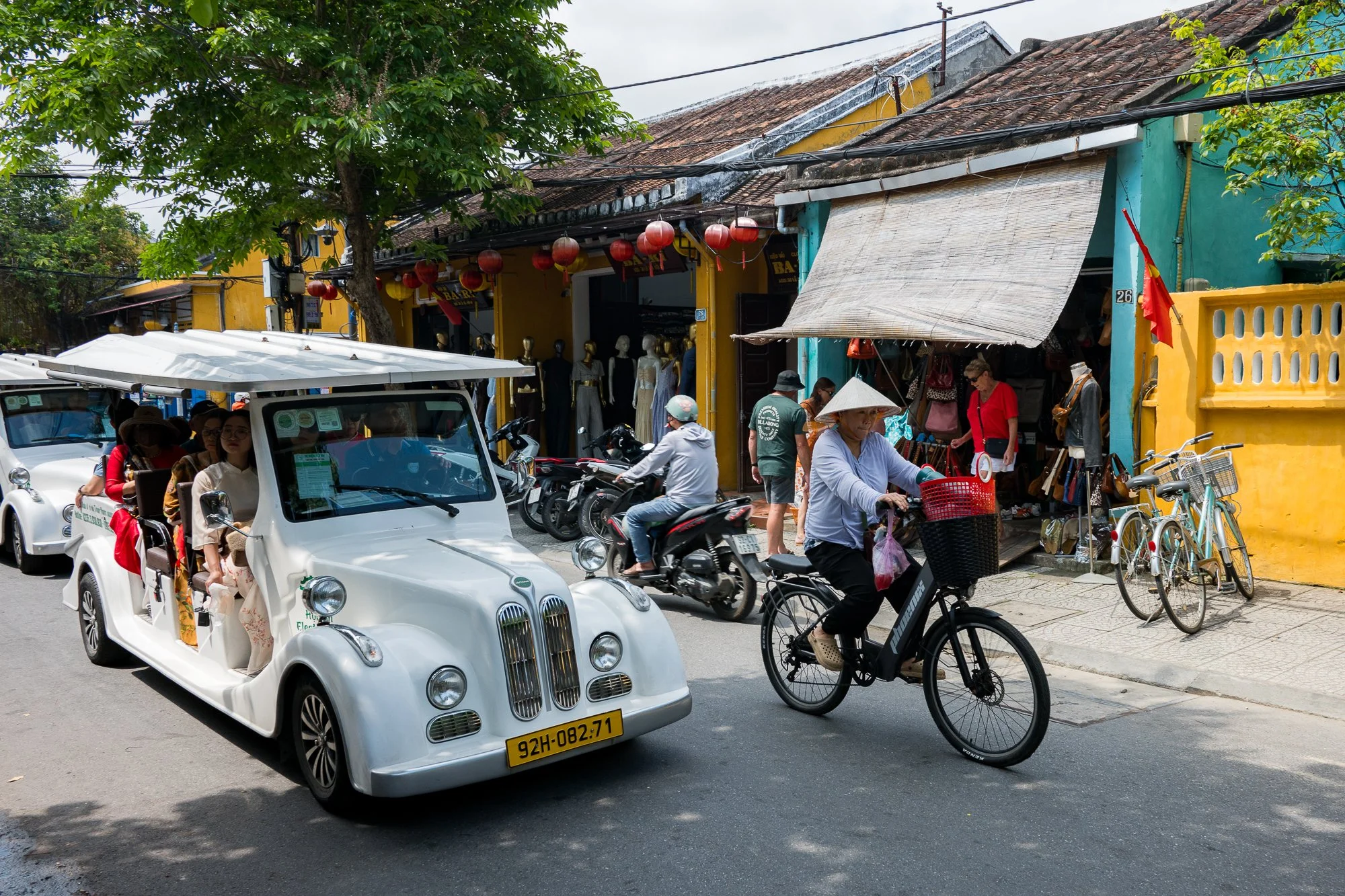
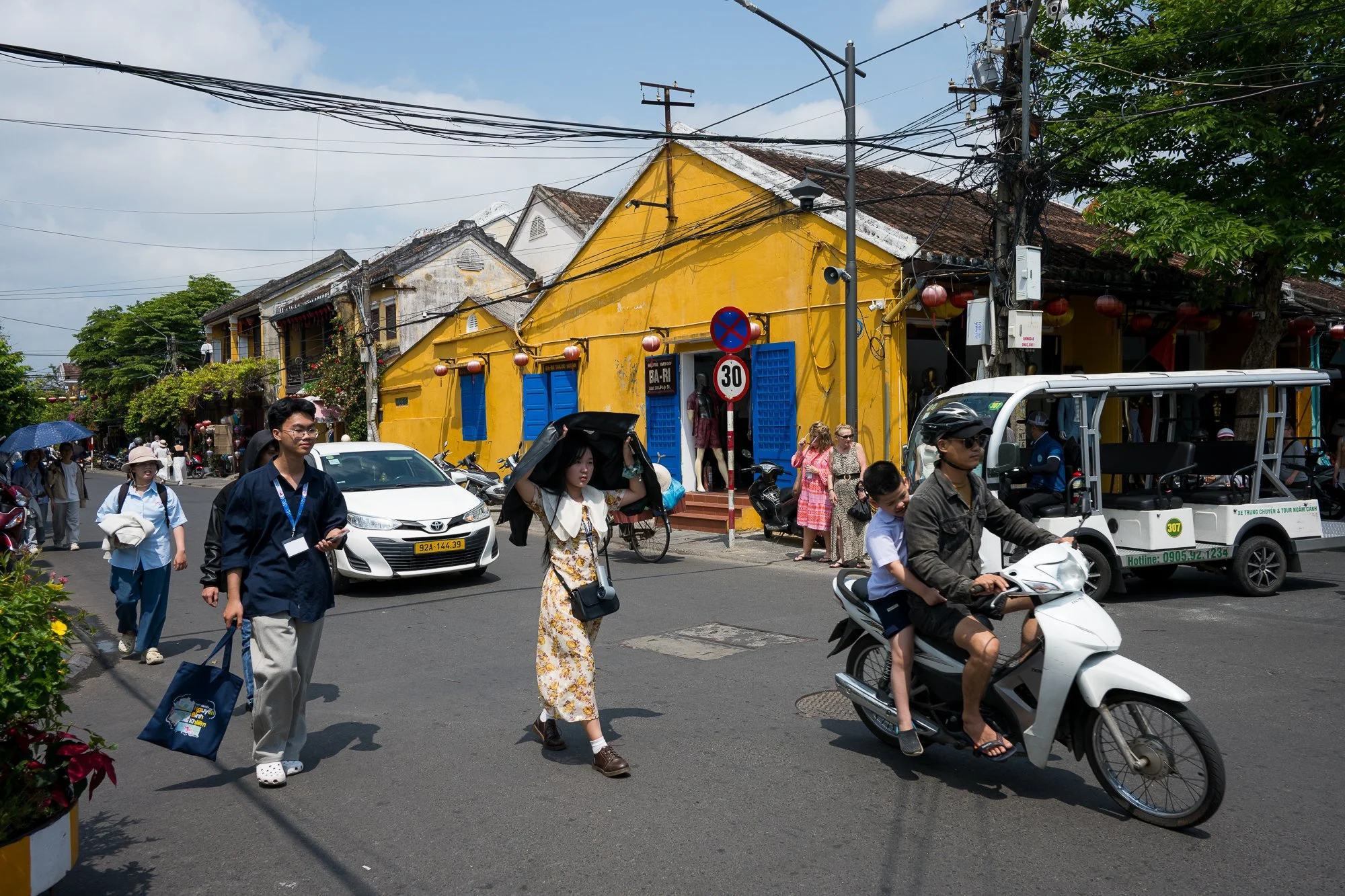
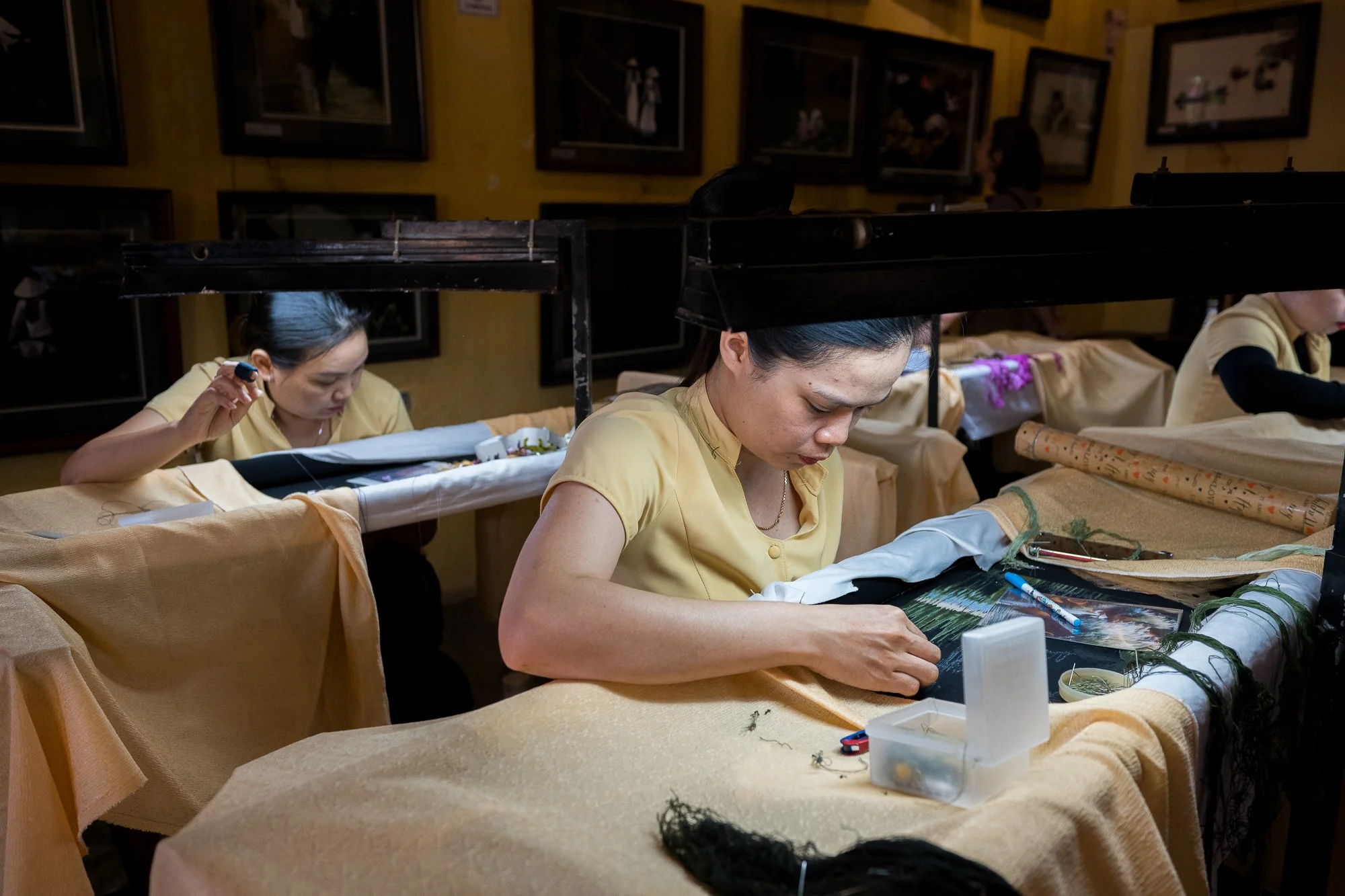
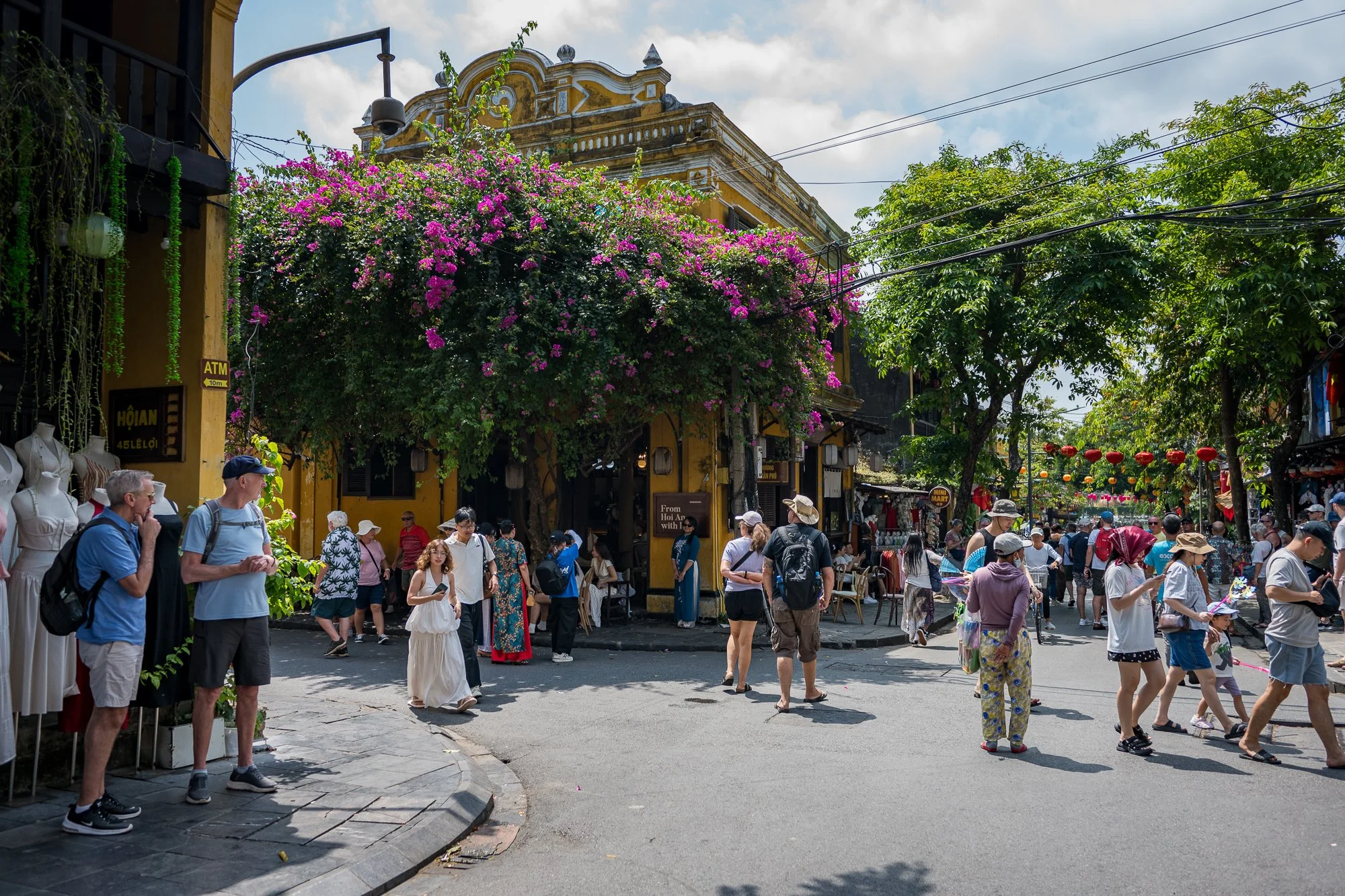
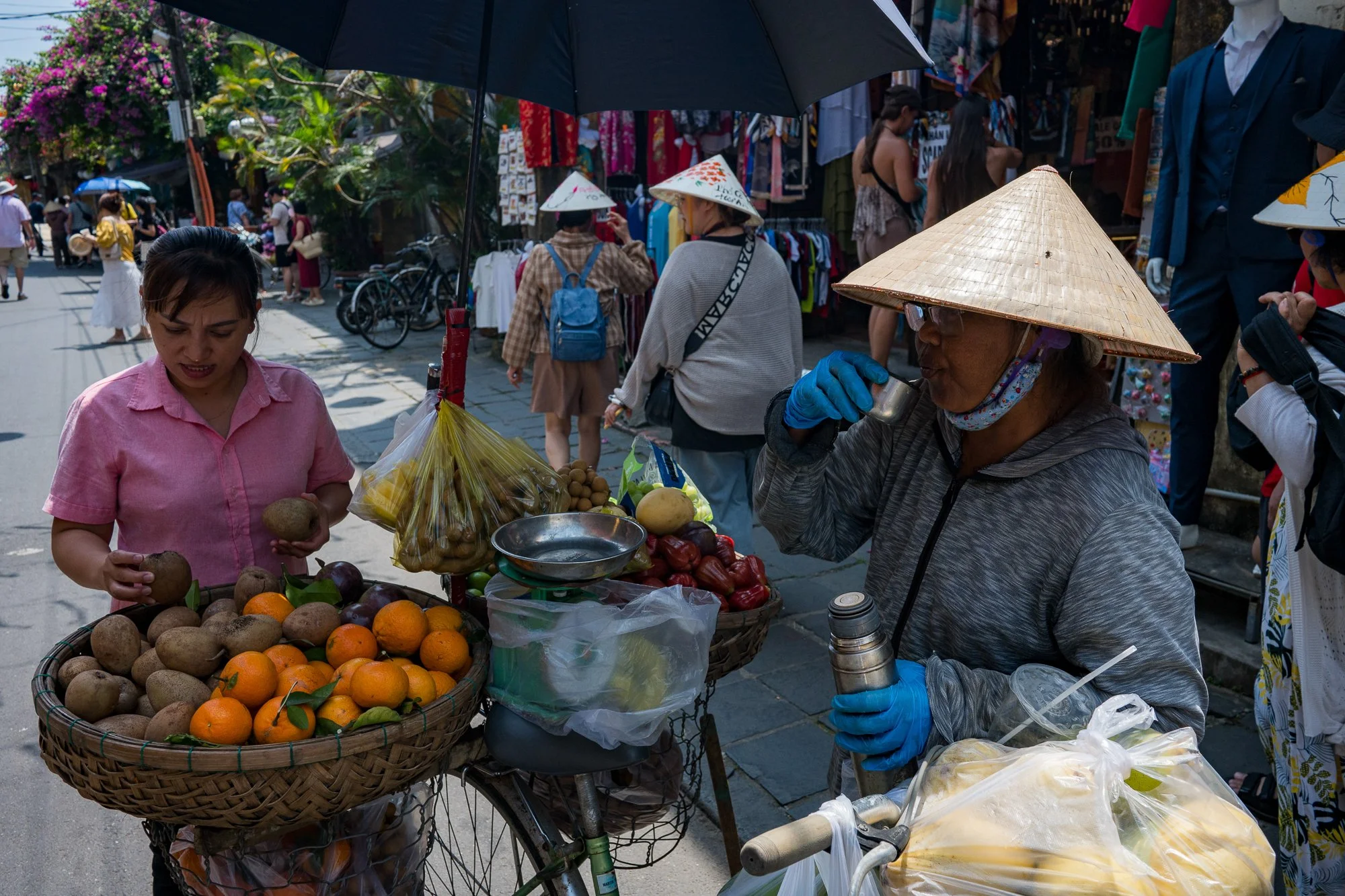
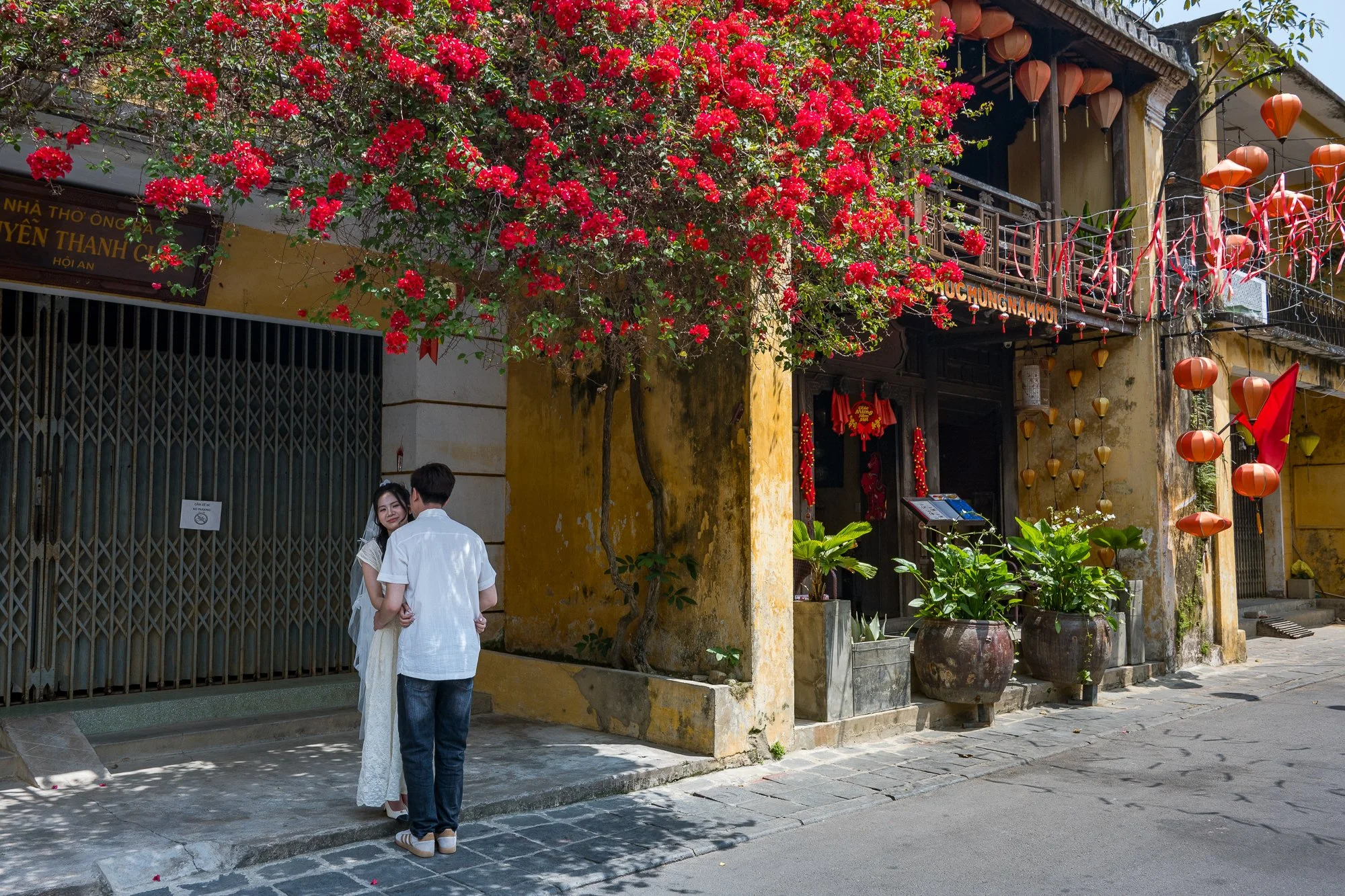
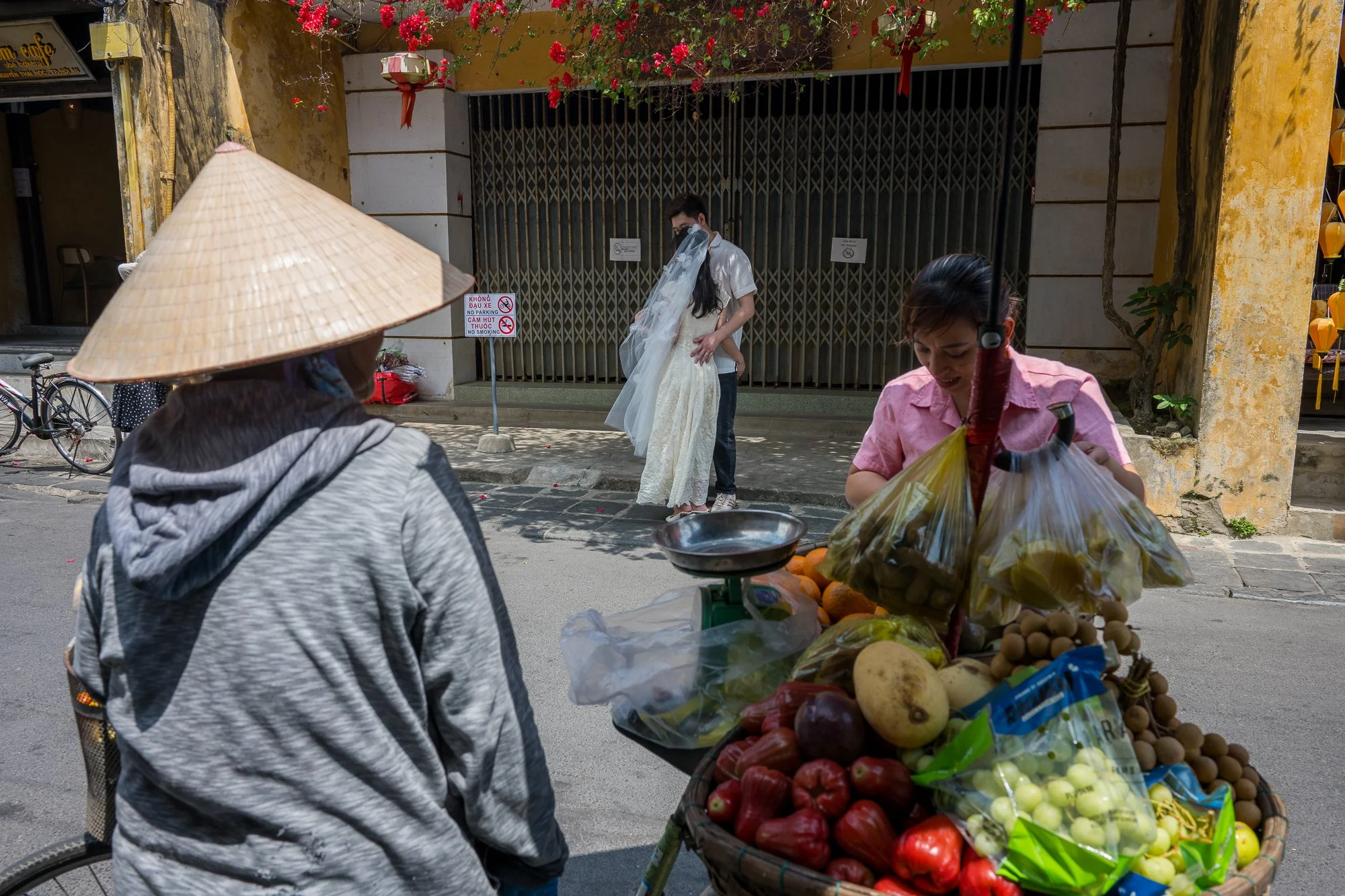
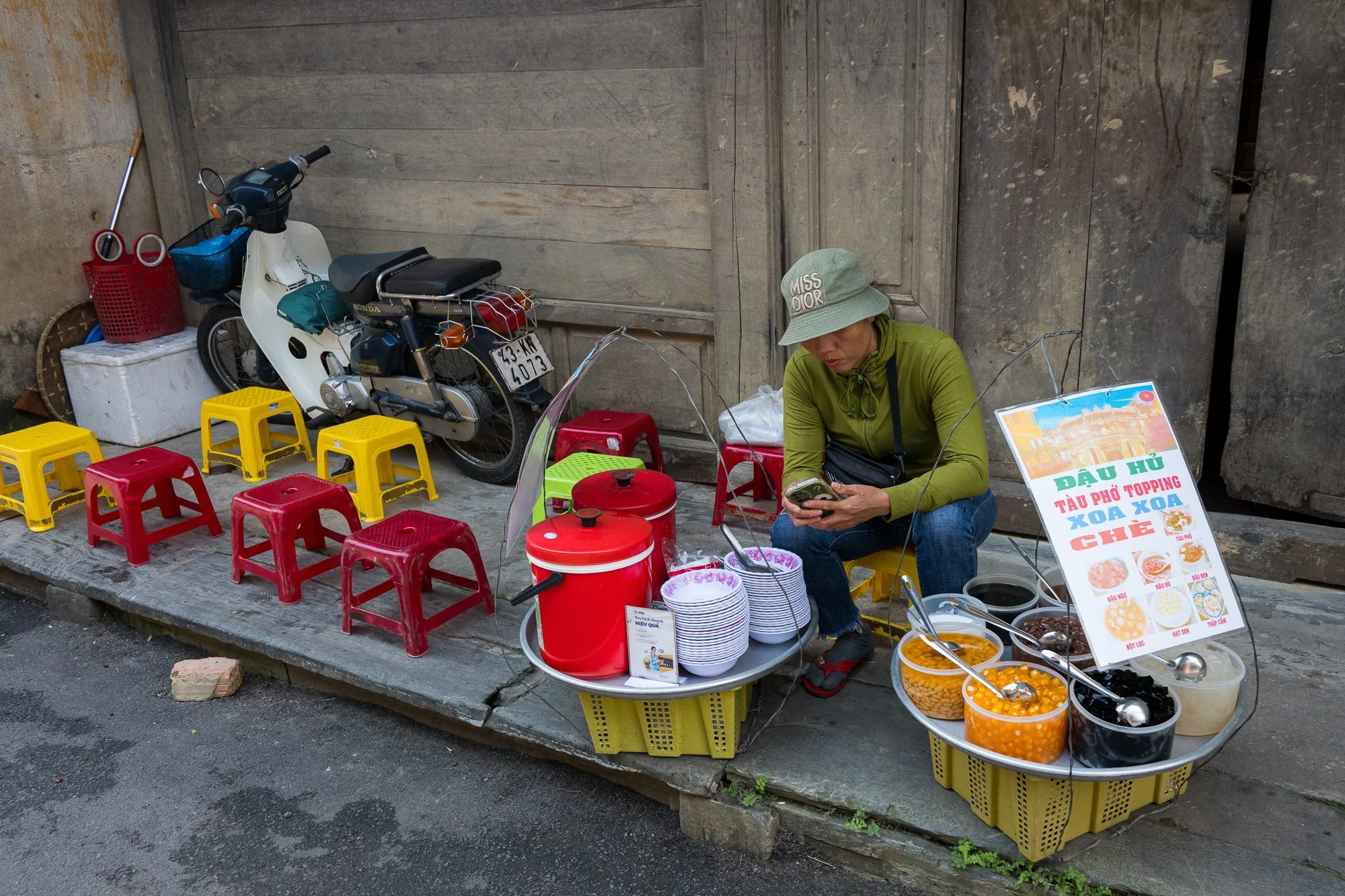
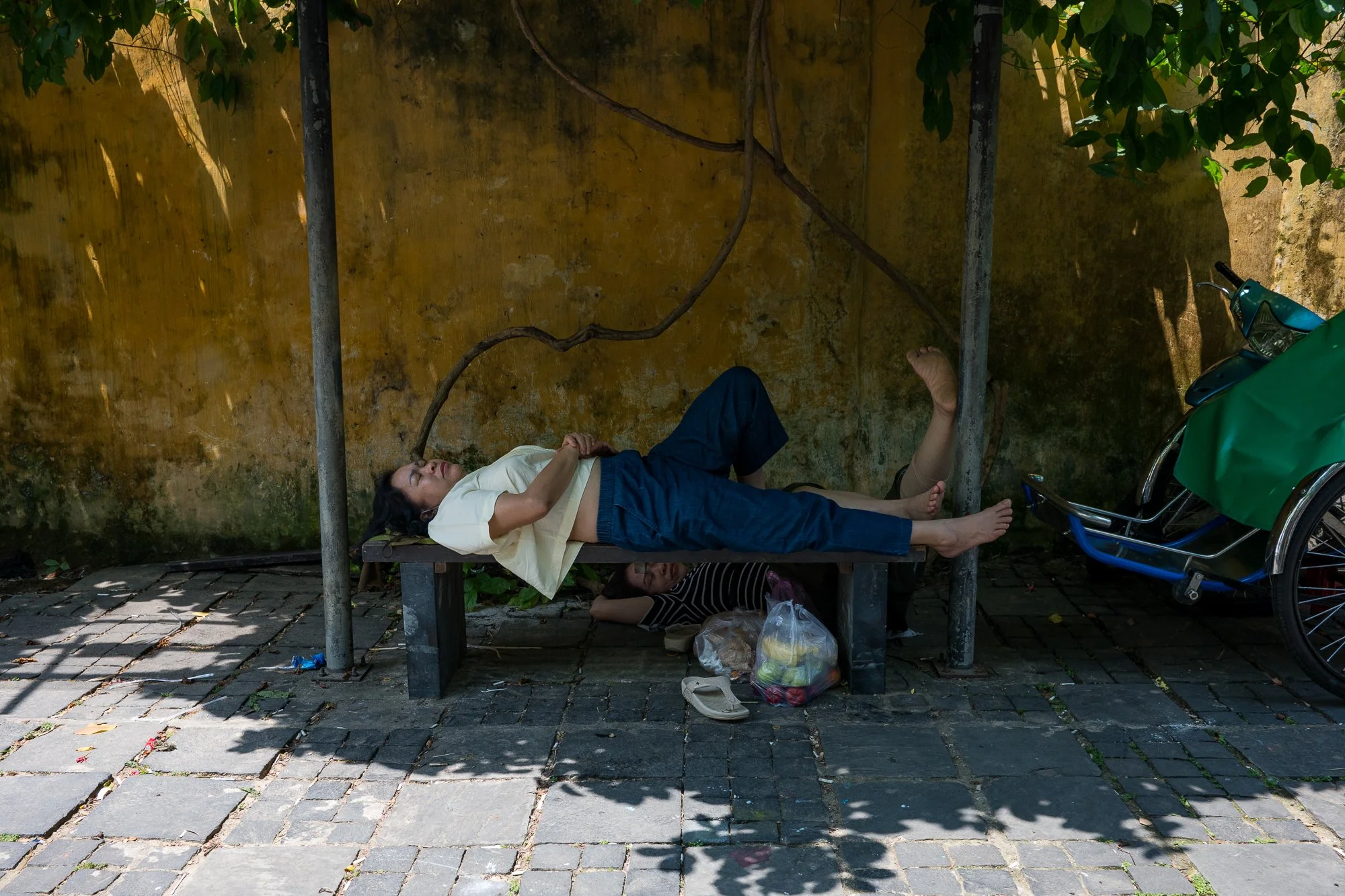
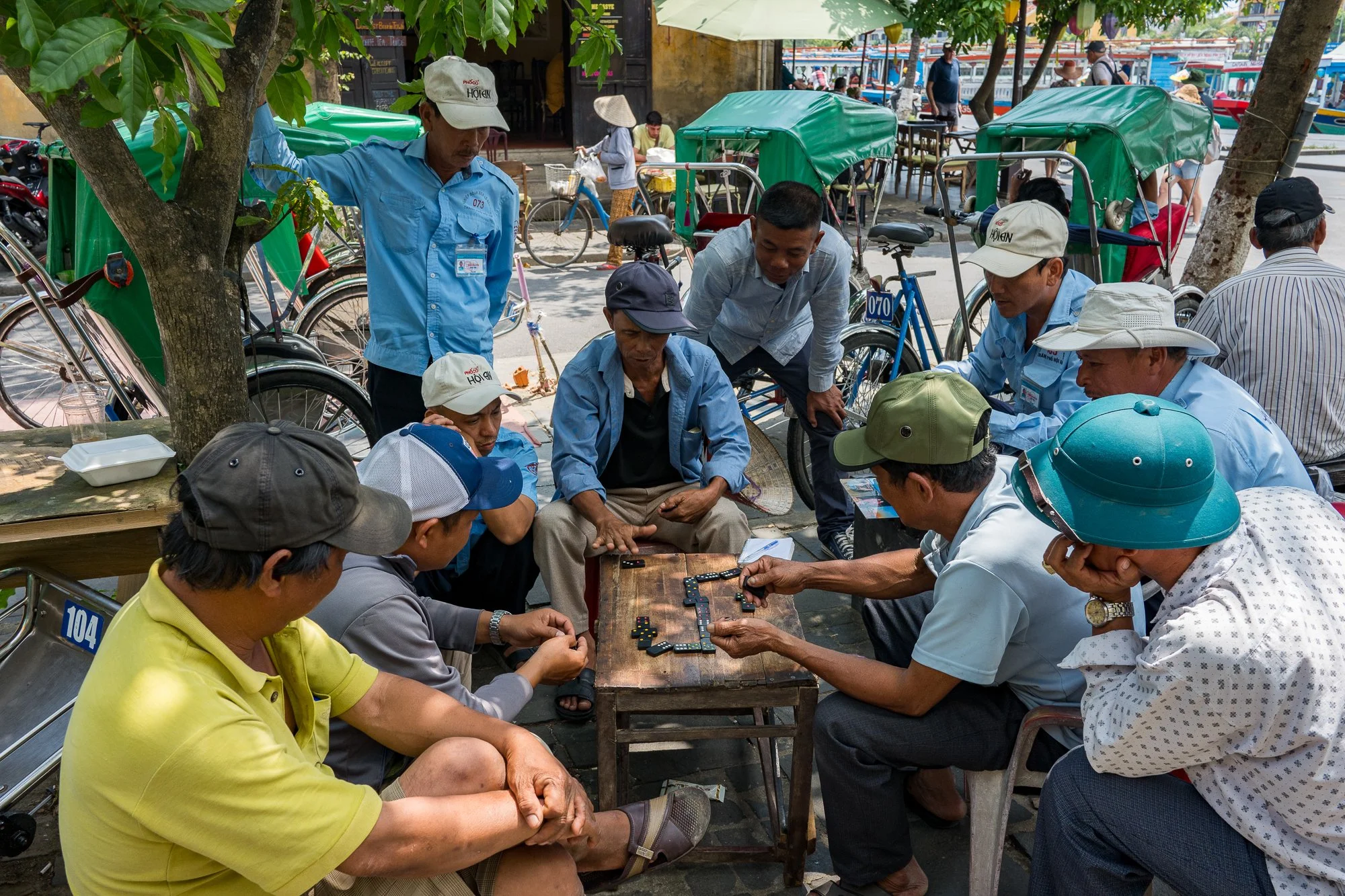
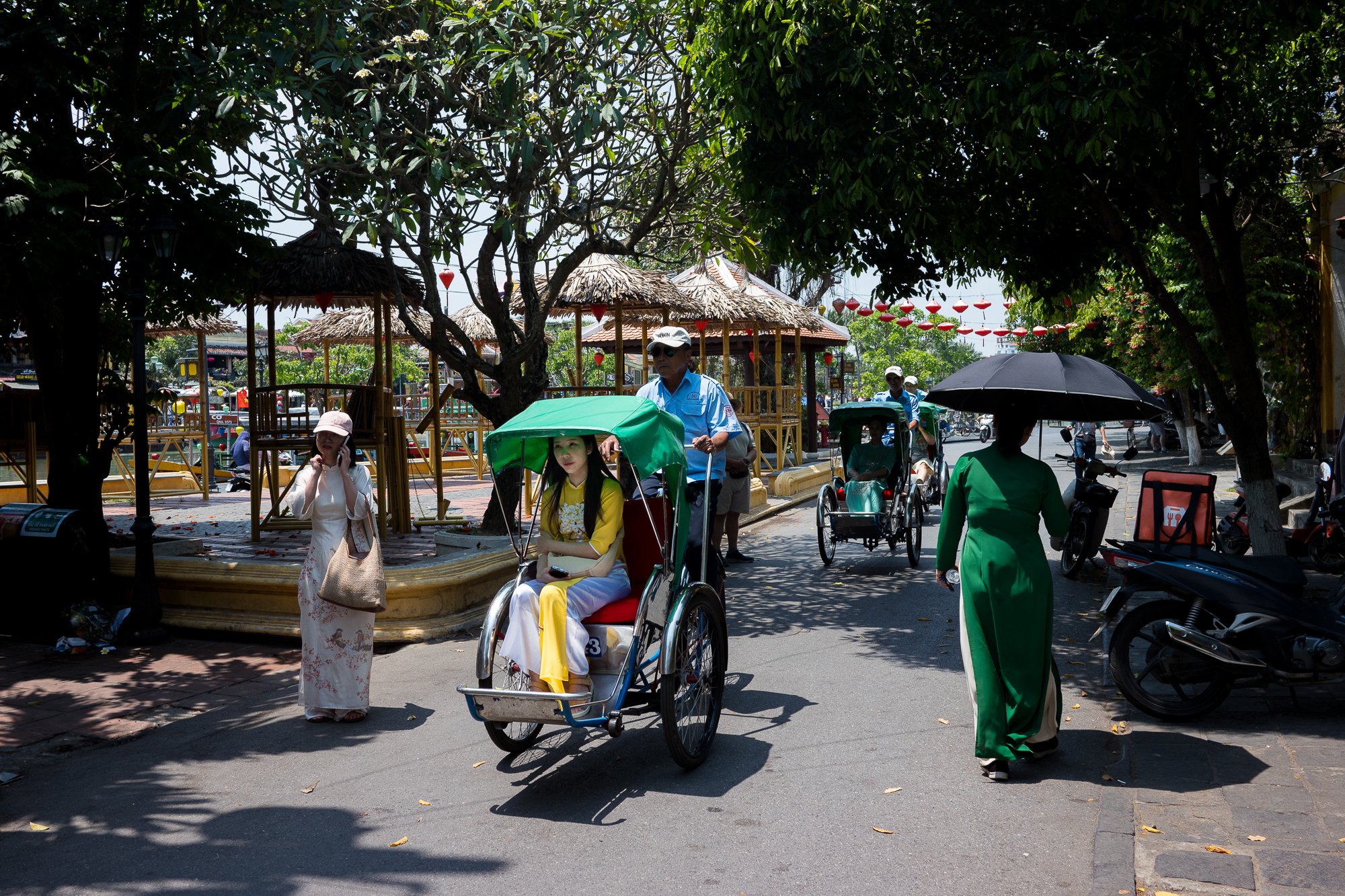
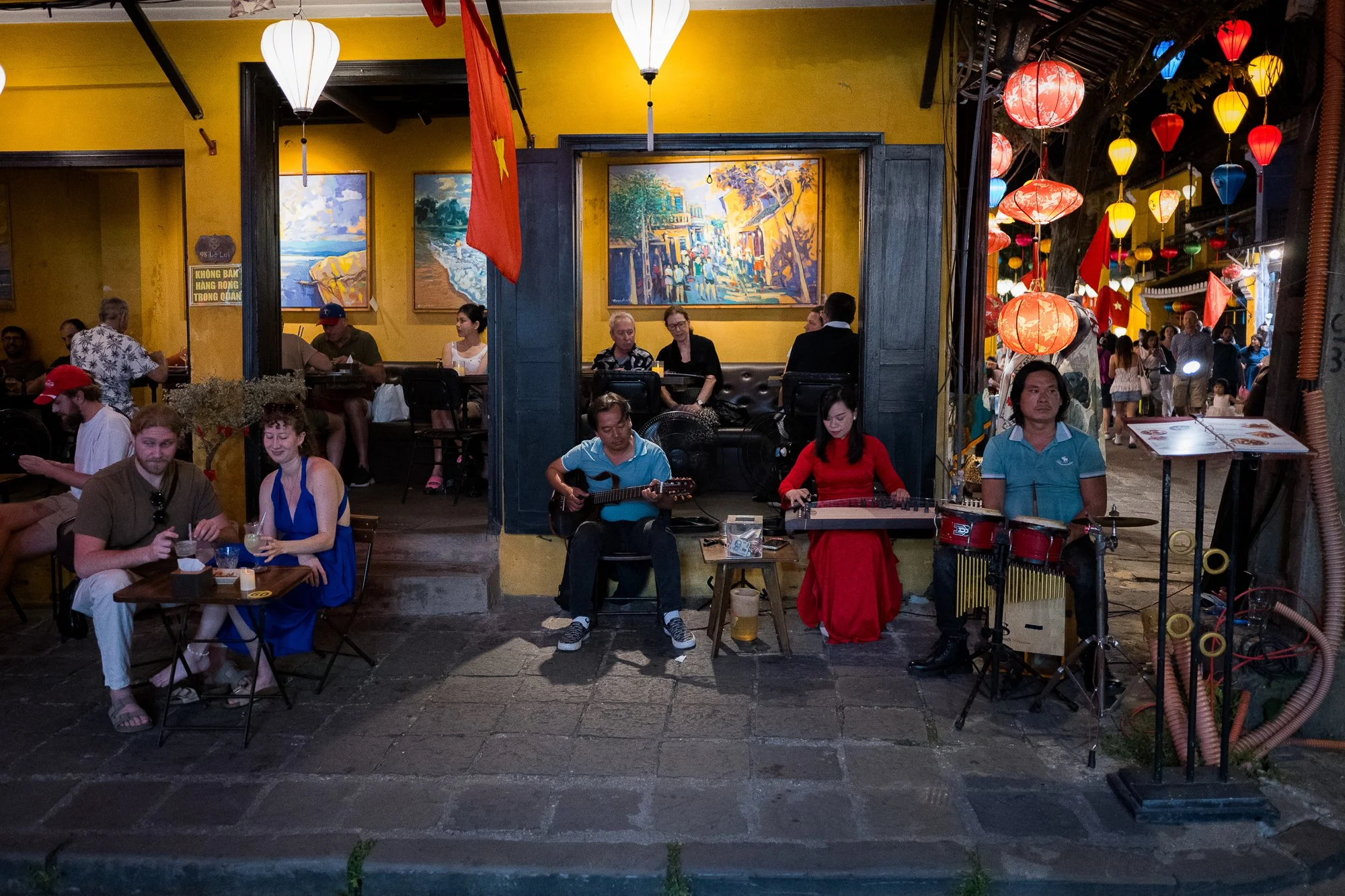
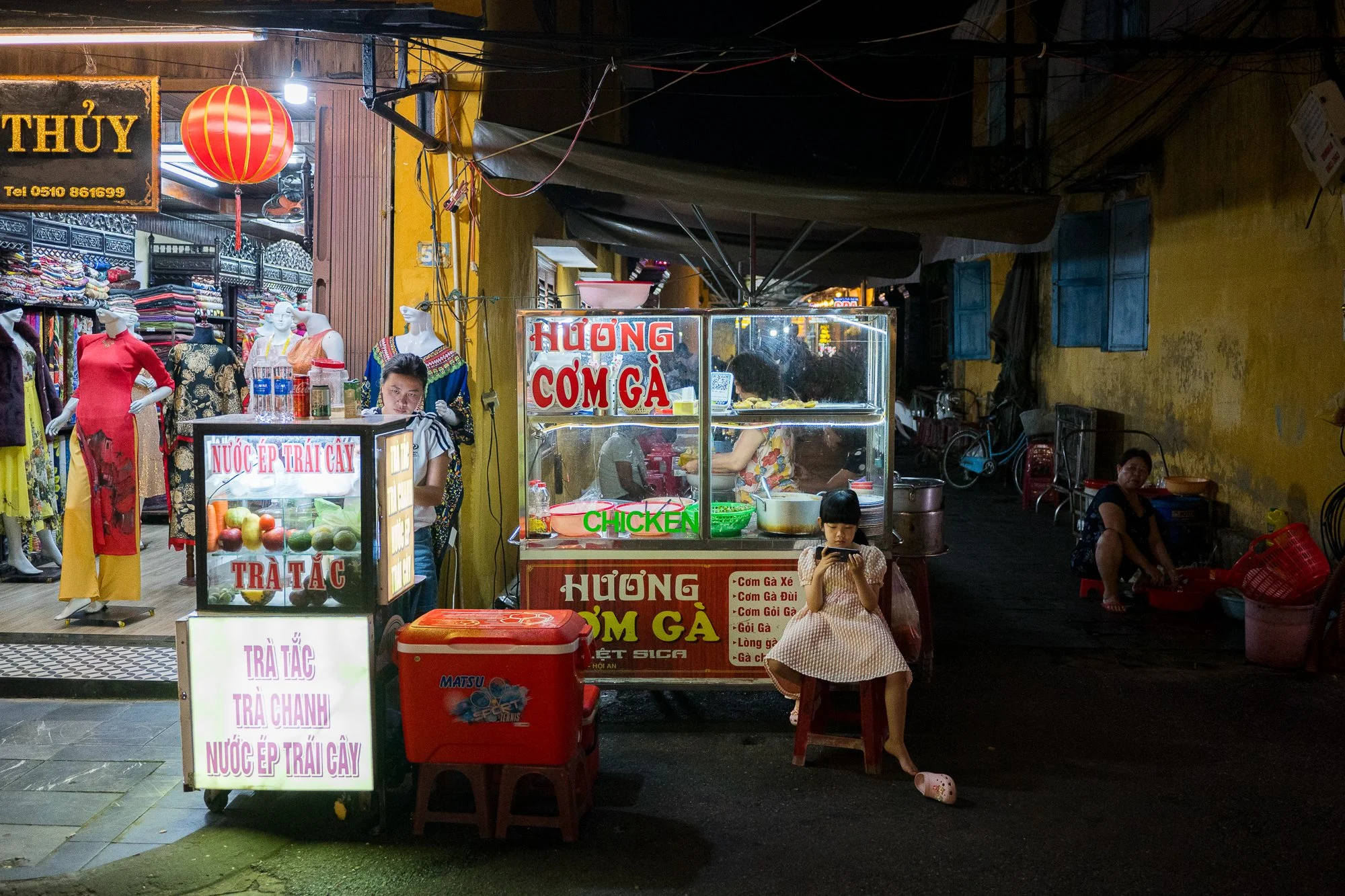
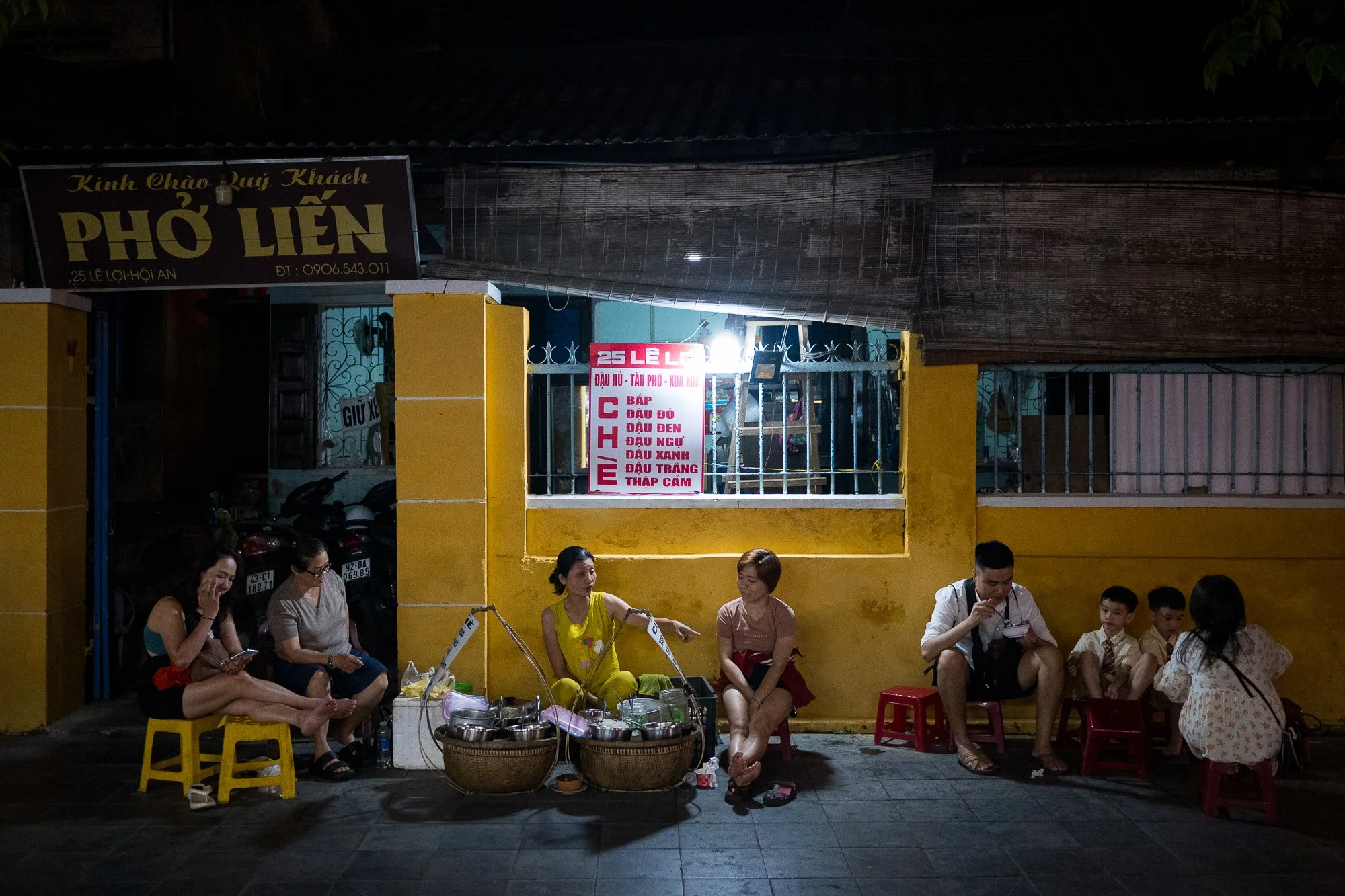
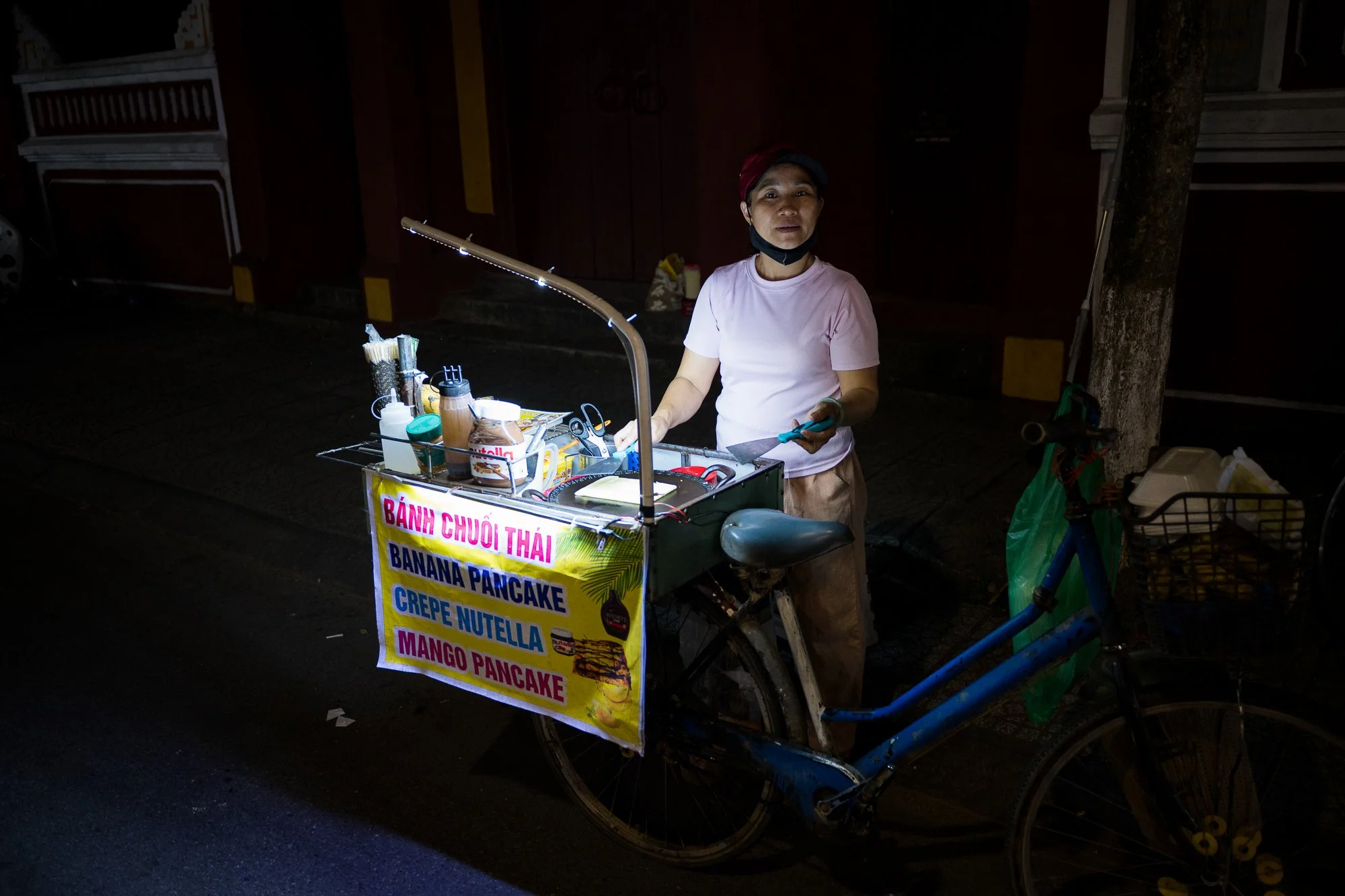
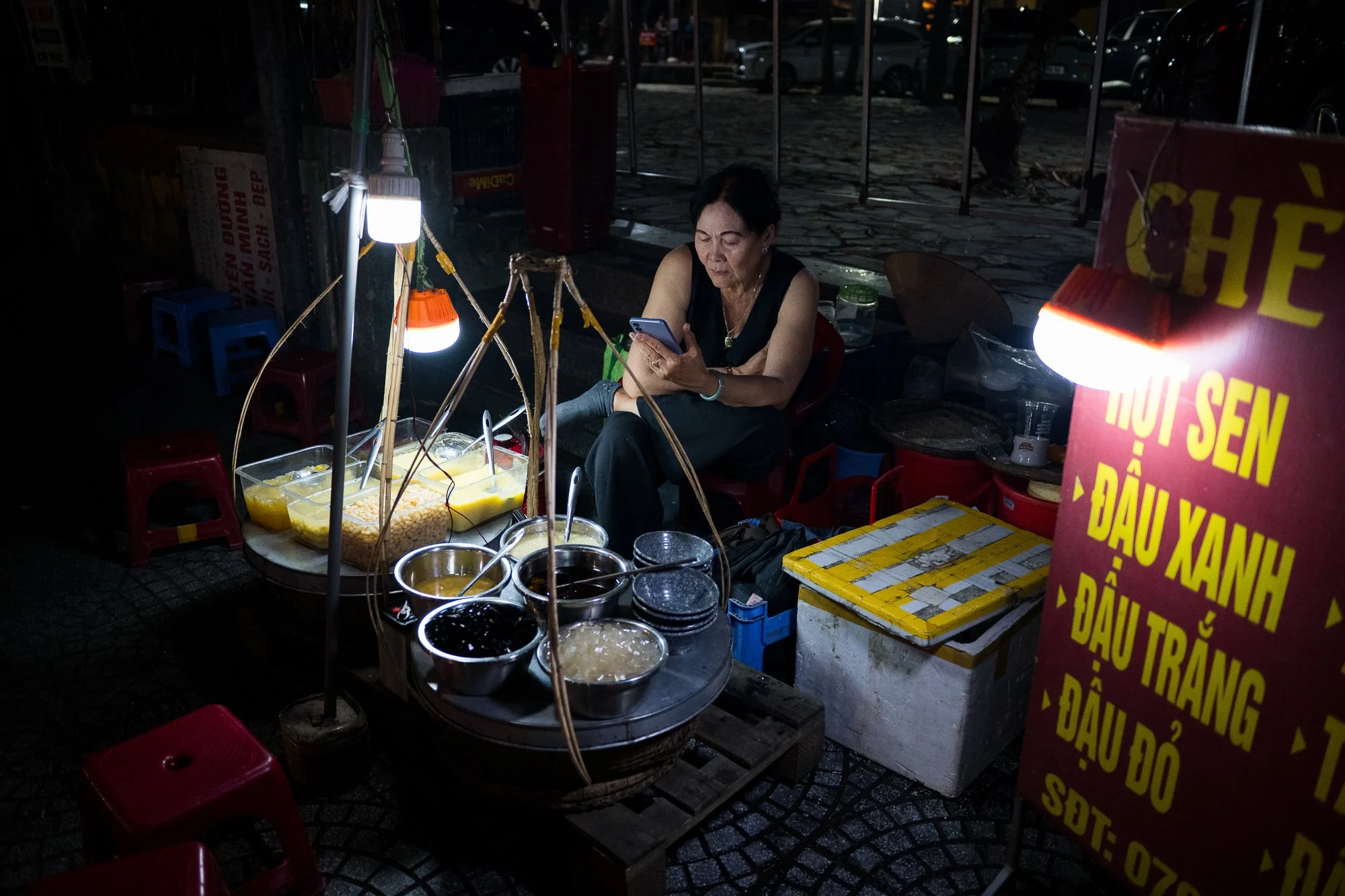
A couple of evenings were spent in Da Nang itself, and the other couple of evenings we spent in Hoi An, including a day trip where we wandered around all the colourful shops of Hoi An. As a friend of mine put it: Hoi An is what Malacca dreams of being. Both are UNESCO World Heritage Sites, both trade on colonial-era shophouses and an old-town atmosphere, but Hoi An has done something Malacca hasn't quite managed, which is to get out of its own way. It was well organised, totally set up for tourists, and the locals were very inviting. Also, many streets within the main area were vehicle-free thoroughfares, making it even more fun to walk around and sightsee. It is known as a place to get almost anything you want tailored: shirts, pants, suits, dresses, they do it all there for a good price. This was on my agenda - to get a nice jacket/blazer tailored for myself whilst we were there, but alas, with the kids in tow, there wasn’t enough time for me to steal a moment to get it done. So the jacket will have to wait for another trip.
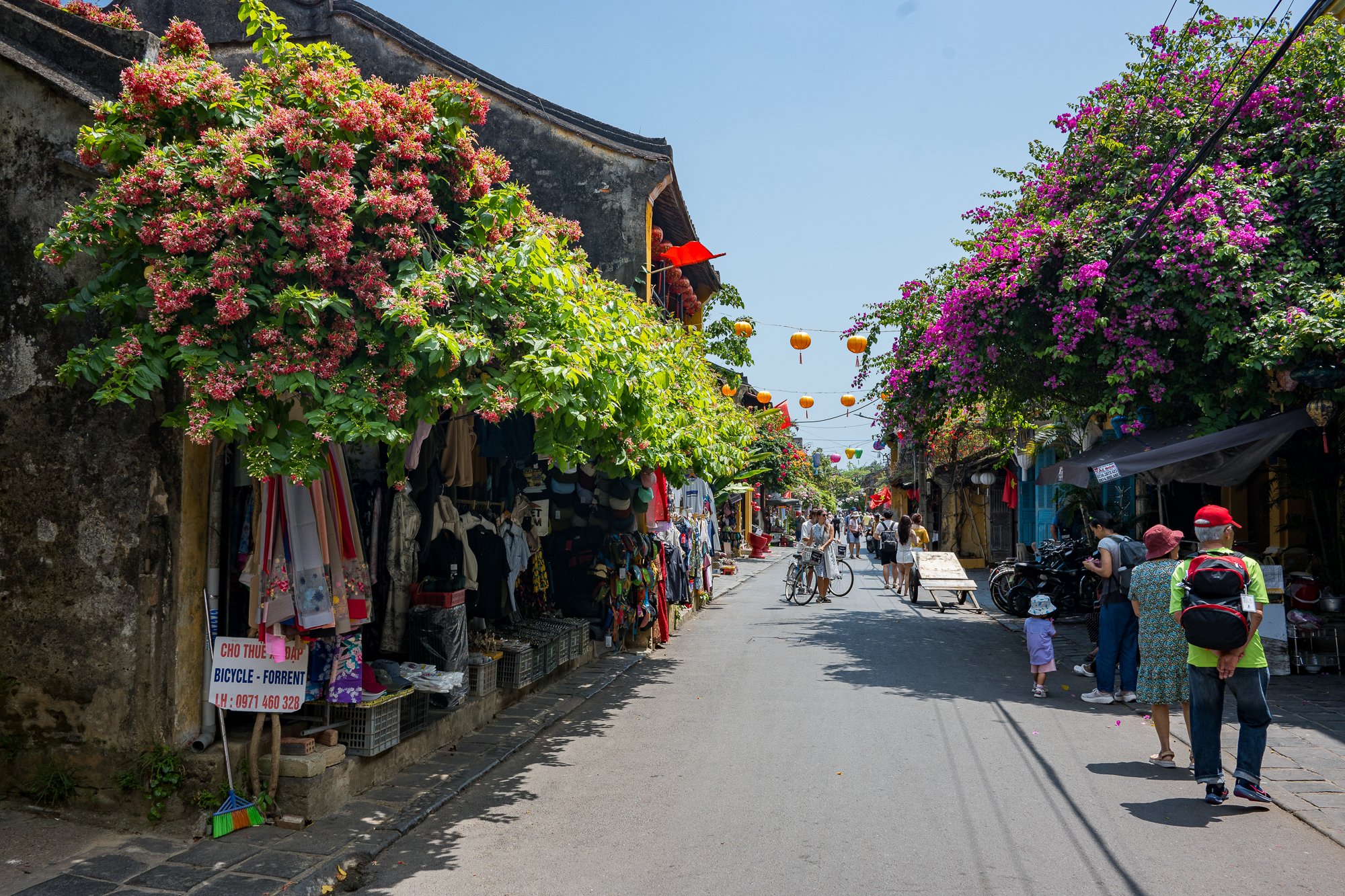
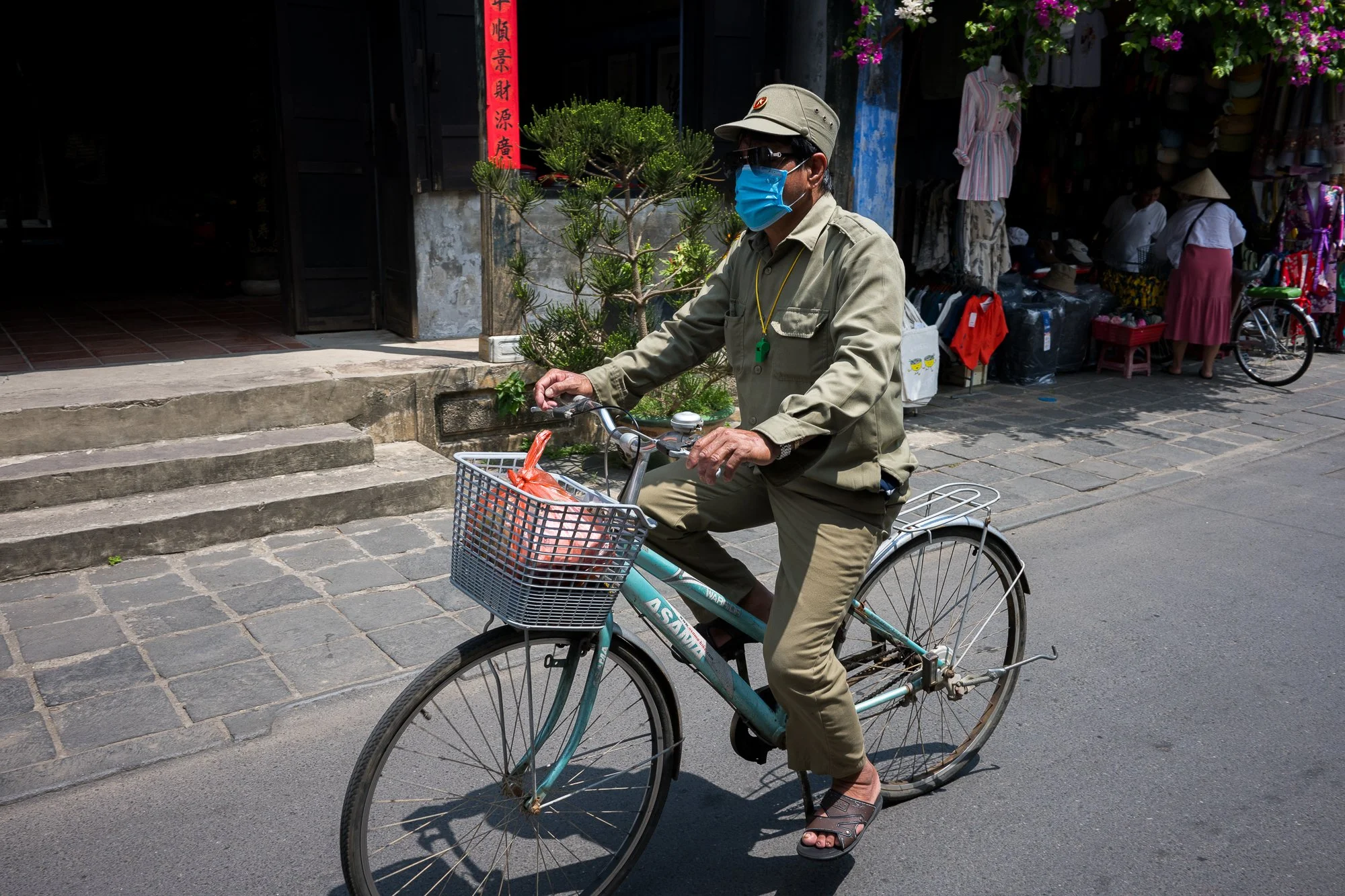
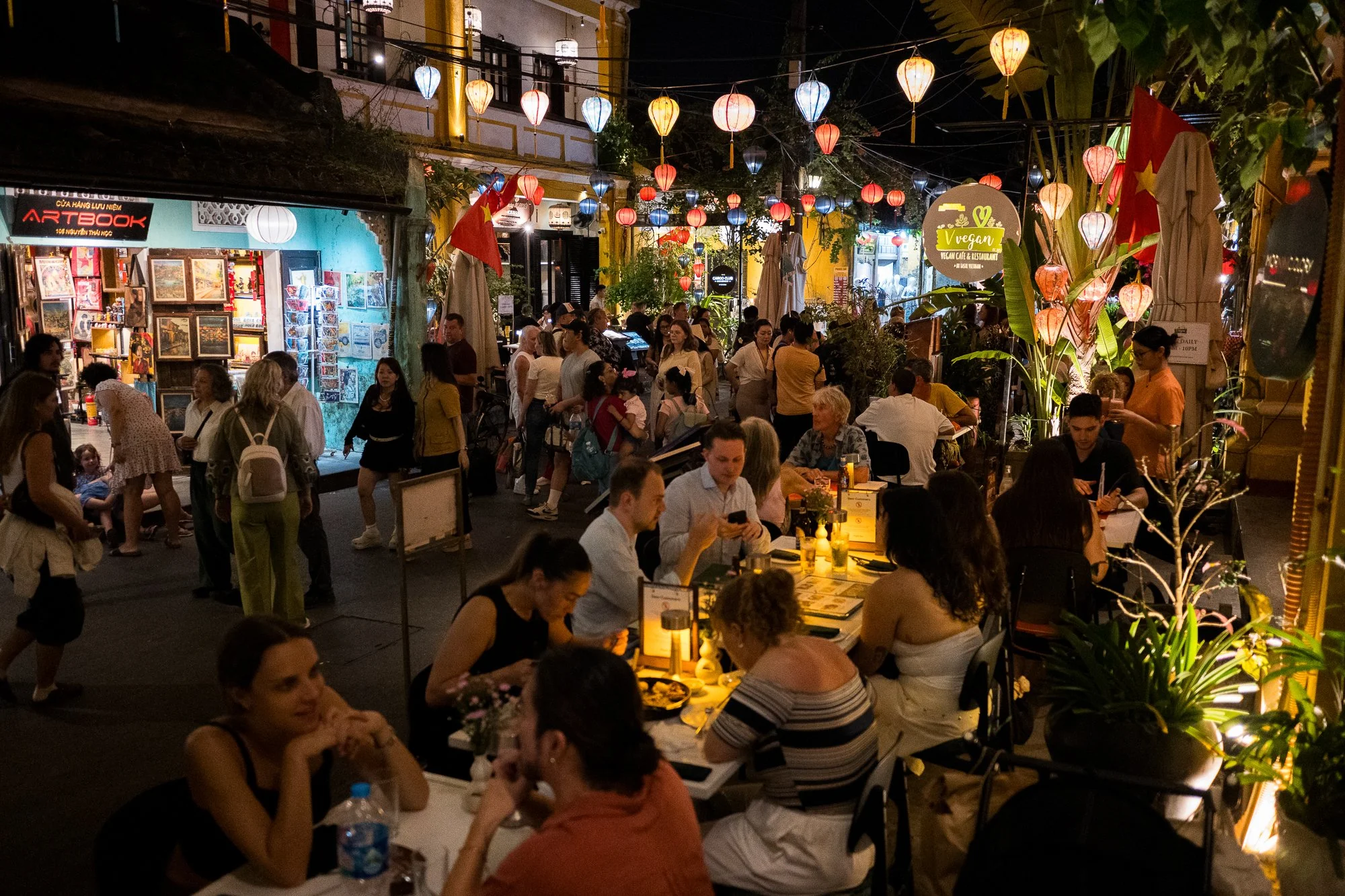
A typical street scene in Hoi An.
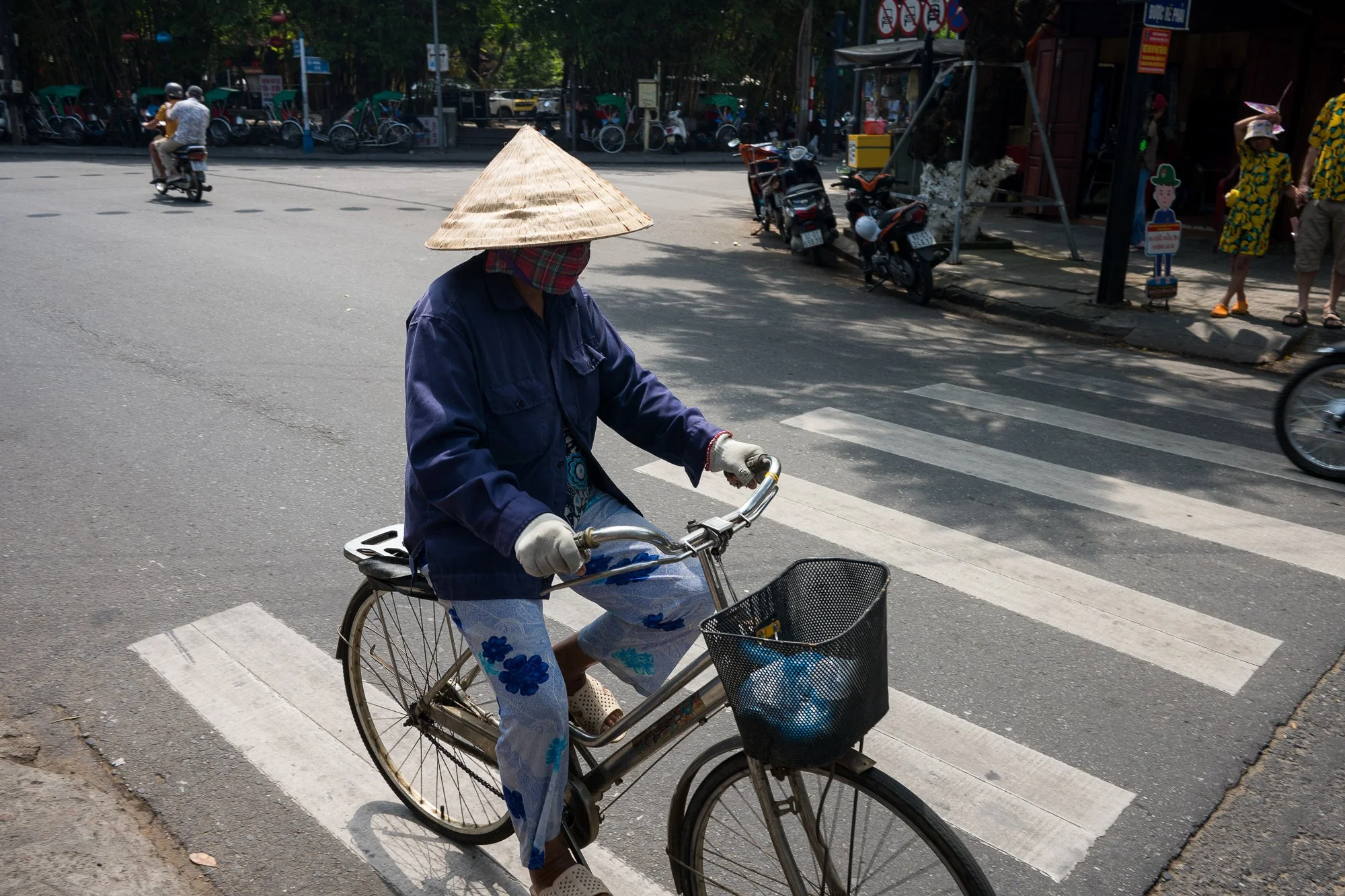
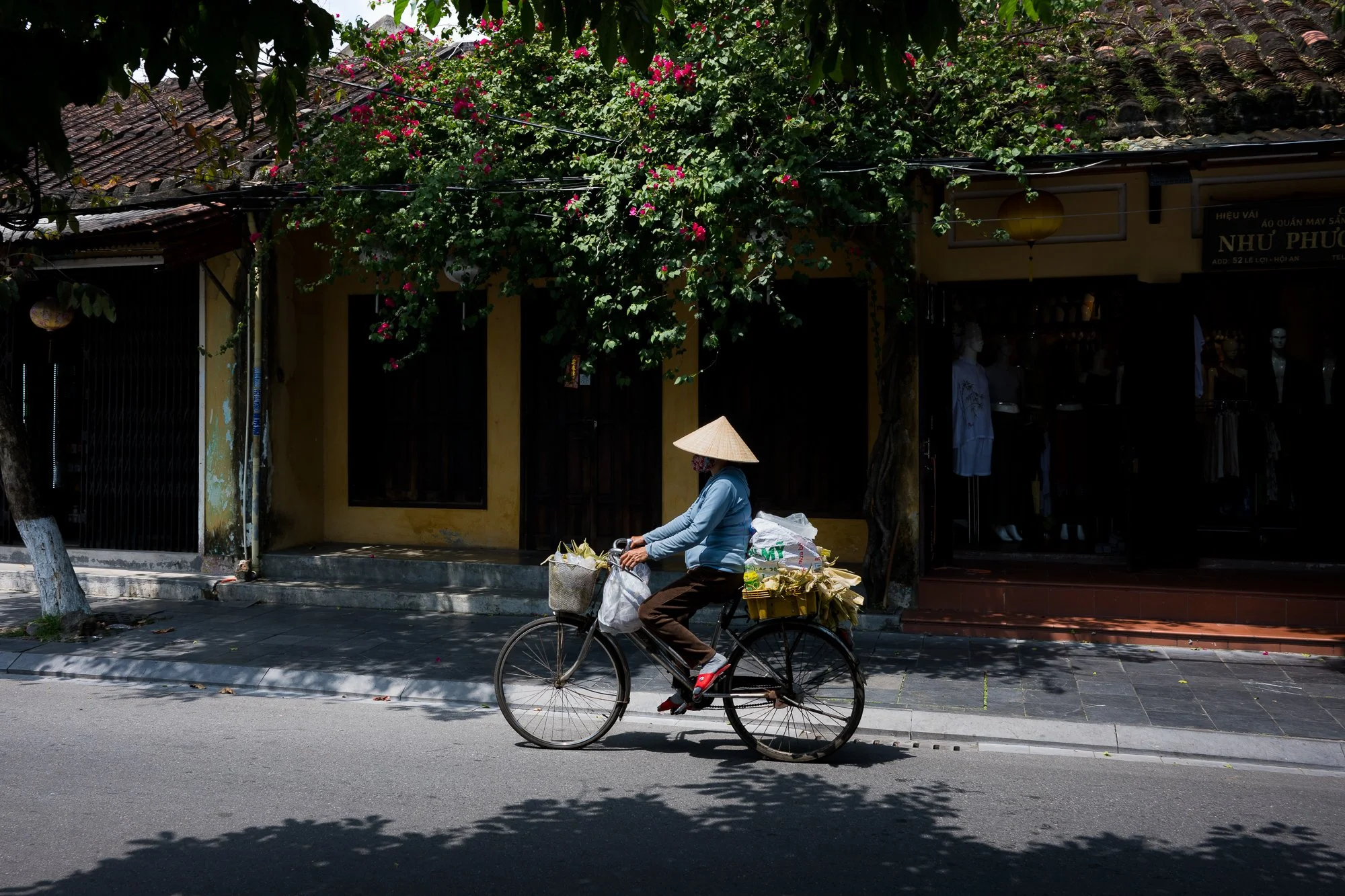
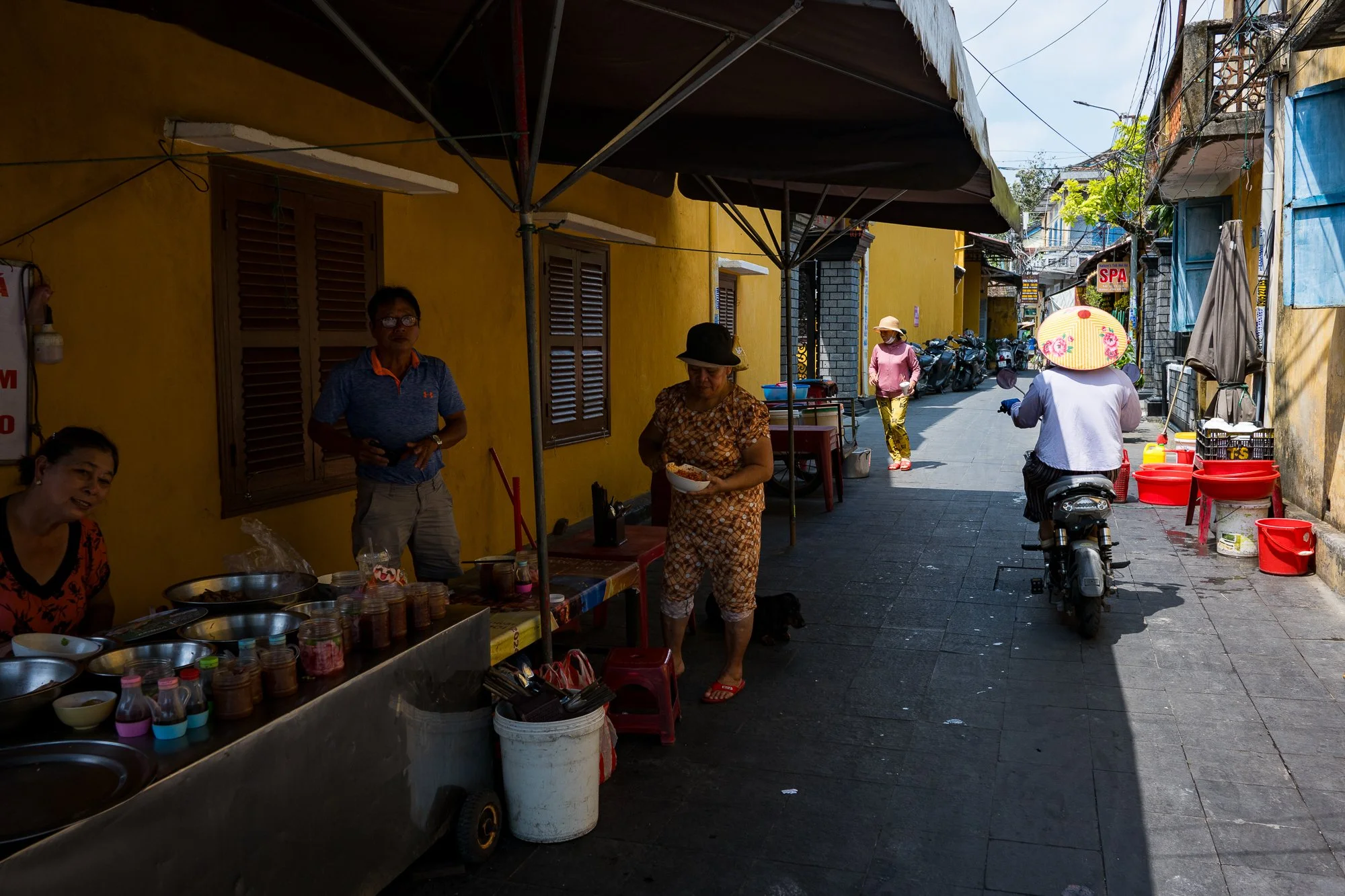
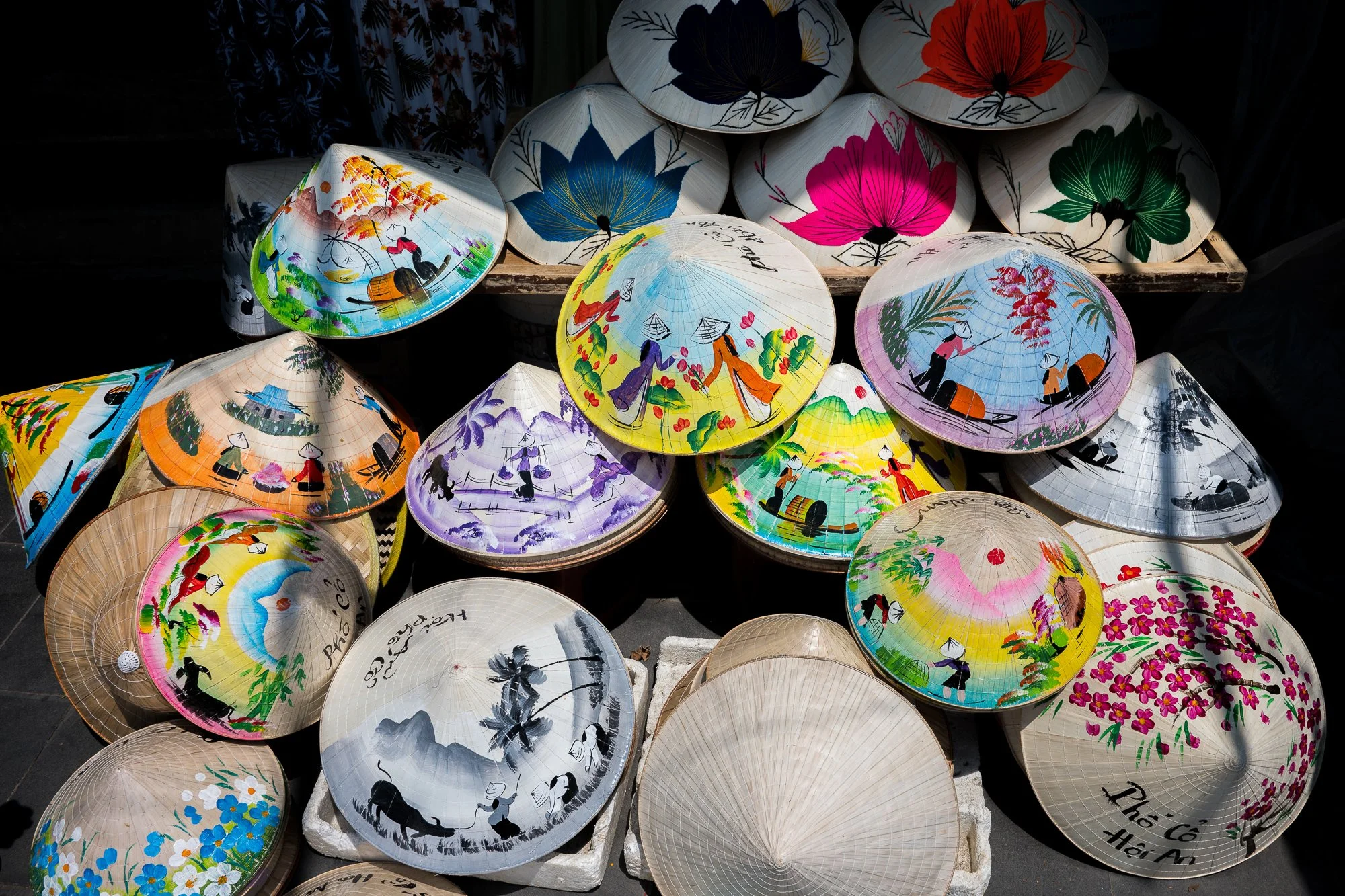
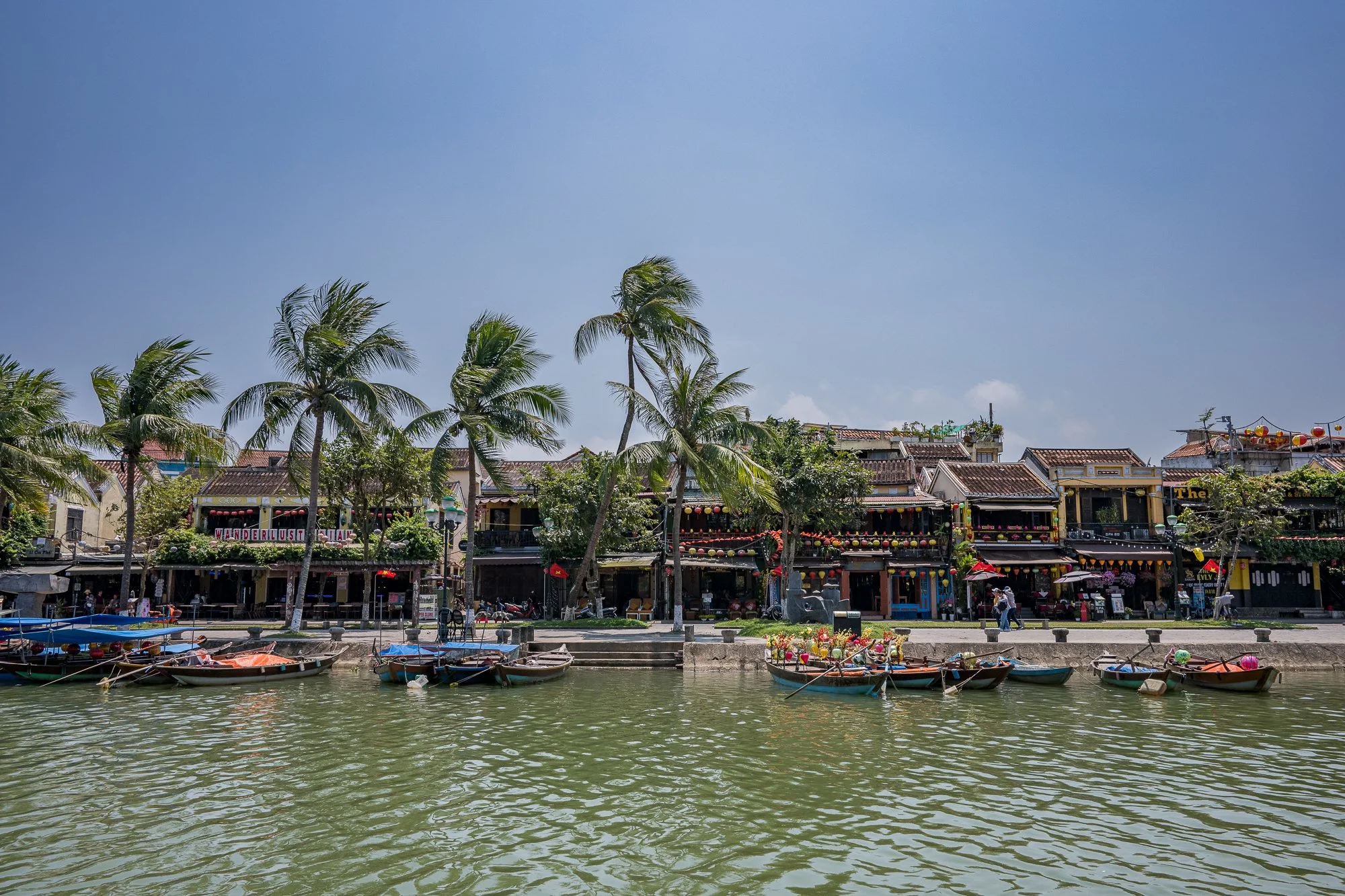
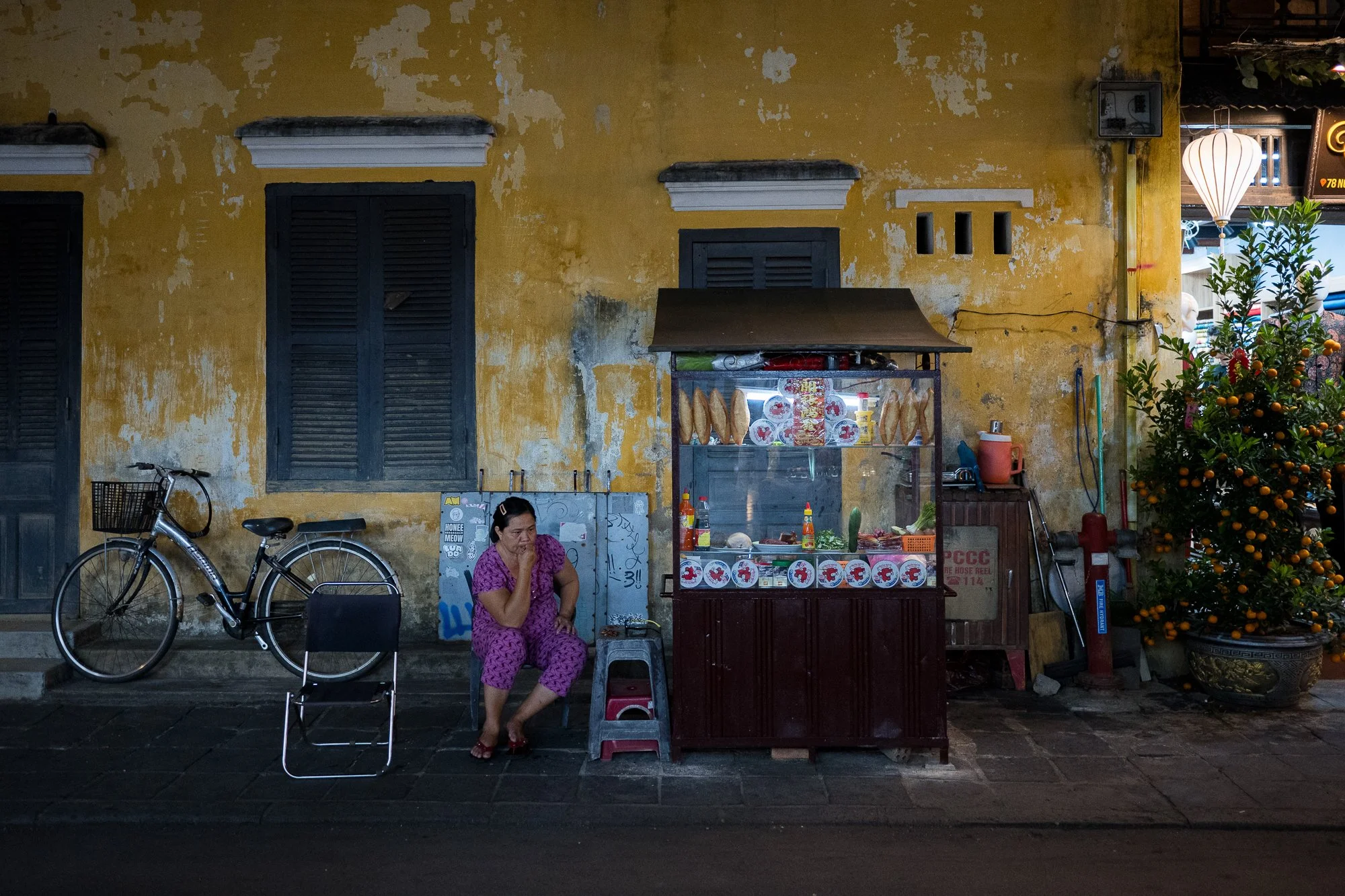
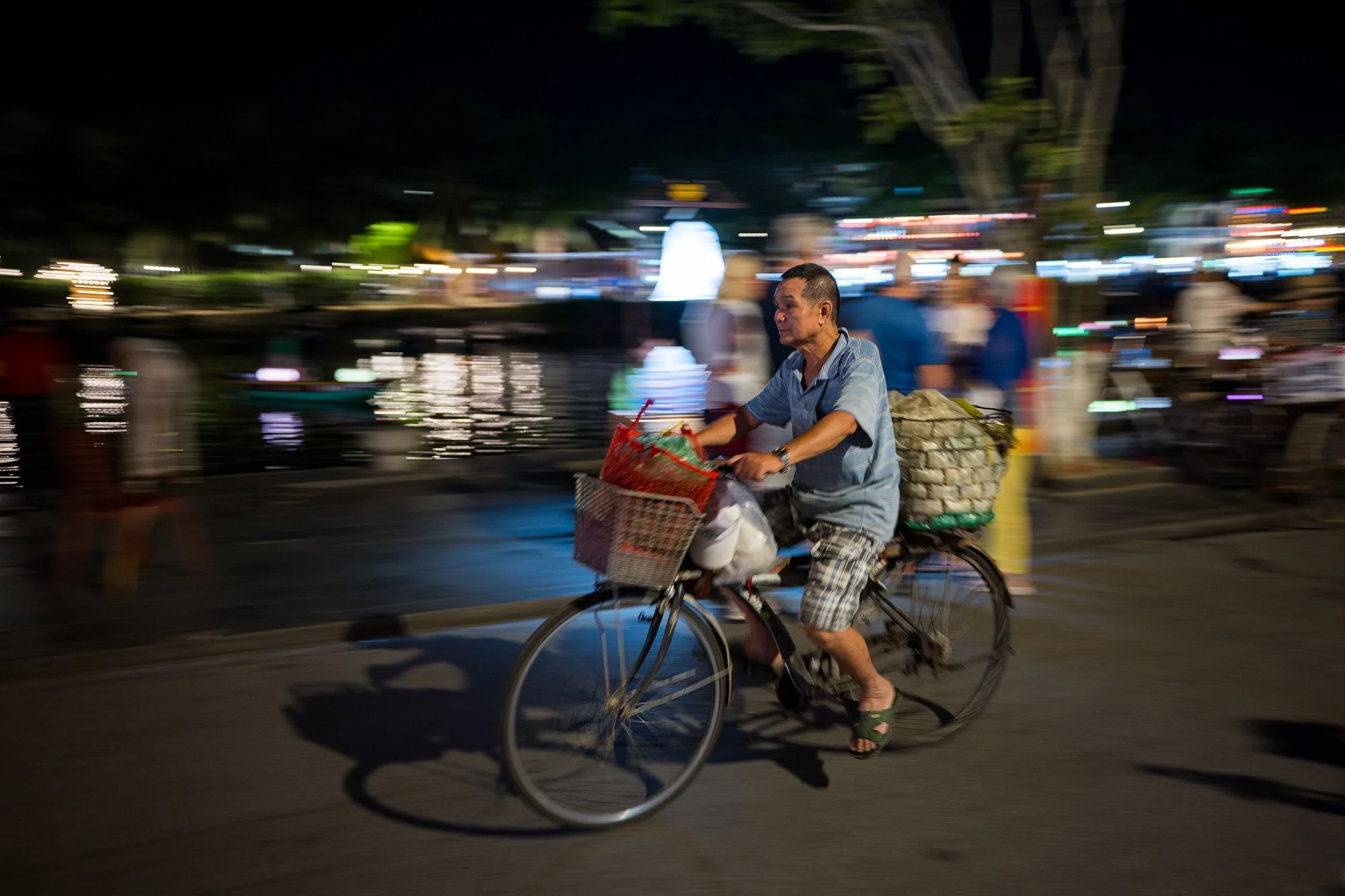
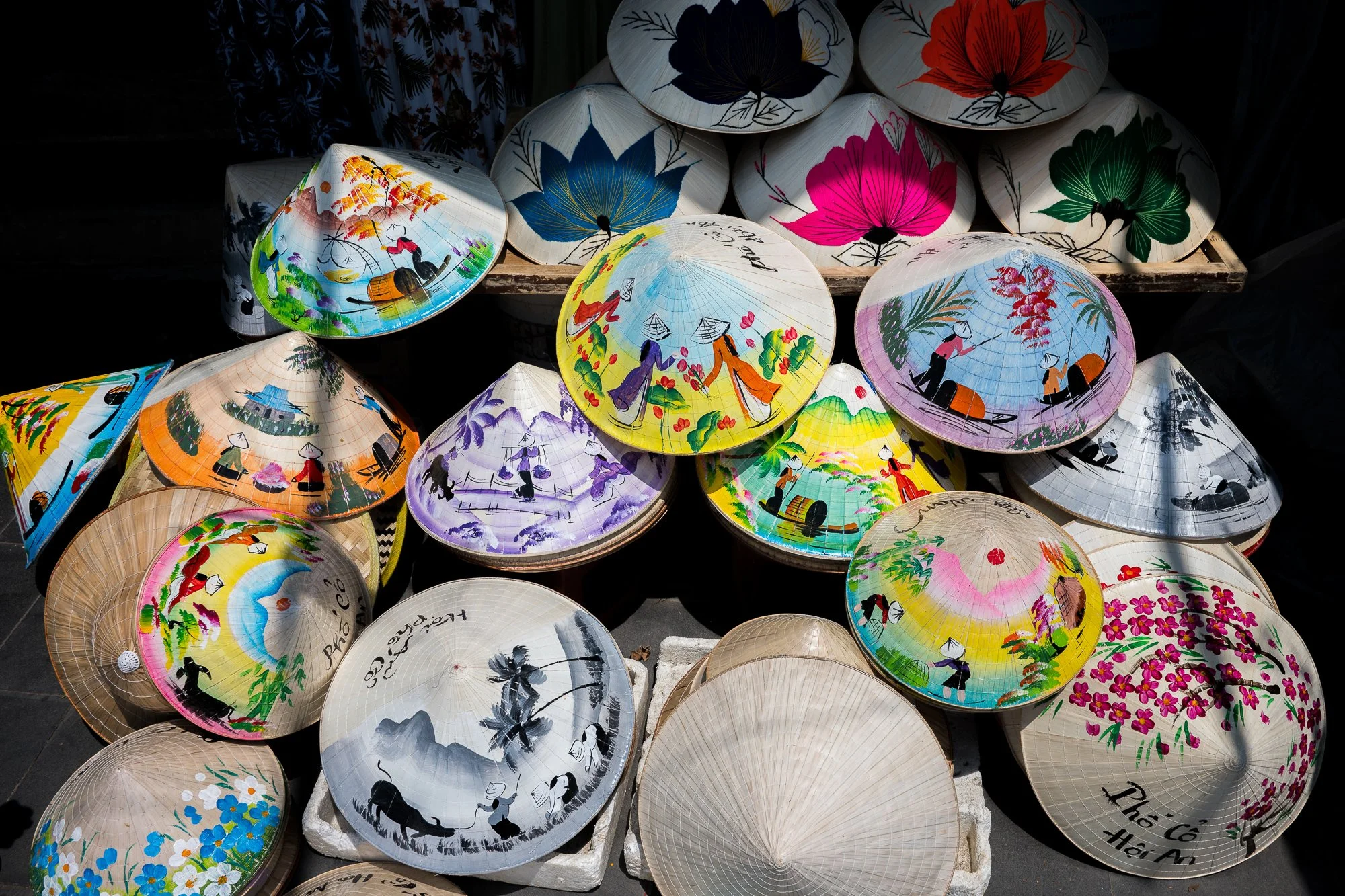
The city itself, framed against the Thu Bon River, is picturesque. The whole place is yellow. Not a gentle, creamy yellow - actual yellow, like someone settled on a single paint colour sometime in the 19th century and everyone's been loyally committed to it ever since. Or they are fans of OG Coldplay, maybe that. These yellow buildings frame the colourful tailors and seamstresses that line the streets. Almost every other shop is a tailor shop. people on their bicycles going about their daily routines, topped off with the iconic cone hat of Vietnam, the Nón Lá (meaning "leaf hat"). Initially worn by both men and women, the hat was primarily designed to protect farmers from Vietnam's harsh tropical sun and monsoon rains during rice cultivation. Over time, it became universally associated with agricultural workers and everyday people across the country, and also, now, a tourist souvenir to buy and take home. - Thanks, Wikipedia, for the info.
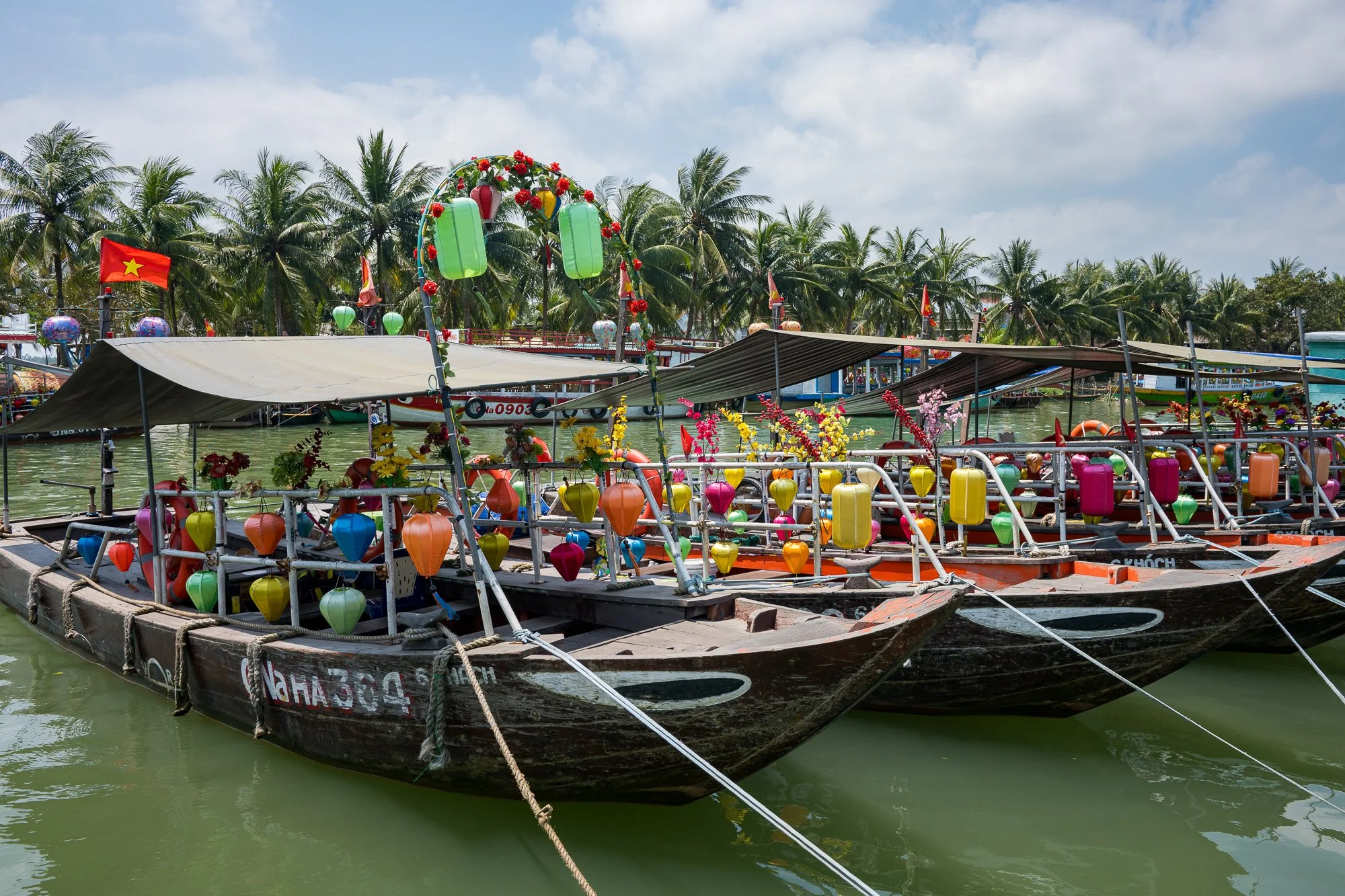
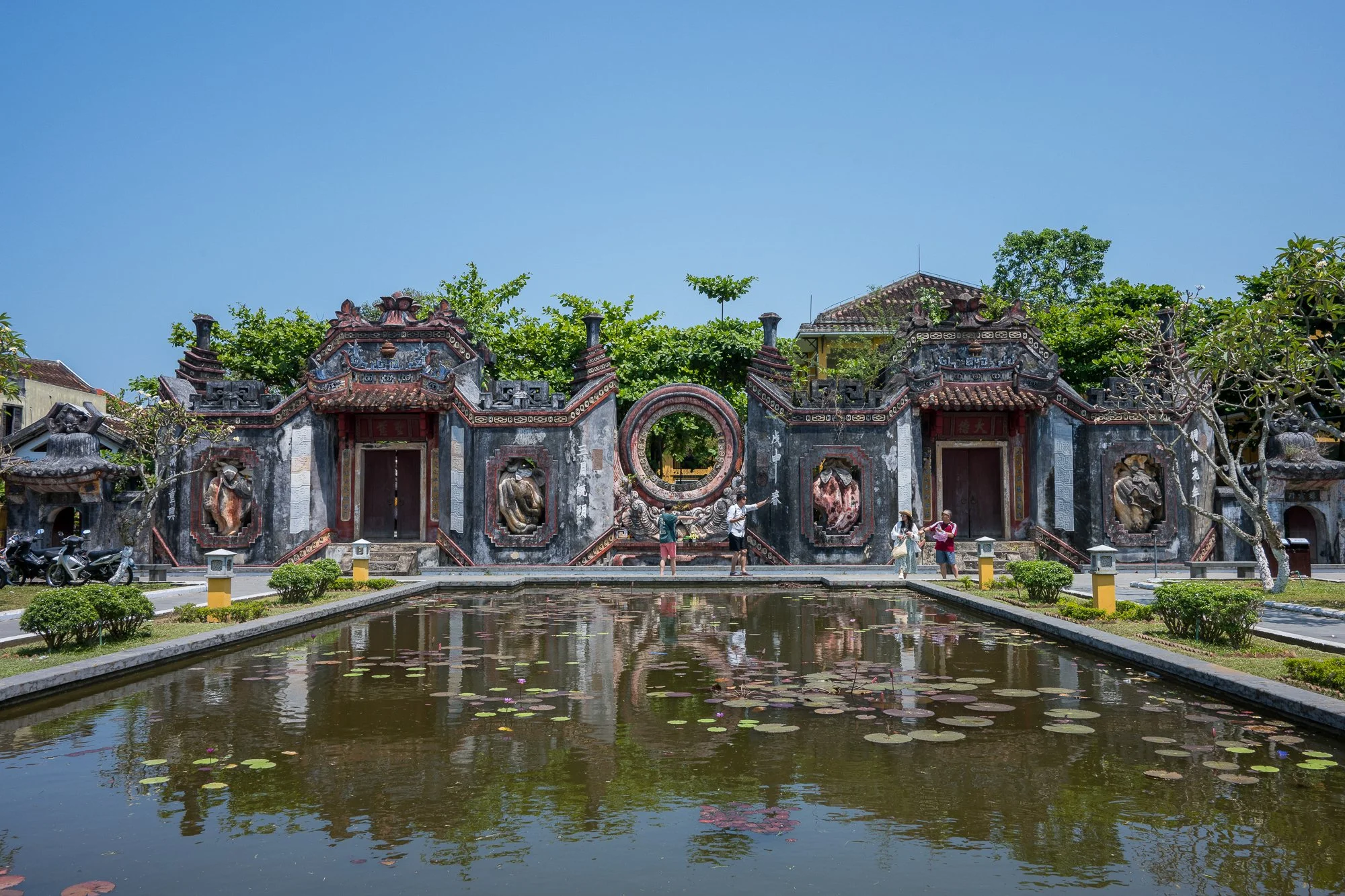
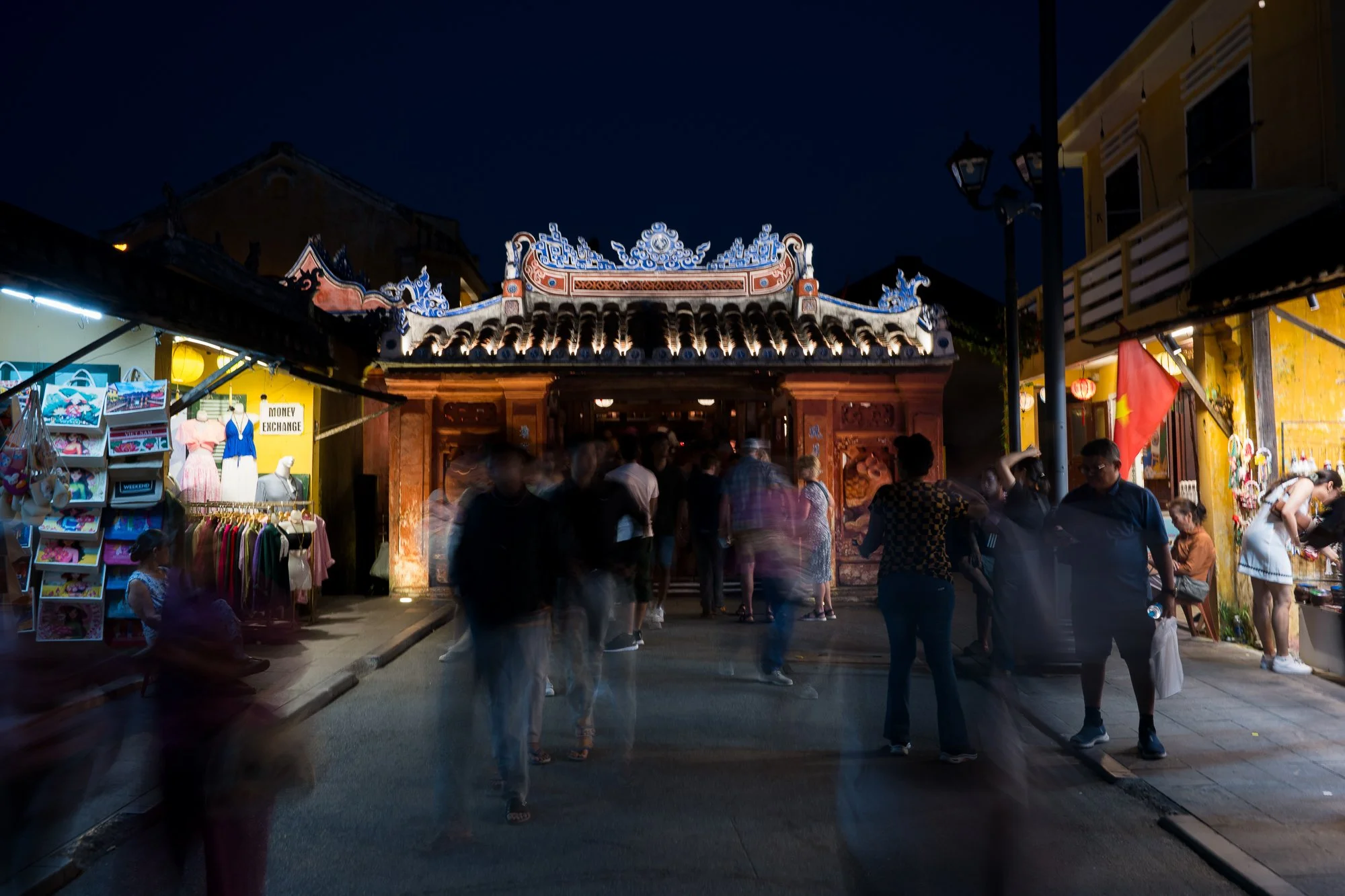
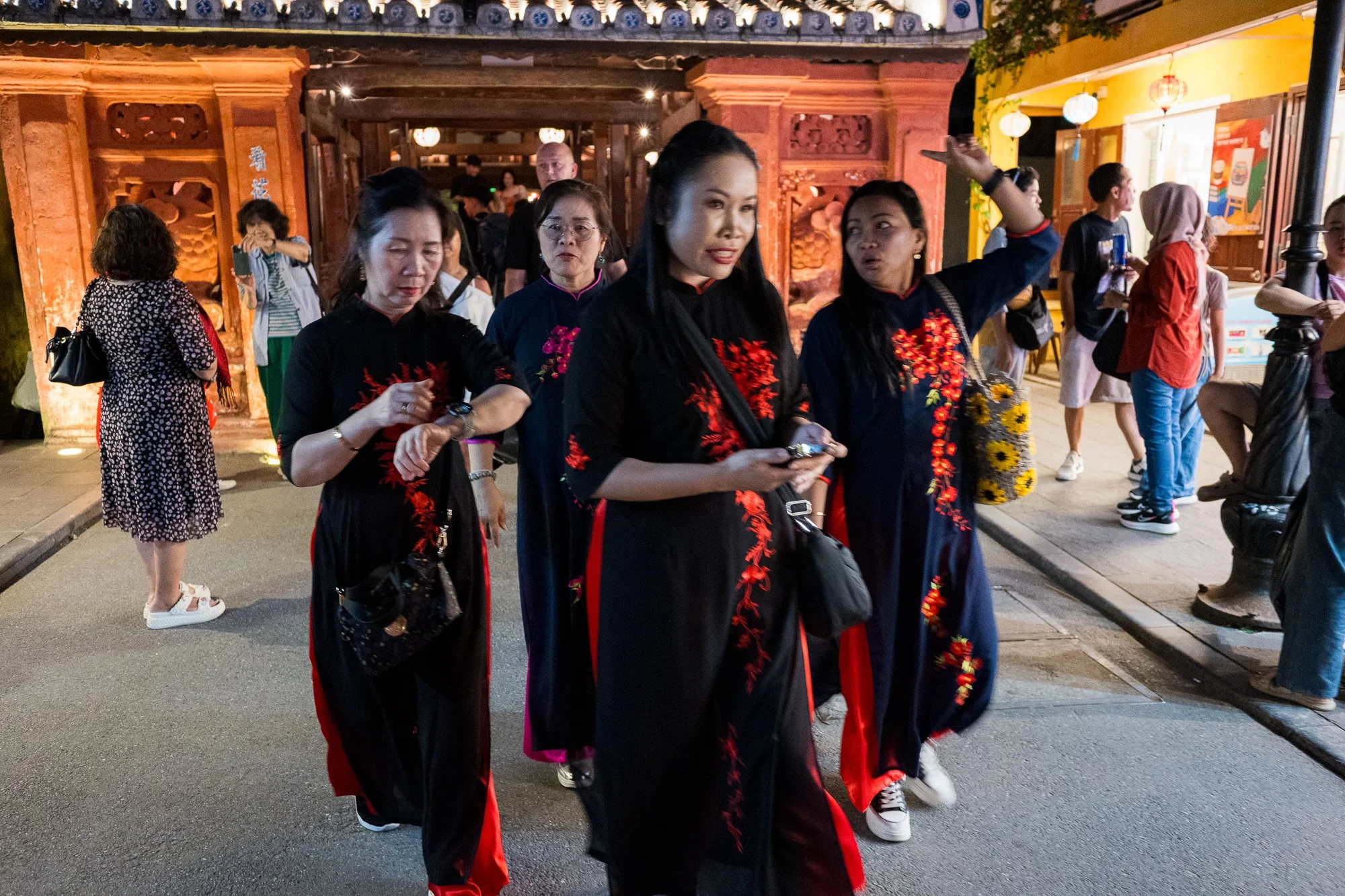
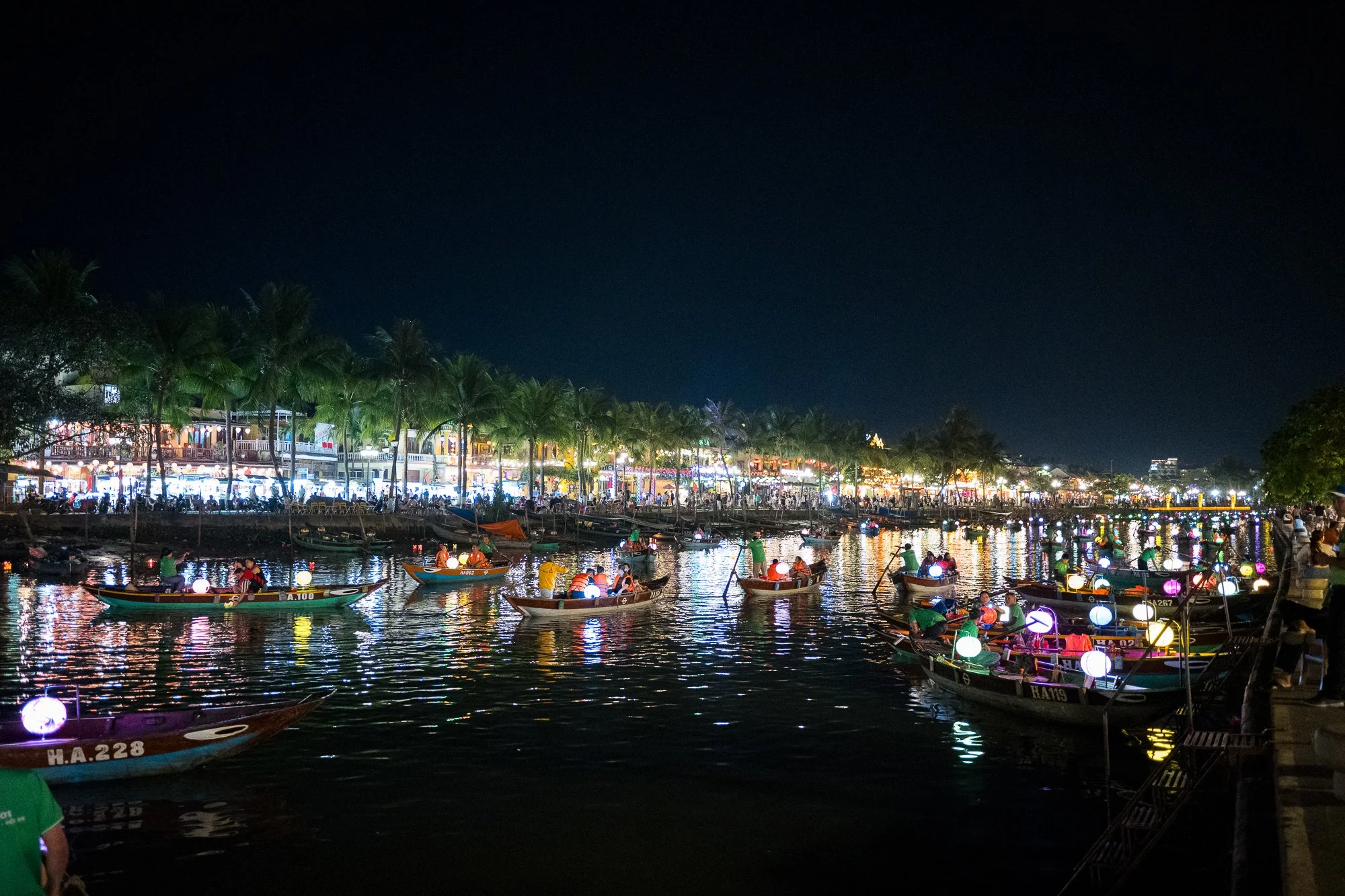
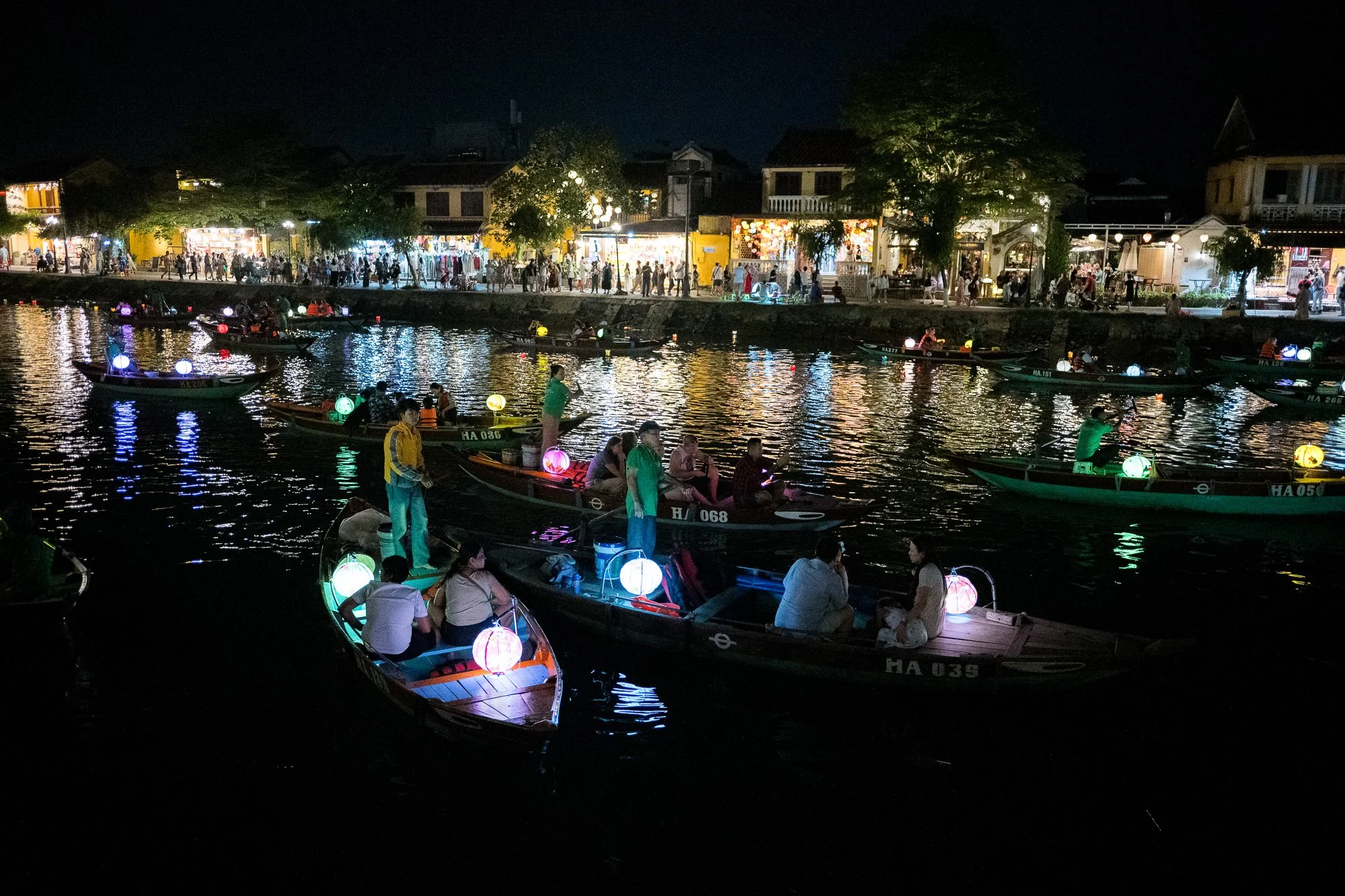
In the evenings, the whole town shifts. Paper lanterns go up along the streets and over the Thu Bon River, and what was already a pleasant afternoon wander becomes something else entirely - warmer, more alive, with all that colour doubling in the water below. Small boats carrying people, almost all tourists, local and foreign, slowly moving up and down a small stretch of the river, allowing people to release their little paper lanterns that eventually burn out and into the river itself. Environmentally safe, you may ask? That's a good question that I don't know the answer to, but it's definitely not the cleanest tourist trap to get into. Almost every other person along the river is trying to sell you a package to get on a boat to release lanterns onto the water. Thankfully, the kids were too young to want to do it, and the sheer number of people crowding the riverside was too overwhelming for them. We did our best to walk past all of those tourist traps to get to the restaurant and back. We also walked past the famous “ Japanese Bridge”, which, according to legend, a giant catfish, with its head in Japan, tail in the Indian Ocean, and body in Vietnam, causes earthquakes, natural disasters, and floods when disturbed. The Japanese are said to have built the bridge with monkey and dog deities to suppress this monster. Cue my fascination with Kaiju-realated pop culture media ;)
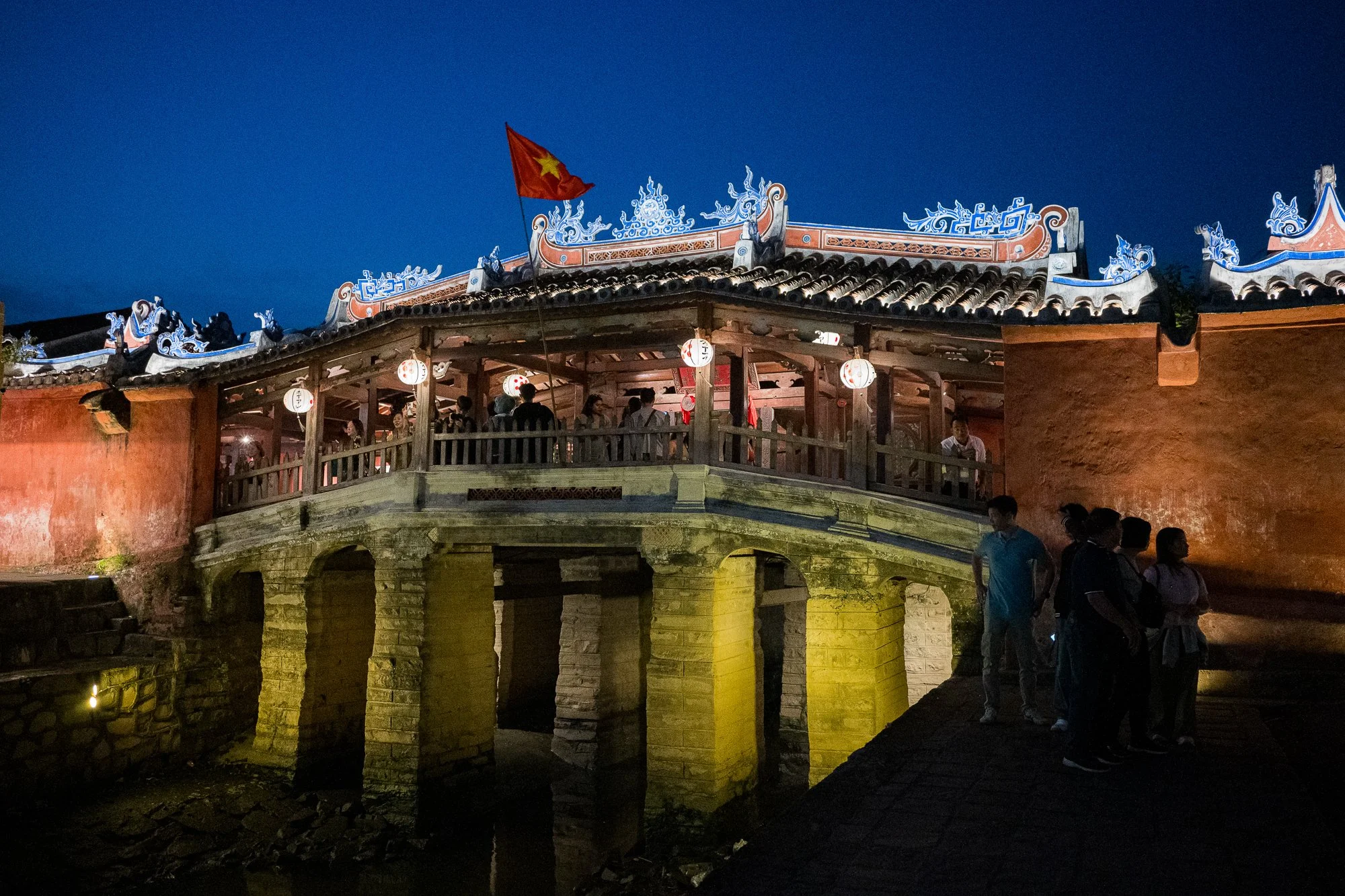
The Japanese Bridge (Chùa Cầu)
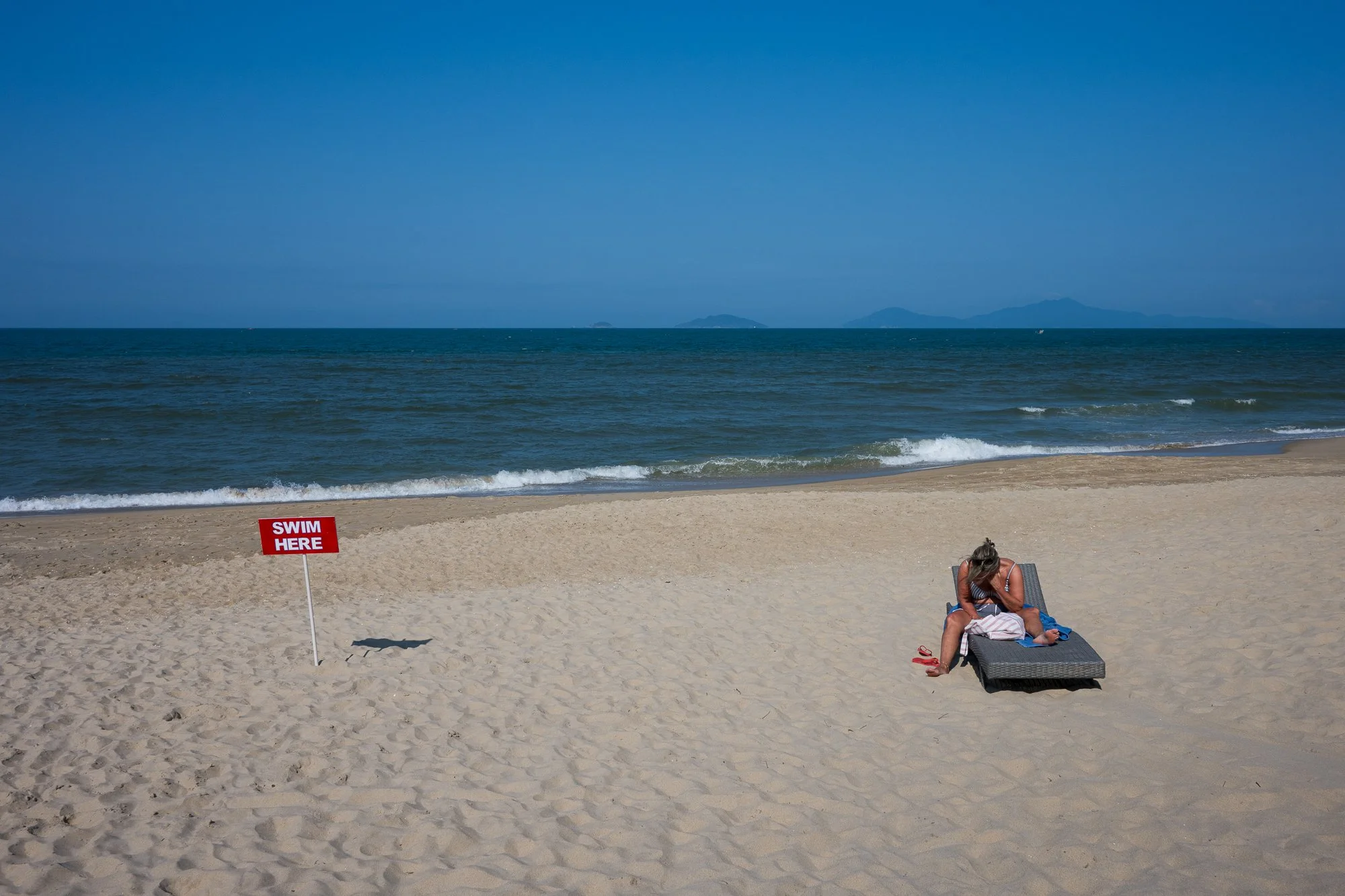
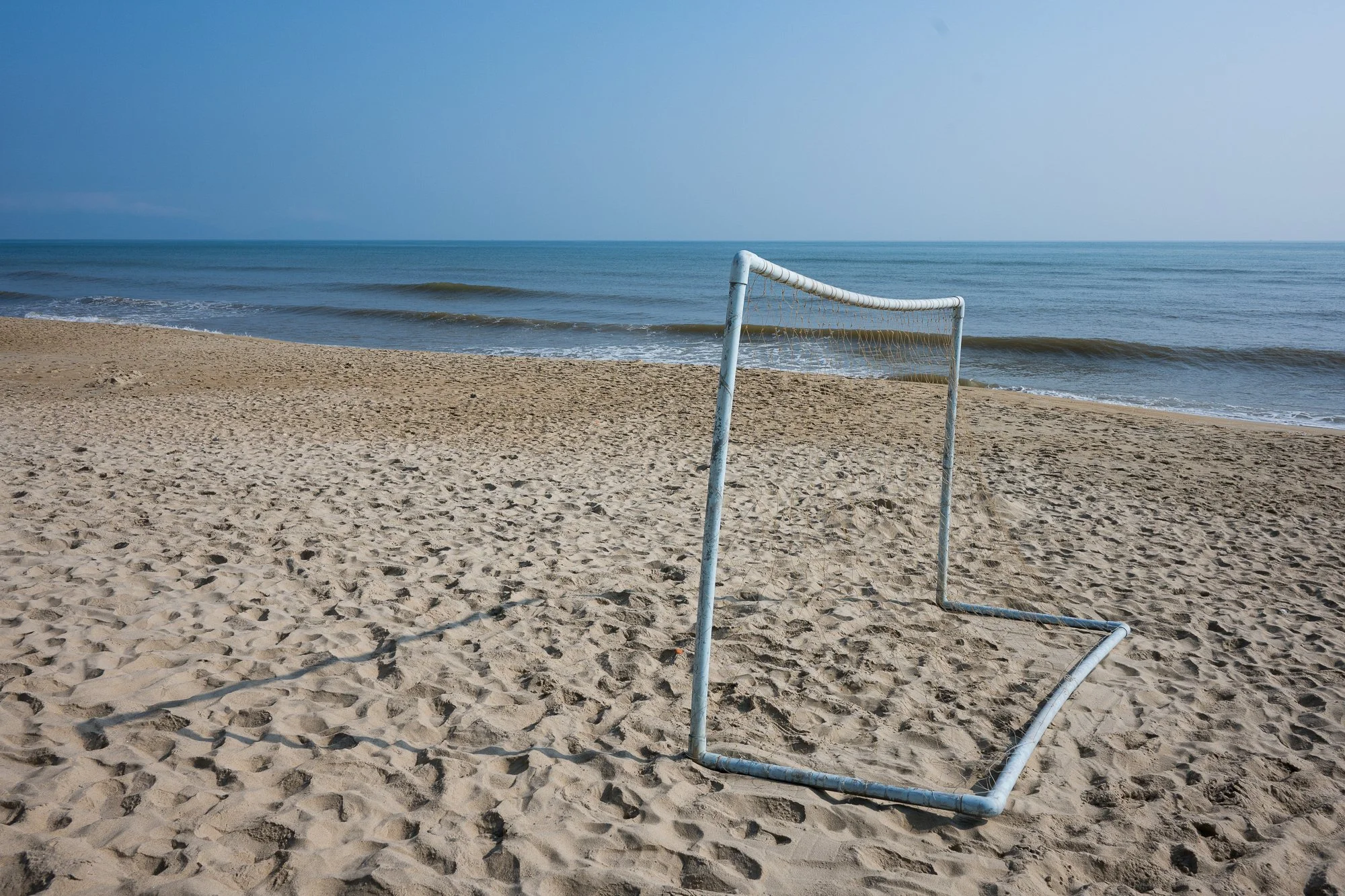
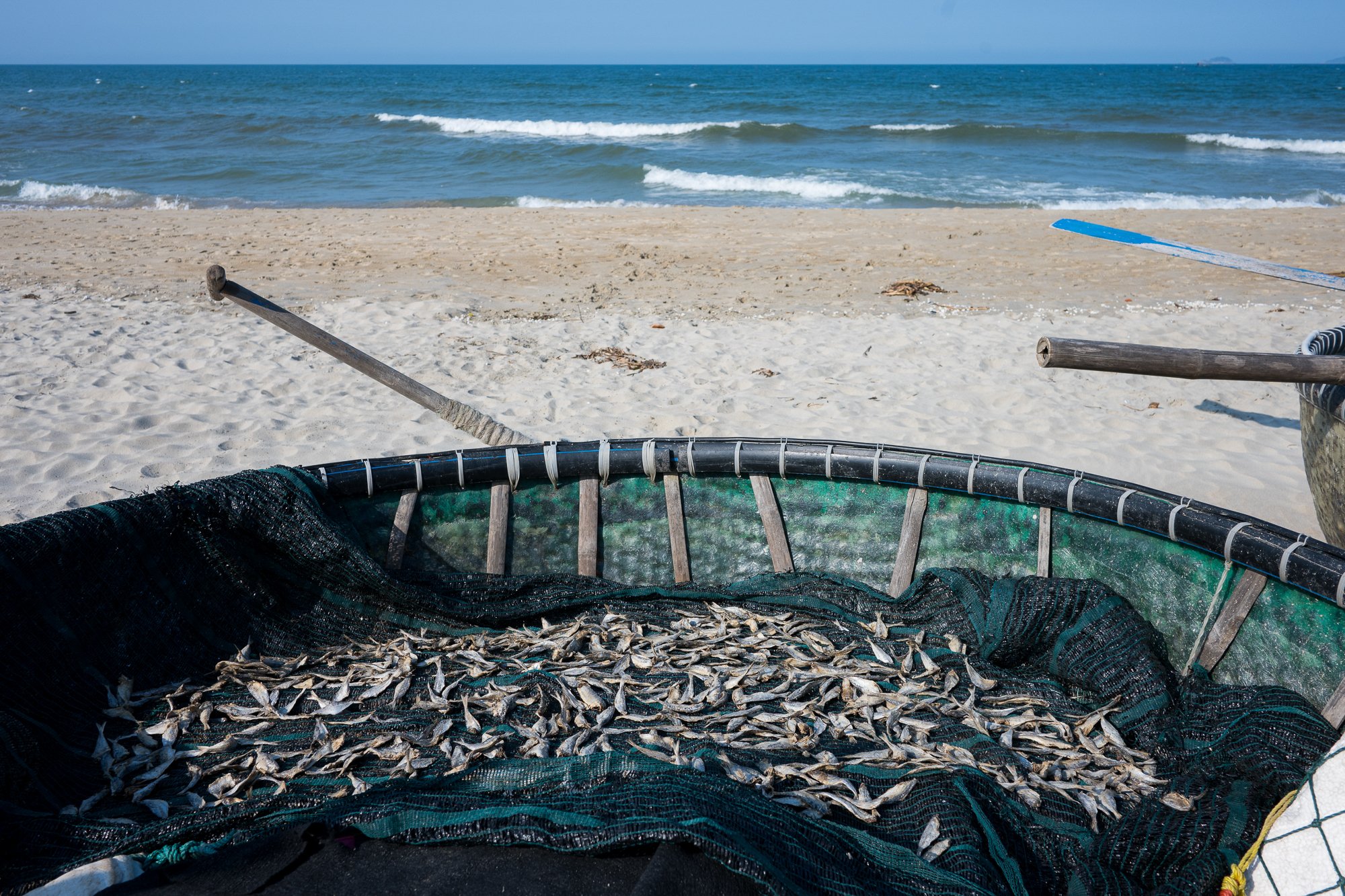
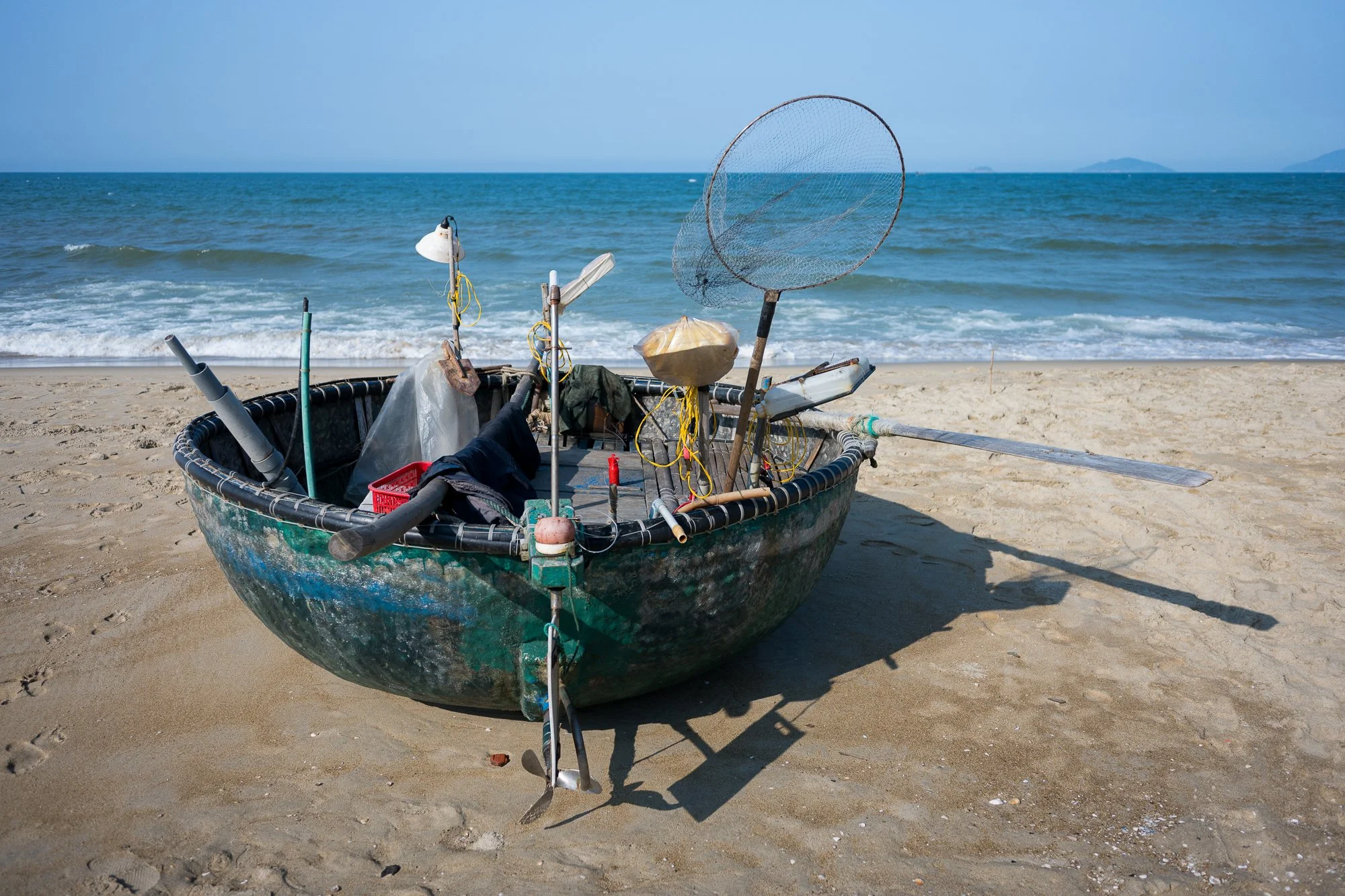
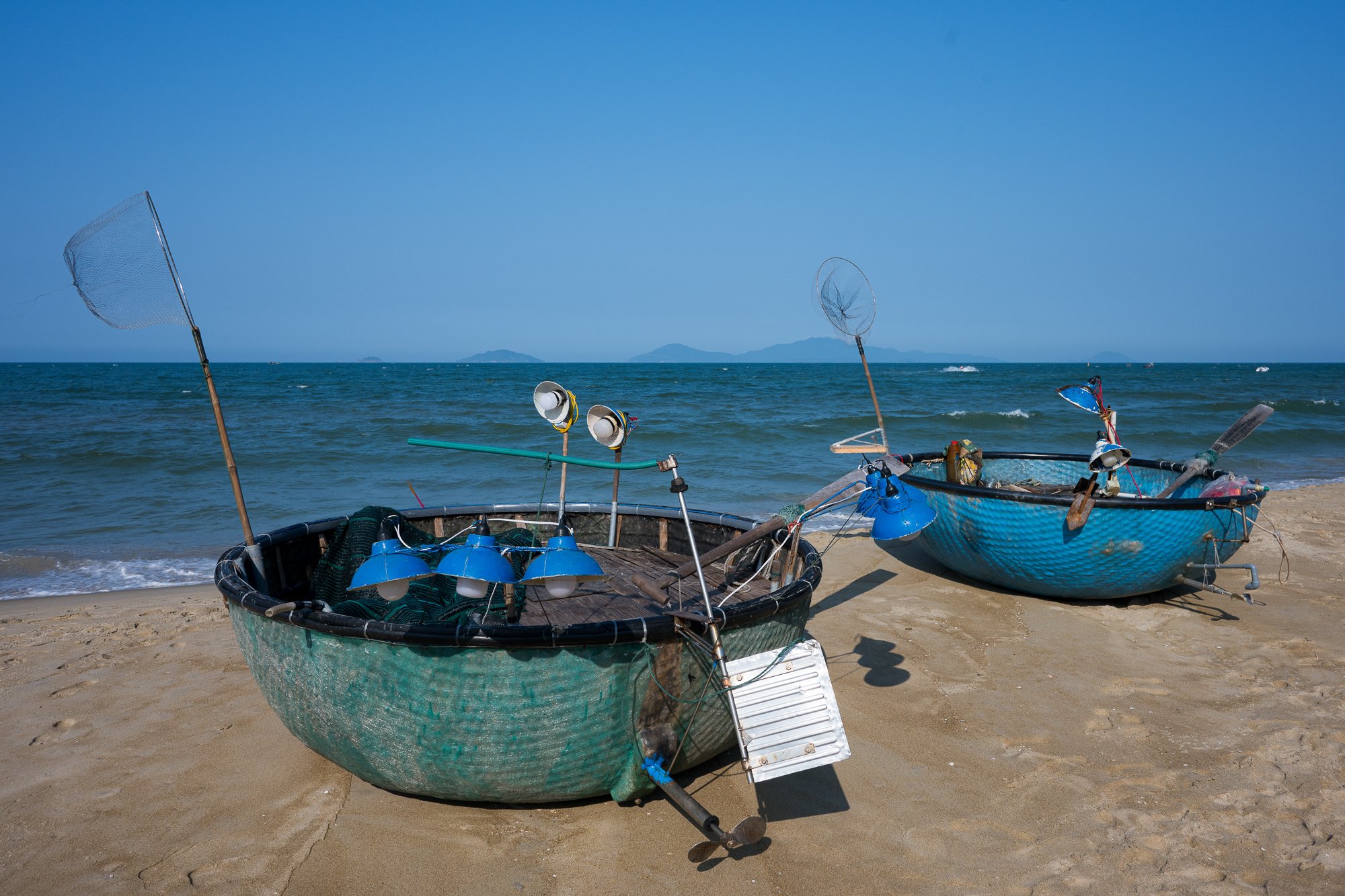
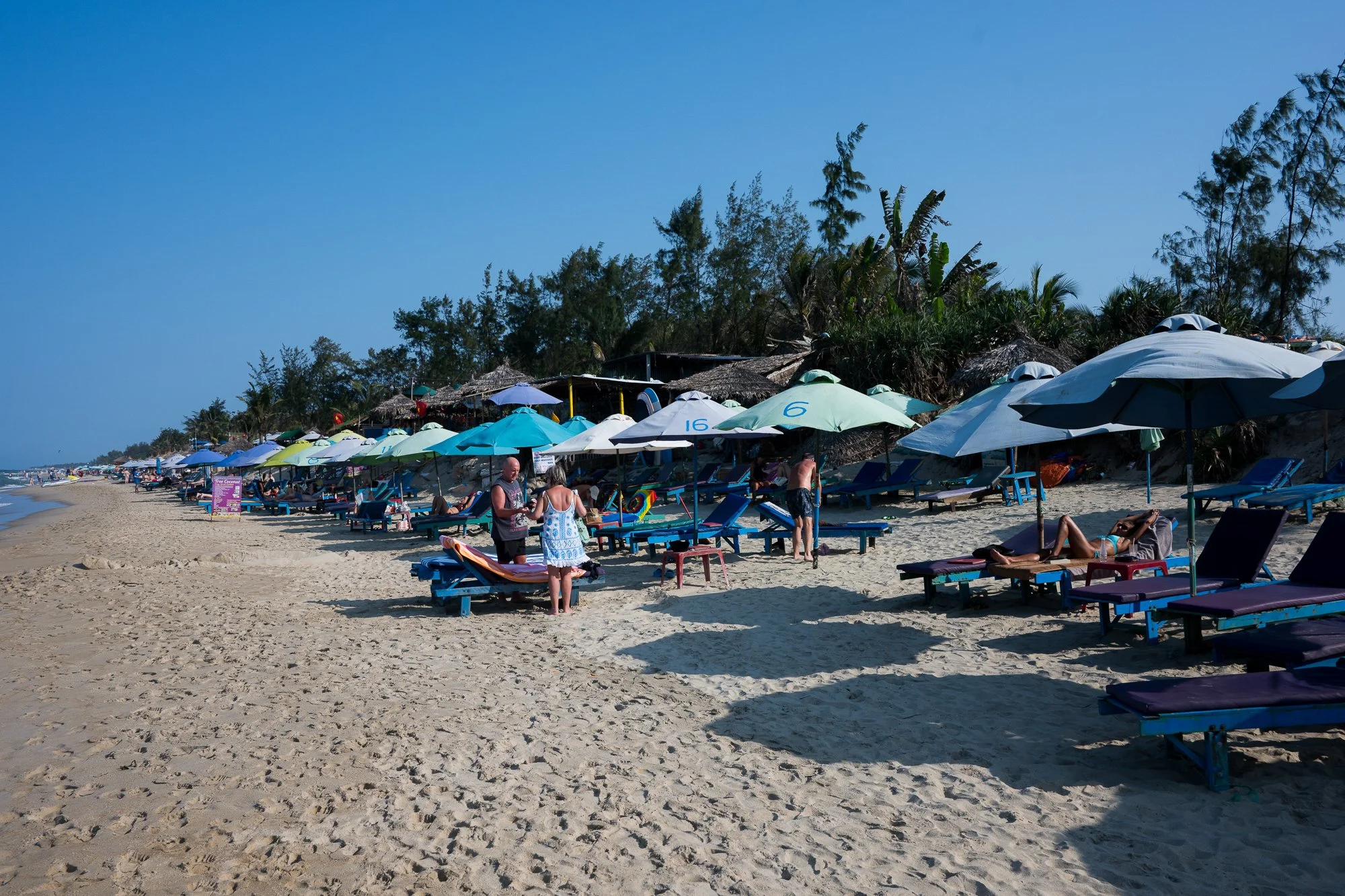
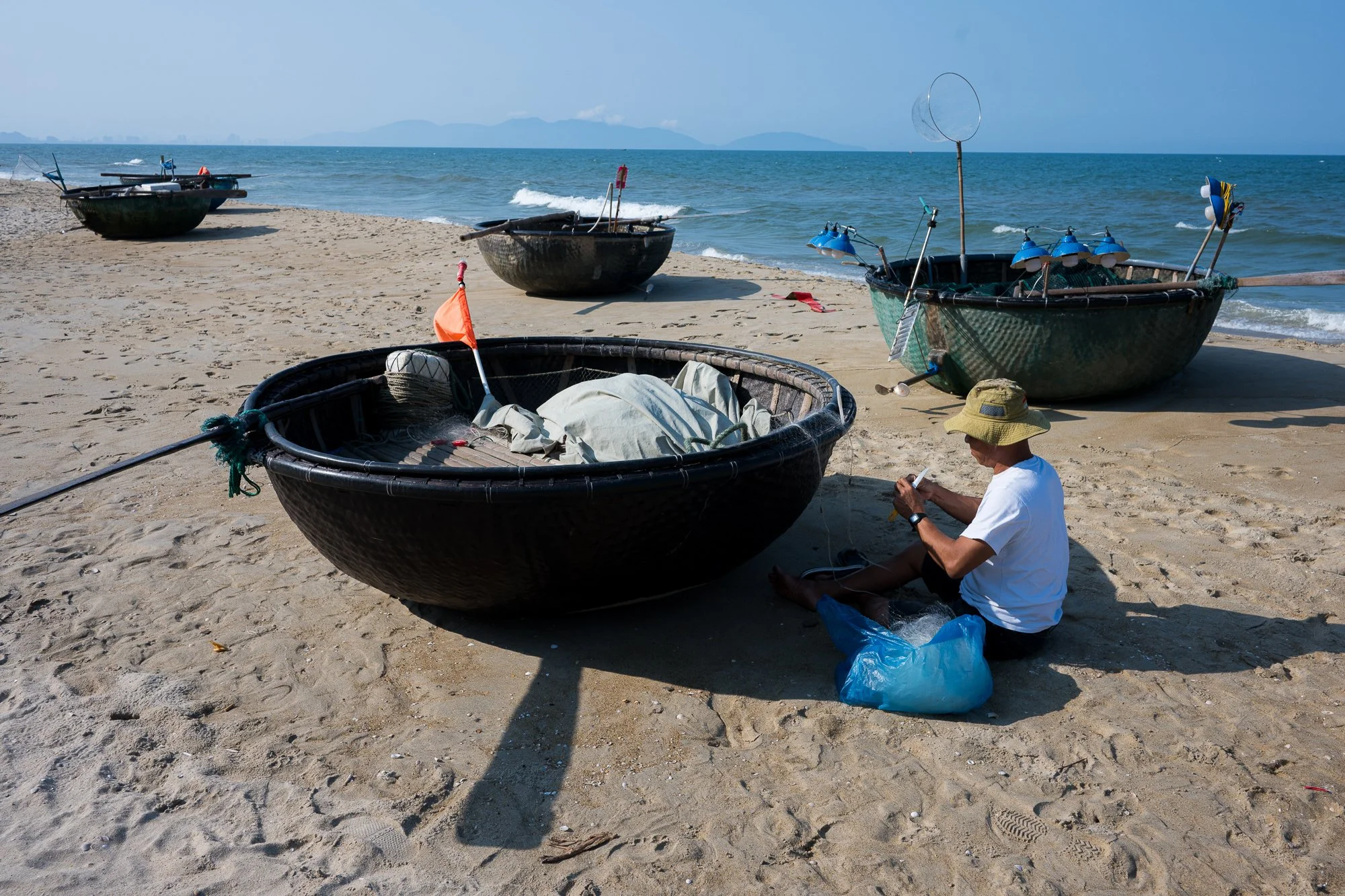
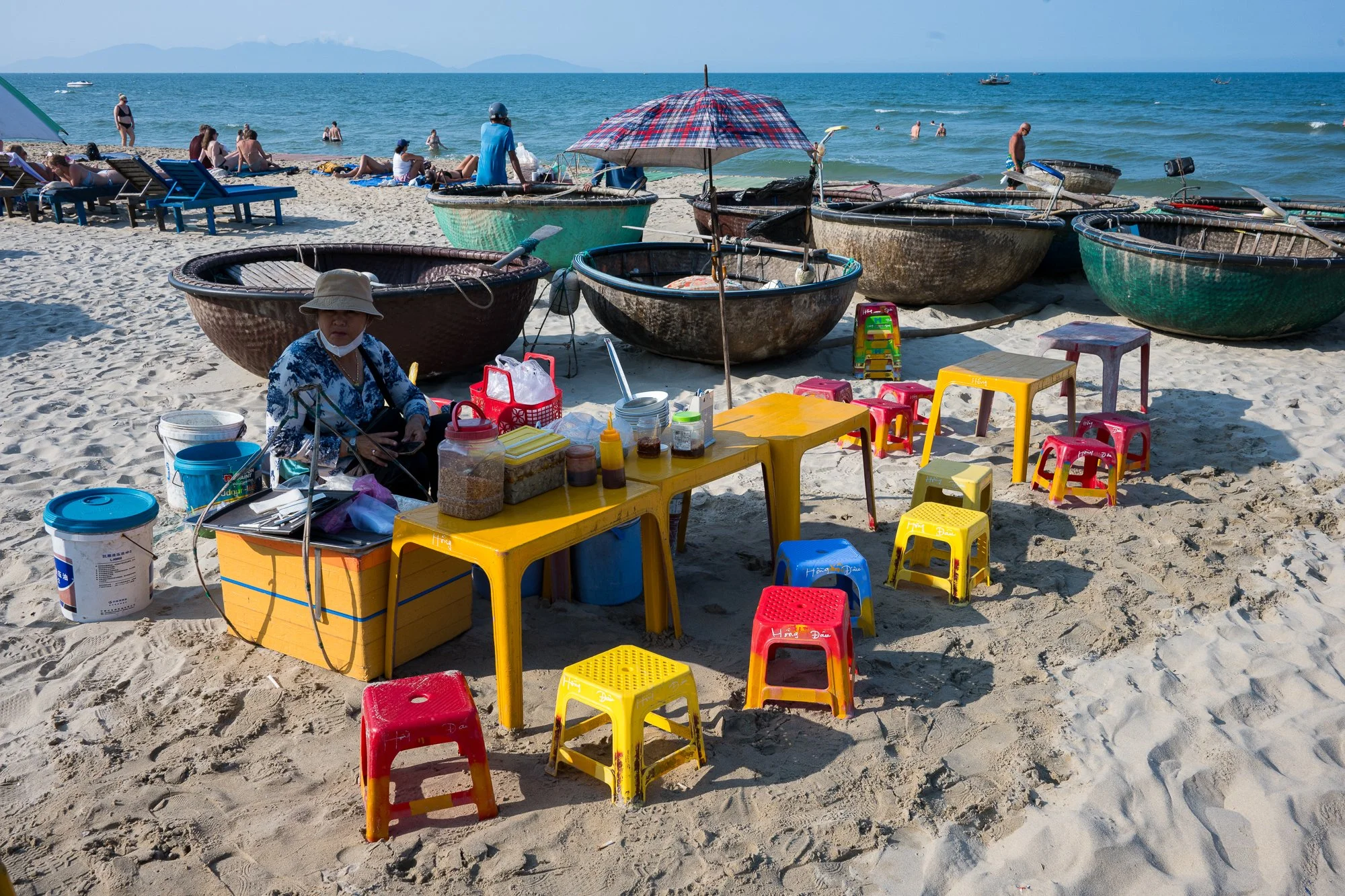
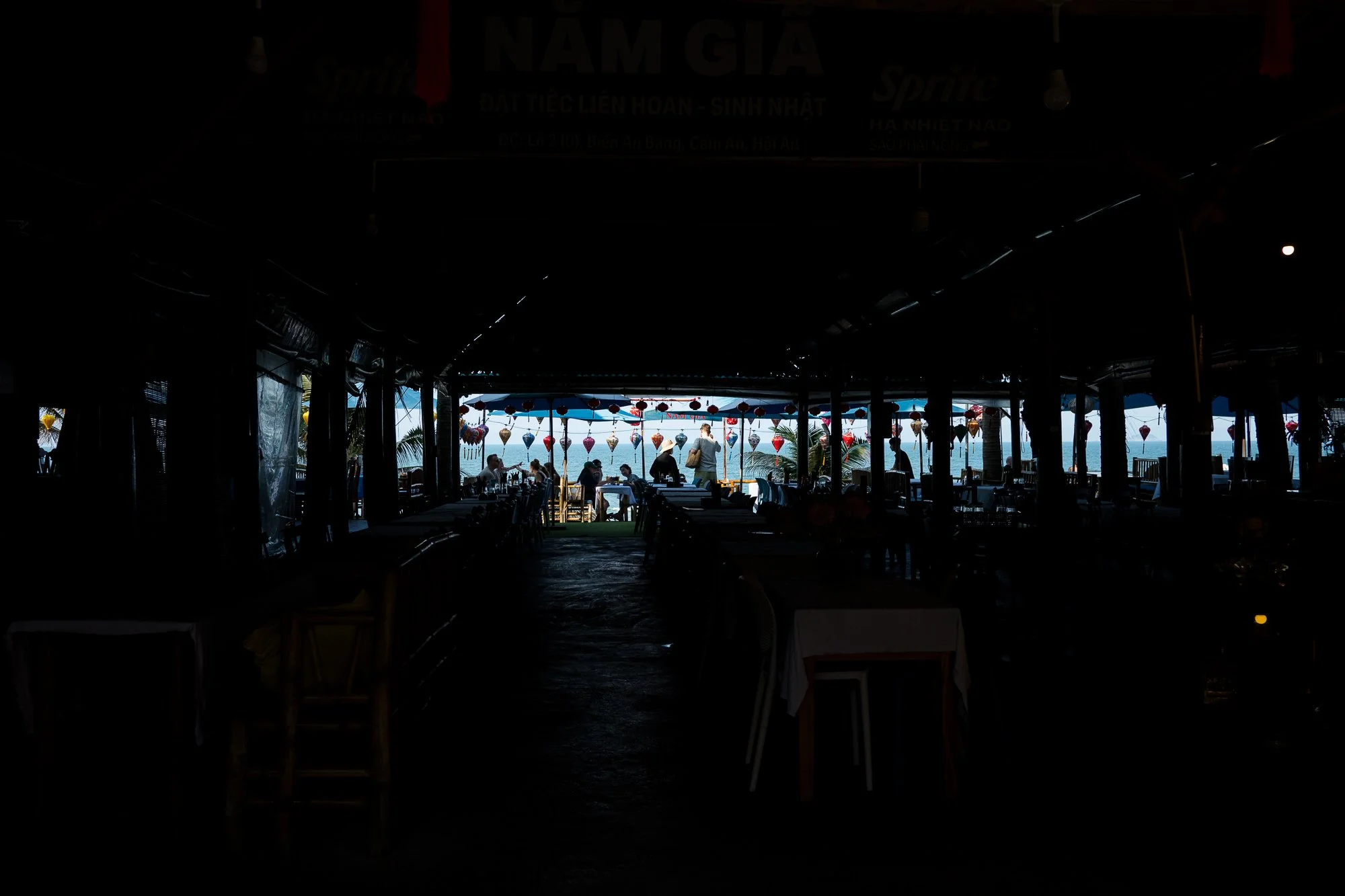
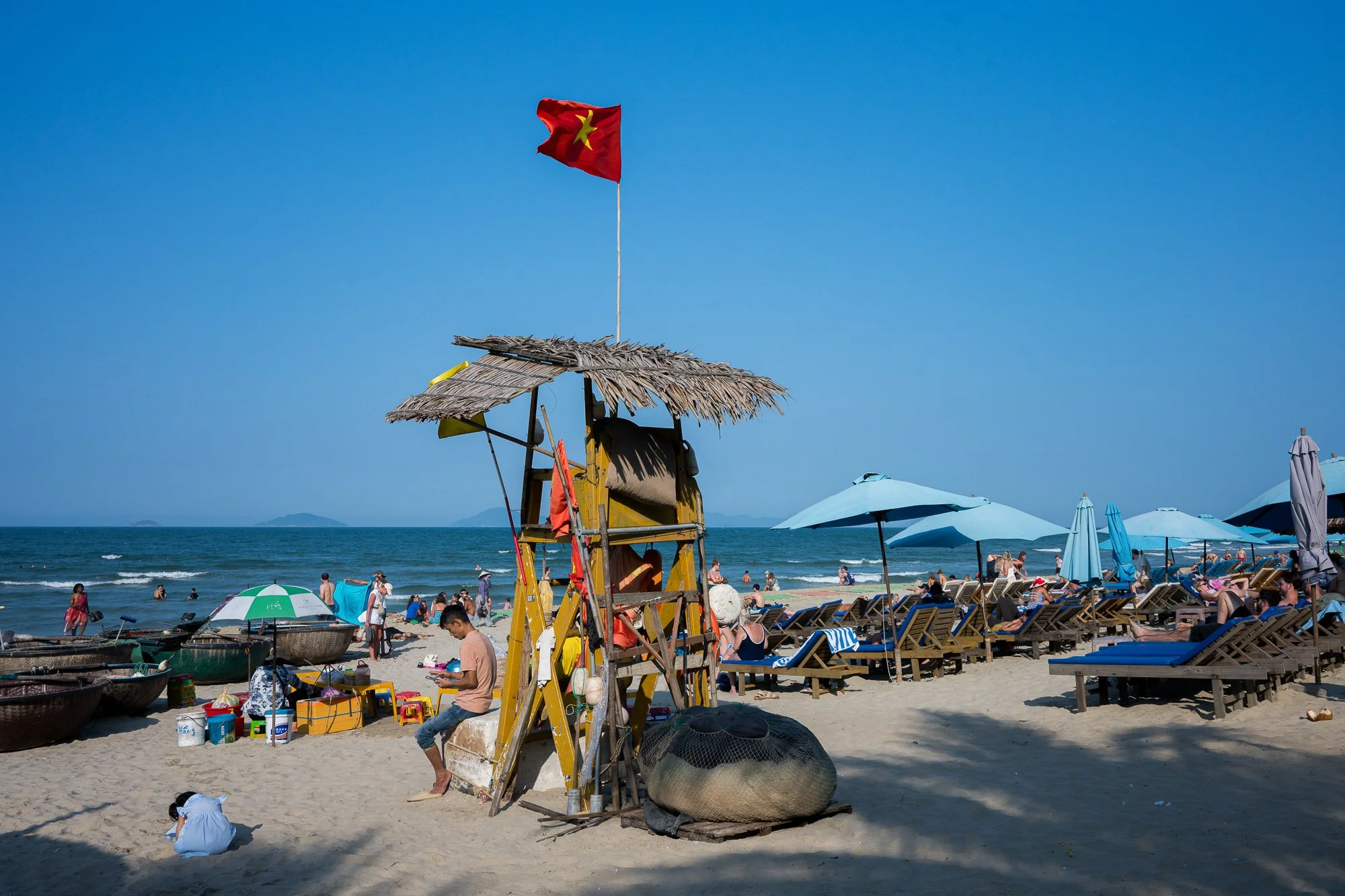
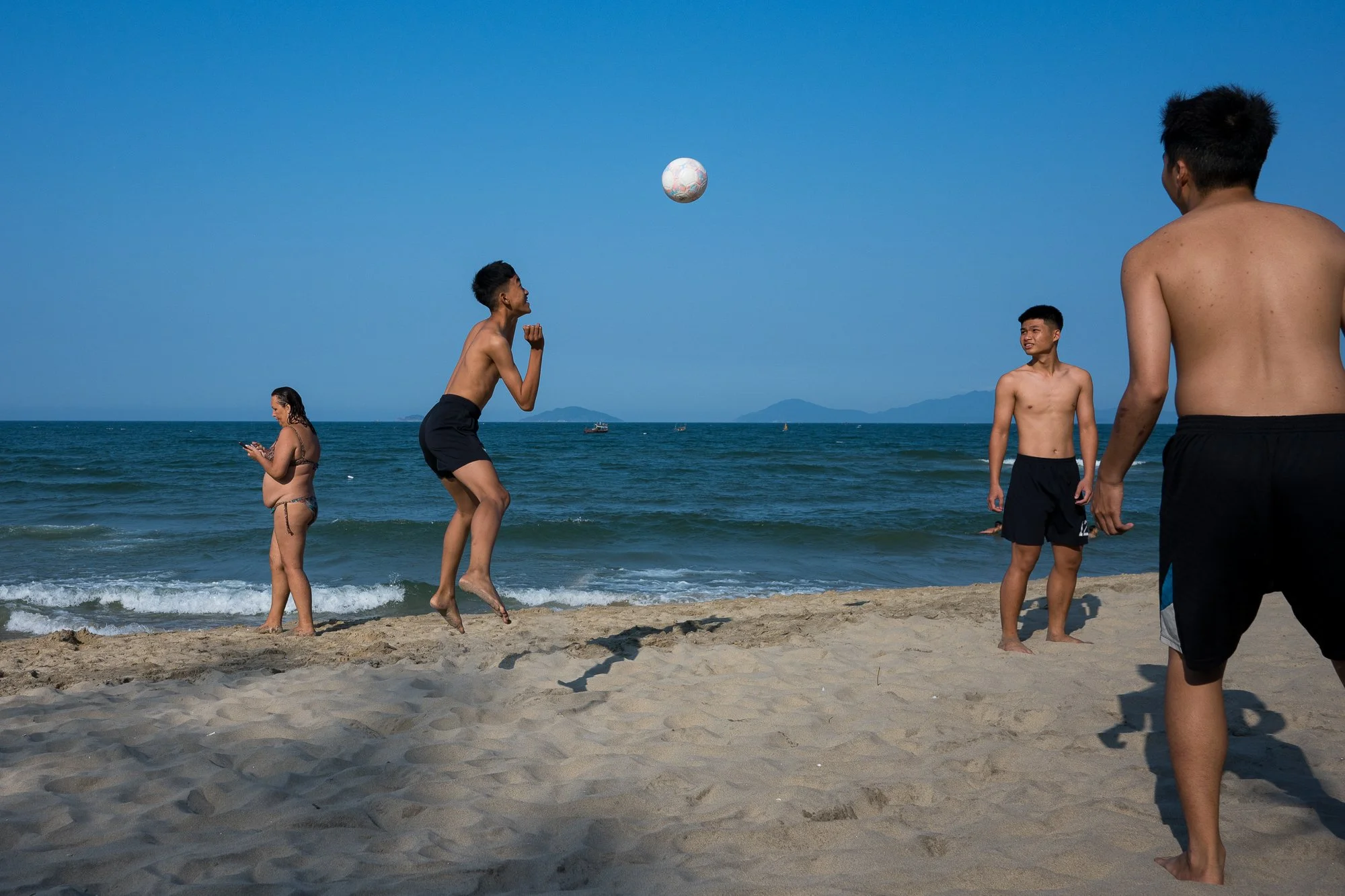
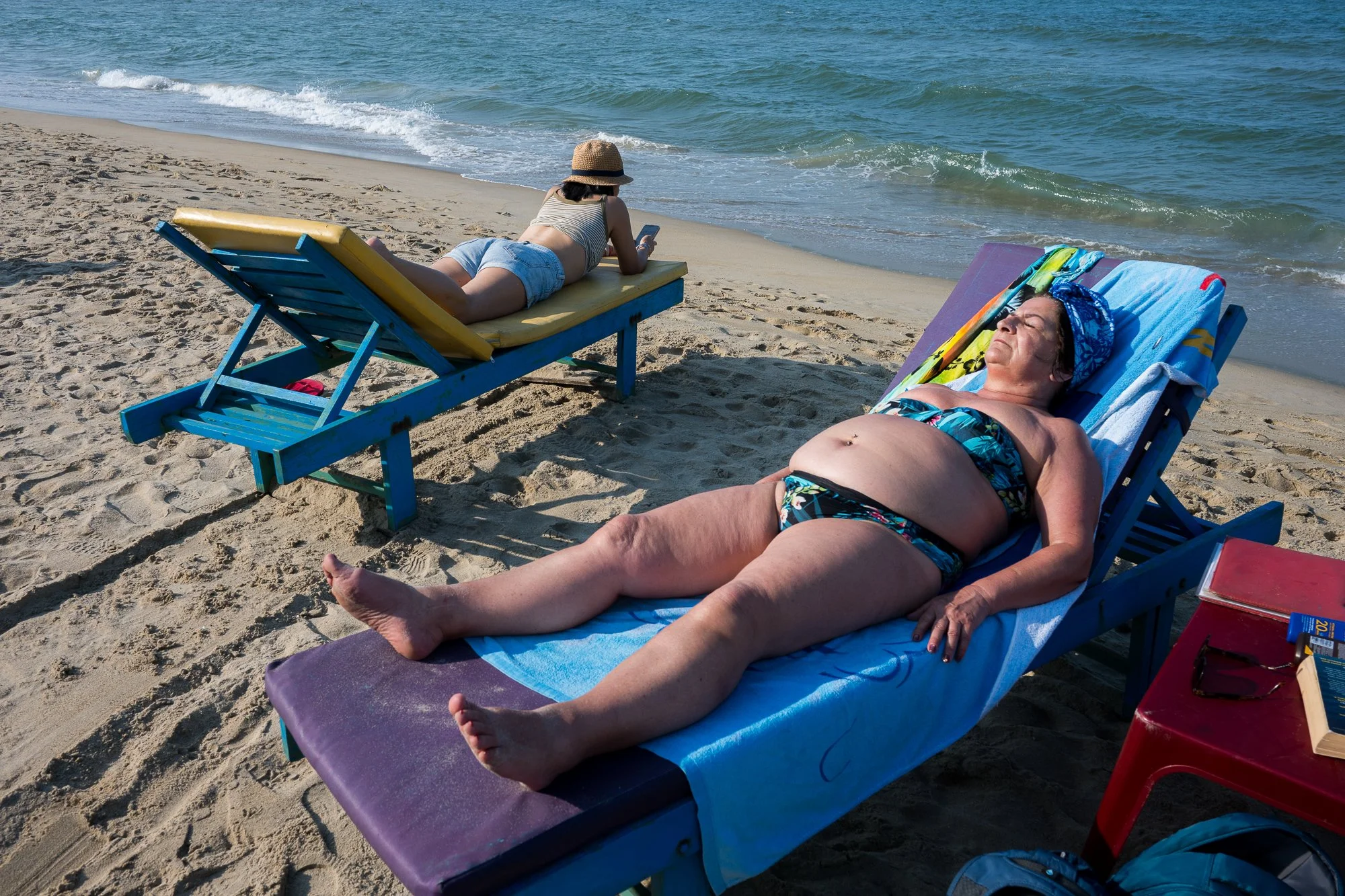
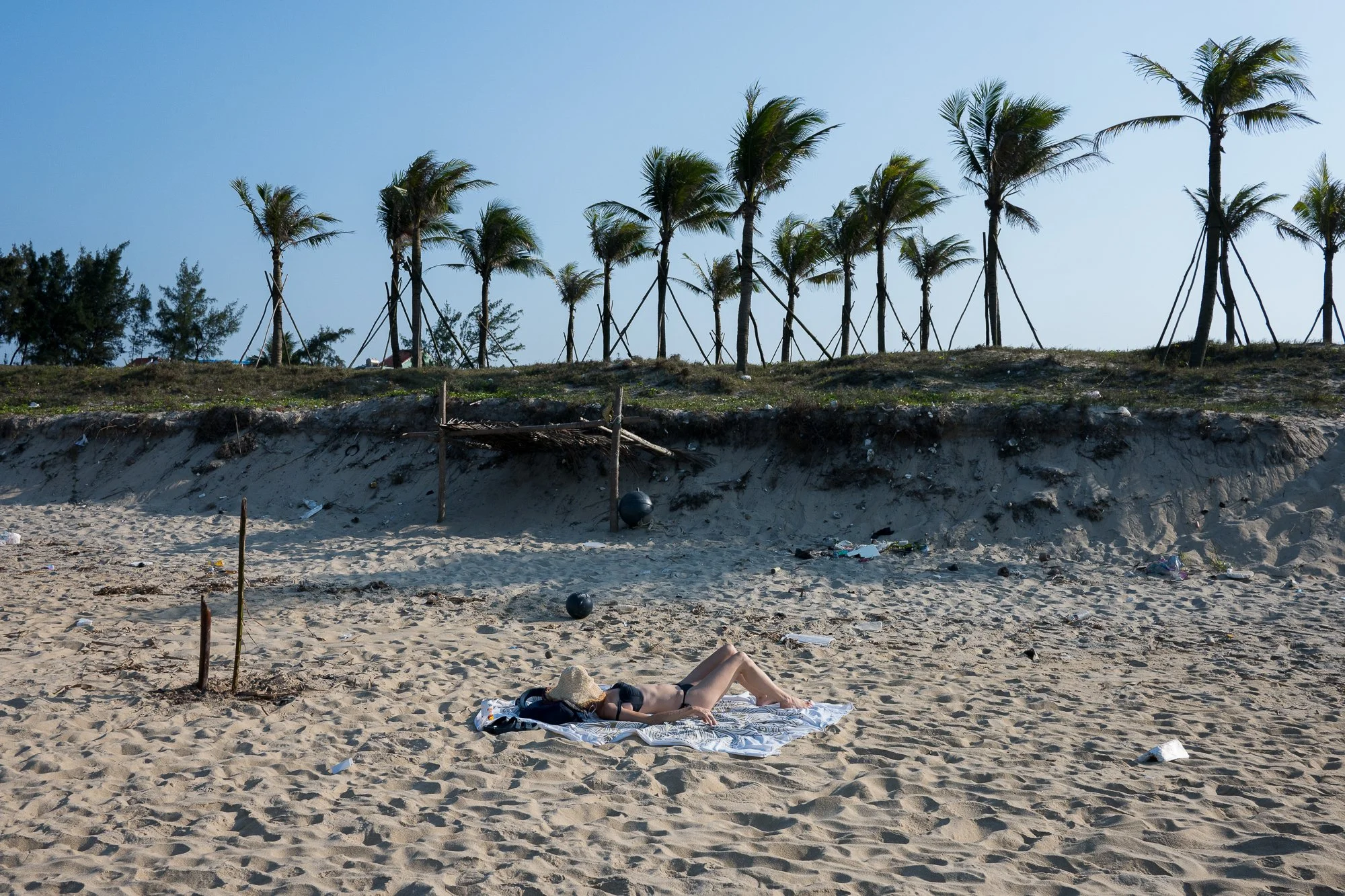
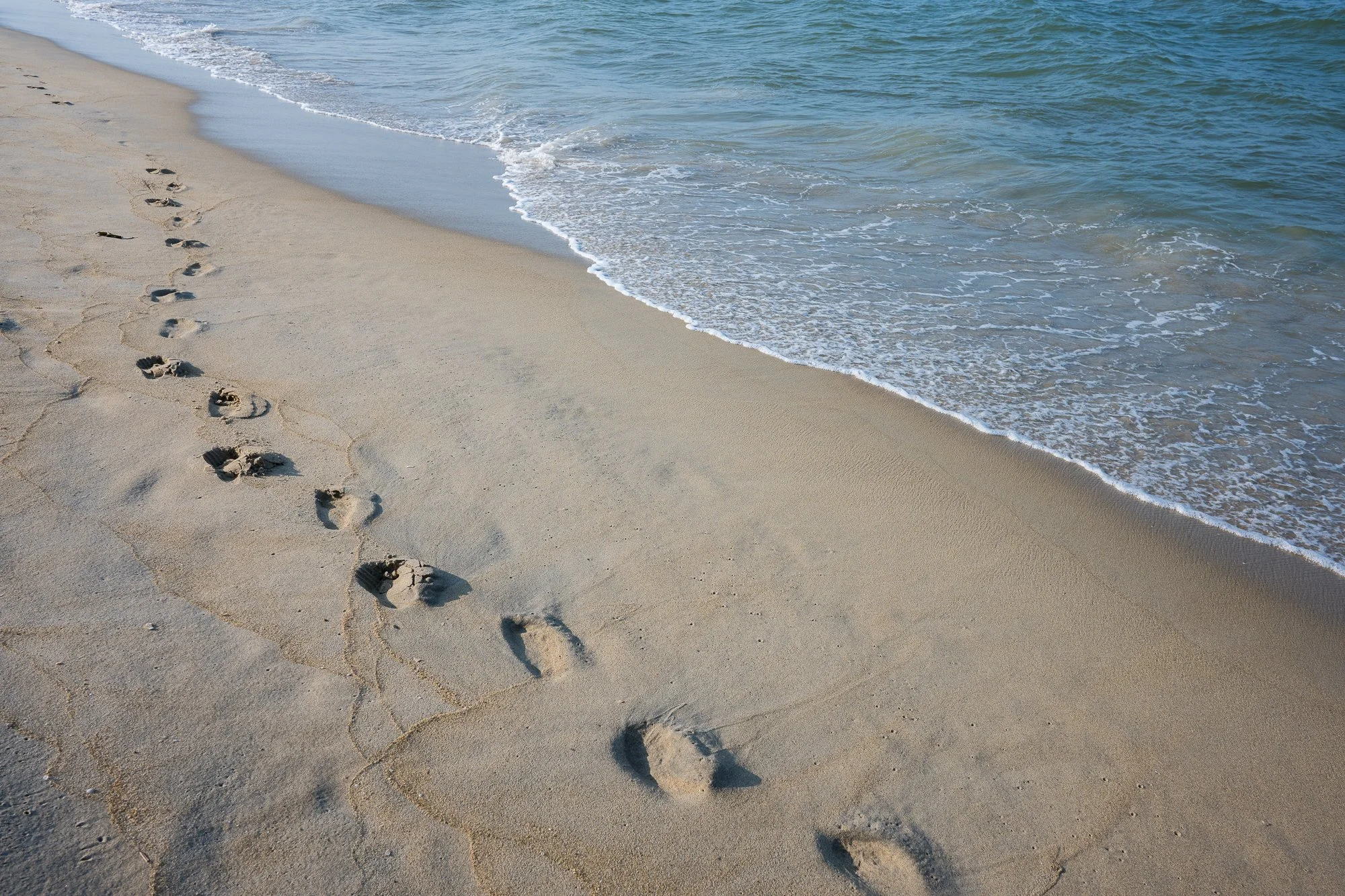
While the kids were in the pool one afternoon, I got to walk down one stretch of the beach and took some candid beach scenes. On this side of the coastline, it is much more laid-back compared to the stretch next to Da Nang. A little less developed, but all the better for it. More my kind of scene. I got shots of the famous round boats of Hoi An, known locally as thúng chai (coconut basket boats), which are traditional, bowl-shaped bamboo vessels. Originally invented by impoverished local fishermen during the French colonial era to bypass boat taxes, they are now a major tourist attraction. The ones along the beach, however, were all geared up to be working fishing boats. Then I get to the area on the beach, much like any other tourist beach around Southeast Asia, where you see the quintessential locals selling refreshment and snacks, long rows of beach lounge chairs and umbrellas for rent, and the customary beachside shack with beverages and food to suit the tourists. The same postcard vignettes you'd find on any tourist beach in Southeast Asia, but never quite boring.
One day I'll go back. Not with an itinerary, not with a list of temples and bridges and dinner reservations - just with enough time to sit down with a tailor on day one, get measured up, and spend the rest of the trip waiting for my jacket while wandering the yellow streets at whatever pace Hoi An insists on. The place has a particular unhurried quality to it that I didn't fully appreciate until we'd already left. That's usually how it goes. The jacket is just an excuse. The real agenda is to do absolutely nothing efficiently and take photos, which Hoi An seems very well set up for.
Cheers.