#082: Da Nang
Da Nang, Vietnam - Heat, Noise, Eventful Evenings, And Everything In Between.
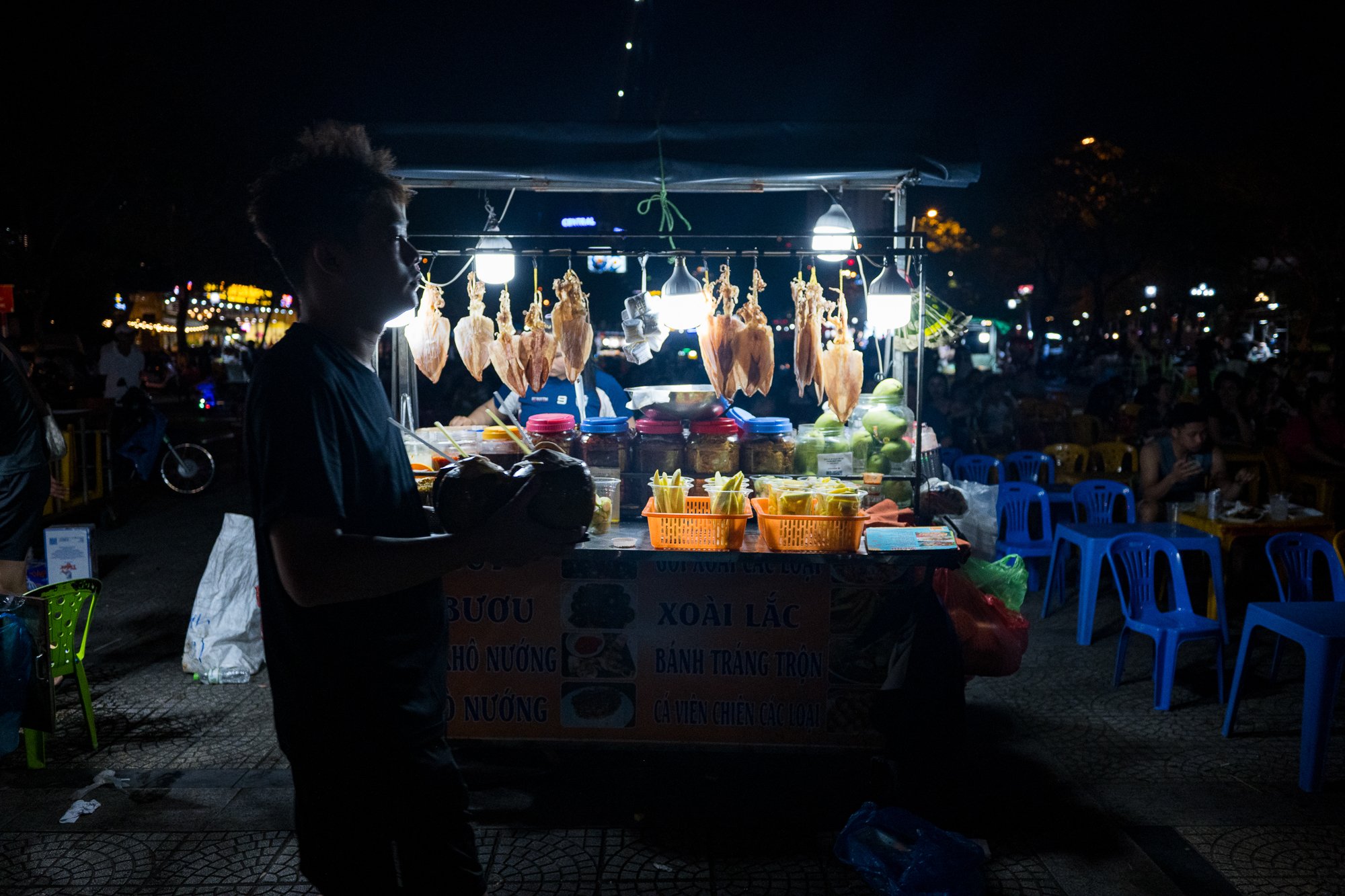
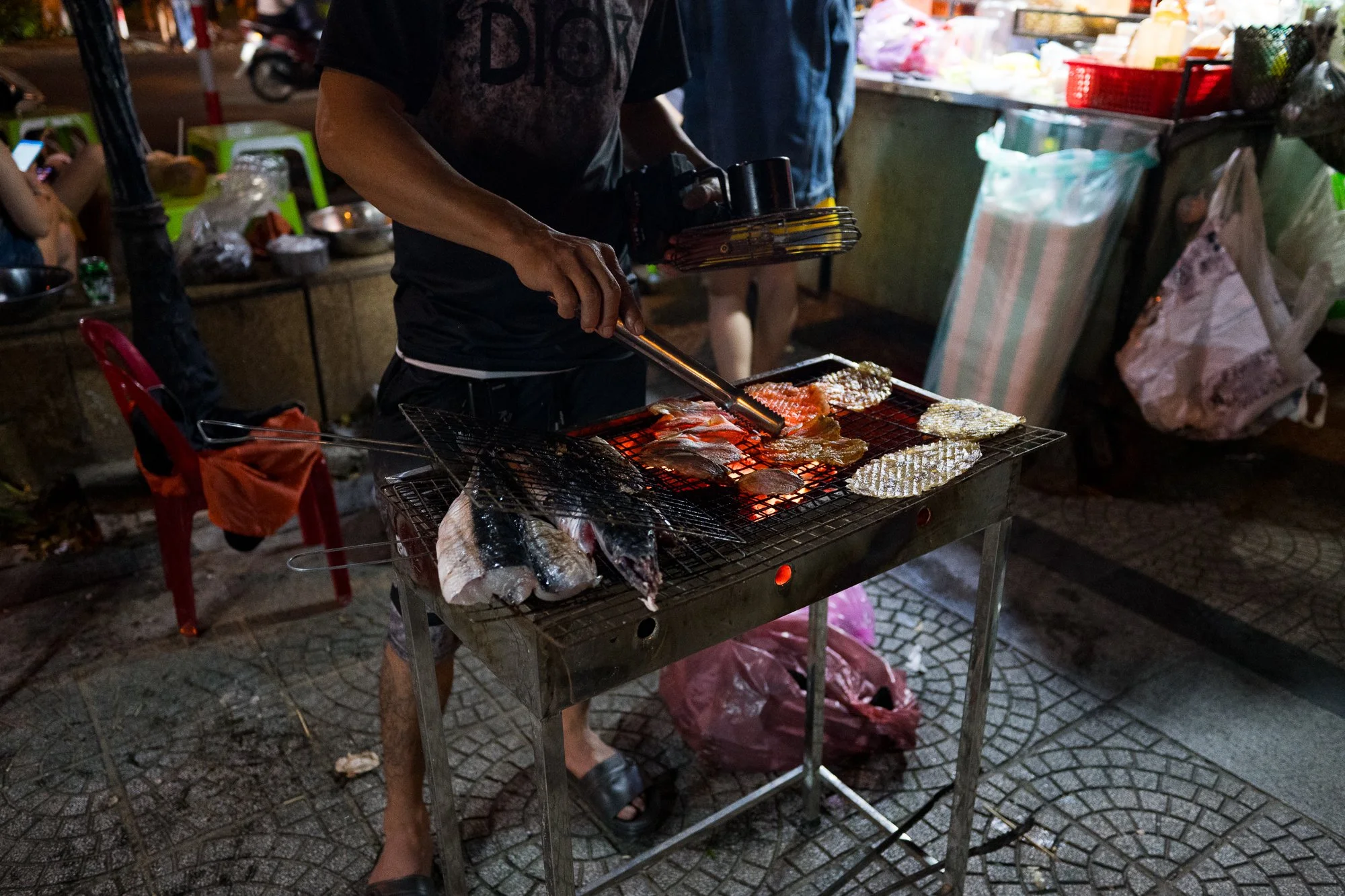
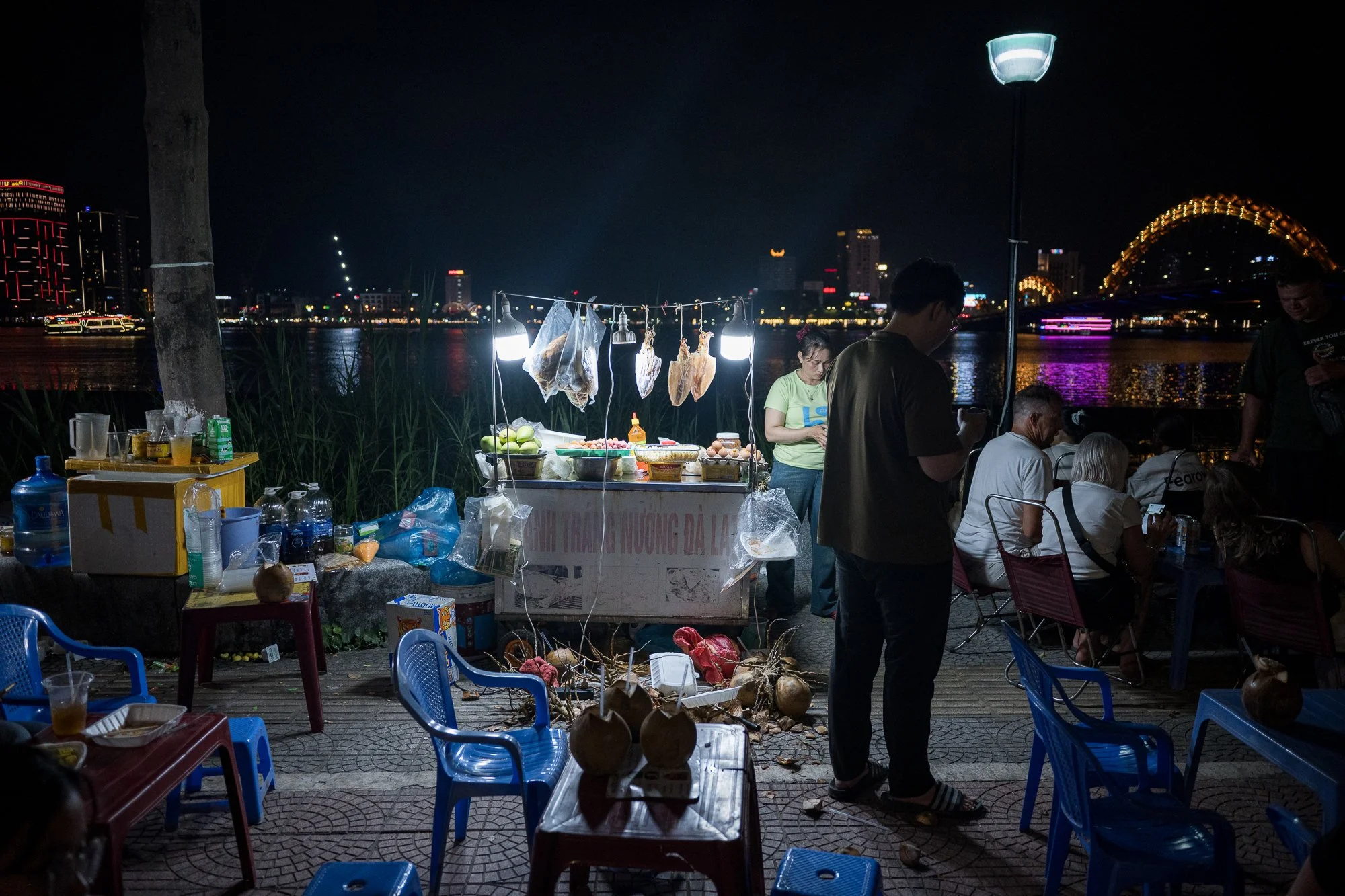
The man grilling some seafood was not interested in being photographed. Not hostile about it - just indifferent, which is actually the better condition to shoot in. He had the hot grill to manage, customers arriving, a defused bulb swinging overhead that was just enough to illuminate the immediate surroundings, and somewhere behind all of that, a wife and kid working the stall. I stood off to the side and waited. Got two frames I like. Moved on.
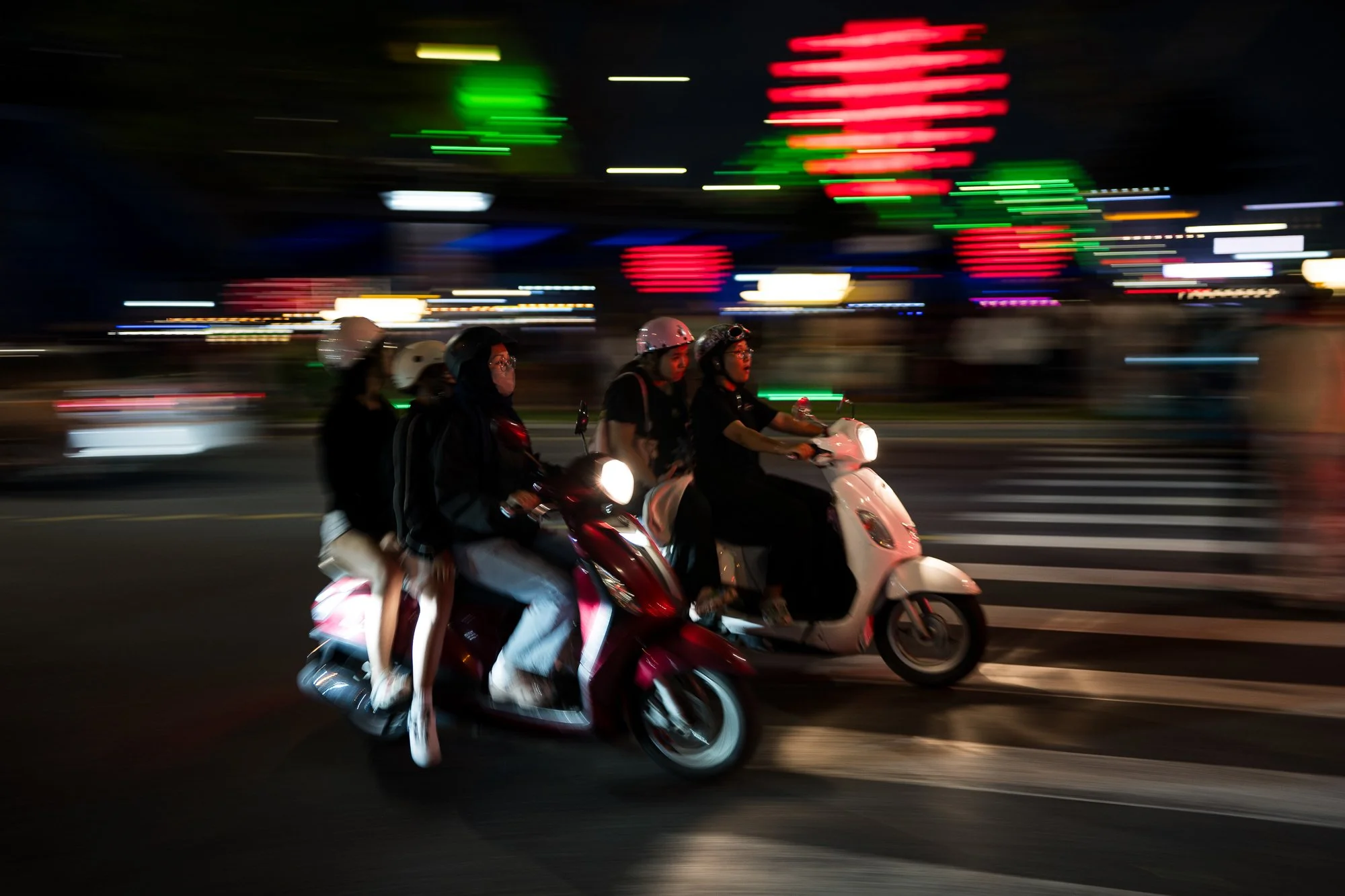
That was Da Nang for me: a couple of evenings at the markets, camera in hand, working around people who had better things to do than notice me. Which is exactly how it should be.
We were there for Hari Raya /Eid - a few days off, the family needing somewhere that isn't home, and with the extended family in tow. Vietnam had my vote immediately, it being my first time there. We based ourselves along the coast between Da Nang and Hoi An, at a beachside resort that served its purpose efficiently: the kids disappeared into the pool for the duration of the days, the South China Sea handled the afternoons, and the evenings were mine. Or mostly mine. Enough, I suppose. In between all the other family-related agendas, I got to sneak in a few minutes here and there to take the photos I wanted to take.
The deal on family trips is this: the resort handles the children, more specifically the swimming pool, and the evenings belong to the city. I've made my peace with this arrangement. Trying to shoot properly while keeping track of children in an unfamiliar city is a reliable way to do neither thing well. So the camera stayed in the bag most of the time and came out when I could grab a moment here and there.
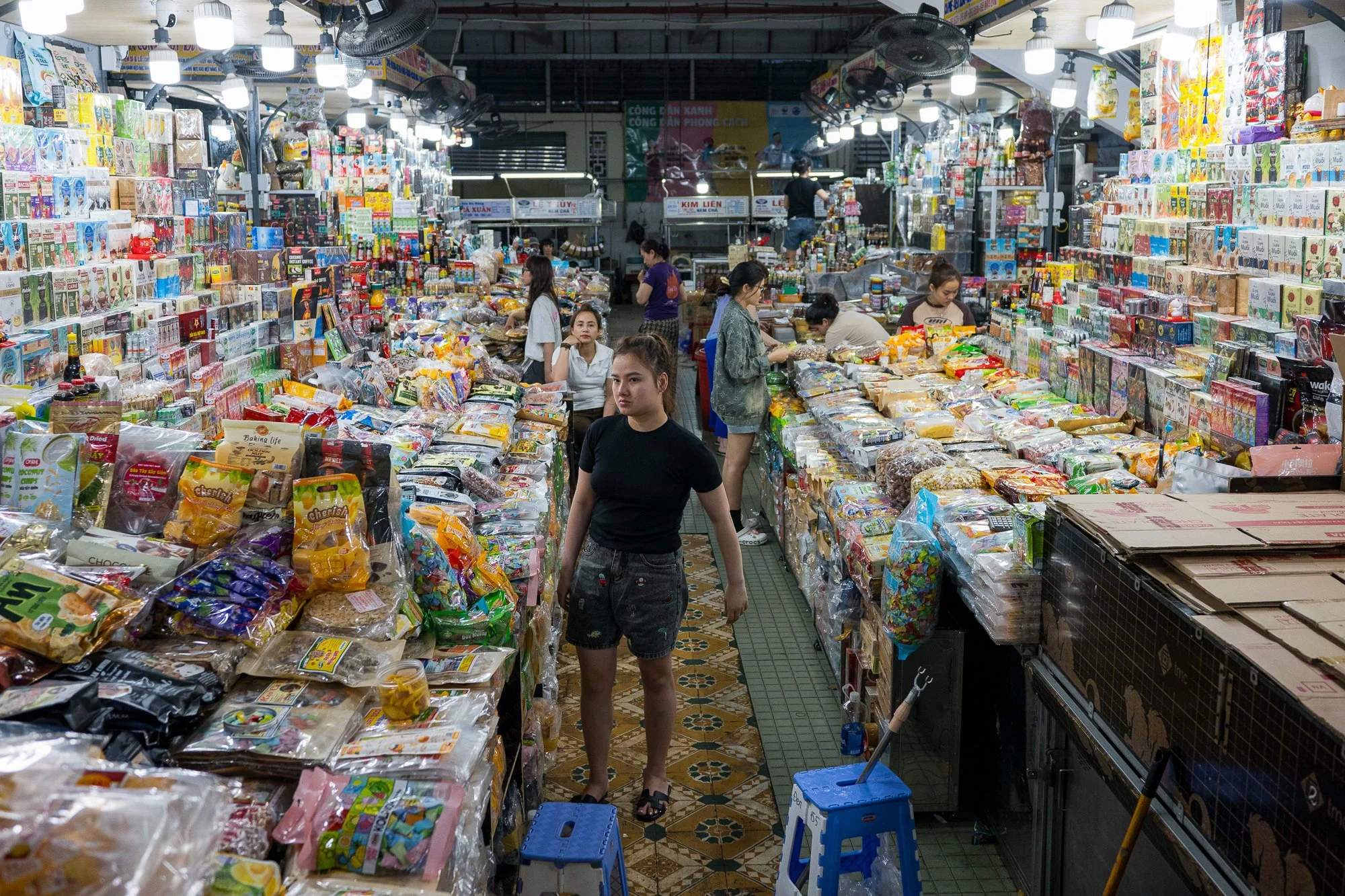
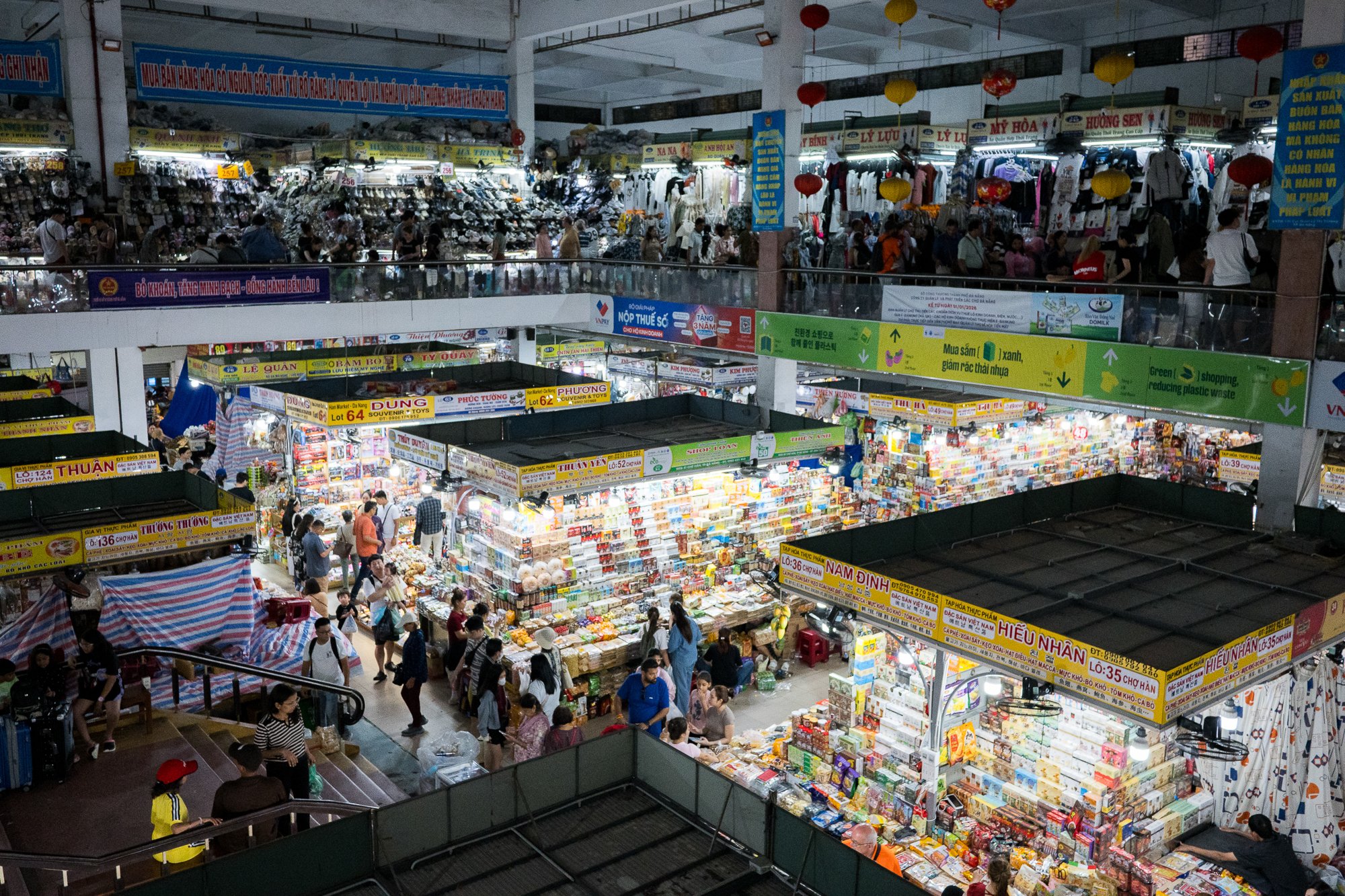
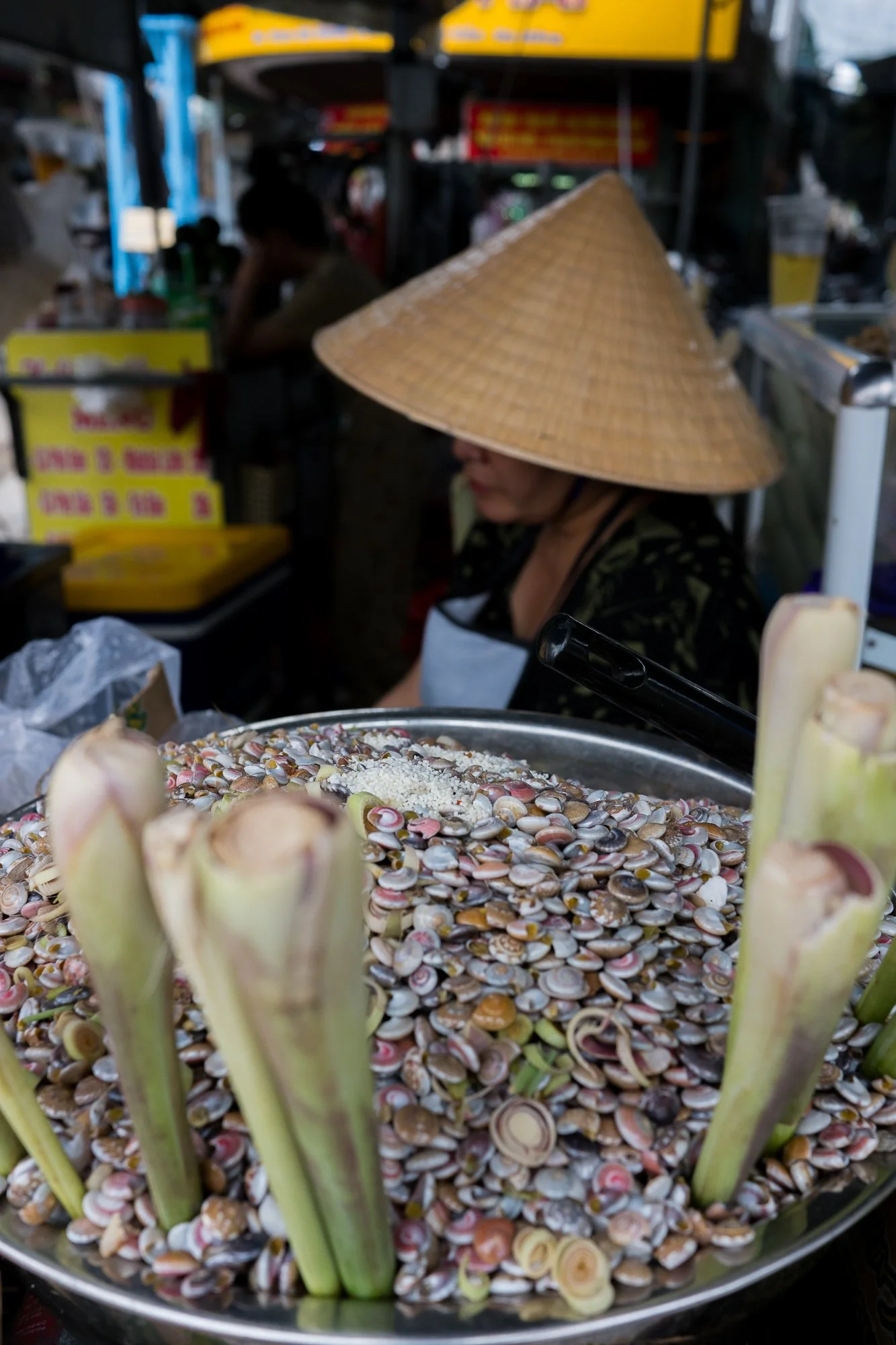
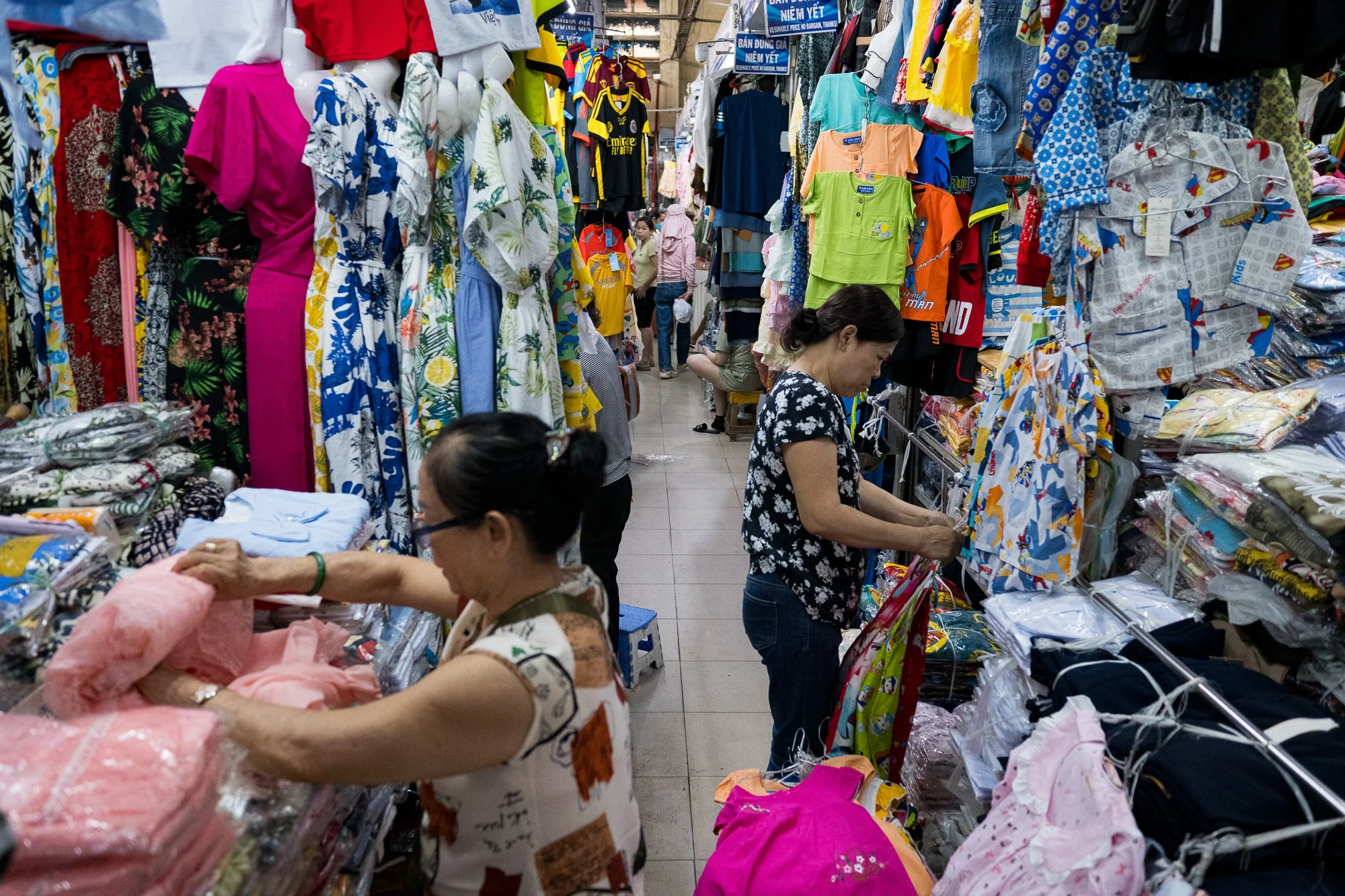
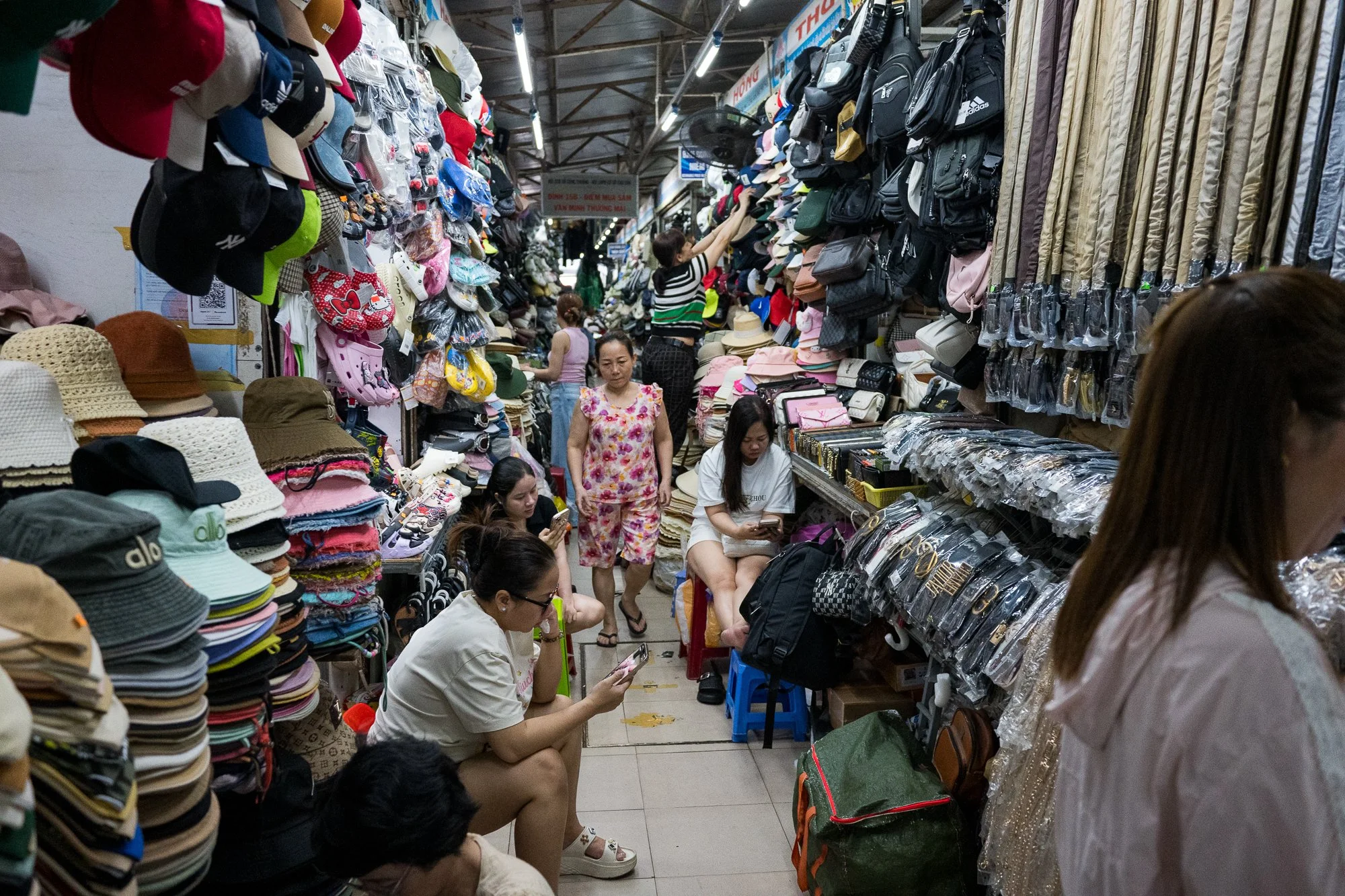
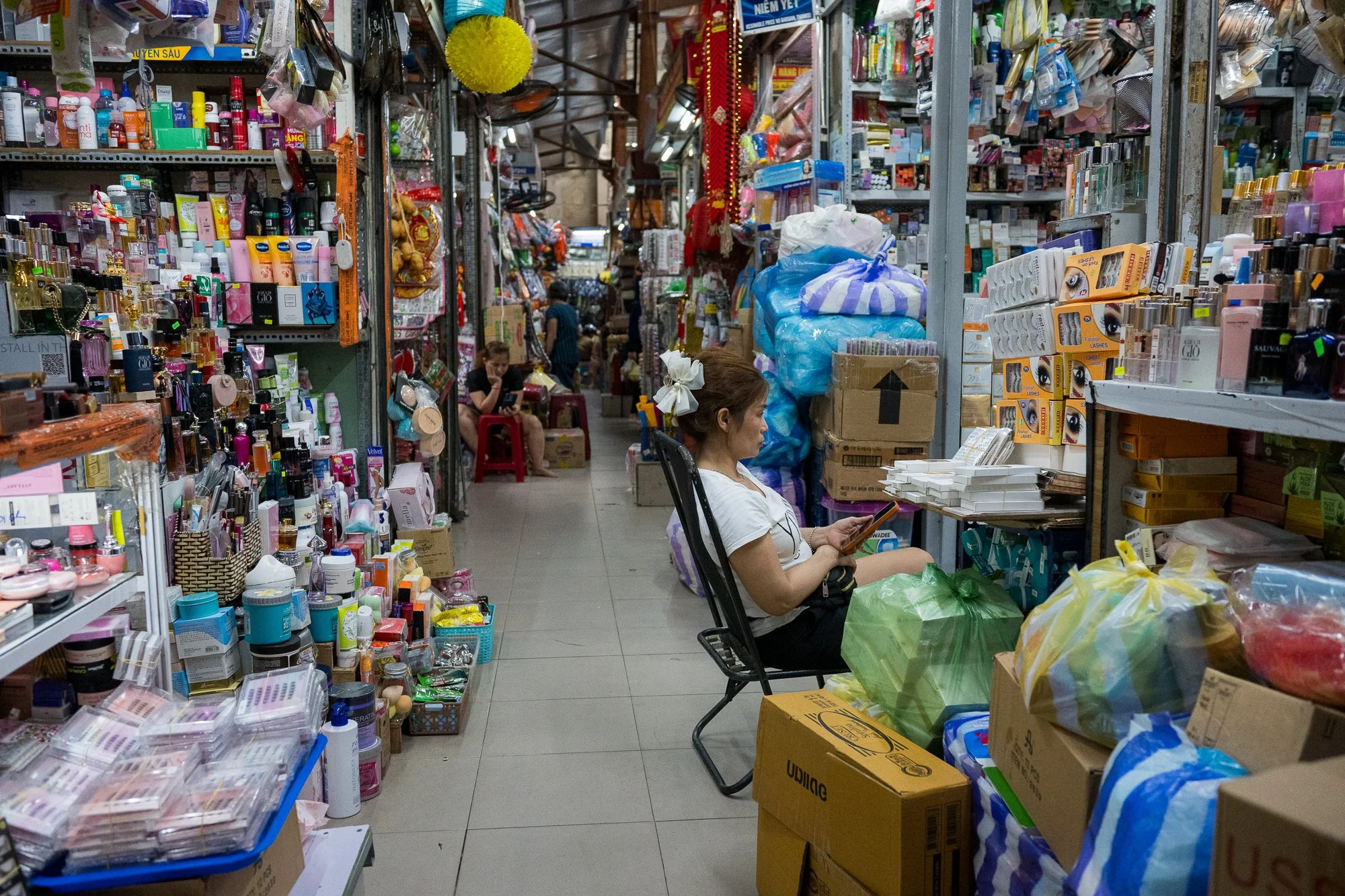
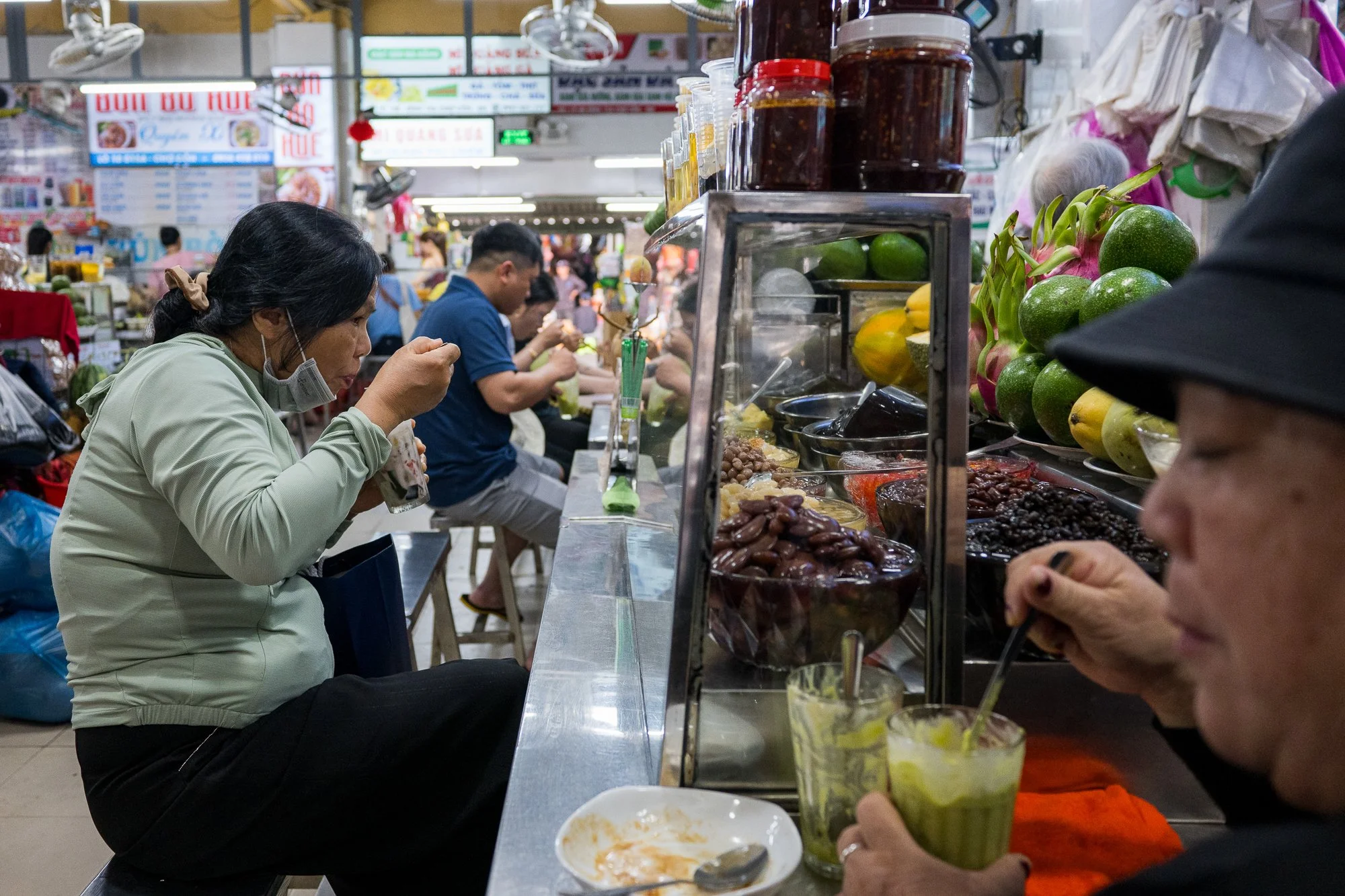
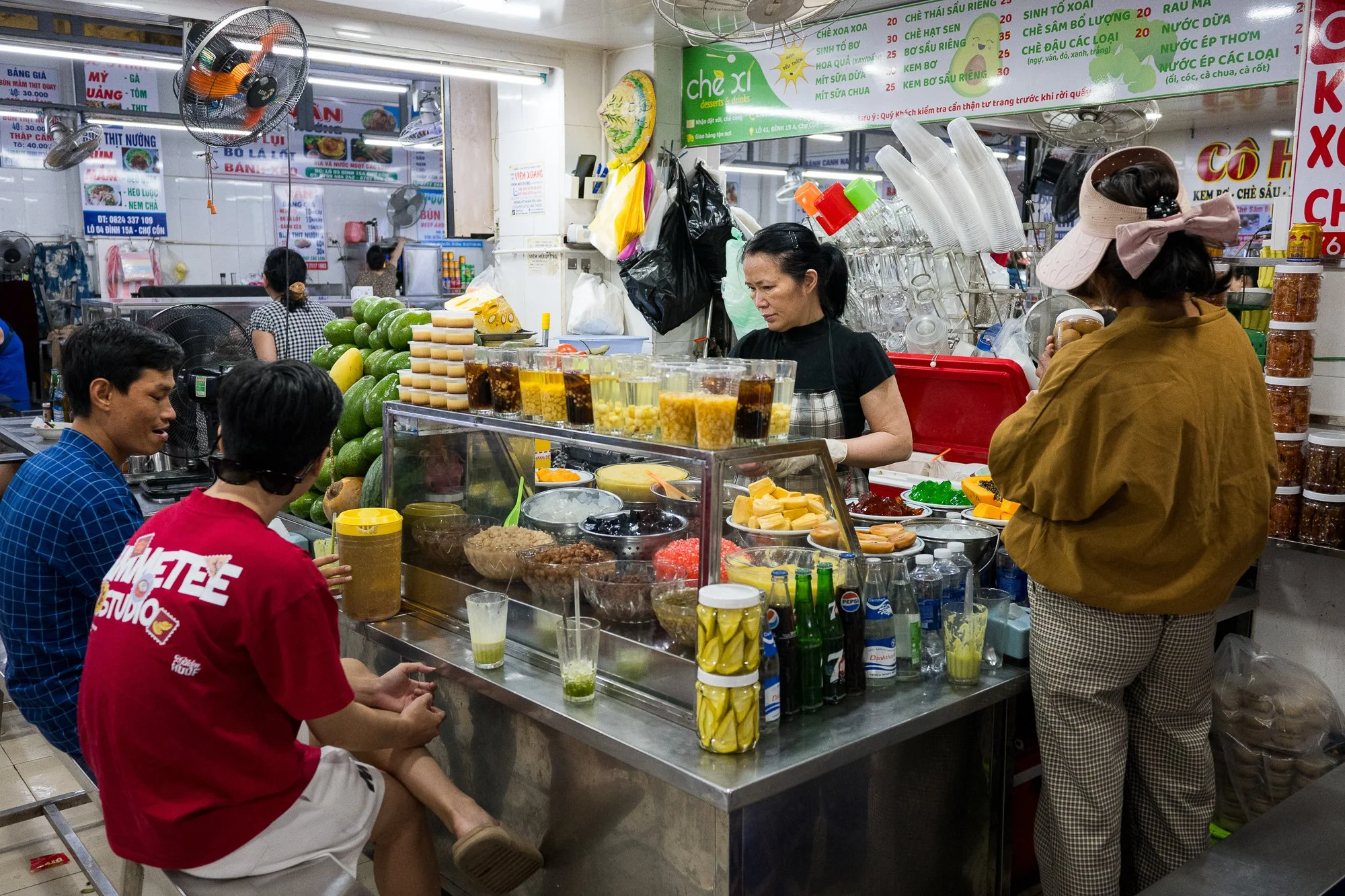
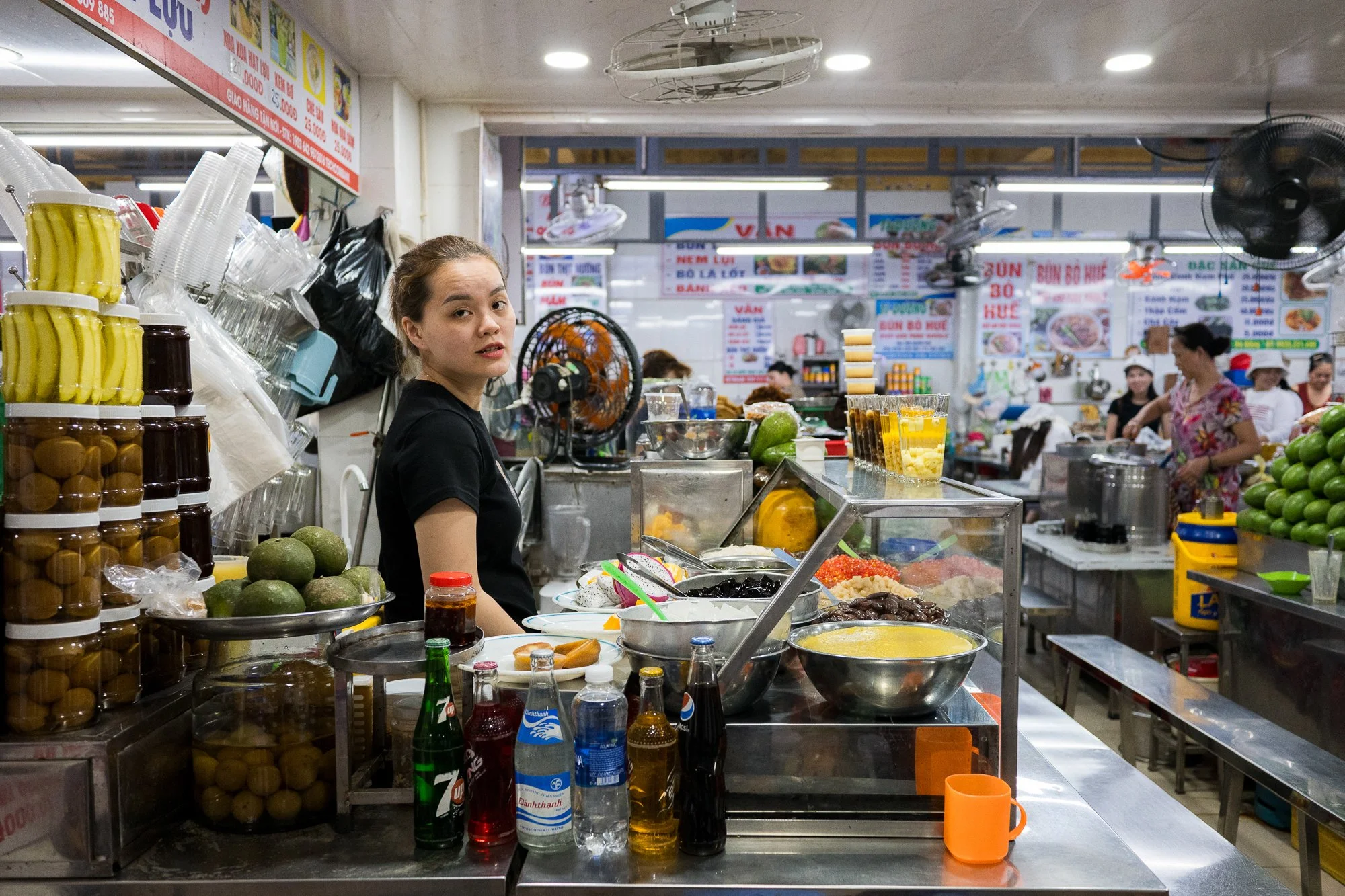
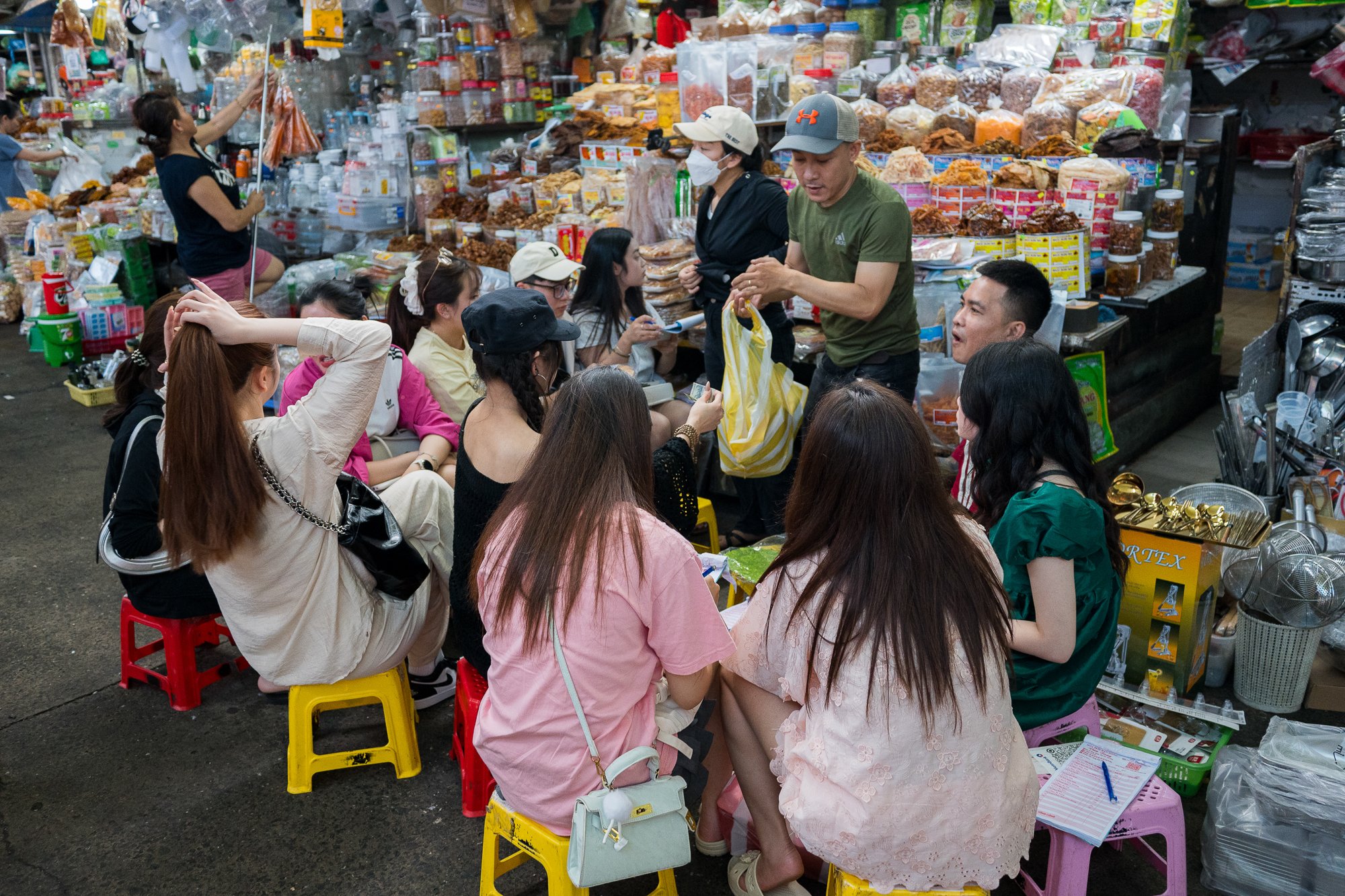
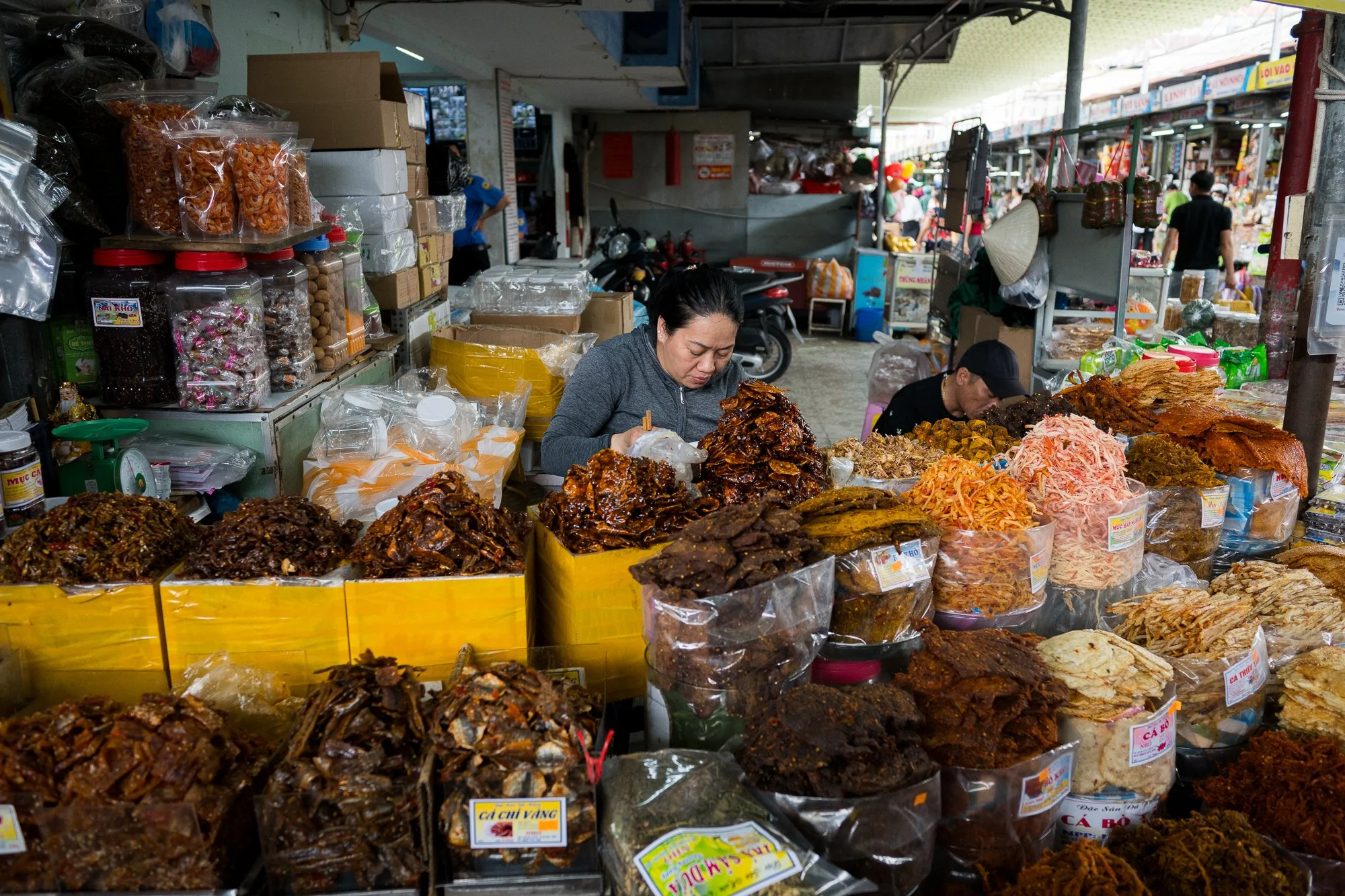
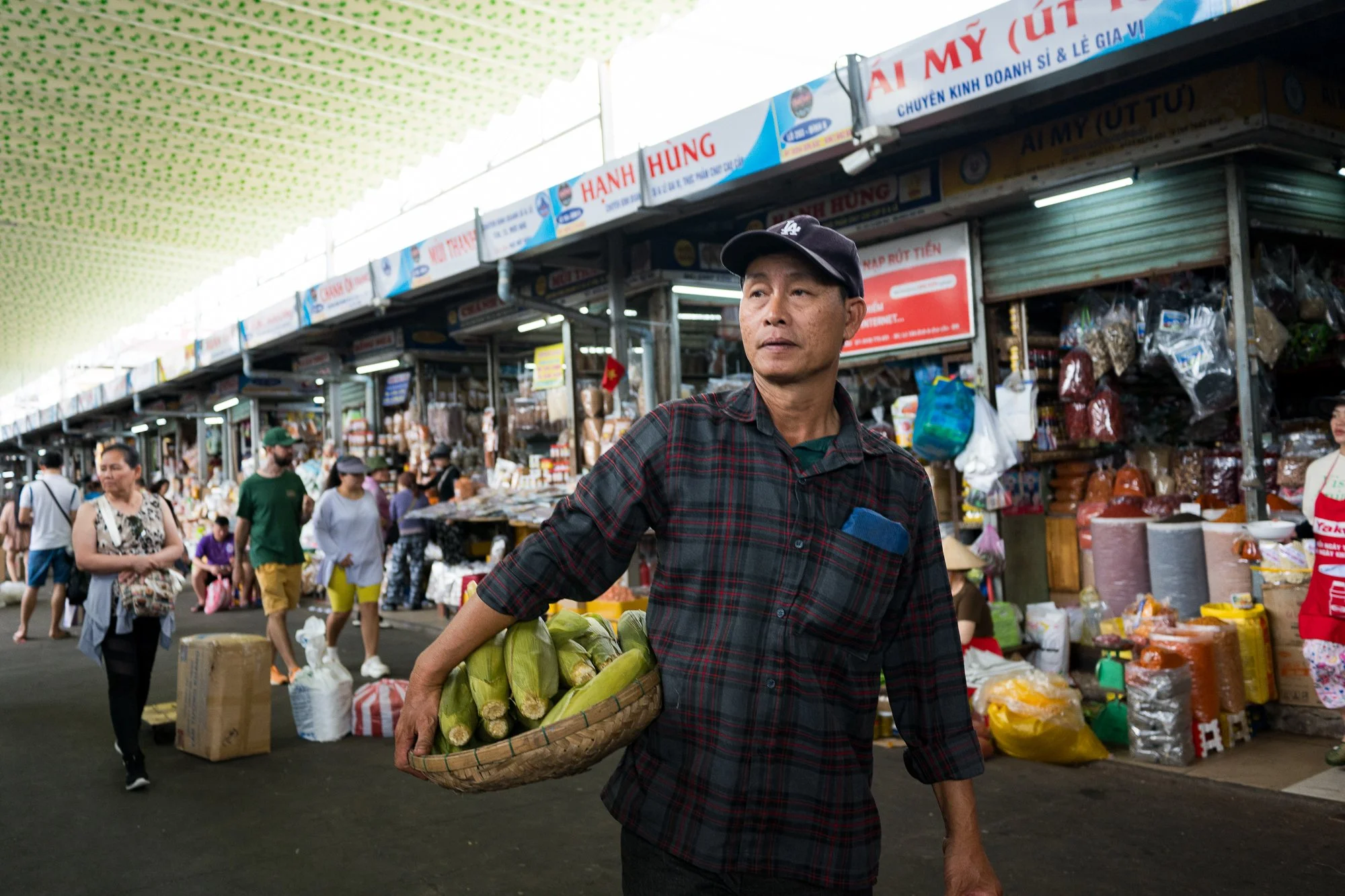
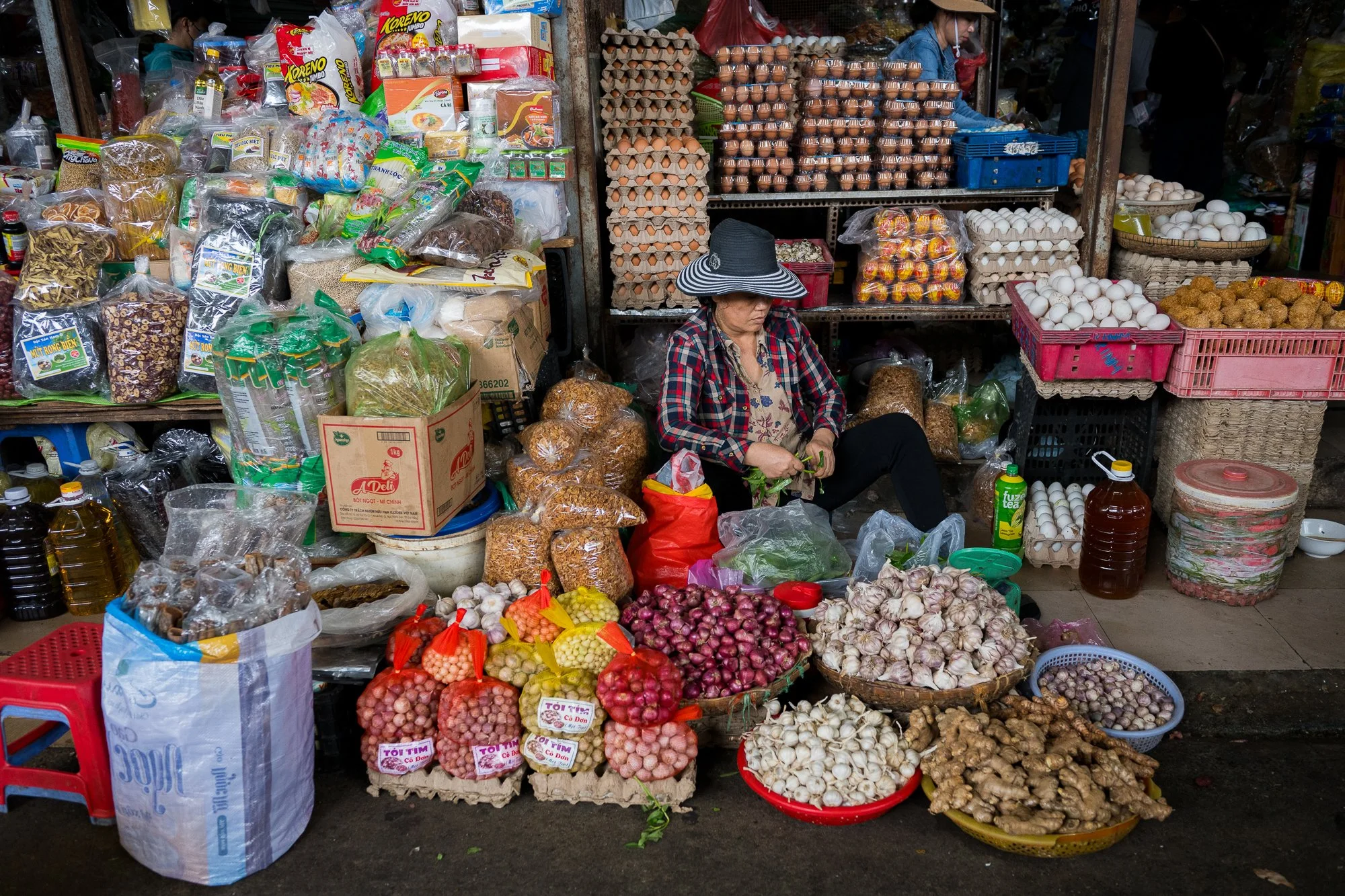
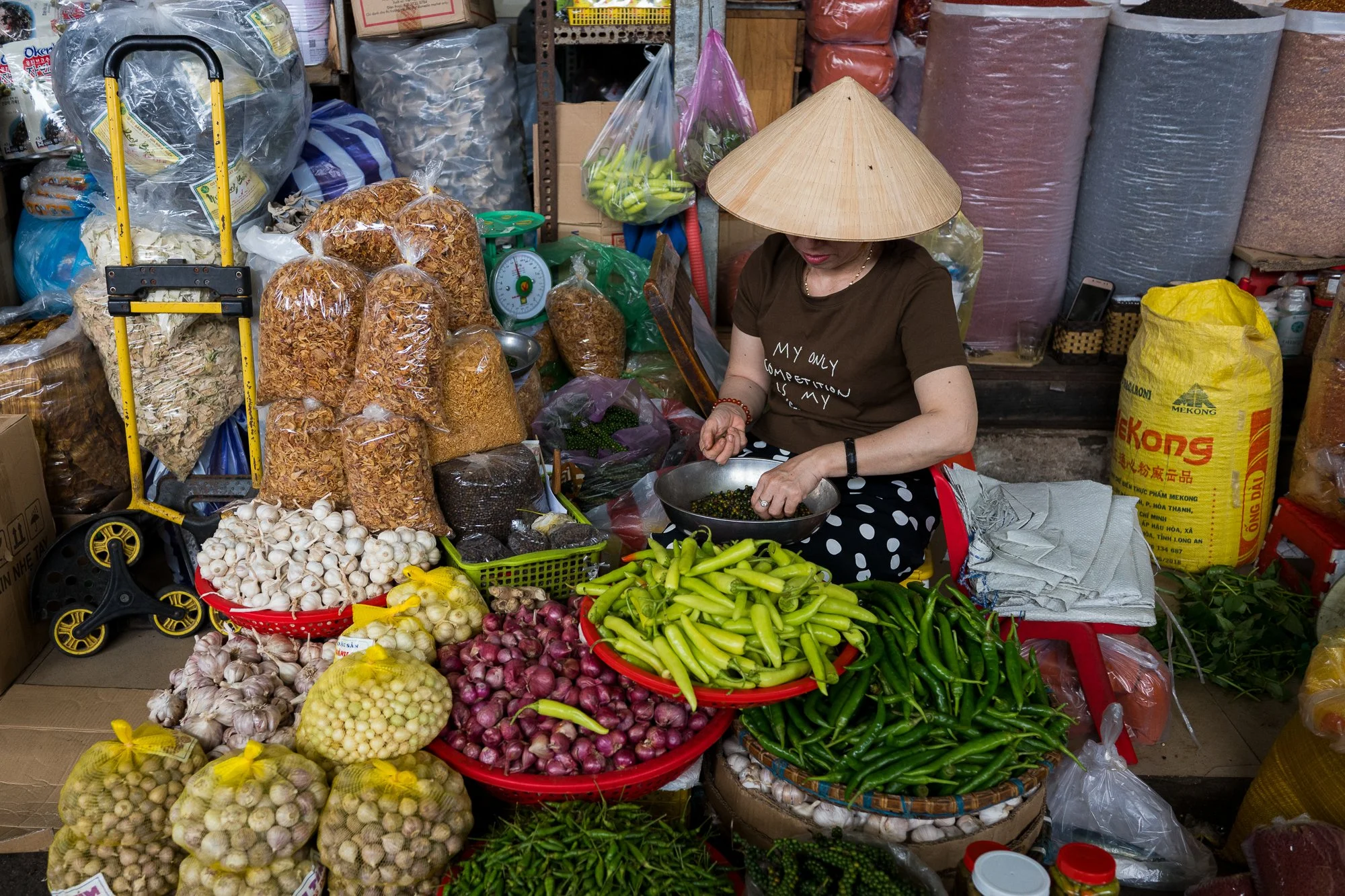
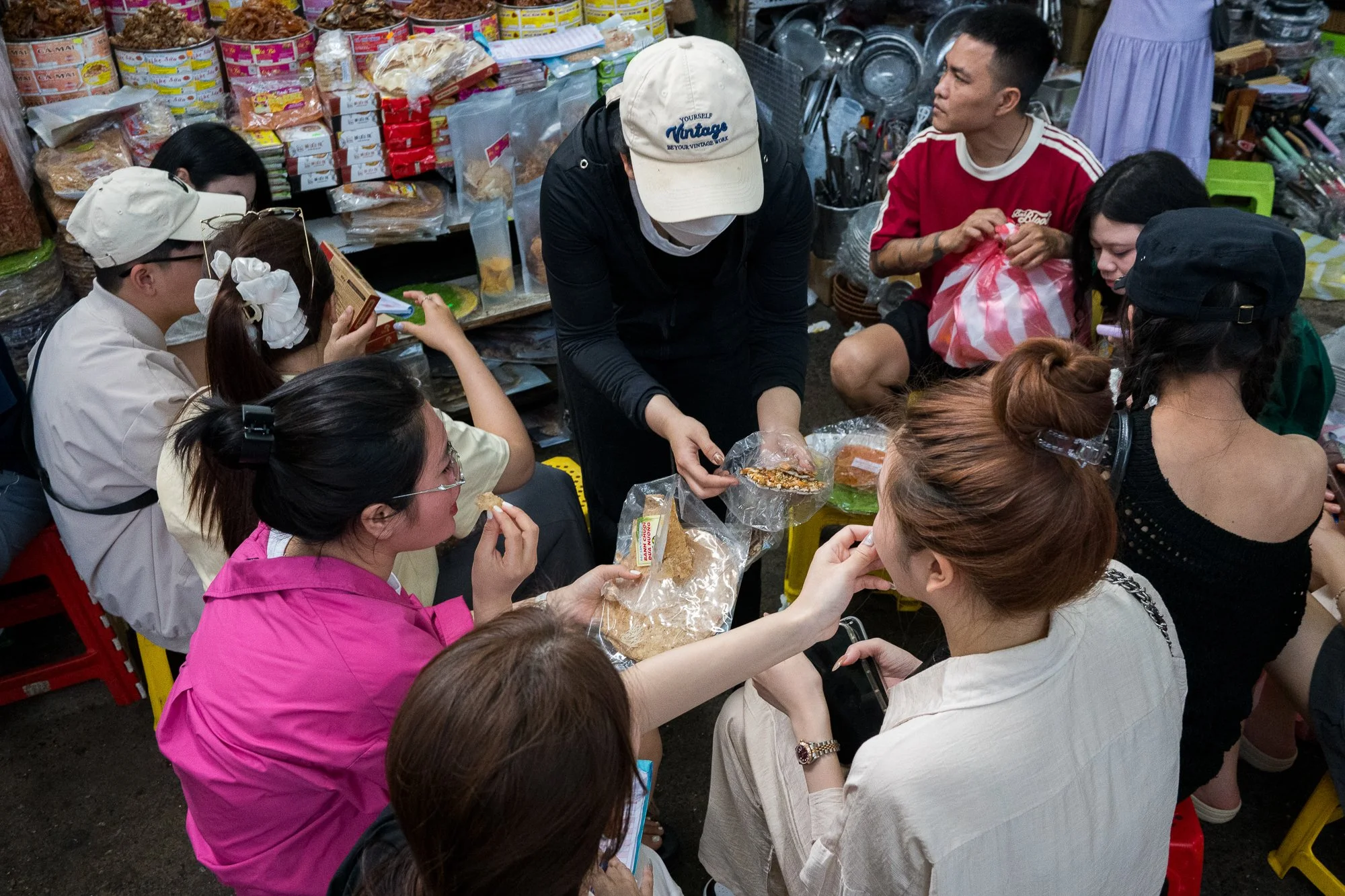
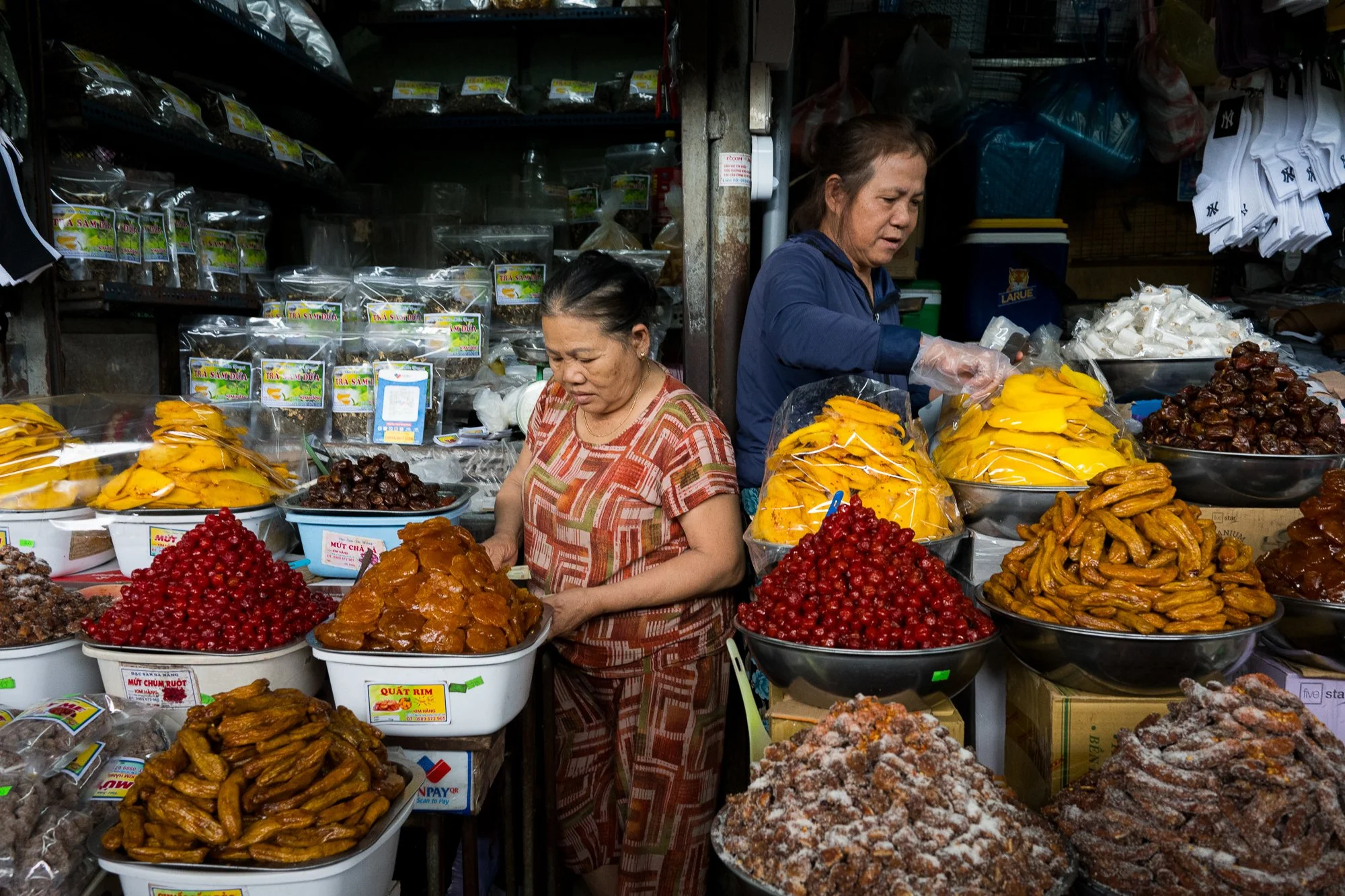
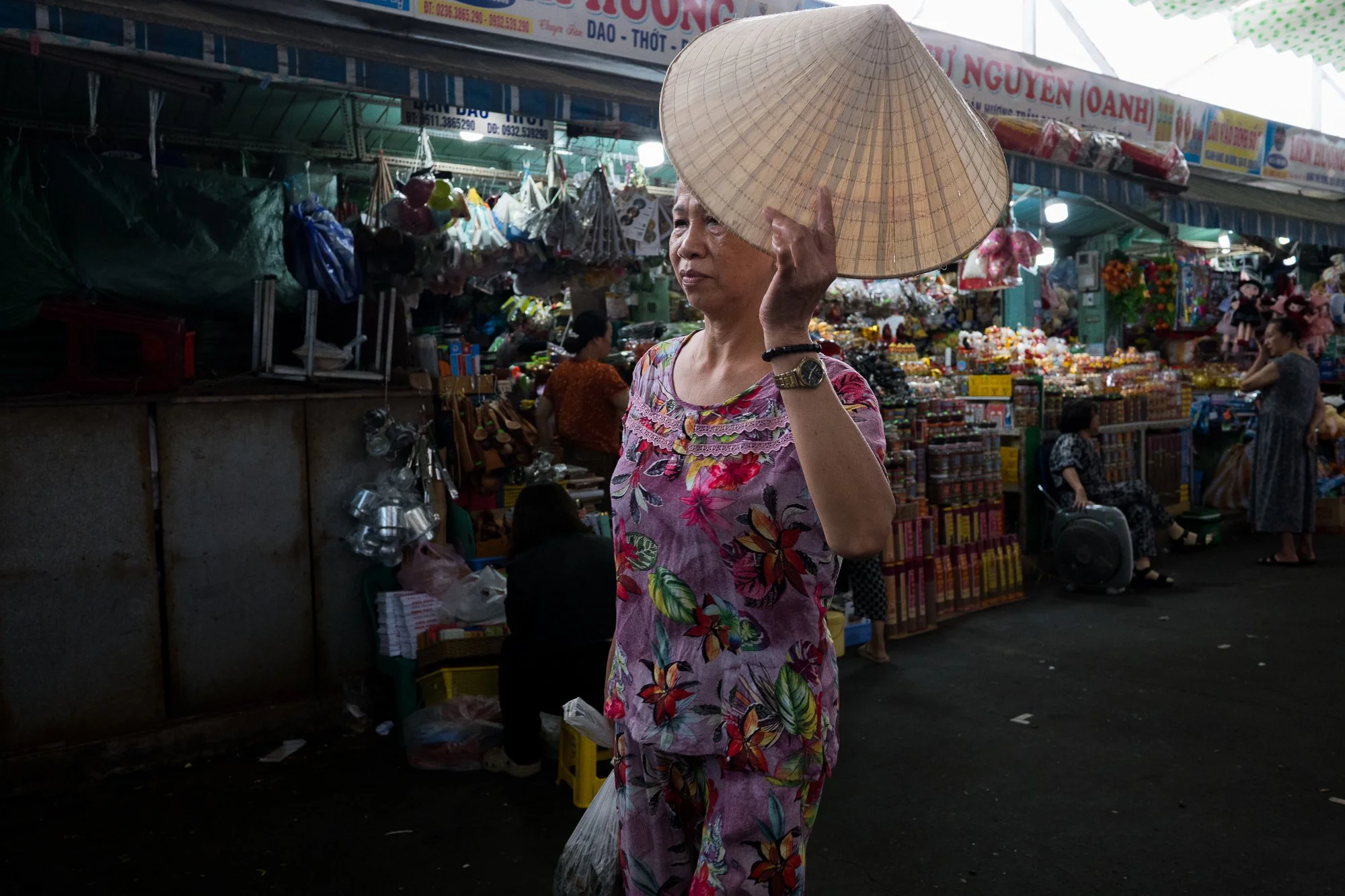
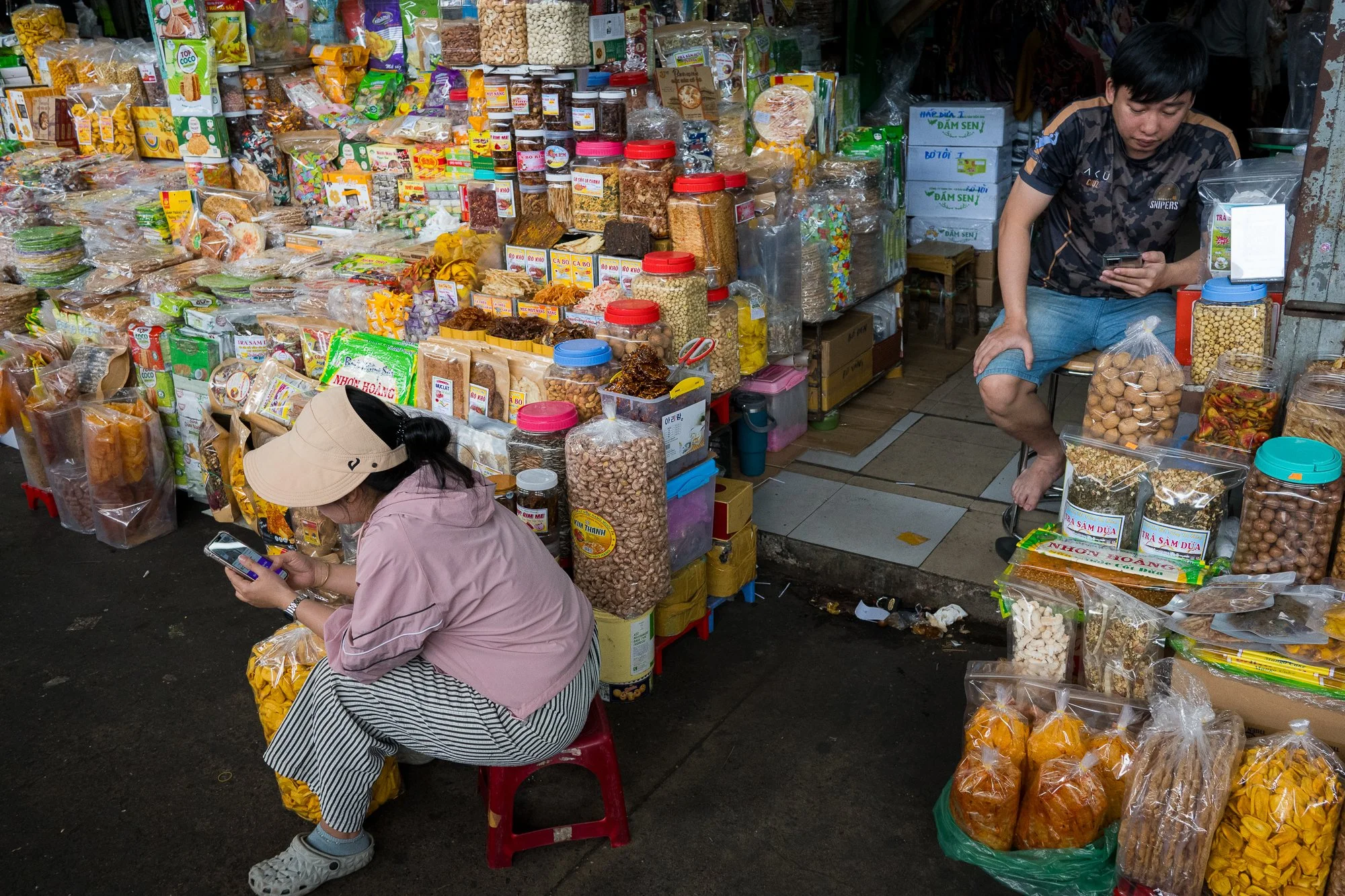
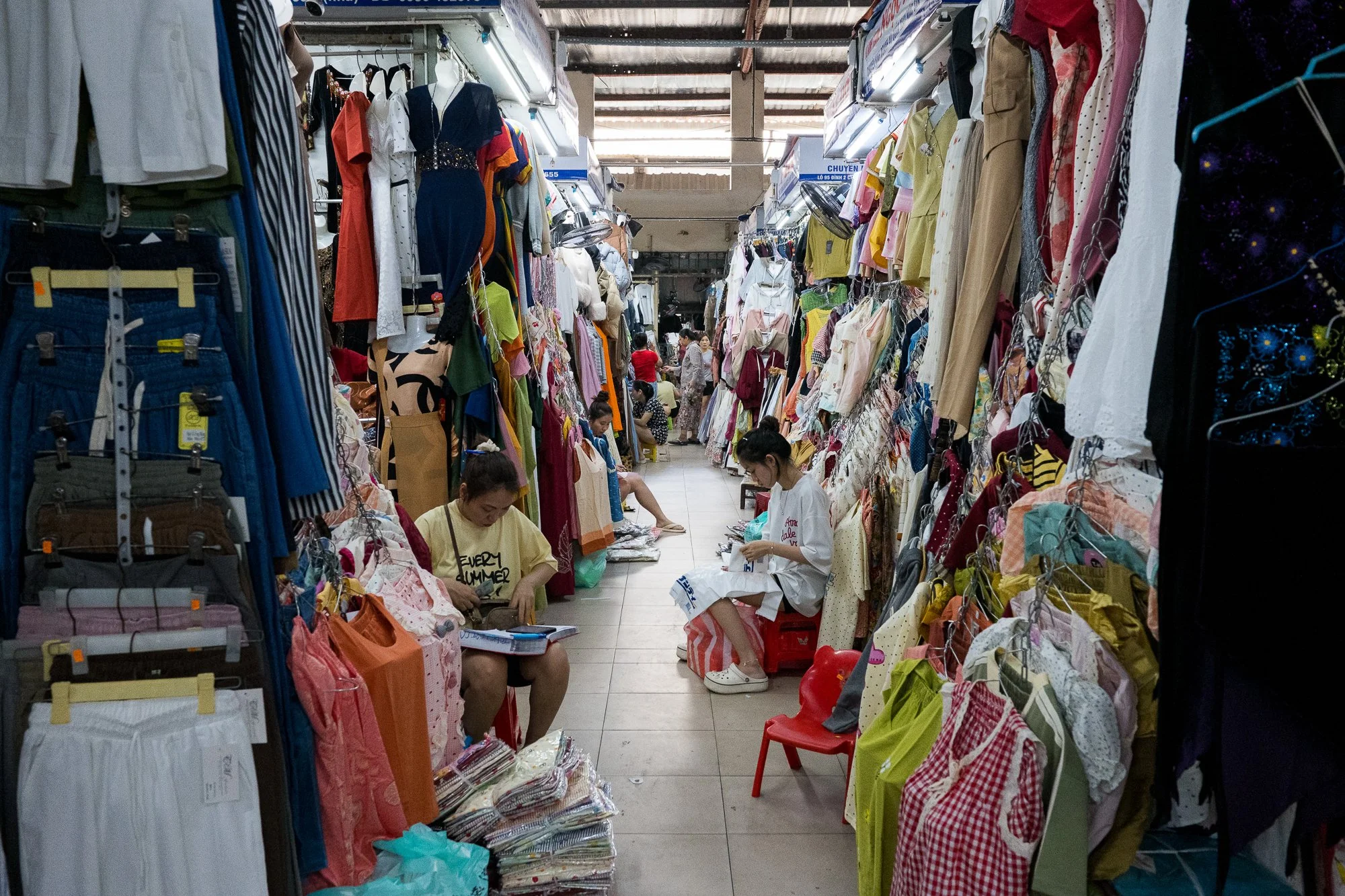
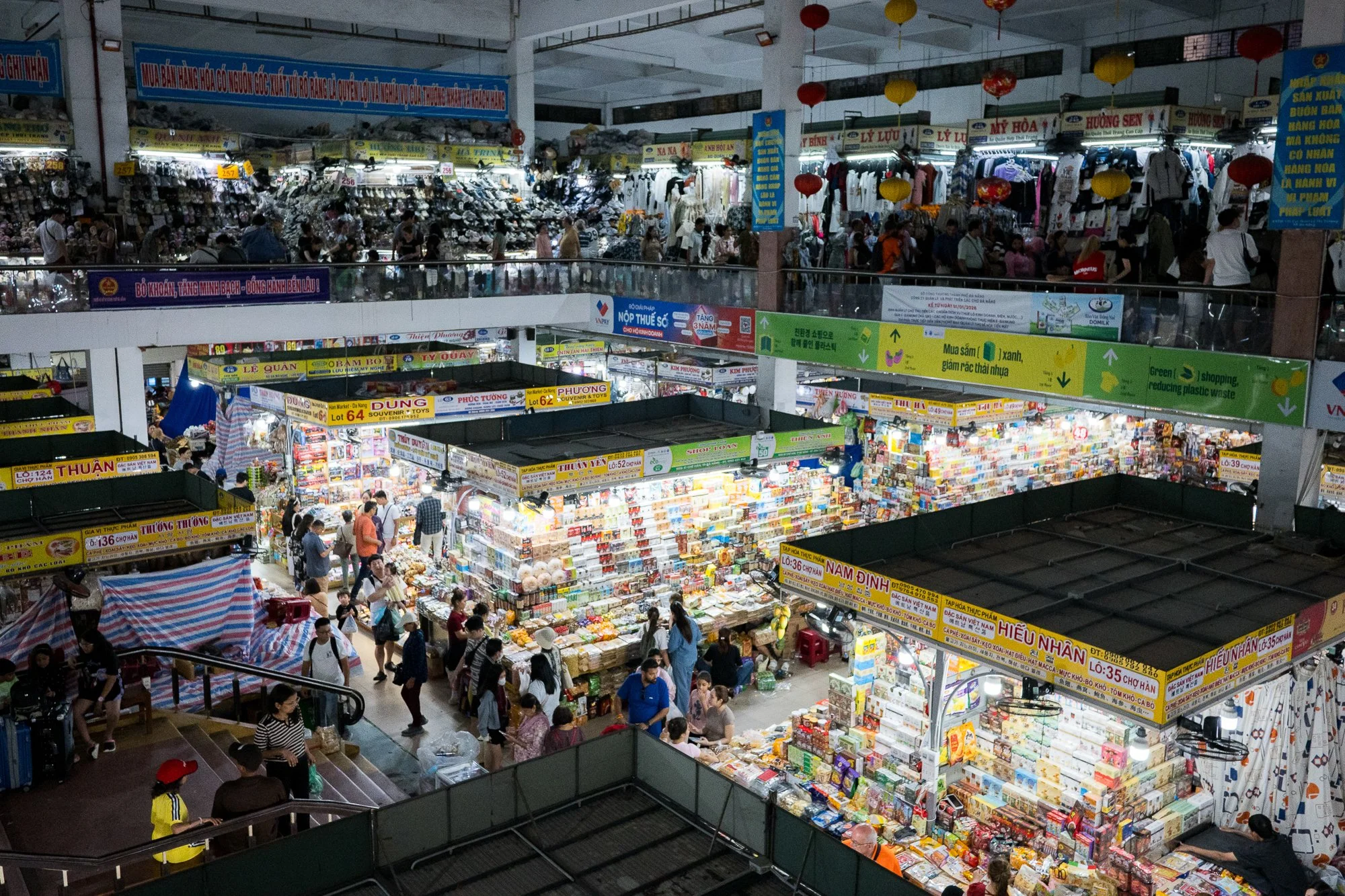
Da Nang has a beachfront strip that's clearly been developed with tourism in mind - the hotels line up along the coast, the restaurants face the water, the souvenir shops have found their positions. But a short drive from that brings you into a city that is still doing its own thing: the Han Market and Chợ Cồn market, both of which sell clothes, seafood, vegetables, phone cases, grilled meats on sticks, and things that defy quick categorisation. These are not tourist markets. They are markets that tourists also go to, which is a meaningful difference. Nobody is performing authenticity for you. They're just selling things. We didn't spend much time in them, more just to take a look and to see for ourselves what it was all about.
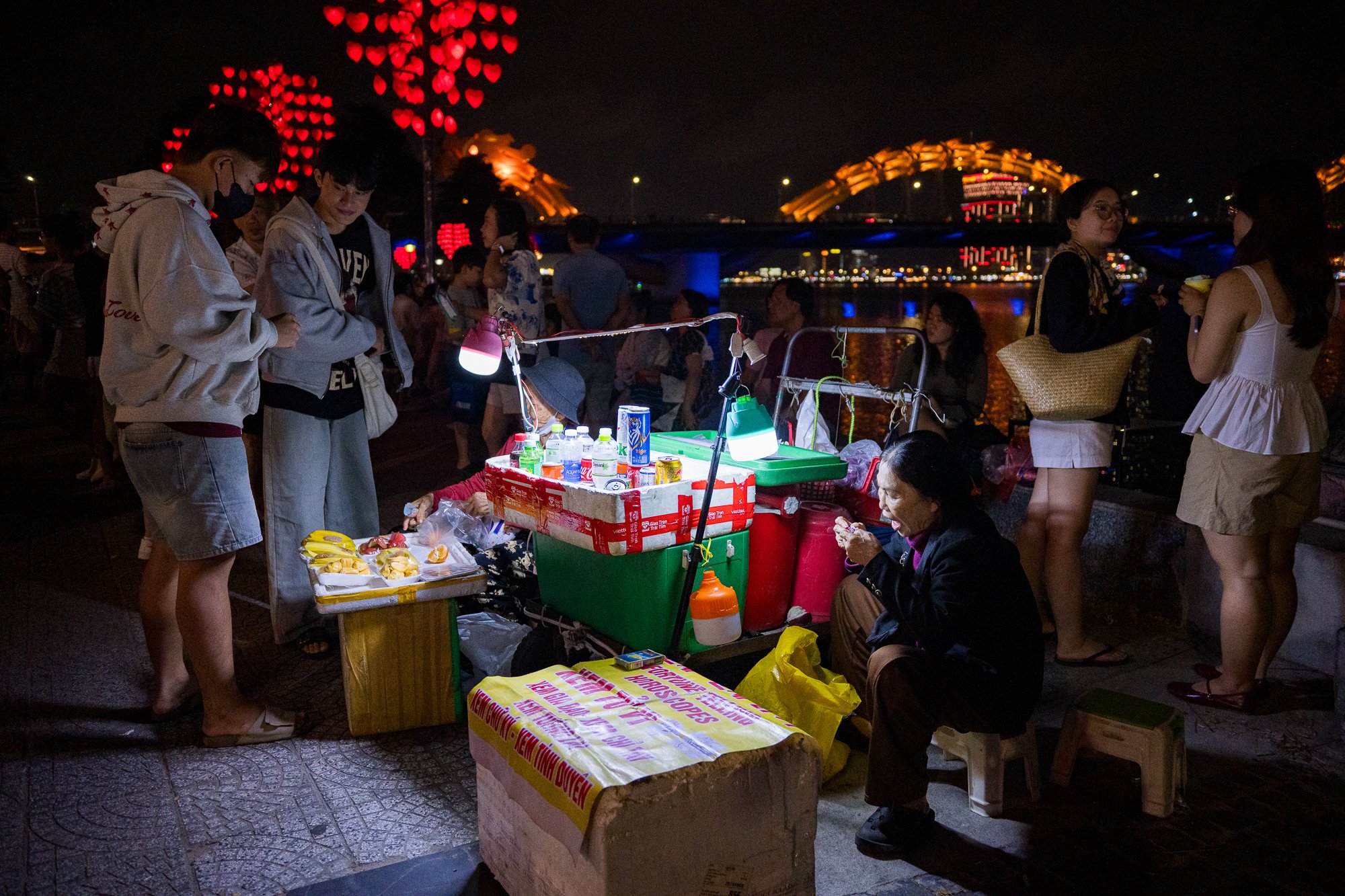
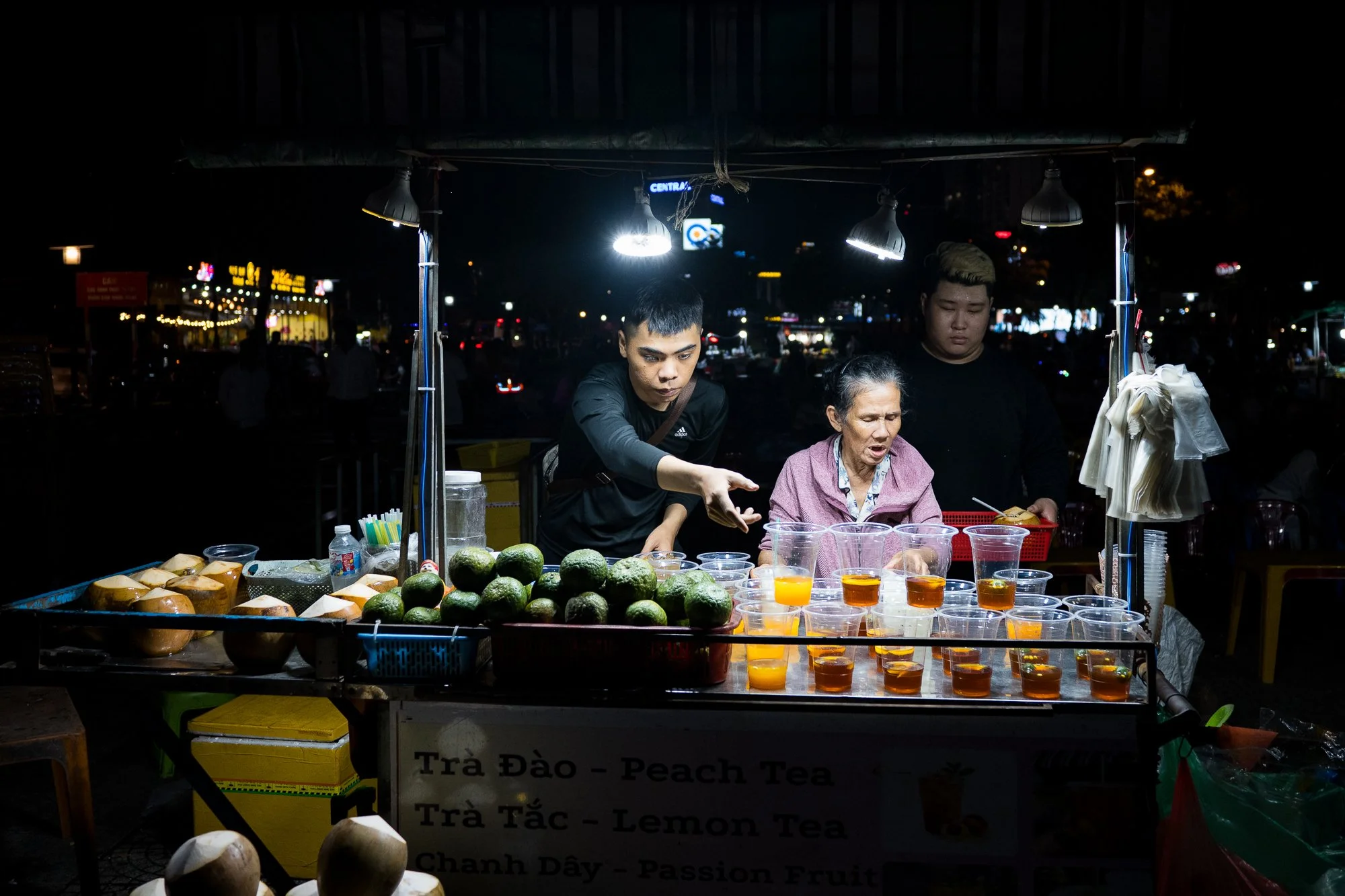
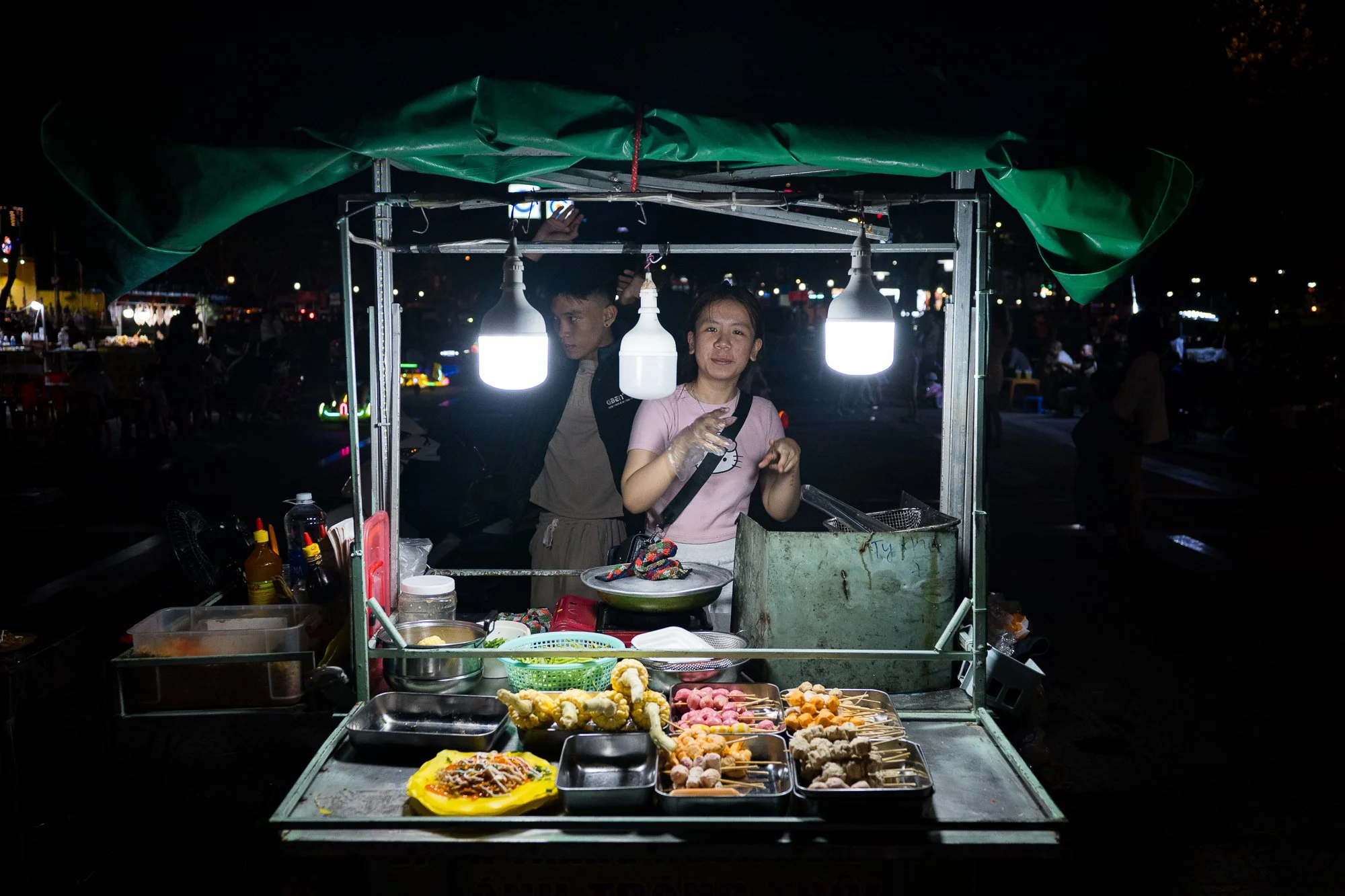
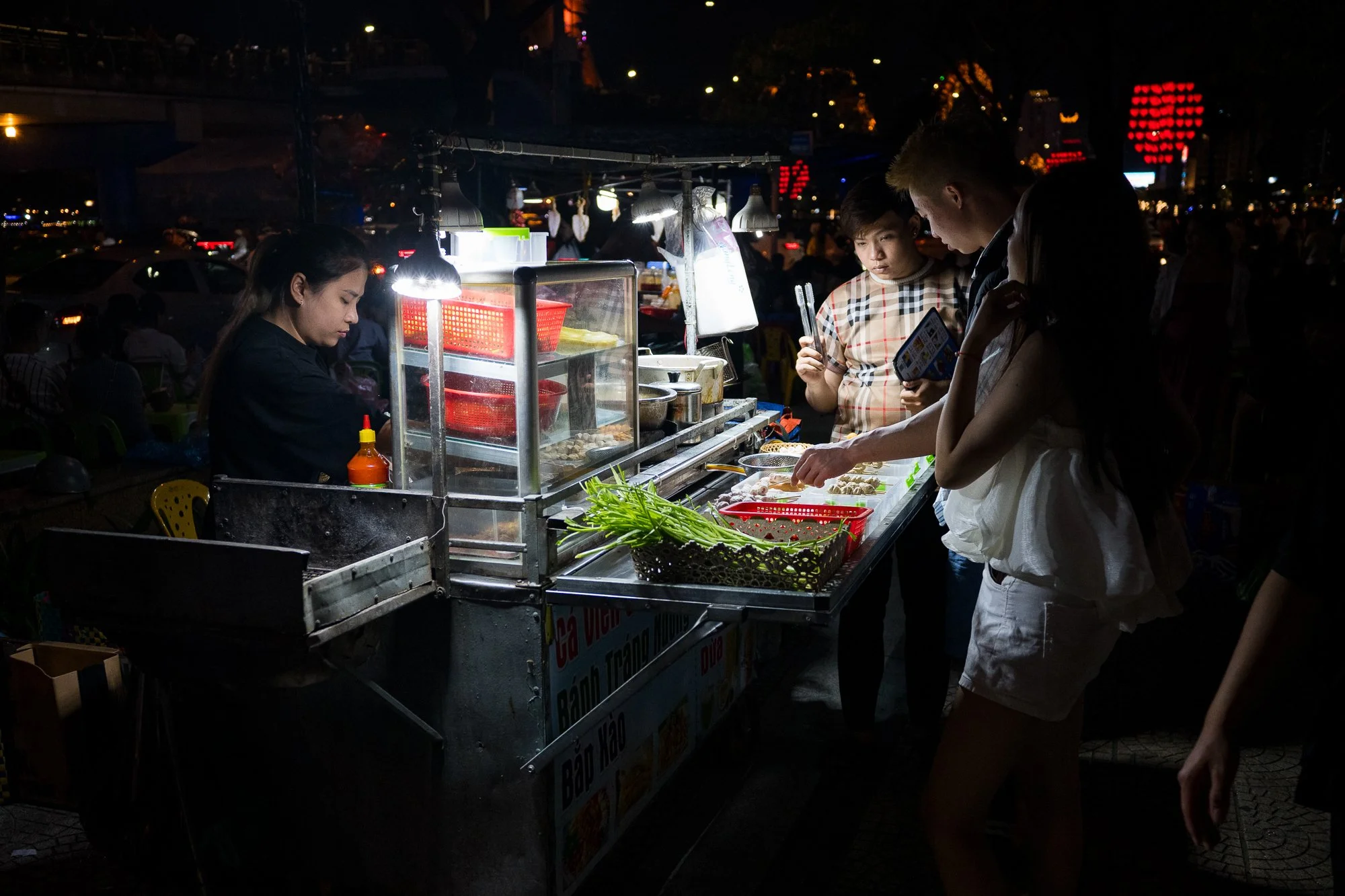
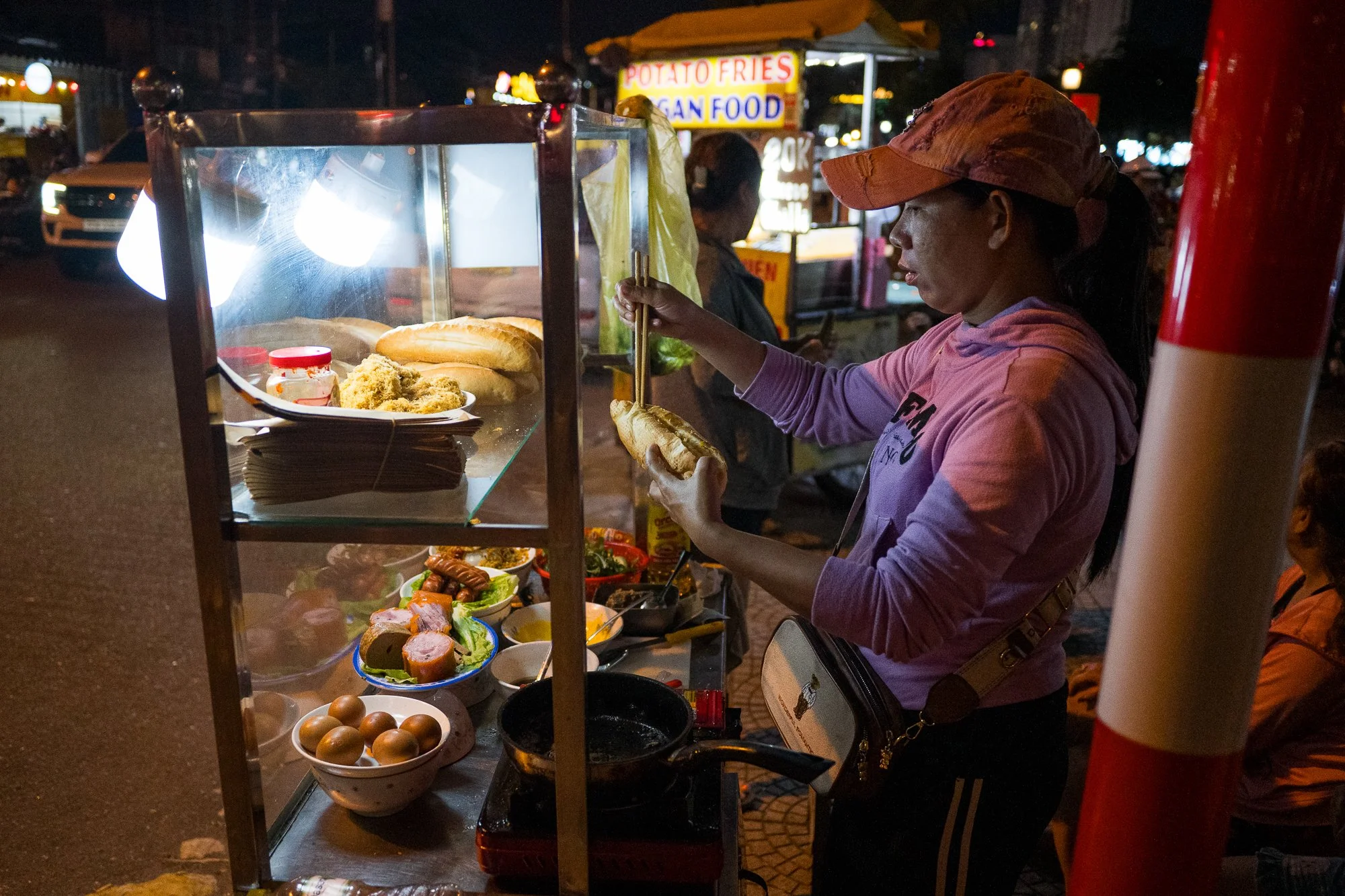
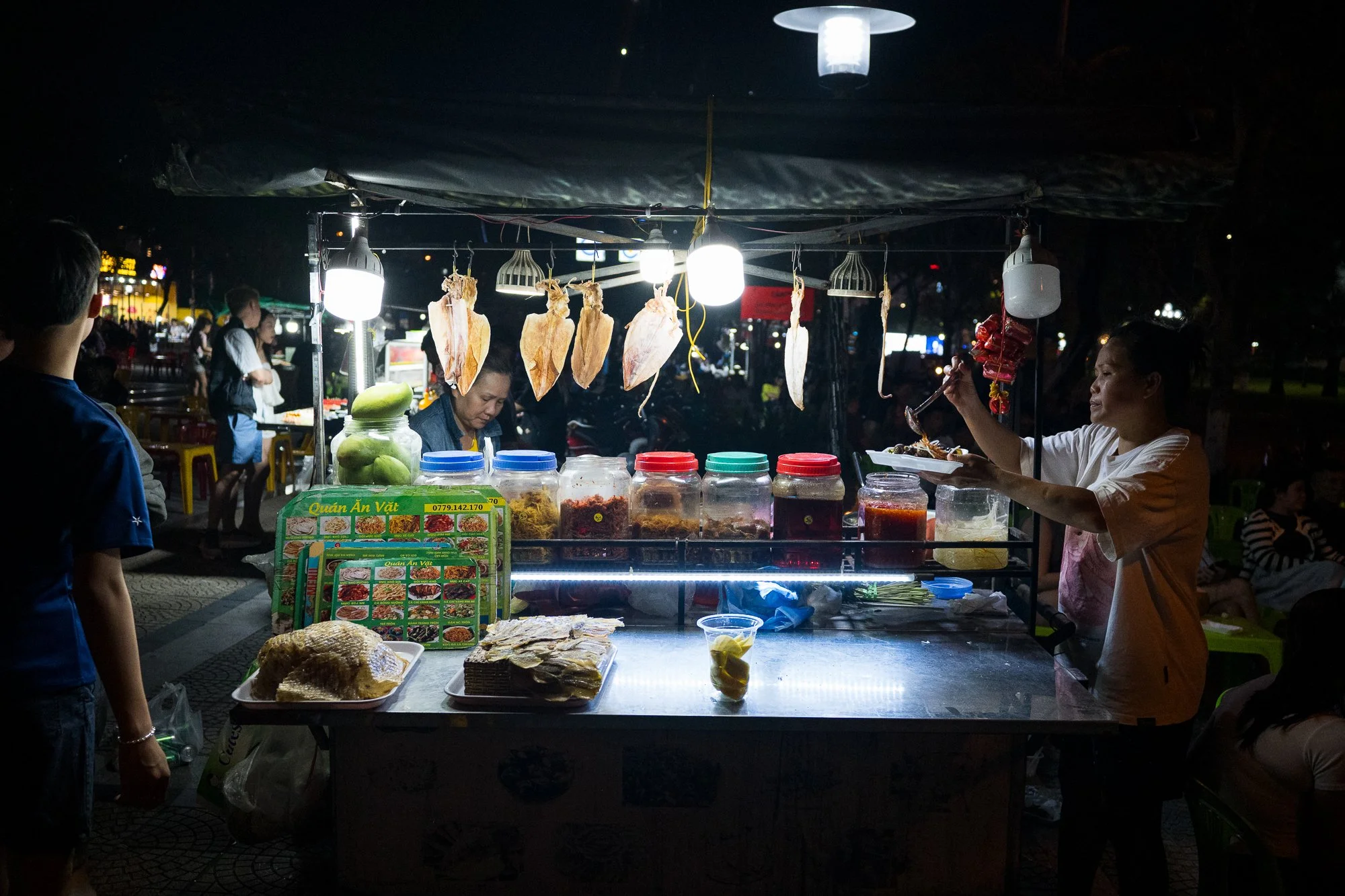
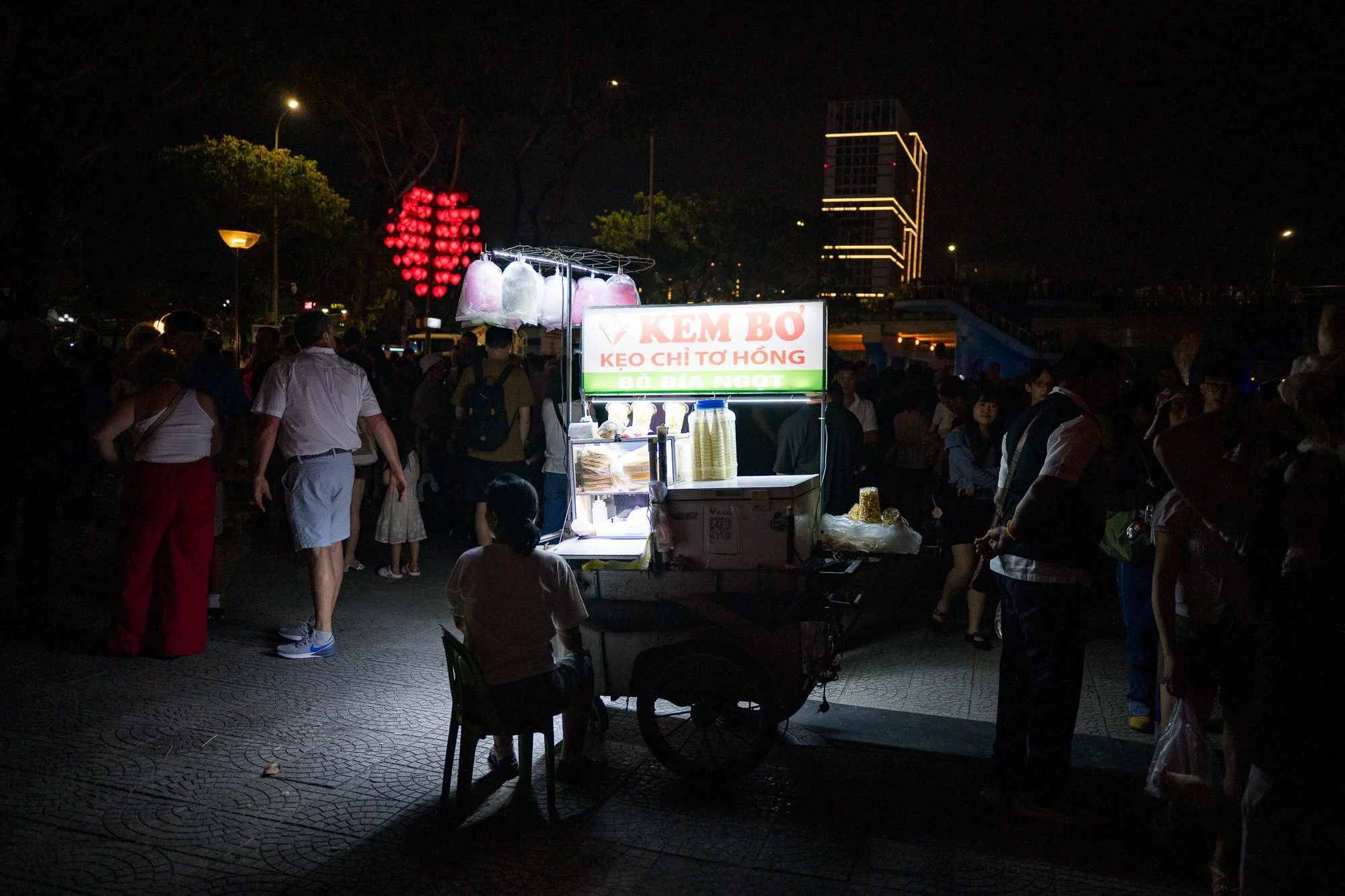
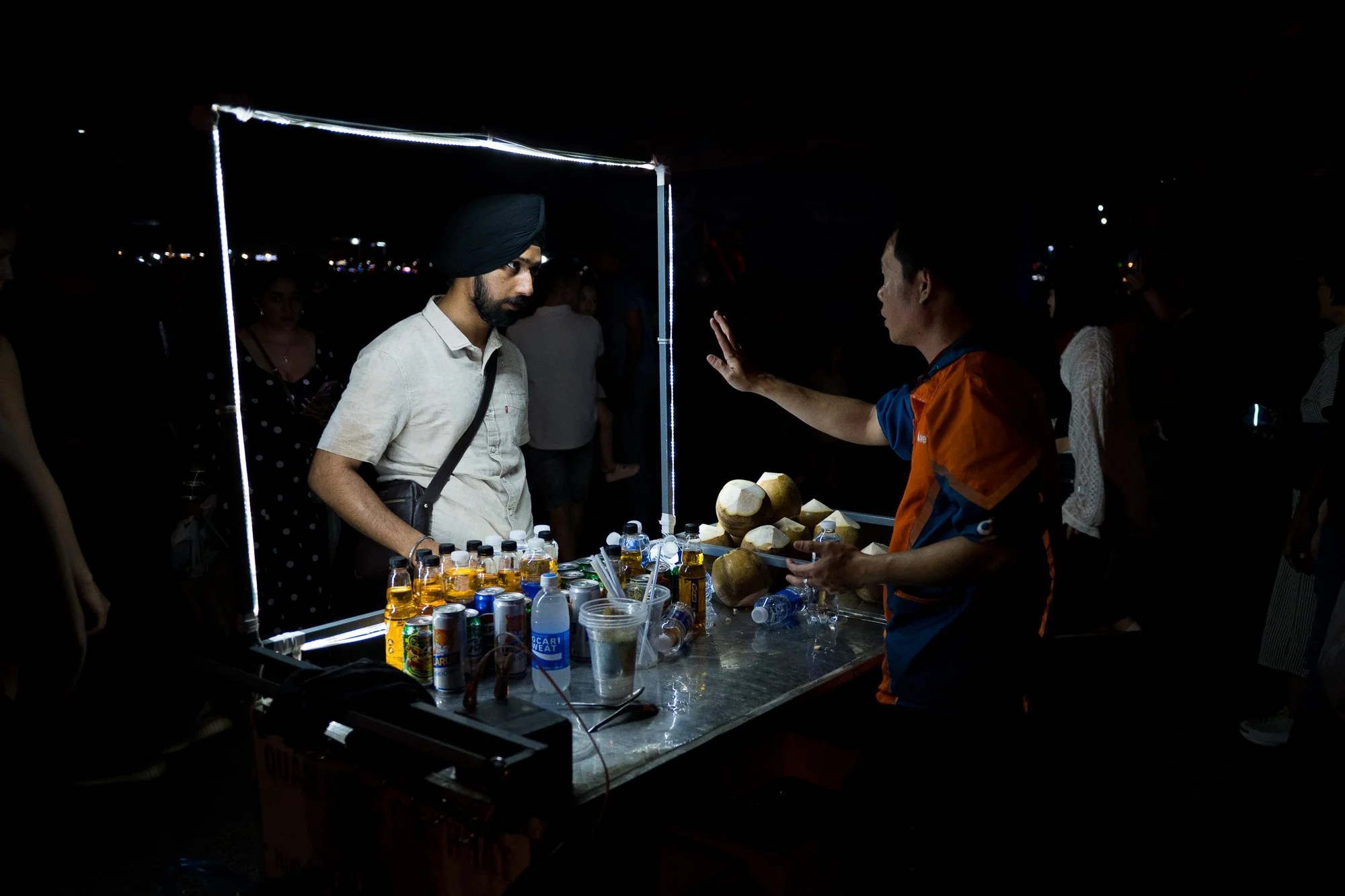
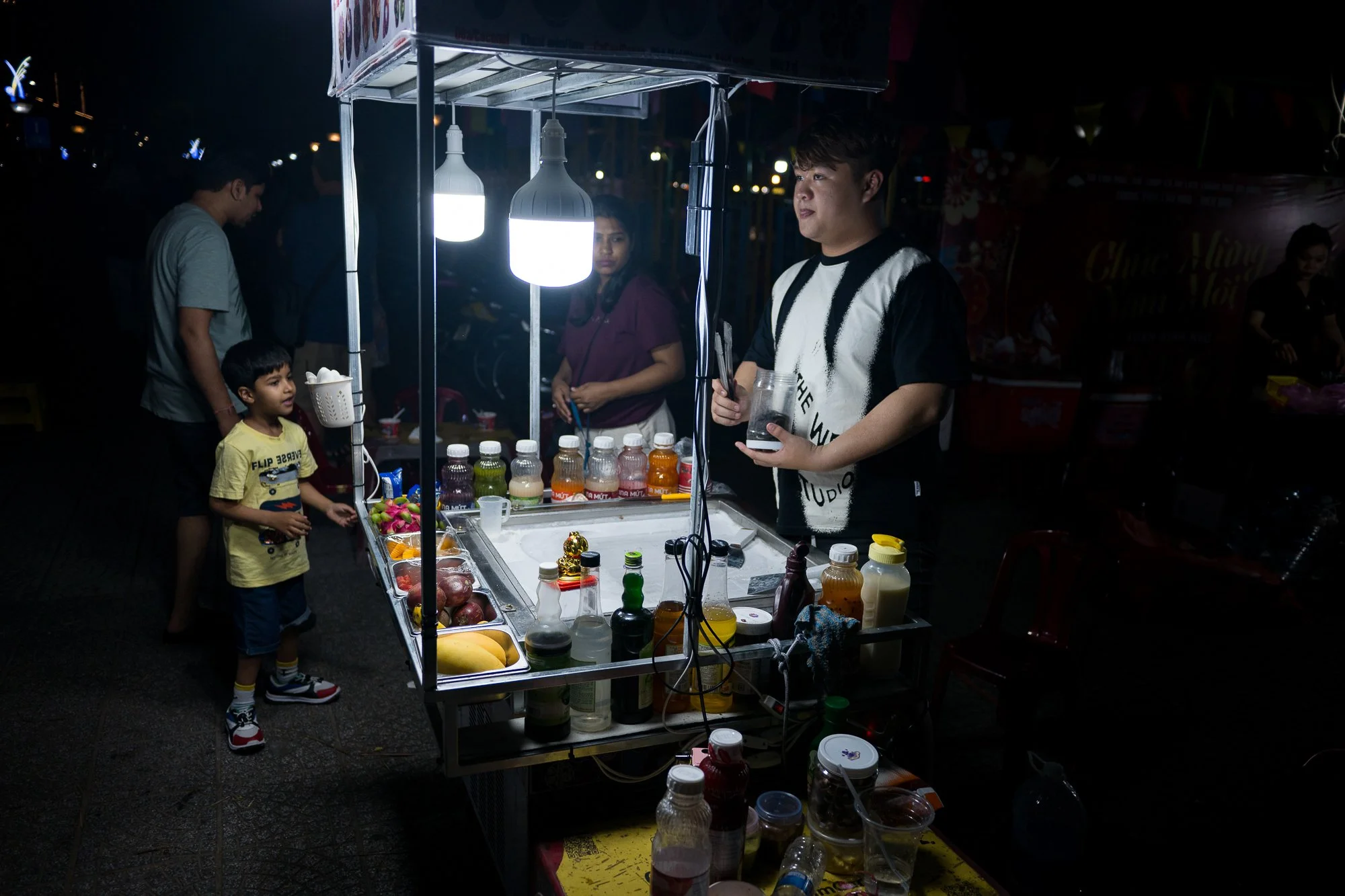
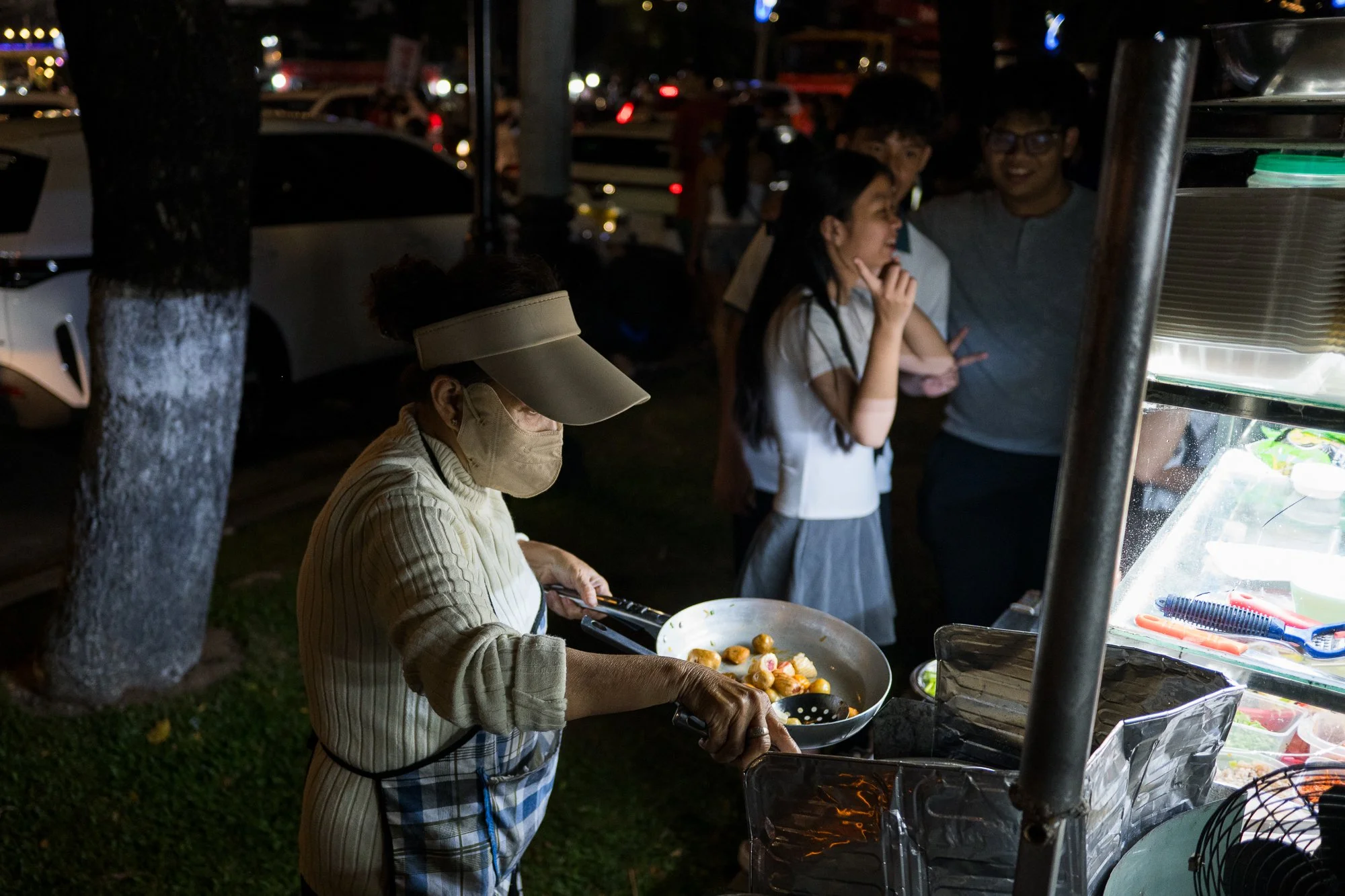
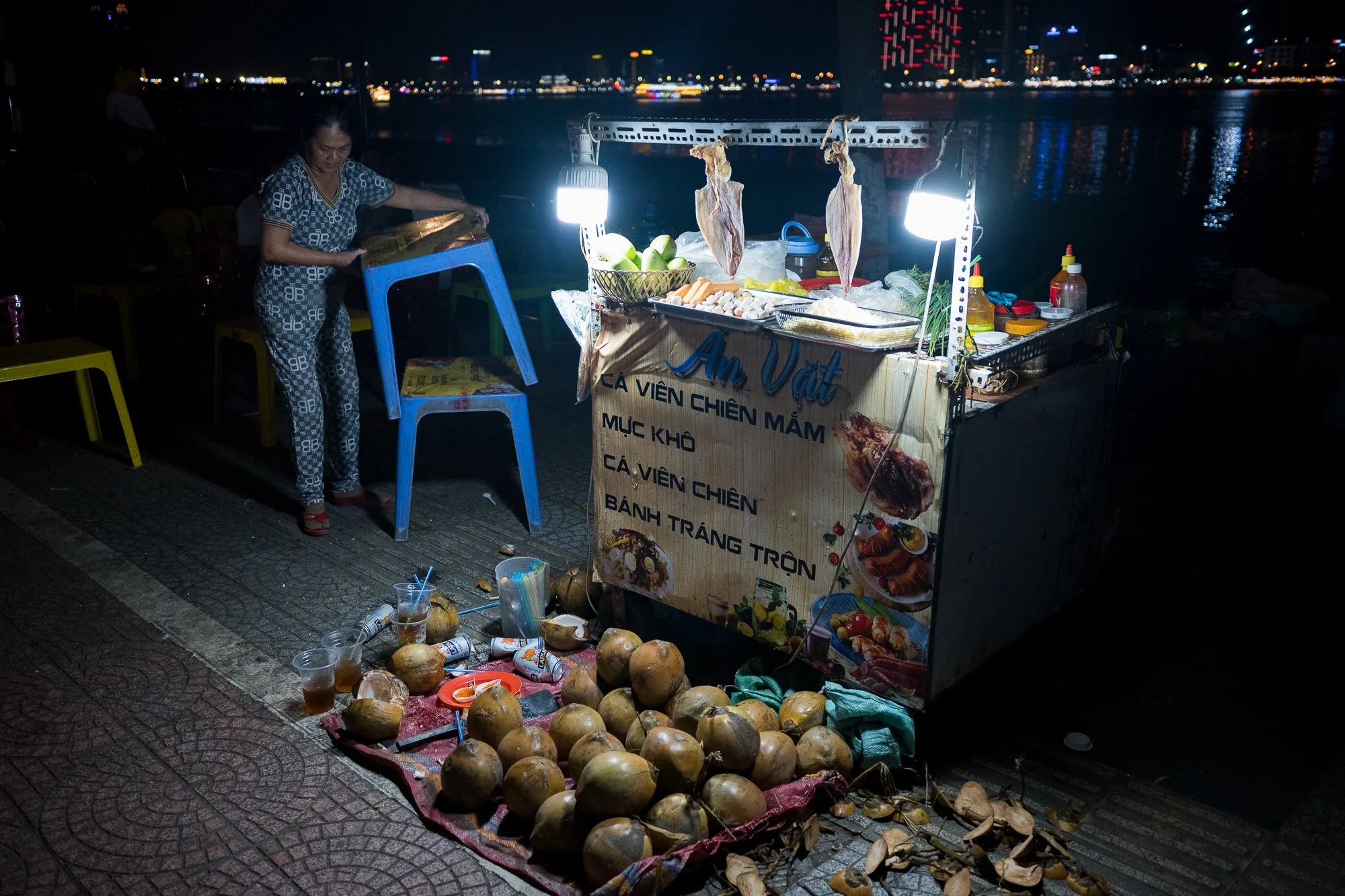
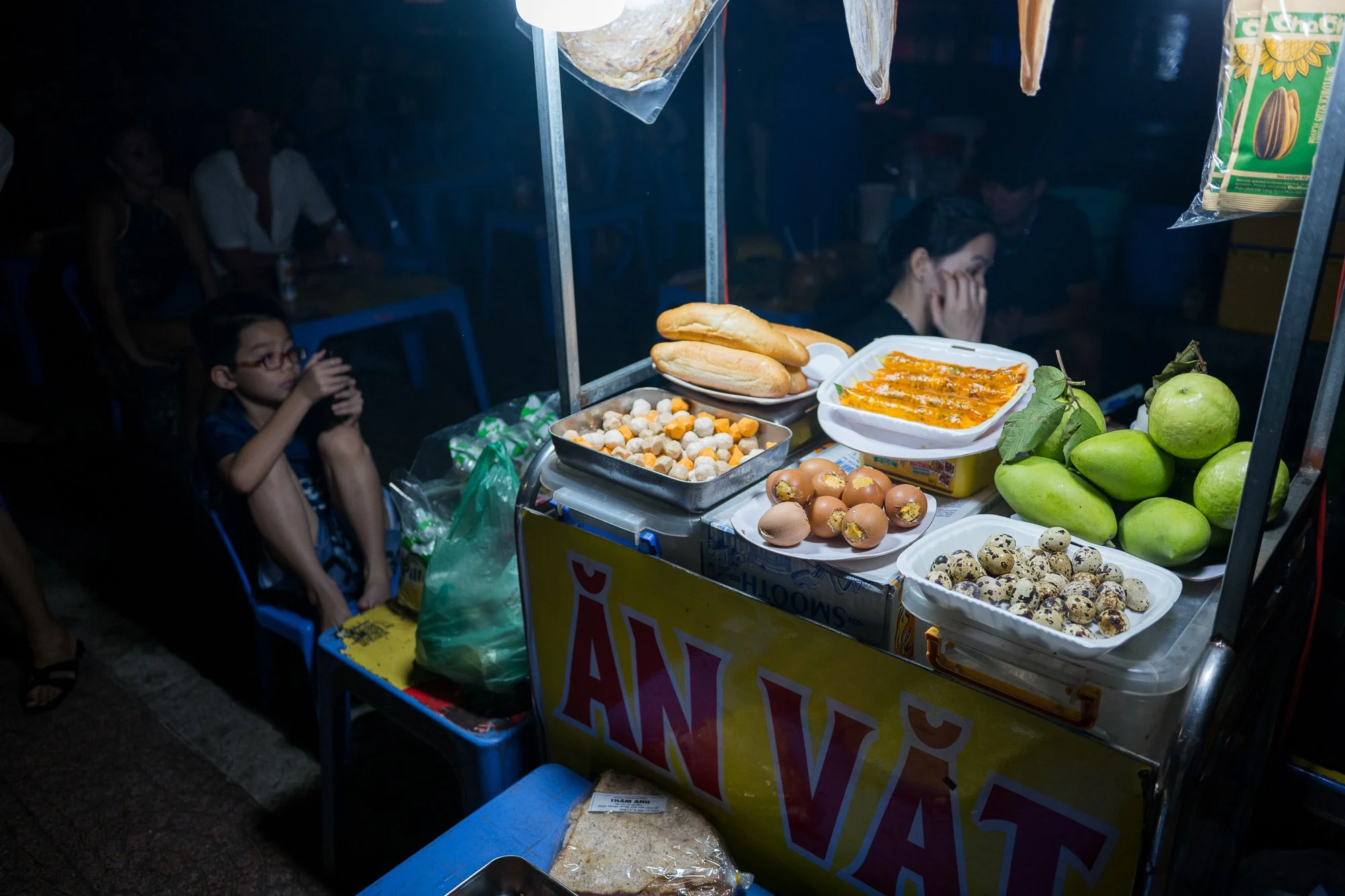
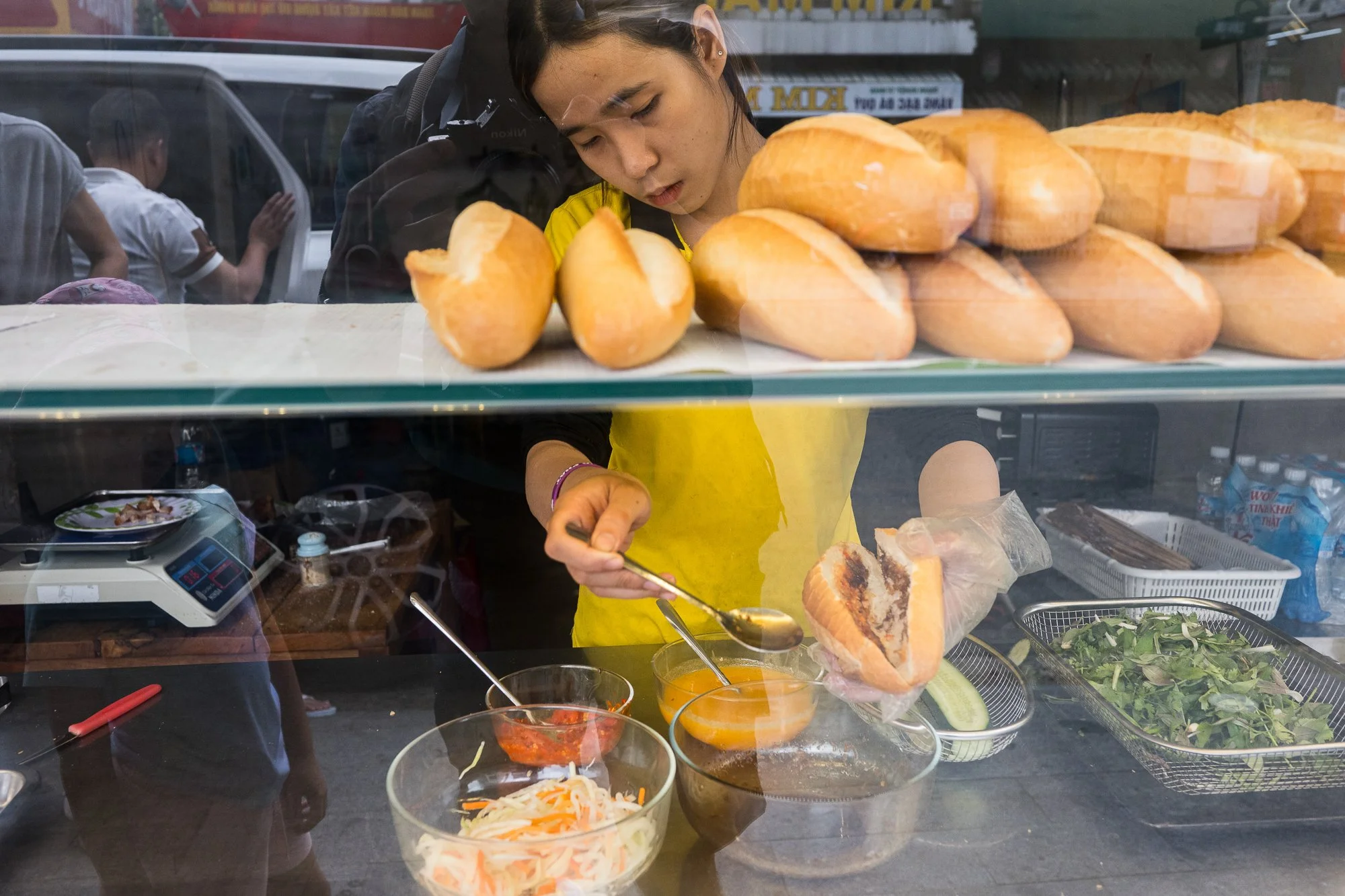
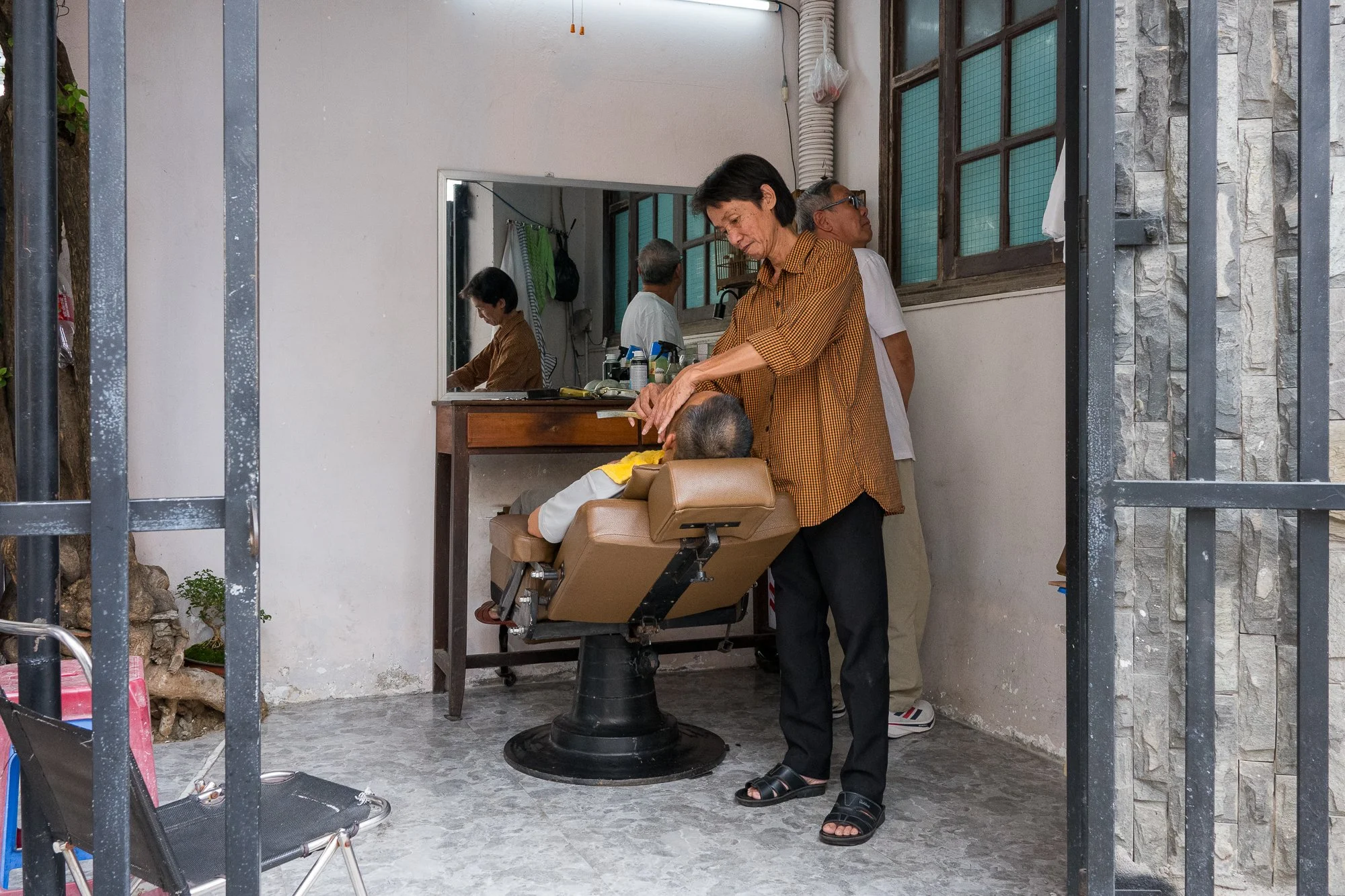
I had the camera out most evenings, pointed mostly at the food vendors. The ones working the woks in clouds of steam. The food and drink vendors. The lady flipping bánh mì with the relaxed speed of someone who has done this since before I was born - not performing, not posing, just working. Evening market photography is honest work in the most literal sense: the light is terrible, the ISO setting on the camera is turned up high; tungsten and fluorescent mixed in proportions that make colour grading a small nightmare, everyone is moving, everyone is busy, and nobody asked for your attention. You either get it, or you don't. The camera has to earn its place in the scene, or it doesn't belong there. I’m not trying to be invisible either, I am there front and centre. Most of them didn't mind. A few of the nicer ones tried to pose, which I appreciate but rarely use.
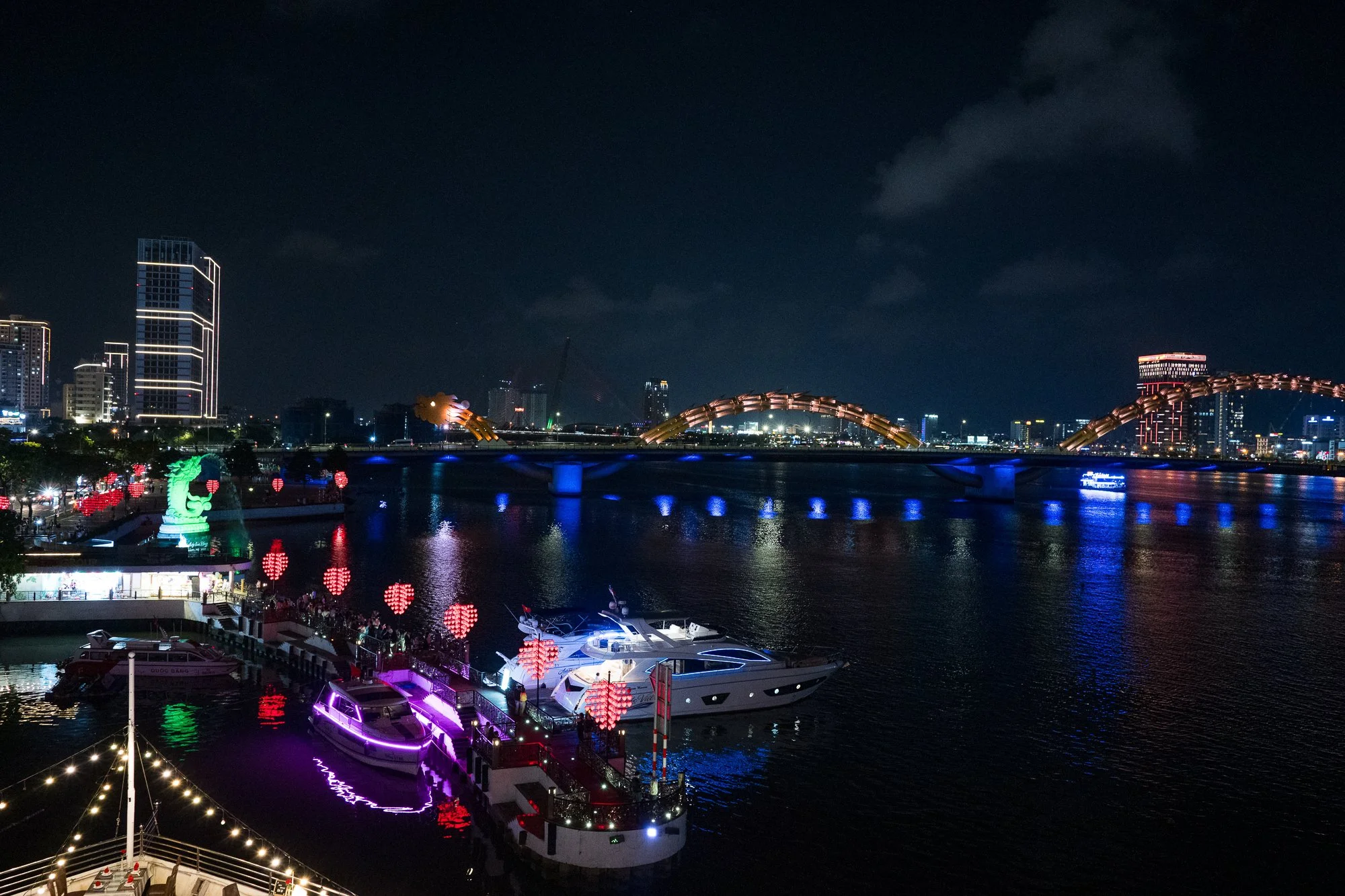
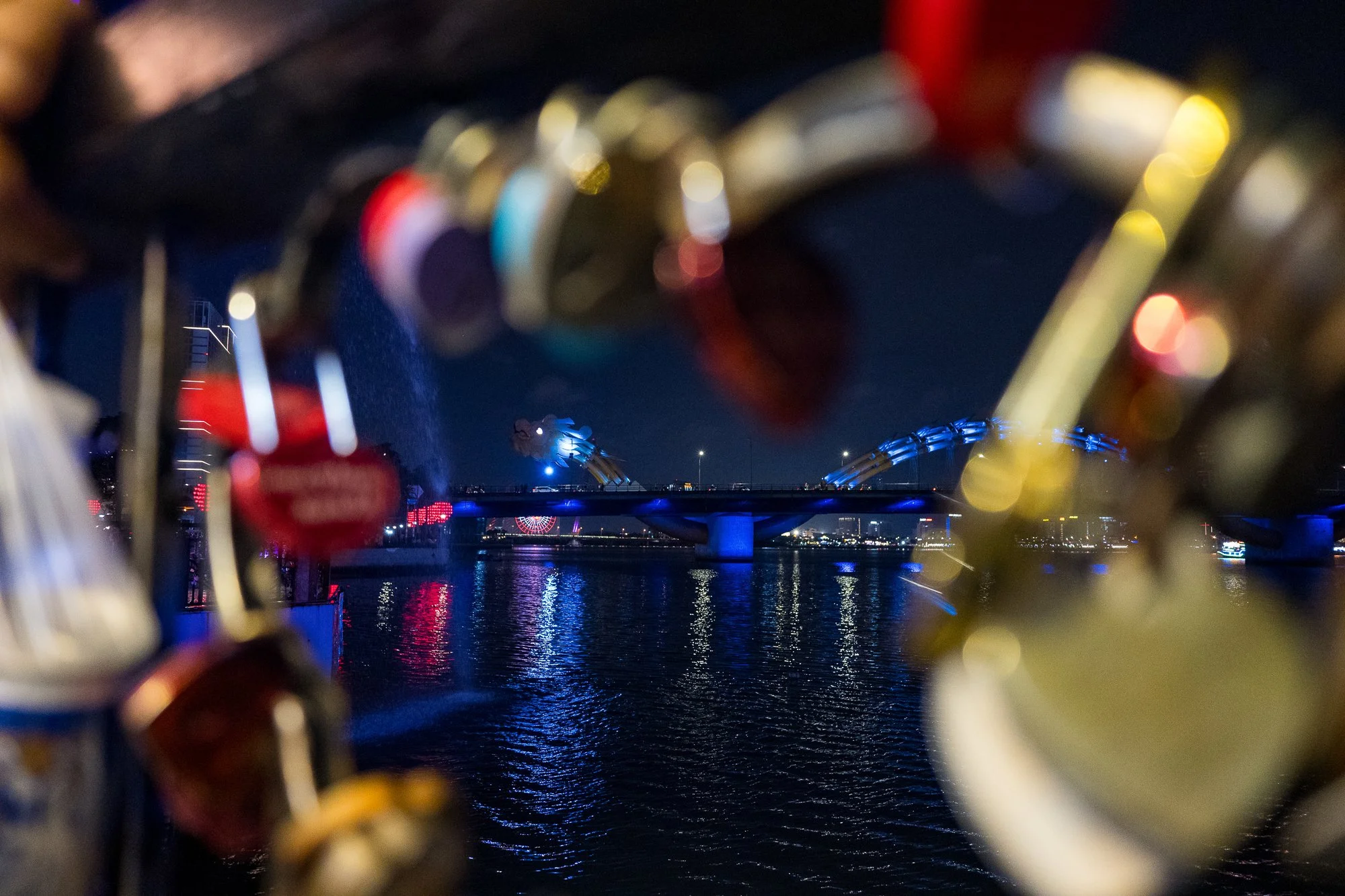
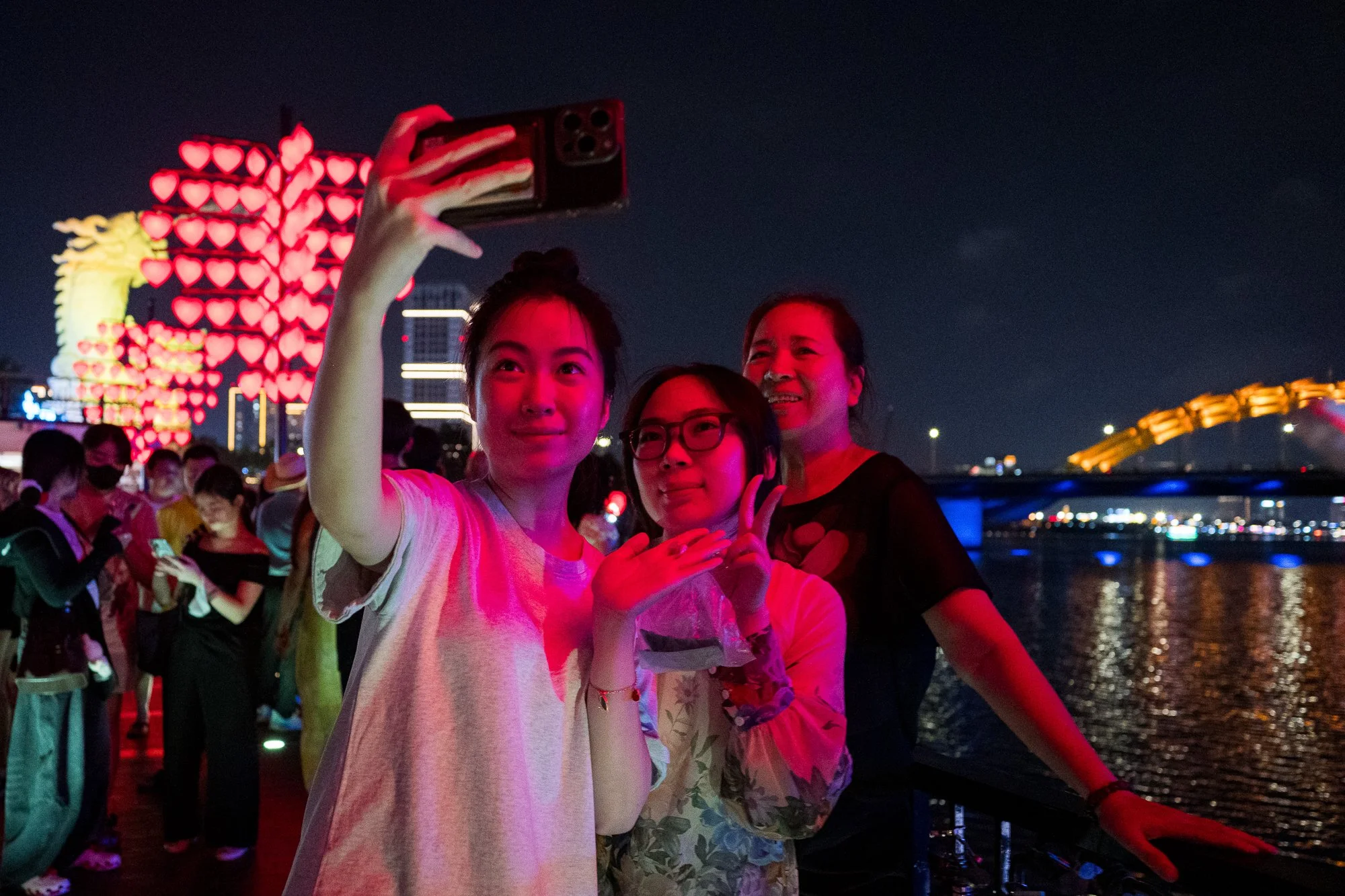
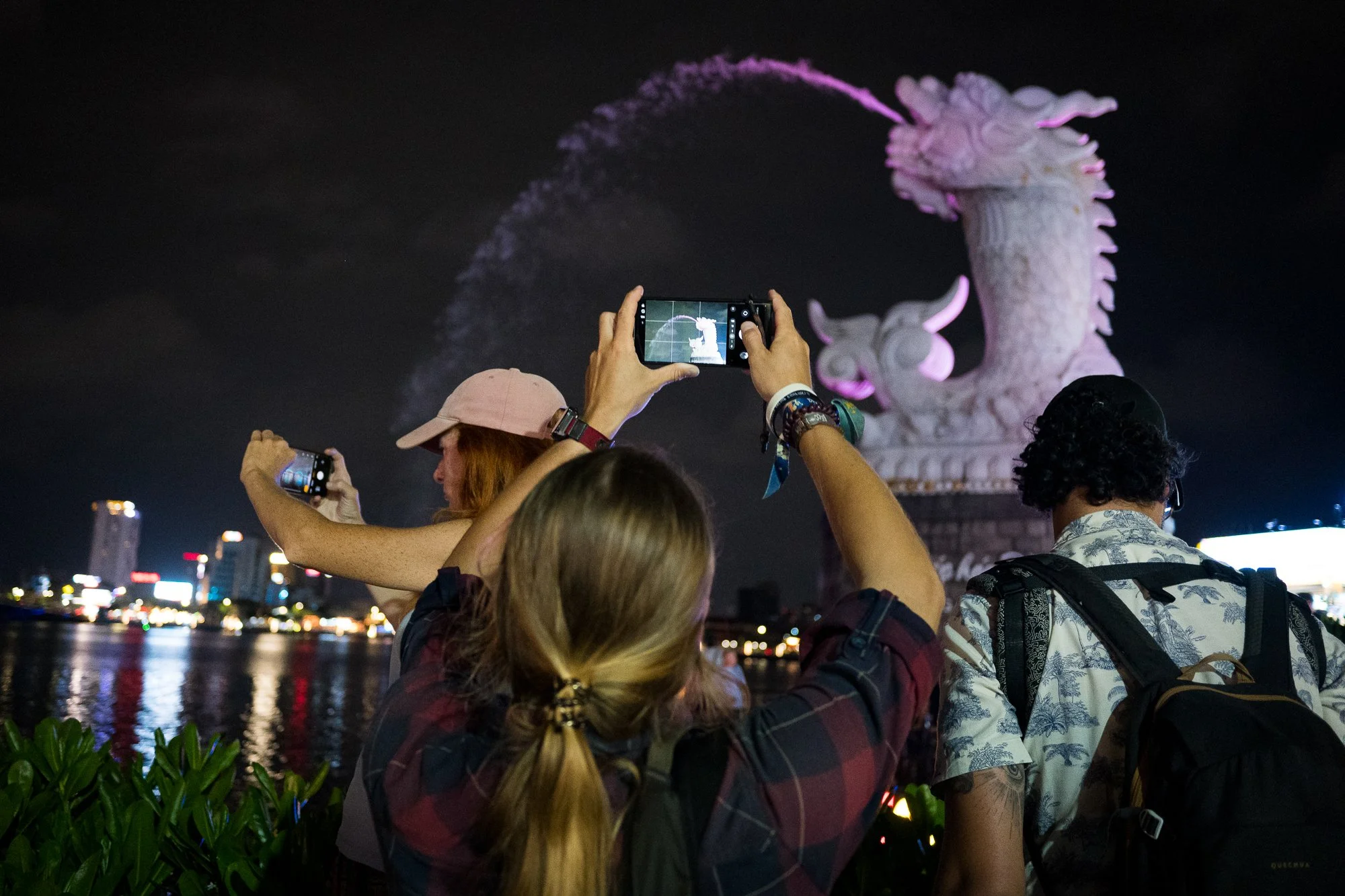
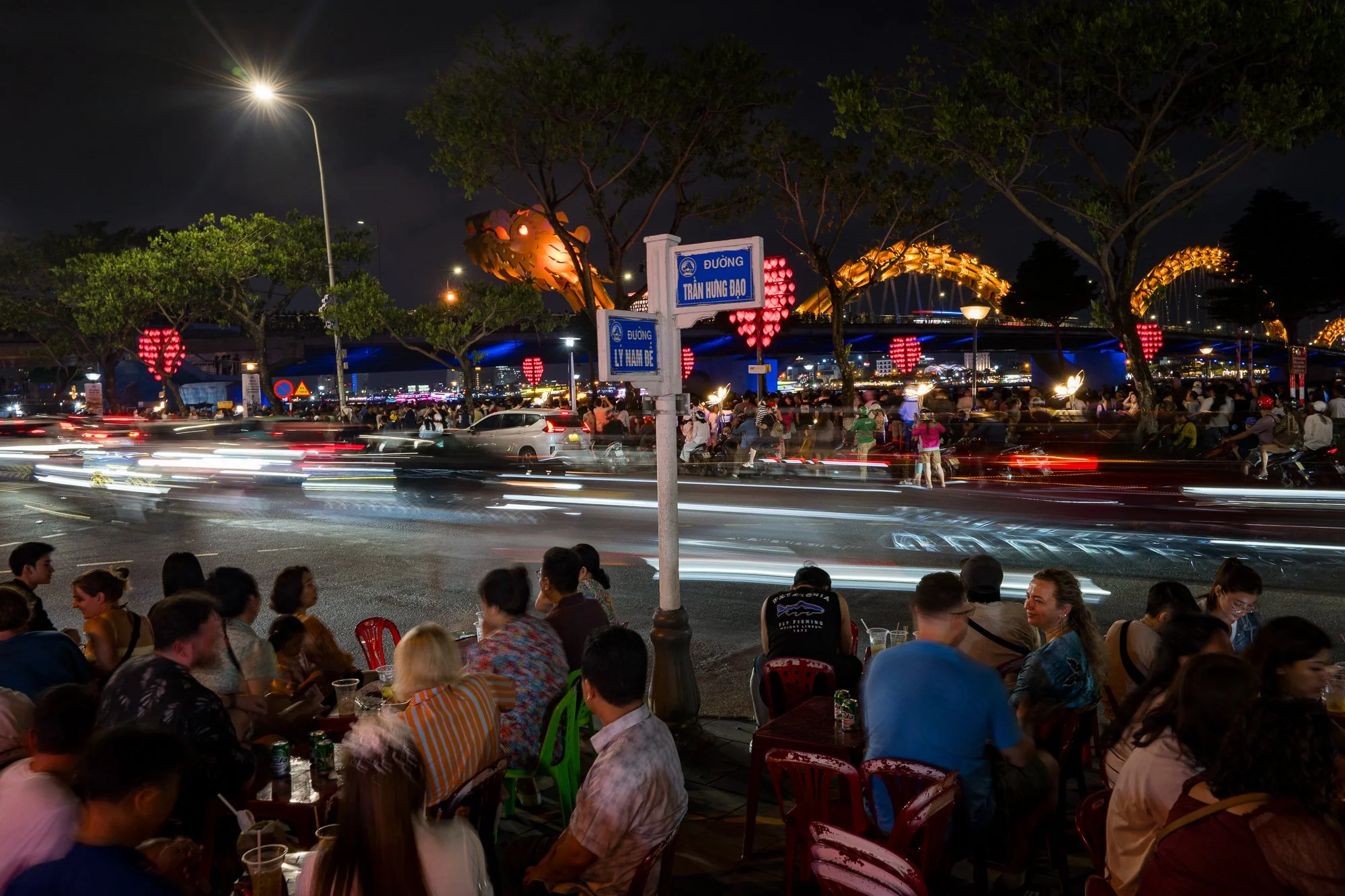
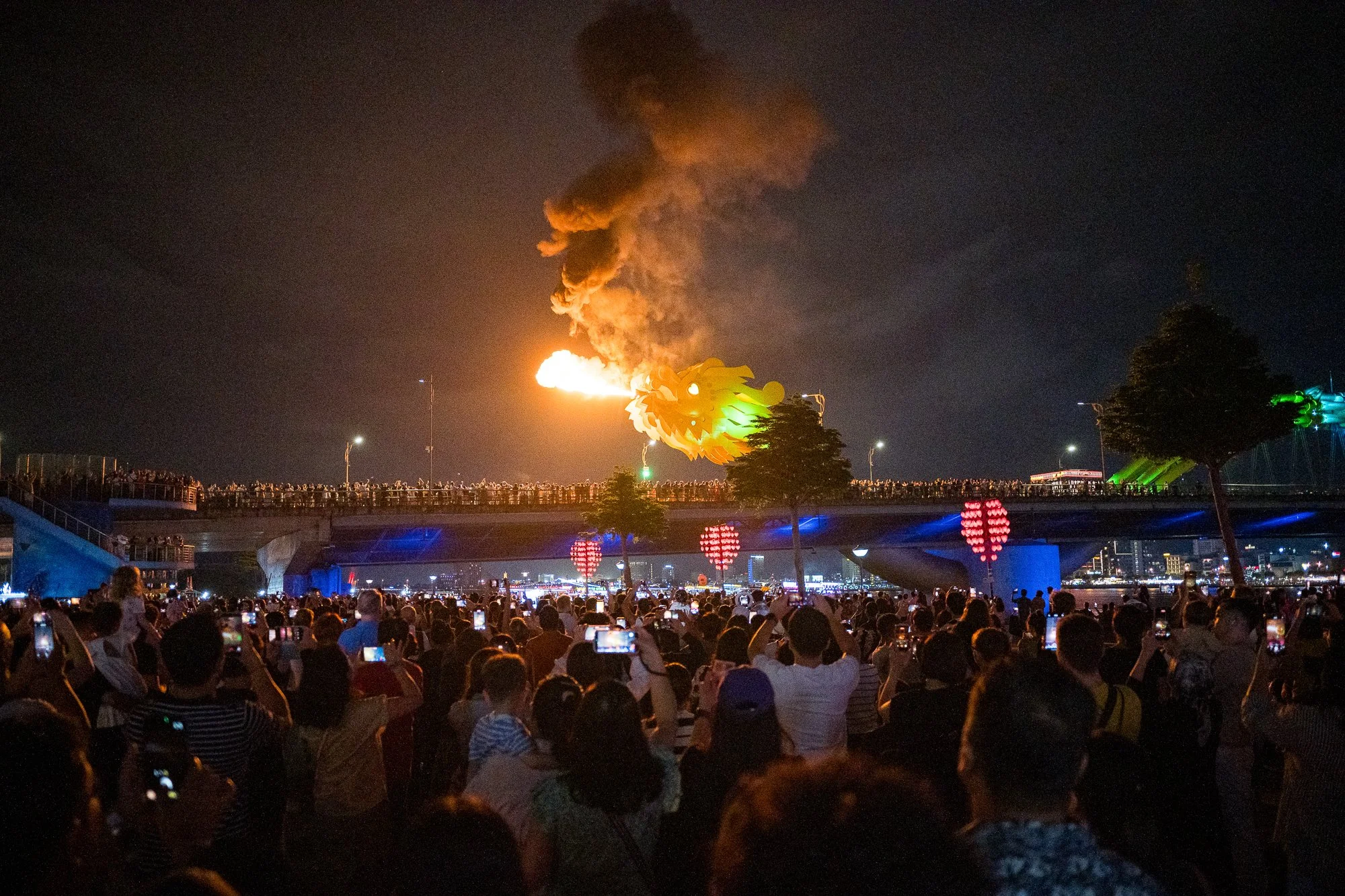
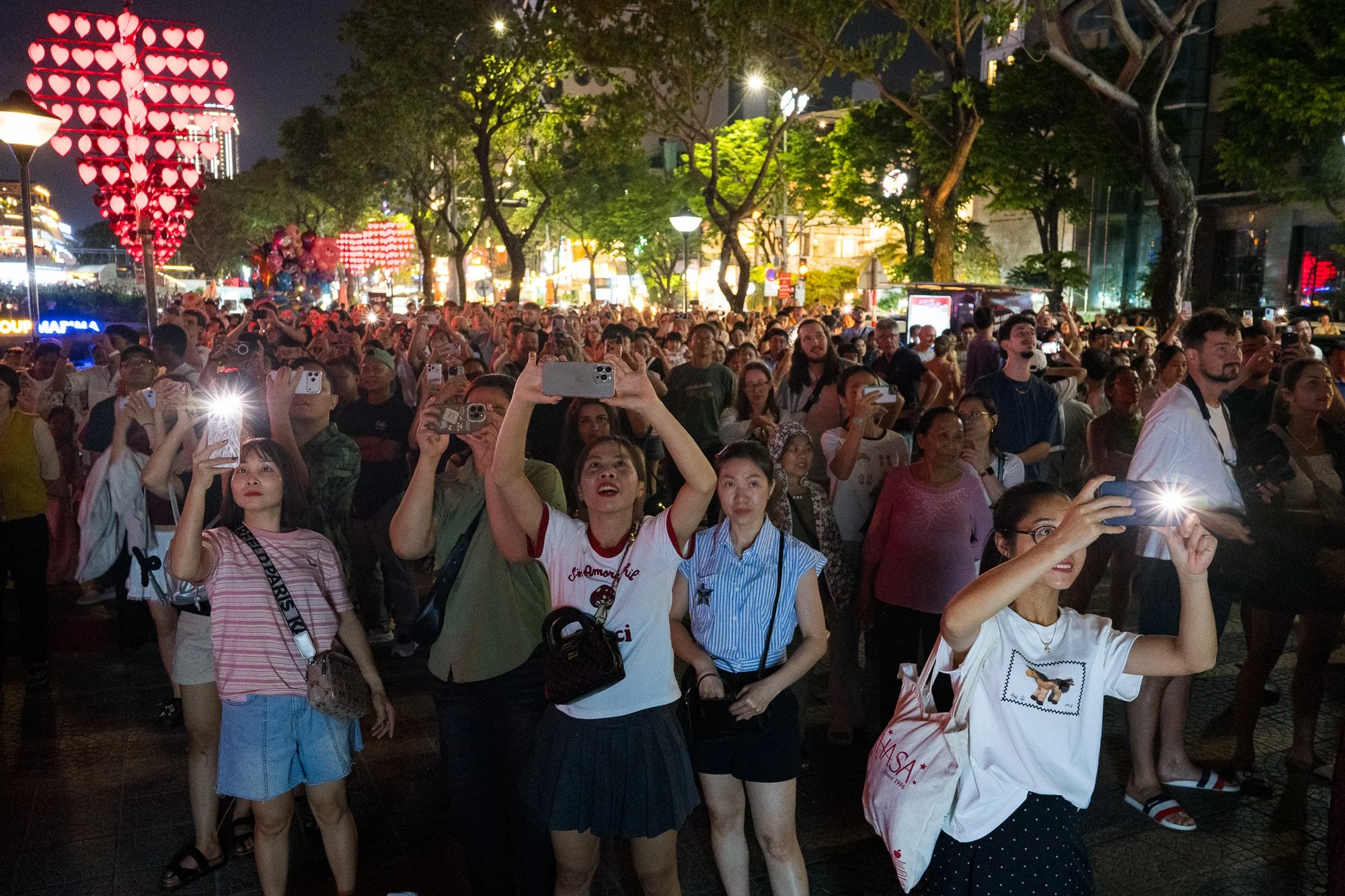
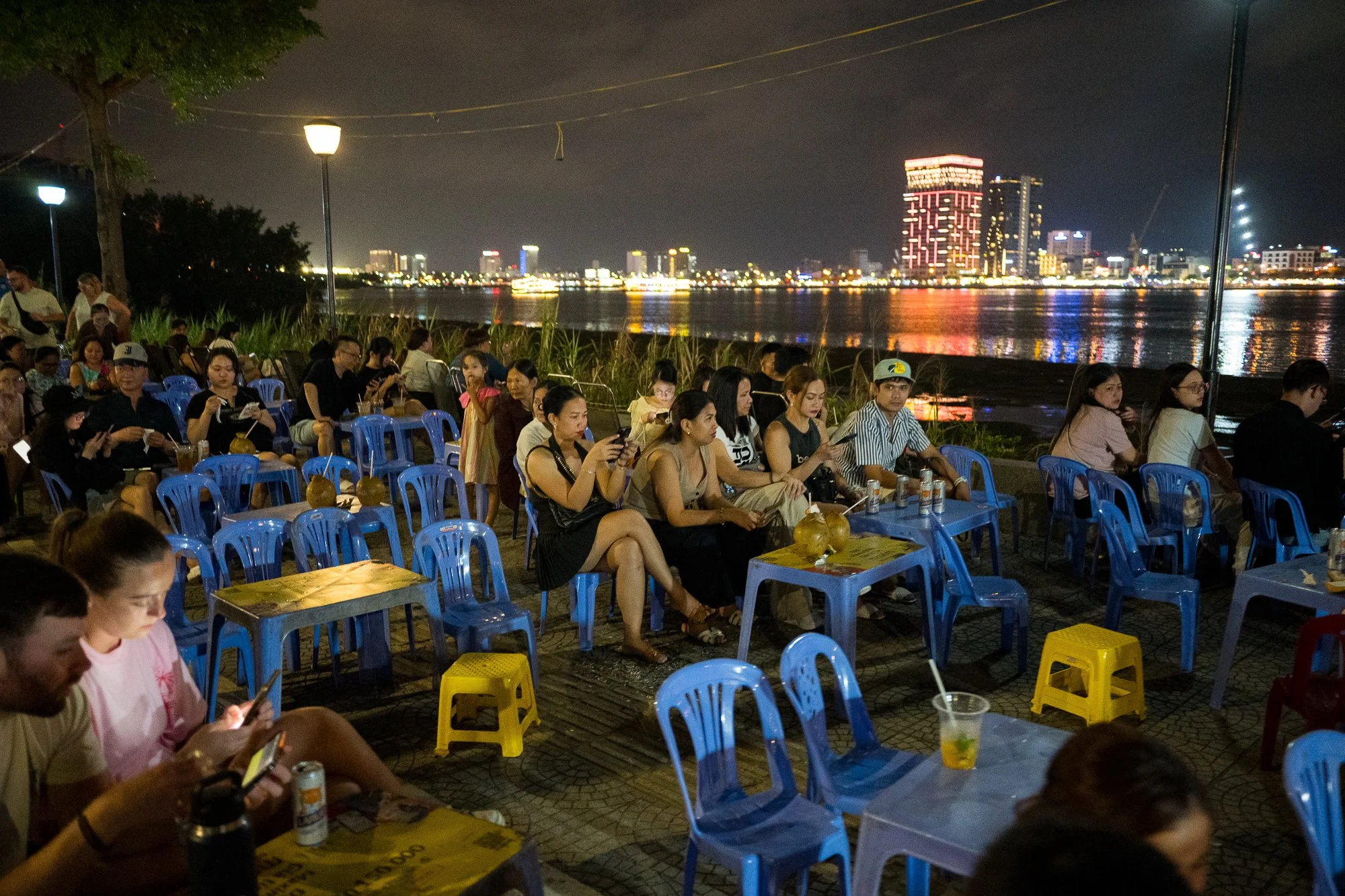
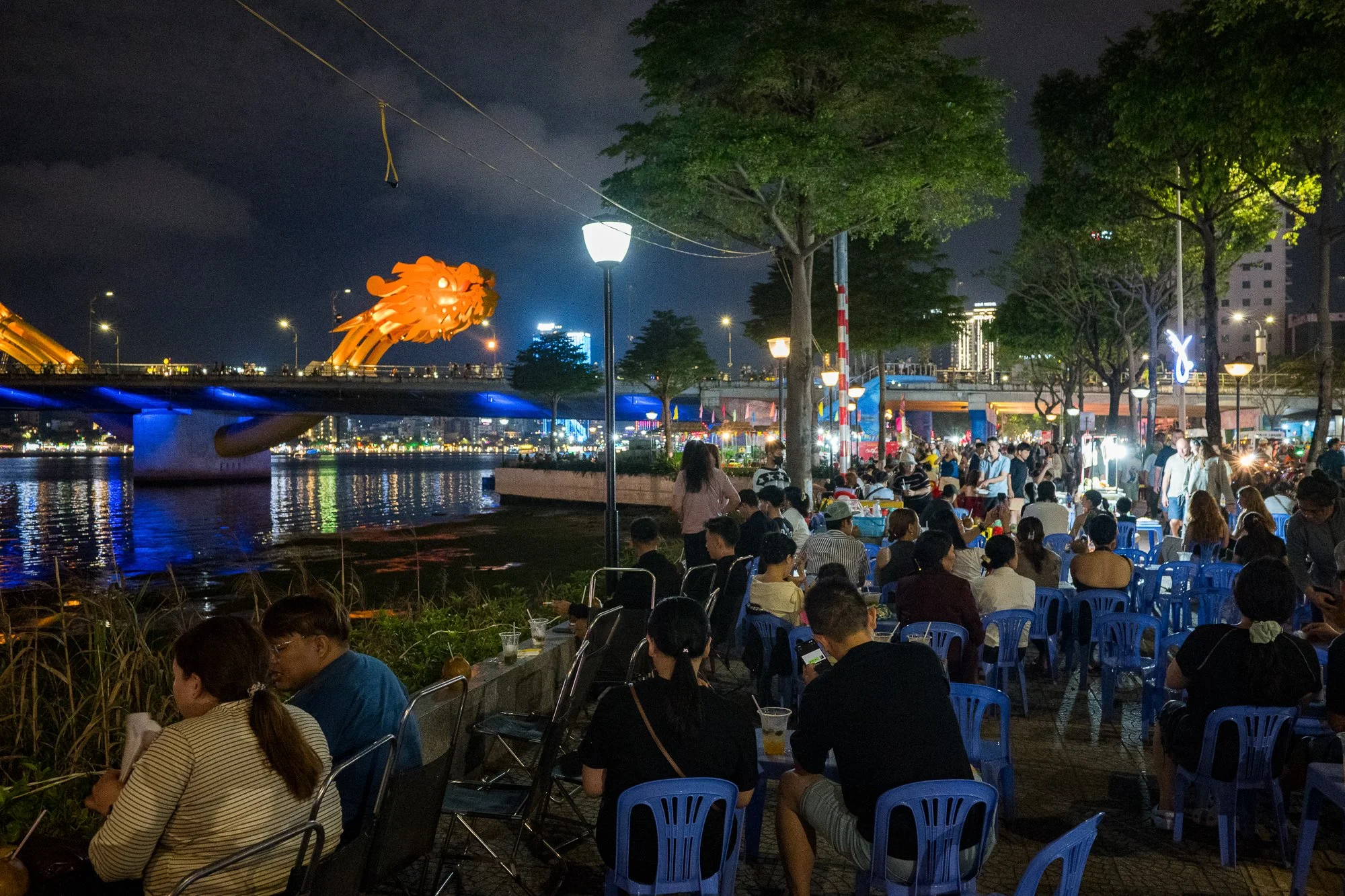
Then there's the Dragon Bridge - the Cầu Rồng - which is the kind of thing that looks, in photographs, like it shouldn't work, and then you're standing in front of it, and it absolutely does. A dragon spanning the Han River, lit in shifting colours, scaled and lit and detailed to a degree that is objectively excessive and somehow completely committed. On weekends, it breathes fire and water. Crowds gather along the riverfront. Families on plastic stools. Vendors moving through with things you didn't know you wanted.
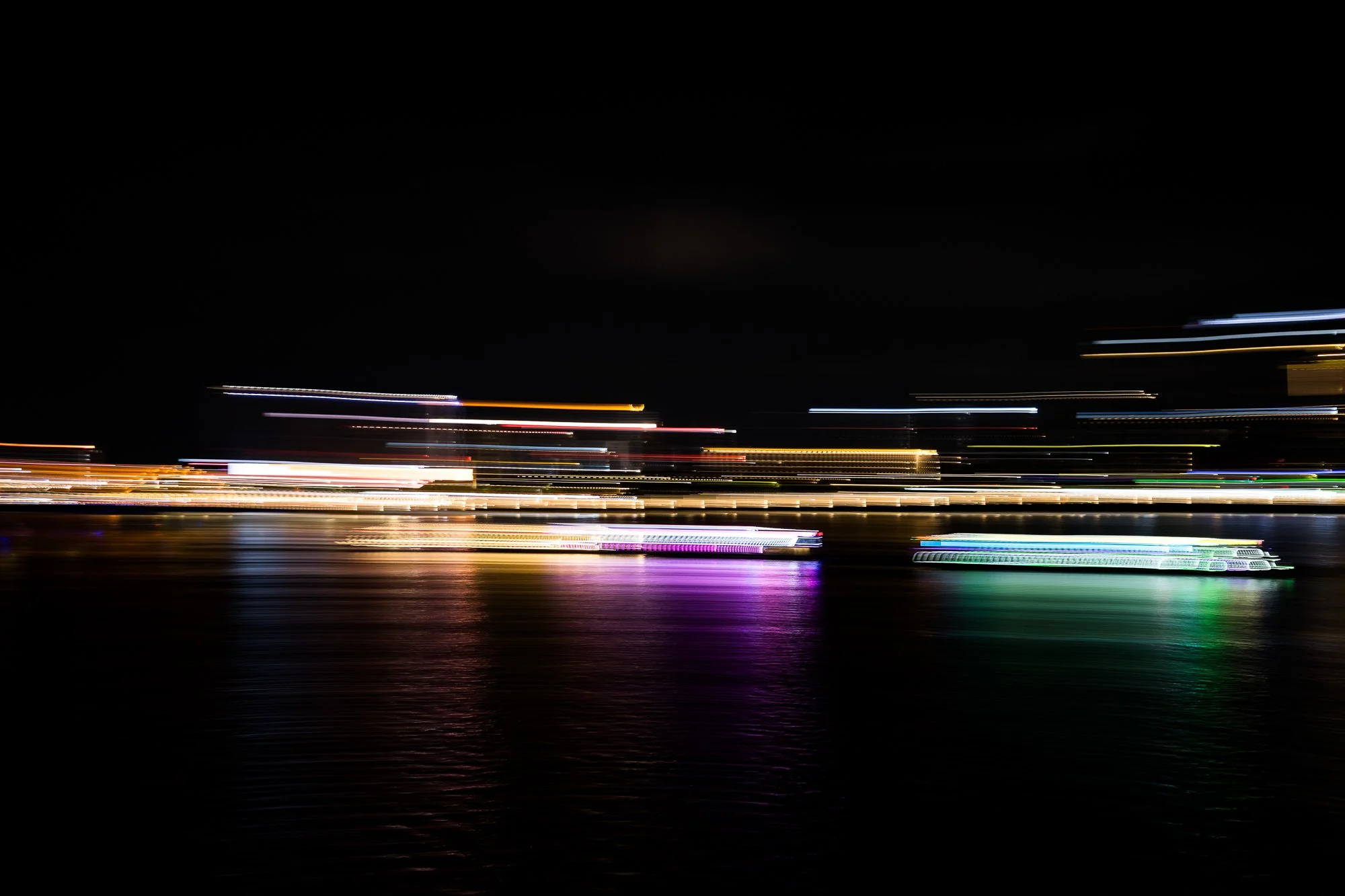
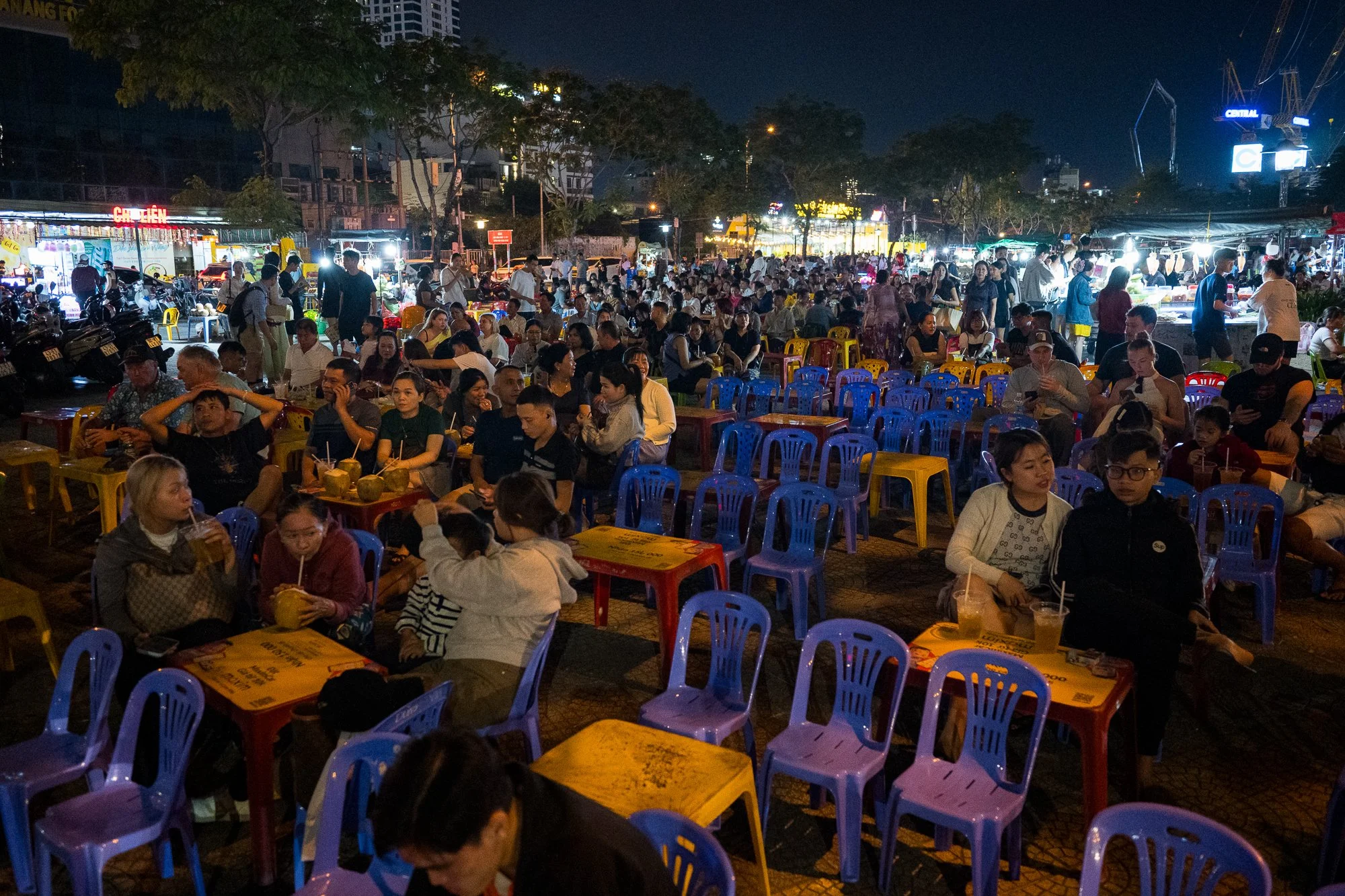
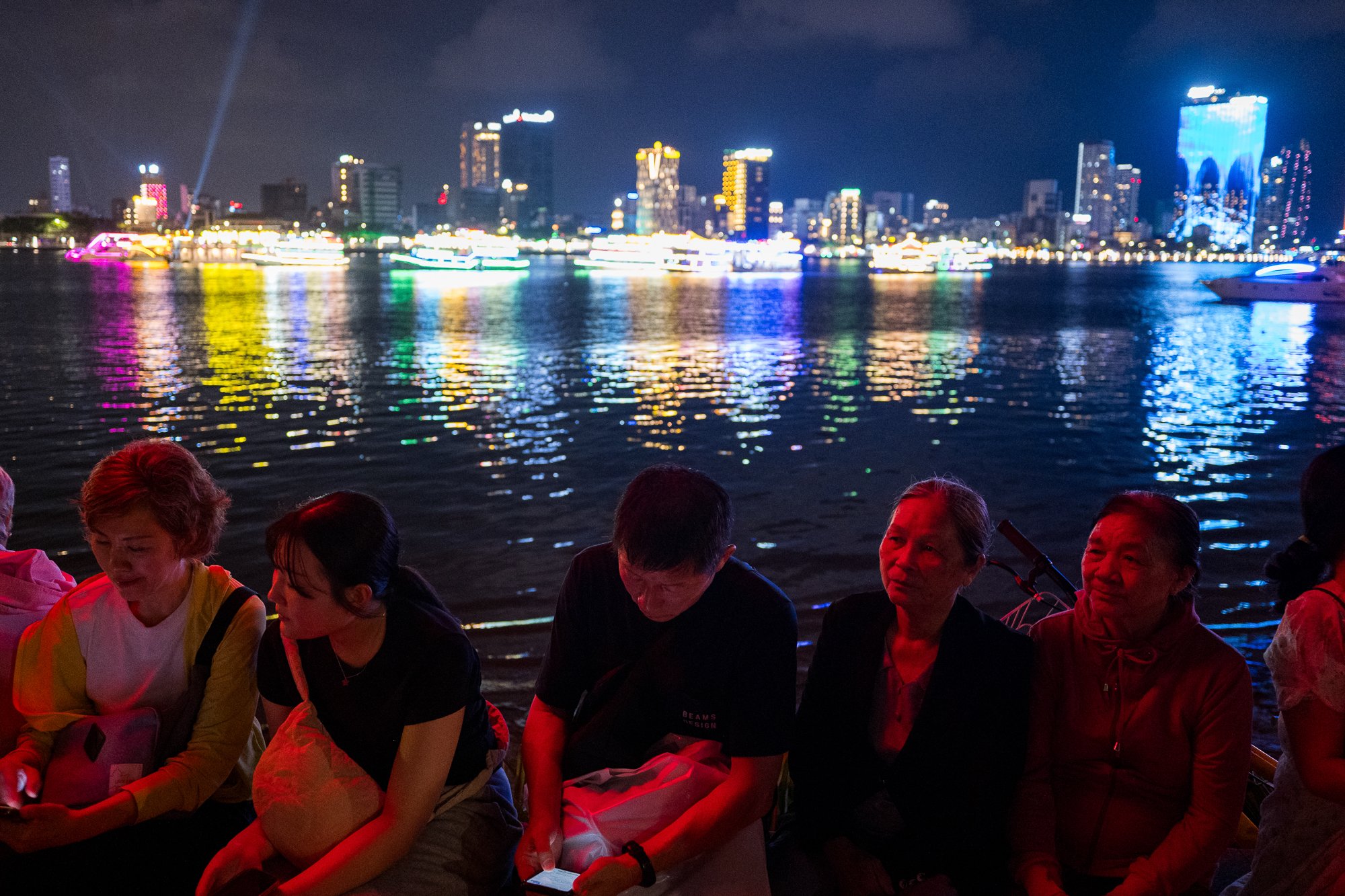
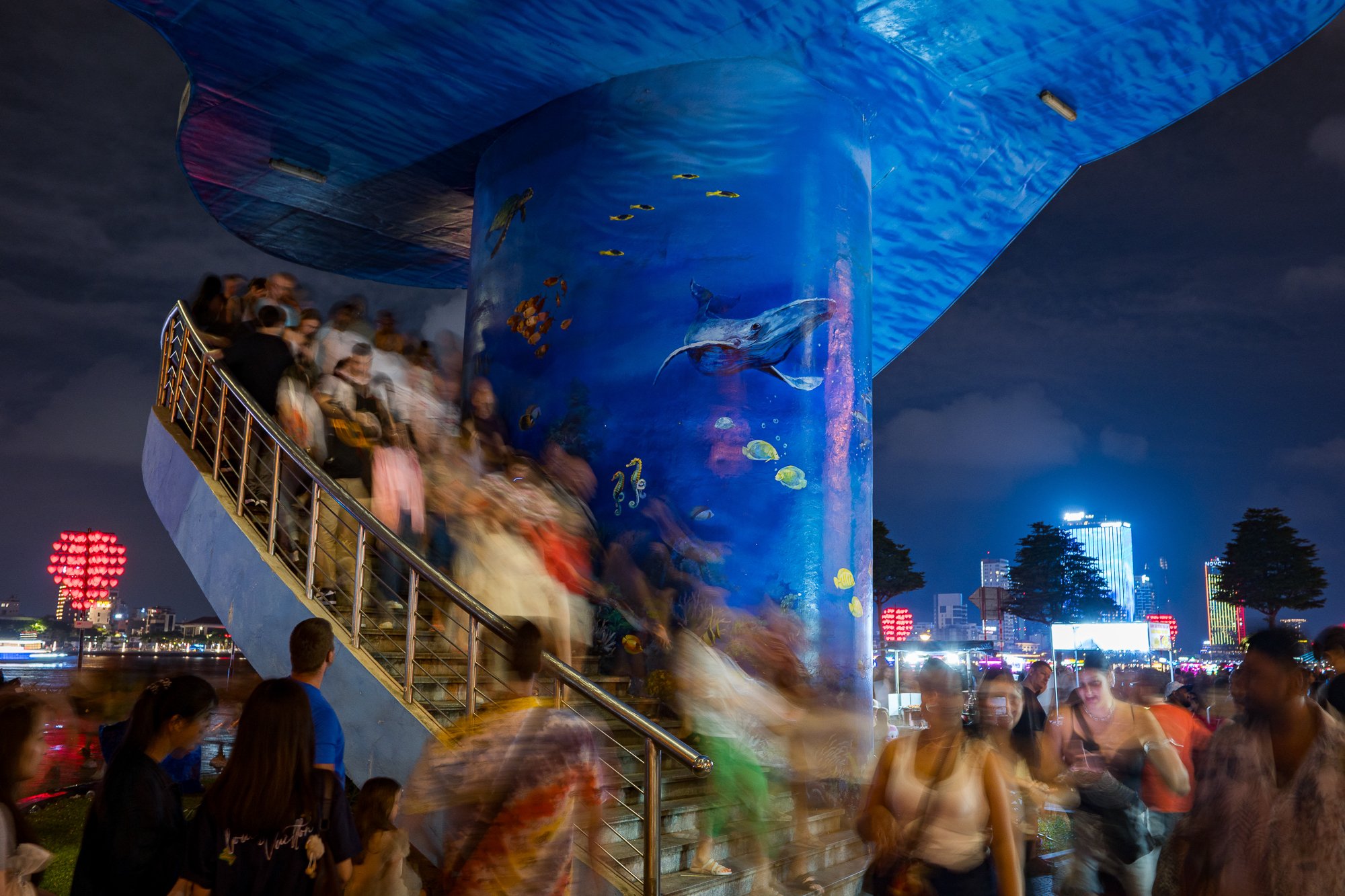
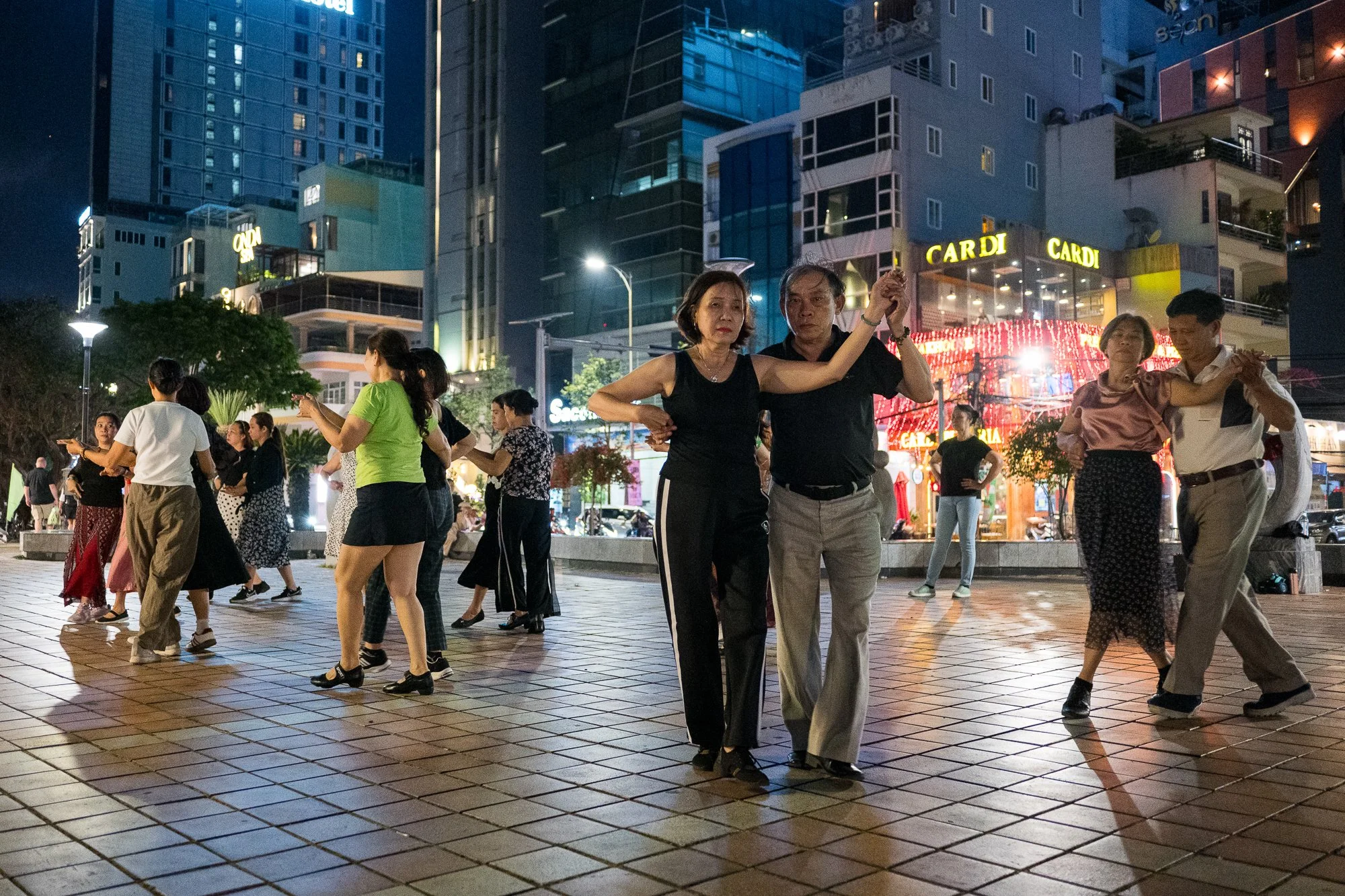
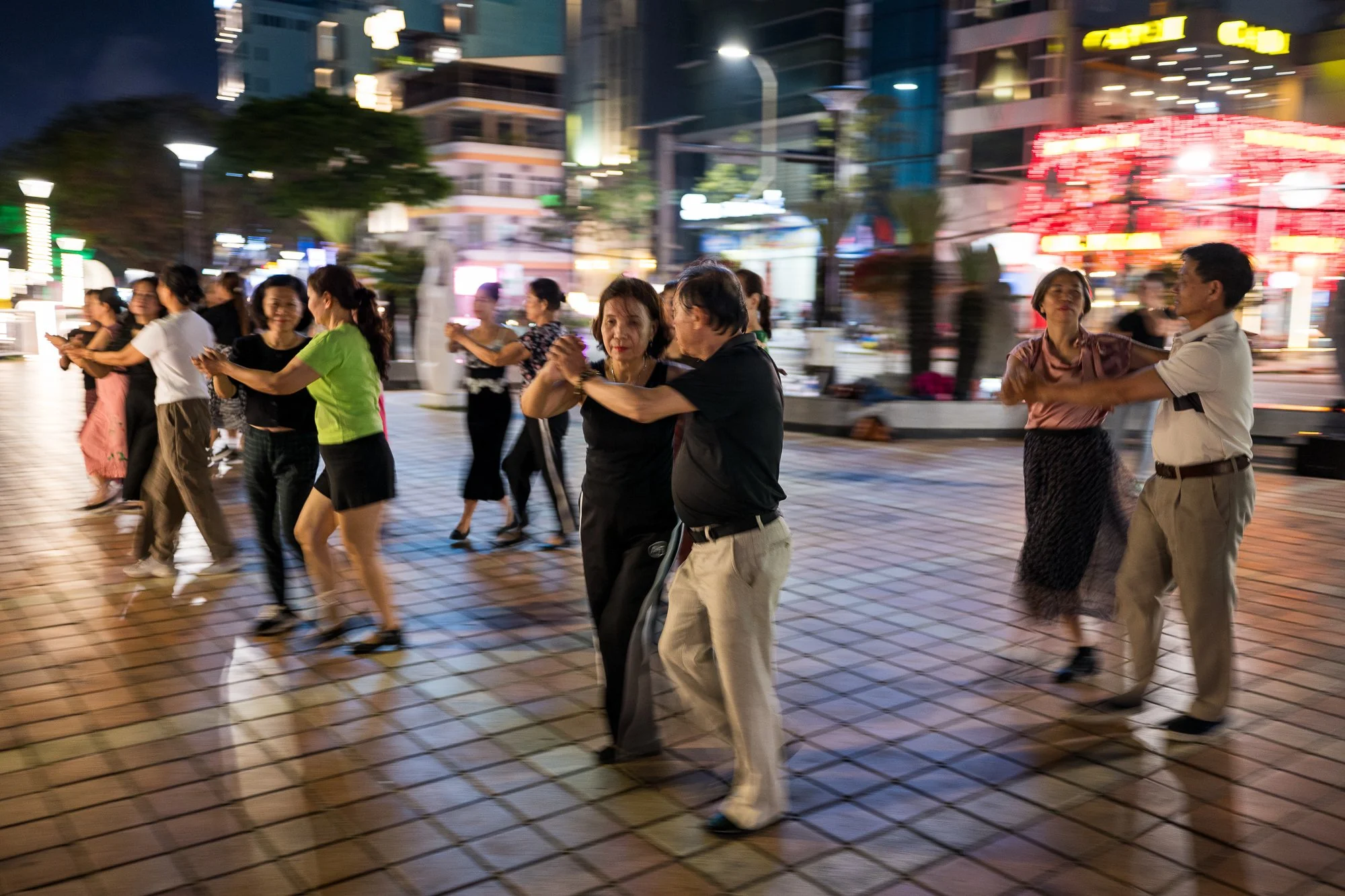
The riverfront has a particular energy in the evenings - democratic is the right word for it, in the sense that everyone just comes to be outside together. Couples, families, groups of friends, a line of locals practising ballroom dancing against the backdrop of the river with its lit-up boats. On one evening, I watched it for longer than I intended. It wasn't what I'd gone out to photograph, but it was the better thing to look at.
We didn't make it to the Golden Bridge - the Cầu Vàng, the one with the two giant stone hands holding the walkway - this time around. The kids weren't interested, and I filed it under next visit.
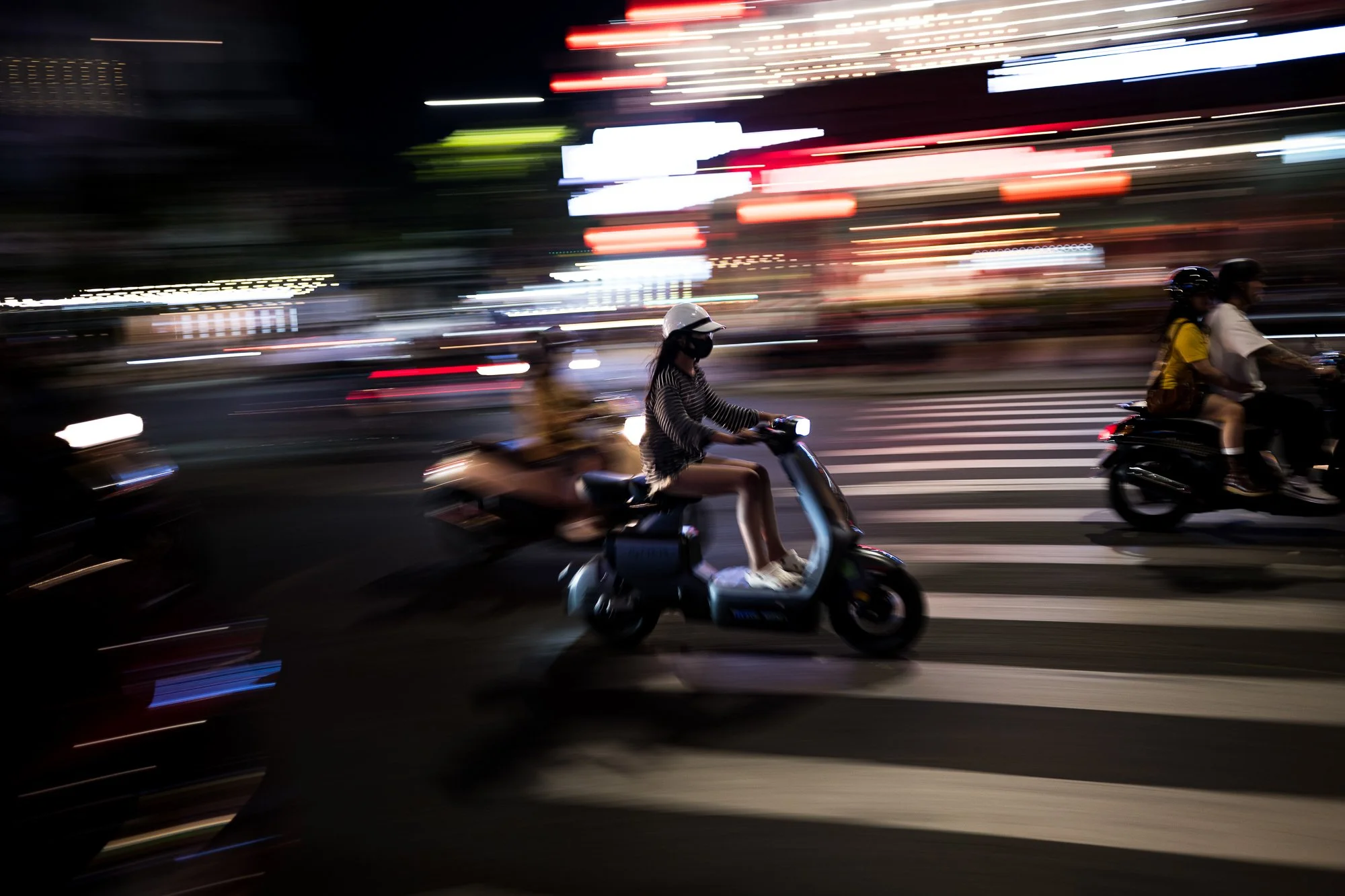
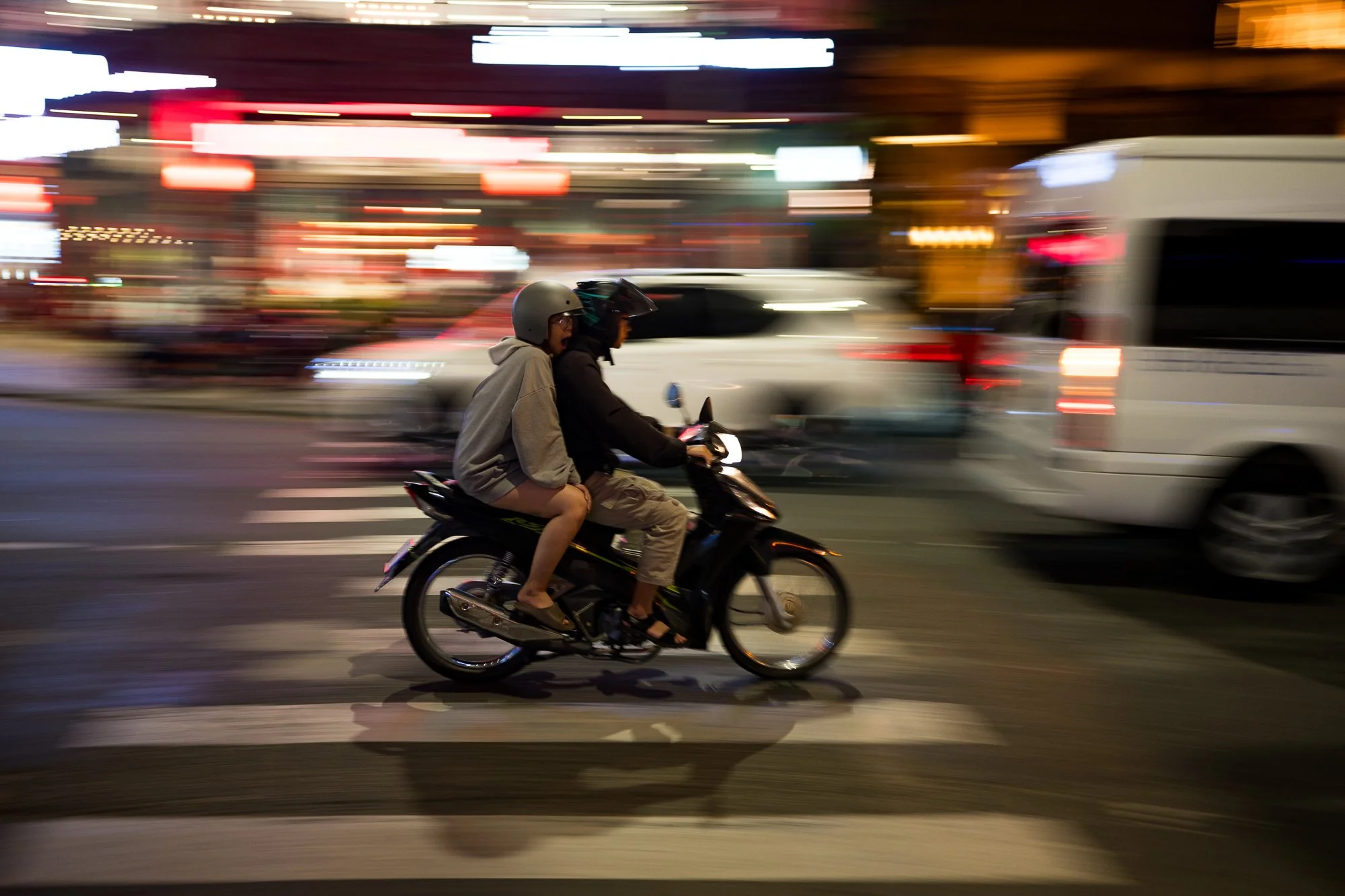
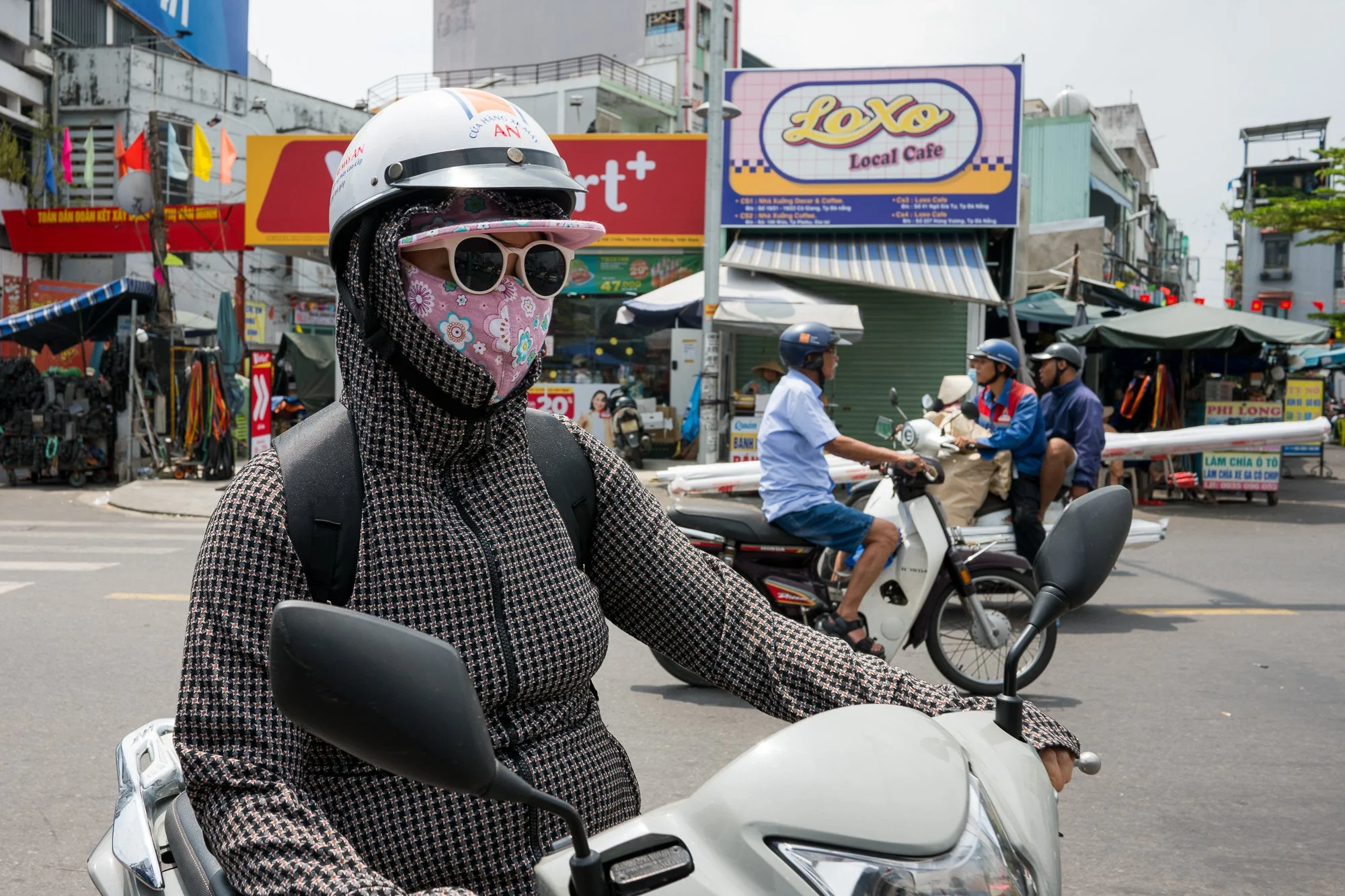
Da Nang is not a city trying to accommodate your photography. The streets don't slow down for you. The vendors don't pause. The light in the evening markets is the light you get, not the light you'd choose. That friction is the thing I liked most about it.
A lot of Southeast Asian cities that have tourism infrastructure start to develop a smoothed-over quality in the areas tourists frequent, a slightly performed version of local life. Da Nang hasn't fully got there yet, or at least the parts we were in hadn't. The markets felt like they'd be there whether we showed up or not, which made shooting in them feel less extractive than it can sometimes feel.
I didn't get enough time out there. The evenings were enough to produce photos I'm happy with, but every time I found a corner that interested me, the family itinerary pulled me back. That's the deal, as established above. If I ever go back to Da Nang without children and without a resort schedule - a speculative proposition - I think the streets would give up considerably more.
Hoi An is a separate post. Different “city”, different mood, deserves its own space.
For now: Da Nang, a few warm evenings, food vendors in their daily rhythm.
Enjoy the photos.
All photos taken with the Nikon ZF.
Cheers.